





Trip Sheet: Pursuit of Clean School Buses Requires Time, Money, and Commitment
Time’s Running Out for Clean School Bus Grant Questions
Inquiries about the second funding opportunity from the Environmental Protection Agency’s Clean School Bus Program must be submitted before midnight Eastern on Aug. 9.
August 8, 2023
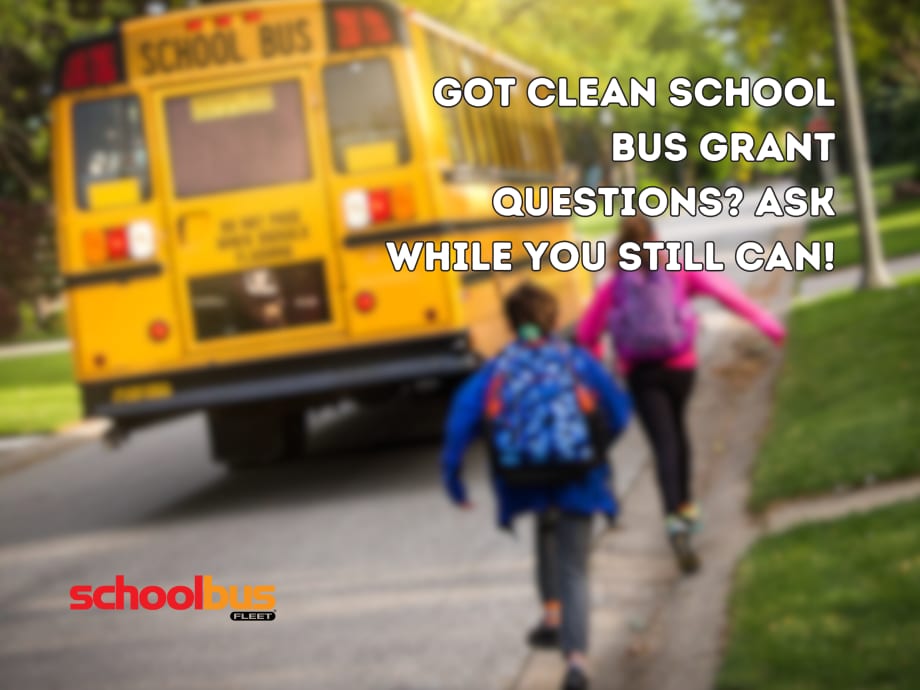
Applicants have until 11:59 p.m. EST on Aug. 9 to submit questions about the grant program to the Environmental Protection Agency.
Image: Canva
7 min to read
Applicants with questions about the latest funding opportunity from the Environmental Protection Agency’s Clean School Bus Program must act quickly if they want to submit questions about the grant program.
Questions are due no later than 11:59 p.m. Eastern on Aug. 9 and can be sent to cleanschoolbus@epa.gov. Before sending in those questions, though, make sure they haven’t already been answered.
Some of the questions and answers are compiled here for your information.
What Is the Clean School Bus Program?
EPA Answer: The Bipartisan Infrastructure Law (BIL) provides $5 billion for the Clean School Bus (CSB) Program to replace existing school buses with clean and zero-emission (ZE) school buses. For each fiscal year between 2022 and 2026, $500 million will be made available to fund zero-emission and clean school buses, and $500 million will be made available to fund only zero-emission school buses. The first funding opportunity under the CSB Program was the 2022 Clean School Bus Rebates. The second funding opportunity, and the first CSB Grants funding opportunity, is the 2023 Clean School Bus Grants. Funds are subject to availability and total awards may be higher or lower than the anticipated funds offered.
The Clean School Bus Program is an entirely separate funding program from the Diesel Emissions Reduction Act (DERA) School Bus Rebates that EPA has offered in prior years.
What is the Difference Between a Grant and a Rebate?
EPA Answer: Both grants and rebates provide selectees with award funds prior to purchasing eligible bus and infrastructure; however, there are a few differences between these types of funding programs, including: 1) the application process: rebate applications are generally quick and simple, whereas grants generally require longer, more detailed applications; 2) the selection process: a random lottery process is used to select rebate recipients, whereas competitive grant programs select recipients based on evaluation of application materials; and 3) the project period support, flexibility, and duration: rebate programs are generally narrowly focused on providing funding for the products (e.g., eligible buses and infrastructure) and intended to be relatively short duration projects, whereas grant programs can offer more support for applicants during the project, as well as flexibility in funding (e.g., providing funds for training) and timing of the project (e.g., longer project periods to complete the project).
What Are the Eligible Uses of Funding?
EPA Answer: CSB grants provide funding to eligible recipients so that they may replace existing school buses with clean and zero-emission models. Eligible activities include the replacement of existing internal-combustion engine (ICE) school buses with electric, propane, or compressed natural gas (CNG) school buses, as well as the purchase of electric vehicle supply equipment (EVSE) infrastructure and EVSE installations. Workforce training is also an eligible expense. See the Notice of Funding Opportunity (NOFO) for more information on eligible and ineligible uses of funding.
Why Two Sub-Programs in the 2023 Clean School Bus Grant Program?
EPA Answer: EPA would like to address the unique needs and concerns of diverse grantees and encourage participation from a diverse set of stakeholders in the 2023 CSB Grant Program.
Have Eligibility and Program Requirements Been Updated for the Clean School Bus Grant Program?
EPA Answer: The FY 2023 Consolidated Appropriations Act (aka the Omnibus funding bill) included amendments to the CSB Program (p. 771 of 1,653) that make the following changes to the program:
Allow private bus fleets to apply directly for funding.
More clearly allow the inclusion of charter schools as applicants.
Allow an exception to the requirement that a bus serve the school district listed on the application for a minimum of five years, in the case that a private bus fleet contract expires and the bus continues to serve another similarly prioritized district.
The 2023 CSB Grants funding opportunity incorporates these changes.
How Many School Buses Can Be Replaced?
EPA Answer: Applicants applying through the School District Sub-Program (i.e., public school districts, public charter school districts, and Indian Tribes, Tribal Organizations, or Tribally[1]controlled schools) must replace 15 to 50 buses. Applicants applying through the Third-Party Sub-Program (i.e., nonprofit school transportation associations and eligible contractors, including Original Equipment Manufacturers (OEMs), dealers, school bus service providers, and private school bus fleets) must replace a total of 25 to 100 buses, that combined serve at least four school district beneficiaries. Applicants may only submit one application per EPA Region (but may submit applications to multiple Regions).
May an Applicant Apply for Funding Only to Install or Upgrade Charging Infrastructure?
EPA Answer: No, standalone infrastructure projects are not eligible for funding under the 2023 CSB Grant Program; however, other sources of Federal, state, or local funding may be available for such projects. For example, see this Charging and Fueling Infrastructure Discretionary Grant Program offered by the Federal Highway Administration. EPA is also partnering with The Joint Office of Energy and Transportation (JOET) and the National Renewable Laboratory to offer clean school bus technical assistance to school districts, including information and tools needed to successfully plan and deploy clean school buses and infrastructure. JOET may be able to help potential applicants identify other sources of federal, state, and local funding relevant to electric school bus projects. Please visit https://www.epa.gov/cleanschoolbus/clean-school-bus-technical-assistance for more information. Potential applicants can also contact JOET technical assistance by emailing cleanschoolbusTA@nrel.gov.
Will Applicants on Waitlist from Past Funding Opportunities Automatically Be Considered This Round?
EPA Answer: No, each program is a separate funding opportunity, and interested applicants must apply to each individual listing. Applicants that were put on a waitlist for past funding opportunities will need to re-submit a new application in accordance with the new funding opportunity guidelines.
Are School Districts That Applied for 2022 Rebates or 2023 Grants Prohibited from Later Opportunities?
EPA Answer: No. Applicants that applied for previous CSB funding opportunities or that apply for the 2023 CSB Grant Program are not prohibited from applying for future CSB funding opportunities.
How Many Grants Will EPA Fund Under 2023 School Bus Program?
EPA Answer:EPA anticipates awarding a total of approximately 25 to 50 cooperative agreement(s) under the 2023 CSB Grant Program Notice of Funding Opportunity (NOFO), subject to the availability of funds, the quantity and quality of applications received, Agency priorities, and other applicable considerations. In making the final funding decisions, EPA may also consider programmatic priorities and geographic diversity of funds, number and size of awards, environmental benefits, applicability of different business models, and other Agency and programmatic priorities.
Are Private Schools Eligible to Receive Clean School Bus Funding?
EPA Answer:Private schools are not eligible to receive CSB funding. Per the CSB statute, school buses must serve local educational agencies.
Are Bureau of Indian Affairs-Operated Schools Eligible to Apply?
EPA Answer:Bureau-operated schools are not eligible to apply directly for funds because these schools do not qualify as “tribally controlled schools" under the Clean School Bus Program statute. However, an eligible applicant (as defined in Section III.A of the Notice of Funding Opportunity (NOFO)) – such as an eligible contractor, nonprofit school transportation association, Indian Tribe, etc. – could apply to replace buses in their own fleet or in another private bus fleet, which could then serve a Bureau-operated school. The proposed replacement bus and any associated charging infrastructure to be paid for in part by EPA funds must not also be funded by other federal funds (e.g., funds from Bureau of Indian Education or Bureau of Indian Affairs).
How Can Private School Bus Fleets Participate in the Grant Program?
EPA Answer: Private bus fleets may directly participate through the Third-Party Sub-Program as eligible contactors. Applicants applying under the Third-Party Sub-Program must replace between 25 and 100 buses (split between at least four school district beneficiaries, although there is no minimum number of buses required per school district beneficiary as long as the total number of buses for the third-party grant is between 25 and 100). Additionally, other eligible applicants, such as school districts, can apply directly and enter into a contractual arrangement with a private fleet that owns and operates buses, to replace buses that serve a public school district. EPA is not involved in this contractual arrangement. Thus, like in the 2022 CSB Rebates, a private bus fleet may participate indirectly by having the school district they serve apply through the School District Sub-Program. If selected, the school district could pass funds to the private fleet to replace the buses in that fleet. Please note that EPA can only provide funds to the direct applicant.
Are School Bus Upfitters Eligible as Contractors?
EPA Answer:An upfitter would only be an eligible contractor if it has the capacity (1) to sell, lease, license, or contract for service clean school buses, ZE school buses, charging or fueling infrastructure, or other equipment needed to charge, fuel, or maintain clean school buses or zero-emission school buses, to individuals or entities that own, lease, license, or contract for service a school bus or a fleet of school buses; or (2) to arrange financing for such a sale, lease, license, or contract for service. Please also refer to Section III.D of the Notice of Funding Opportunity (NOFO) for new bus requirements, including the need for new buses to be EPA or CARB certified.
These are just a small sampling of what the EPA has addressed. Check out all the current questions and answers on the Clean School Bus Program website.
Subscribe to Our Newsletter
More Alternative Fuels

CALSTART and Forth Combine to Form Catalyst Mobility
The new name represents a renewed vision for the nonprofit focused on advancing clean, equitable, and affordable transportation solutions that move people and goods.
Read More →
Alt-Fuel Moves: New Buses, Charging Hubs & Real-World EV Testing
Propane and electric school bus deployments continue to grow as districts add new vehicles, expand charging infrastructure, and gather more real-world operating data.
Read More →
Fewer Electric School Bus Models Reshape the U.S. Market
WRI’s latest buyer’s guide points to a consolidating electric school bus market, but fewer options may reflect a maturing industry rather than fewer meaningful choices for school bus operators.
Read More →
The Fuel Budget You Can Actually Predict: How Propane Autogas Keeps Money in the Classroom
Learn how propane autogas helps school districts manage fuel costs with predictable pricing, lower maintenance, and reduced emissions from former transportation director Joel Stutheit.
Read More →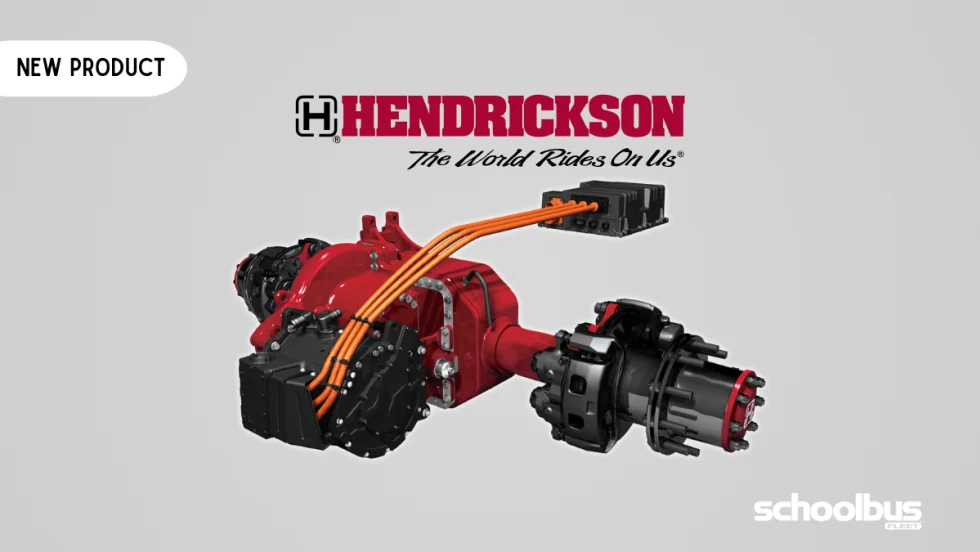
Hendrickson, Driventic Introduce New Electric Powertrain for School Buses
ELECTRAAX, the electrified, lightweight drive axle offers integrated ePowertrain efficiency and modular flexibility for Class 6–7 school bus use.
Read More →
The Mobility House Joins PowerFlex in Fleet Electrification Deal
The acquisition combines intelligent charging software, bidirectional charging expertise, and fleet electrification services to support the growing adoption of electric school buses across North America.
Read More →
Alt-Fuel Moves: Electric School Bus Investments Hit the Road
See which districts across the U.S. are putting electric school buses into service, expanding charging infrastructure, and planning the next phase of fleet electrification.
Read More →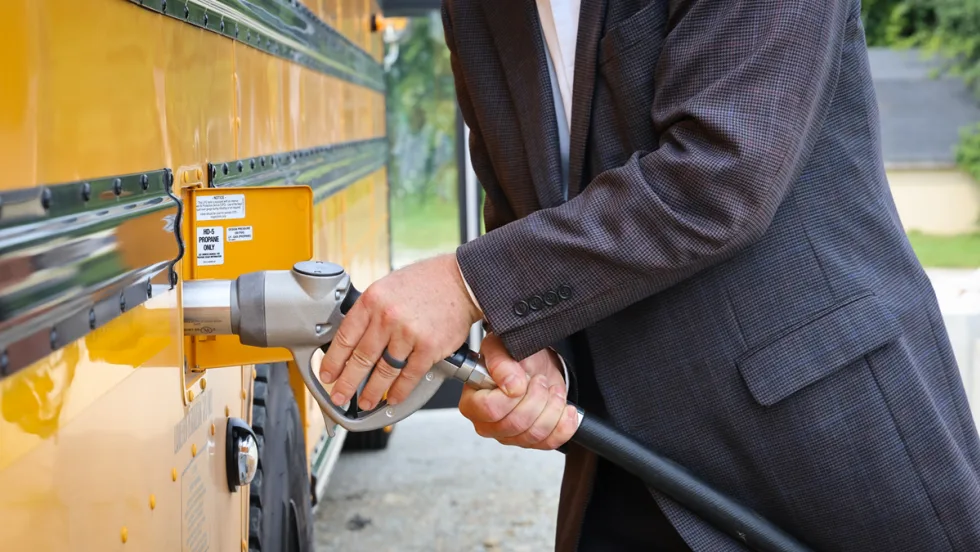
With Fuel Volatility Ahead, School Districts Turn to Propane
While diesel prices peaked above $5 this spring, districts with propane autogas-powered fleets paid under $2 per gallon, according to PERC.
Read More →
EPA Unveils Proposed Changes to 2027 Heavy-Duty Engine Rules
The federal agency has proposed changes to next year’s targets that would eliminate DEF derates, ease warranty requirements, and retain current NOx emissions standards.
Read More →
Alt-Fuel Moves: EV Charging & Infrastructure Projects Gain Momentum
The latest developments include new funding, charging infrastructure, utility investments, and fleet technologies designed to support the transition to electric school buses nationwide.
Read More →