



Last Year: 2025 NASDPTS Annual Conference Highlights in Photos
AI, Safety & Federal Initiatives Take Center Stage at NASDPTS 2026
The association for state transportation directors tackled big topics at its annual conference, including technology and seat belts, and brought federal updates to attendees. These are some highlights.
November 24, 2026
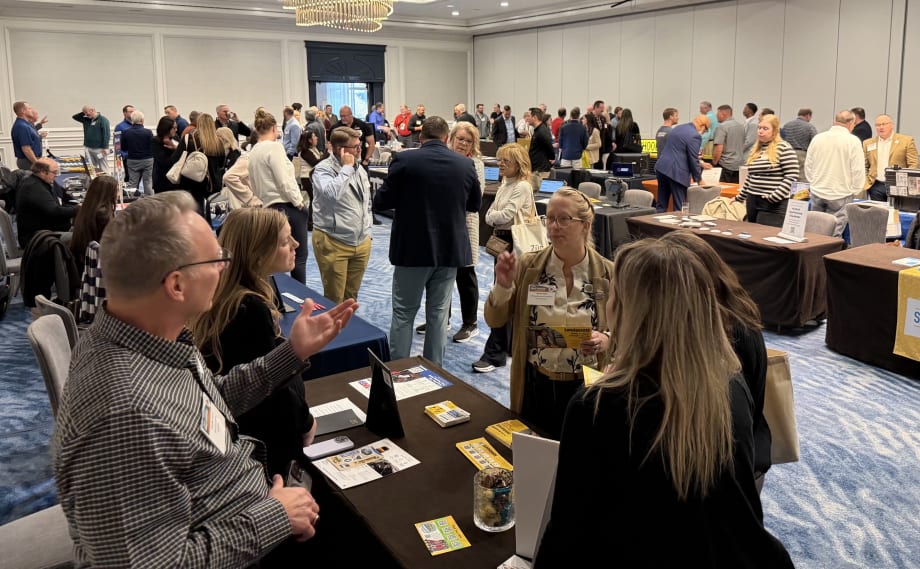
Industry technology was highlighted in session material, as well as in the supplier showcase that let attendees chat directly with product and software suppliers.
Credit:
Derek Graham
5 min to read
The National Association of State Directors of Pupil Transportation Services (NASDPTS) 2026 annual conference was held Nov. 14-17, 2026, at the Ritz-Carlton in Pentagon City, Virginia, and convened state directors with other student transportation stakeholders to discuss issues affecting the industry and association’s business.
While a few attendees and speakers were missing due to the FAA ground stoppage, the association’s board did an amazing job pivoting. It was hard to tell by looking at the room that attendance was down.
Day One: AI & Suppliers
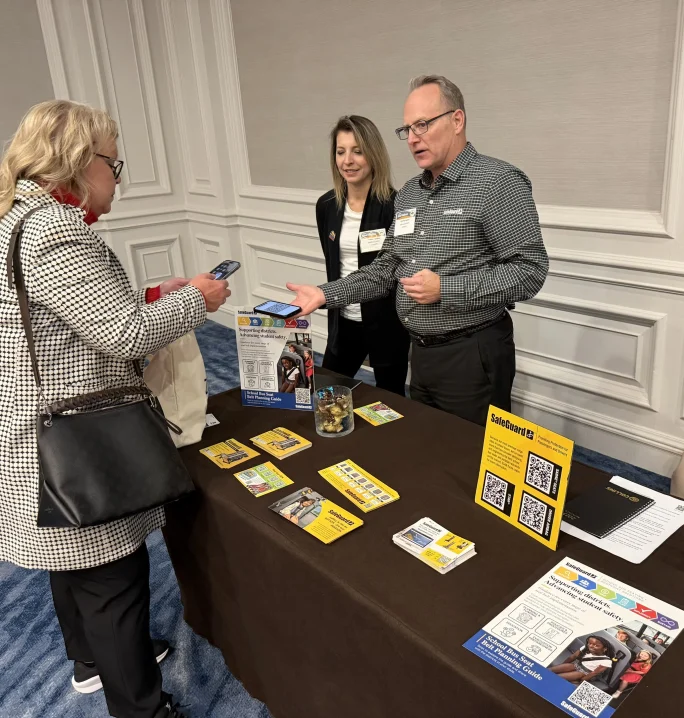
IMMI's John Barrington and Katia Dubas meet with attendees during the supplier showcase.
Credit:
Derek Graham
Day one focused heavily on artificial intelligence. Routing companies, camera vendors, and transportation service providers all reiterated a common theme: AI helps us to do a lot of analysis, much of which we could have done before, but at a much, much faster speed. Multiple panels addressed the role of AI in routing, efficiency, and cameras and safety. Without exception, panelists acknowledged the importance of the human element in using AI-generated results. As one panelist noted, “Data is great, but it is not always right.”
The same day also included the Supplier Showcase, a “mini-trade-show” featuring tabletop displays to help attendees learn of the offerings from supplier council members.
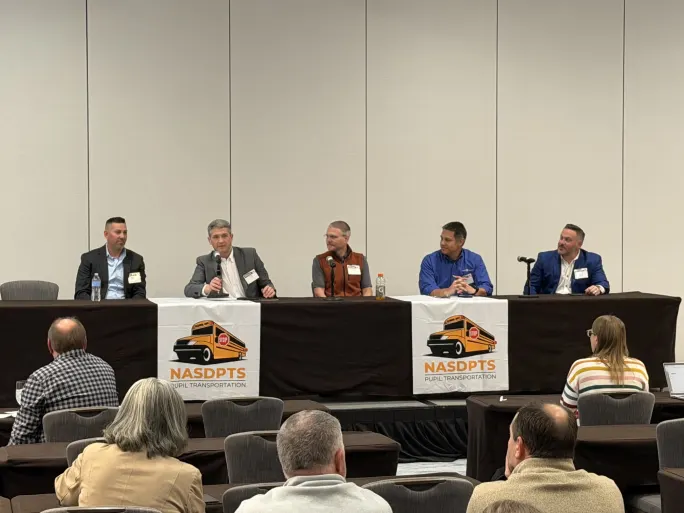
Throughout the conference, a few panels tackled the topic of AI, and all also reminded the importance of human oversight.
Credit:
Derek Graham
Day Two: Updates from Governmental Agencies Relevant to Student Transportation
Day two was government day, where speakers from federal agencies provided updates on topics relevant to state directors and others in the industry. Meg Sweeney and Eric Gregson of the National Transportation Safety Board (NTSB) covered recent investigations and the associated recommendations to the industry. The speakers also sought to help state directors understand what to expect if NTSB arrives to investigate a crash.
Larry Minor of the Federal Motor Carrier Safety Administration (FMCSA) touched on a variety of rulemakings and emphases of his agency, including:
- Safe deployment of automated vehicles
- Strict enforcement of the English Language Proficiency rule
- Restoring integrity to the issuance of non-domiciled CDLs
- CDL standards RIN:2126-AD03 and AD00
- Automatic emergency braking systems
- Railroad Highway Grade Crossings RIN:2126-AC39 (of which he noted that the agency has heard concerns, appreciates the conversation, yet plans to move forward)
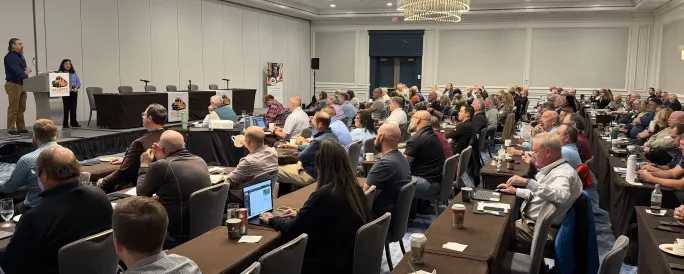
NTSB officials discussed the Leander, Texas, school bus crash and the resulting seat belt recommendation, as well the Millstone, West Virginia, crash and the resulting recommendation for alcohol detection systems.
Credit:
Derek Graham
Michelle Atwell from the National Highway Traffic Safety Administration (NHTSA) reported that her office has completed all of the requirements under the Infrastructure Investment and Jobs Act (IIJA). In addition to providing updates on these projects, some of which are still in agency review, she reported that a new project has been launched to help educate the judiciary on the importance of prosecuting violators of illegal passing laws. She noted that, if law enforcement goes to the extra effort of focusing on illegal passing, it is important that they know they will be supported in court.
John DeVine of the Transportation Security Administration (TSA) Training, Exercises and Community Outreach division shared current initiatives, noting that in addition to its traditional focus, a new emphasis on cyber threats has been particularly active.
Karl Simon from the Environmental Protection Agency (EPA) reminded attendees that $180 million of DERA funding closes on Jan. 22, 2027, and includes school buses. He noted that there was way more money under the infrastructure bill, and the agency anticipates opening the next Clean School Bus grant program in the near future, a goal set by Administrator Lee Zeldin.
Day Three: Learning from Each Other
On Tuesday, despite the absence of Kansas state director Keith Dreiling, the results of the year’s loading and unloading survey were unveiled.
Seat Belt Debate Continues
In a panel titled “Click, Educate, Succeed: Lessons from Seat Belt Implementation,” Anthony Shields of Pearland ISD shared that there was quite a bit of opposition to the seat belt mandate in Texas, with opposition due to perceived problems with evacuation safety and cost. However, many districts have started working on how to implement them. He reiterated the importance of involving stakeholders throughout the process and ensuring drivers (and the district) meet legal requirements, making a sincere effort to ensure kids are buckling. As an example to help implementation, he noted the benefits of using social media as a valuable tool to get the message out.
Tom Simpson, state transportation director in Iowa, added that what helped him take a fresh look at the importance of seat belts was in 2015 when the NHTSA administrator said something like, “Every student should be belted. Period.”
Also on that panel was Rachel Todd, state director in Wyoming, who used to work for a school district. She shared that in the past, she was opposed to seat belts but now is a strong advocate. When the state required new buses to be equipped with them, her district started the phase-in, agreeing to use the equipment that came on the buses. There was some pushback from school bus aides, who are on all of buses, but parents began to complain that their kids were on buses without belts. “We never stop talking about compartmentalization,” she said. “Let them know that [the school bus] is the safest mode of transportation with or without belts. Don’t waste your breath reiterating the law. Show them; tell them WHY we are doing this.”
Contributing further to the educational program variety were topics of special ed regulatory changes, the Commercial Vehicle Safety Alliance, vehicle fuel choices, seating and securement, contingency planning for fleet disruptions, Daylight Savings Time, and preparing for regulatory changes. The hallway conversations among peers supplemented the program and attendees were sure to return home energized and ready to apply what they learned.
Subscribe to Our Newsletter
More Articles
AlphaRoute Targets Field Trip Planning Challenges With New Software
The new module is designed to reduce administrative workloads by consolidating requests, approvals, scheduling, and billing into one system.

AMF Bruns of America Unveils Wheelchair Securement Upgrades
The company adds Smart Klick, Swivel Tongue, and Smart Fitting 2.0 to its Protektor wheelchair securement system, adding universal compatibility and visual safety indicators, with orders opening in early 2027.
How to Make School Bus Seat Repairs Last: 7 Expert Tips
Tired of school bus seat repairs that peel or get picked apart? Here are some tips for stronger vinyl repairs that hold up to everyday use.
5 Student Transportation Technology Companies Make Deloitte Fast 500 List
BusRight, Polara, Samsara, BusPatrol, and Netradyne were recognized for their strong three-year revenue growth.
Virginia School Bus Driver Develops Free Seating Chart Tool to Help Manage Students
Montgomery County school bus driver Ben Crenshaw combined his design background with firsthand experience managing young passengers to create a seating system that uses color-coded tags and a free online chart.
Dreams, Discipline, and Dairy Products
One school bus driver's humorous take on student behavior shows why patience, structure, and a little grace matter more than expecting kids to be perfect.
BusWhere Adds New District Customers, Launches New Driver and Dispatch Tools
Districts in Arkansas, California, Georgia, and Ohio add live bus tracking and parent apps as another adds RFID cards and BusWhere debuts a dispatch and driver app.
New Jersey School Transportation Reform Sparks Safety Debate
Does transportation for special needs students in the Garden State need an overhaul? One group says yes and is calling for expanded alternative transportation. Some school bus operators say the current model offers the best safety protections.
Five Students Died from School Bus Loading/Unloading in 2025-26
Fatalities are down by just one this year across the U.S. as four states reported five children struck and killed while getting on or off their school bus.
Sponsored•November 16, 2026