





More State Issues: Ohio Transportation Workgroup Calls for End to 'Impractical to Transport' Payments
New Jersey School Transportation Reform Sparks Safety Debate
Does transportation for special needs students in the Garden State need an overhaul? One group says yes and is calling for expanded alternative transportation. Some school bus operators say the current model offers the best safety protections.
November 19, 2026
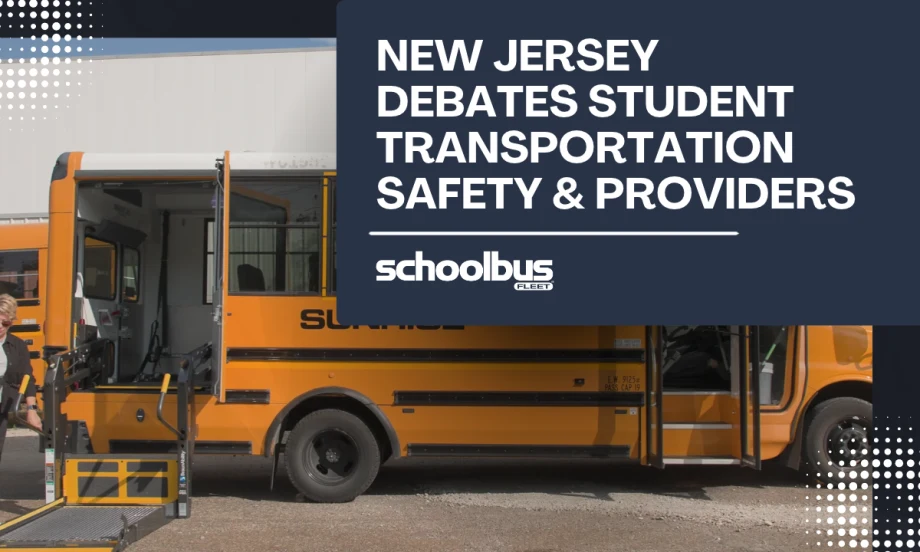
Transportation operators in the state say that New Jersey already possesses an established, accountable mechanism for transportation cost containment, and that deregulating student transportation could incentivize alternative models to underbid traditional school bus providers, cutting driver pay, benefits, and safety training, which would achieve the opposite of what students and districts need.
5 min to read
A new coalition made up of school leaders, parents, nonprofits, and elected officials have proposed more rigorous standards for transporting students with special needs in New Jersey — but not everyone agrees that the state is as behind as the coalition claims. An industry association lead maintains that its current model already uses effective vetting to maintain high standards and ensure student safety.
Here's a look at both sides of the conversation.
N.J. Coalition Calls for More Student Transportation Options
New Jersey Friends of Affordable, Safe Student Transportation (NJ FASST) say that options in the Garden State are limited compared to most other states, especially for those with special needs, students in foster care, and those who are homeless. According to the coalition, 41 states, including nearby Pennsylvania, Maryland, and Delaware, have built legal and oversight frameworks to safely and affordably transport students with disabilities and those experiencing homelessness, offering best practices that they want to see New Jersey adopt.
"Being this far behind comes at a cost to these students and to taxpayers," the group said in a press release.
NJ FASST plans to advocate for student transportation options that improve safety, create budget efficiencies, and provide district flexibility. The move aims to offer more access for door-to-door service in a smaller vehicle than a school bus, with a trained aide on board.
The group applauded Senate Majority Leader Teresa Ruiz's introduction of a bill that would allow school districts, education service commissions, county special services districts, and jointure commissions to contract with alternative transportation providers who meet high safety standards for both drivers and vehicles.
"Every child deserves a safe, reliable ride to school, no matter where they live or what their circumstances are," Ruiz said. "Our homeless students, our children in foster care, and our students with disabilities can't afford to miss class because a route is hard to fill. This bill gives districts a practical, cost-saving option, and it does not trade safety for flexibility. Every provider will be registered, reviewed, and held accountable by the state."
A similar effort is underway in New York.
School Transportation Leaders Raise Concerns About Safety and Oversight
To find out what those involved in student transportation in the state are experiencing, School Bus Fleet checked in with Janine Byrnes, president of the School Transportation Supervisors of New Jersey (STS-NJ) and director of the Sussex County Regional Transportation Cooperative.
Byrnes offered another perspective, noting that the state's transportation agencies already represent the highest degree of safety, and that removing the CDL requirement for drivers puts students at risk. "While coalitions like NJ FASST contend that rigid frameworks fail to meet the quick-turnaround demands of [vulnerable students], prioritizing administrative shortcuts over established oversight undermines student protection," she said.
Currently the state relies on Coordinated Transportation Services Agencies (CTSAs) to manage and oversee specialized student transportation. "By aggregating out-of-district special education, vocational, and nonpublic school students, CTSAs convert what would otherwise be dozens of single-student district vans into full bus runs, splitting administrative overhead and per-pupil costs proportionally among participating boards of education," Byrnes said.
She also believes that there is a major misconception that CTSAs are inherently slow. In reality, she says, modern CTSAs maintain robust pools of pre-screened contractors who have preapproved drivers and Type S vehicles who can fulfill emergency placements quickly — often overnight — without skipping safety checks. Further, vehicles operating under CTSA contracts must meet maintenance standards and receive biannual safety inspections by the New Jersey Motor Vehicle Commission, and CTSA drivers and aides complete state-mandated training.
"New Jersey is a leader in student transportation safety. Allowing third-party contractors to deploy non-CDL drivers and gig-economy/rideshare models for student transport, we must ask, should cost savings come at the expense of safety, accountability, or regulatory integrity?" — Janine Byrnes
Using third-party rideshare networks may achieve immediate dispatch, but at the cost of bypassing bus inspections, background checks, and FMCSA-mandated drug and alcohol testing that comes with stringent oversight from CDL and P- and S-endorsed drivers, she adds.
"The solution to operational friction is not to bypass CTSA safety standards in favor of unregulated gig networks," Byrnes said. "Allowing [non-CDL drivers] to transport vulnerable students lowers the baseline standard of driving competency required."
Instead, the solution she proposes is to fund, strengthen, and expand CTSA operational agility. This would include equipping CTSAs with modern routing software, streamlined small-vehicle fleet management, and dedicated emergency dispatching.
Additionally, she notes that private alternative models frequently rely on rotating, gig-based drivers, which can trigger anxiety and behavioral crises in fragile students. "Delegating door-to-door transportation of nonverbal or medically fragile children to nonregulated commercial rideshare platforms exposes districts and families to unnecessary safety and liability risks."
When an individualized education program (IEP) mandates a nurse for a student, the primary challenge is no longer simply routing and staffing; it becomes clinical and legal coordination. In New Jersey's procurement ecosystem, securing a route that couples a driver, an accessible vehicle, and a licensed nurse under tight timeframes creates severe operational bottlenecks, Byrnes said. Using a CTSA-vetted contractor for temporary or emergency contracts expedites that process.
"Consolidating the route allows the districts to split both the vehicle procurement cost and the hourly nursing agency fee, significantly lowering the individual per-student expense while maintaining continuous medical oversight," she said.
New Jersey Also Examines Special Education Transportation Safety
This is not the only movement in the state to enhance student transportation safety.
Earlier this year, the state's legislature created a task force to study and recommend transportation policies for students who receive special education services. That move was promoted after a series of fatal accidents and incidents involving students with special needs on the school bus. The task force also plans to assess driver and aide training requirements, with a report to the governor expected soon.
Sen. Ruiz also co-sponsors this bill.
More Special Needs Transportation
2027 Special-Needs Transportation Survey Now Open: Share Your Insights
School Bus Fleet's annual special-needs transportation survey returns. Share your insights on ridership, staffing, fleet operations, and challenges by Dec. 4, 2026.
Read More →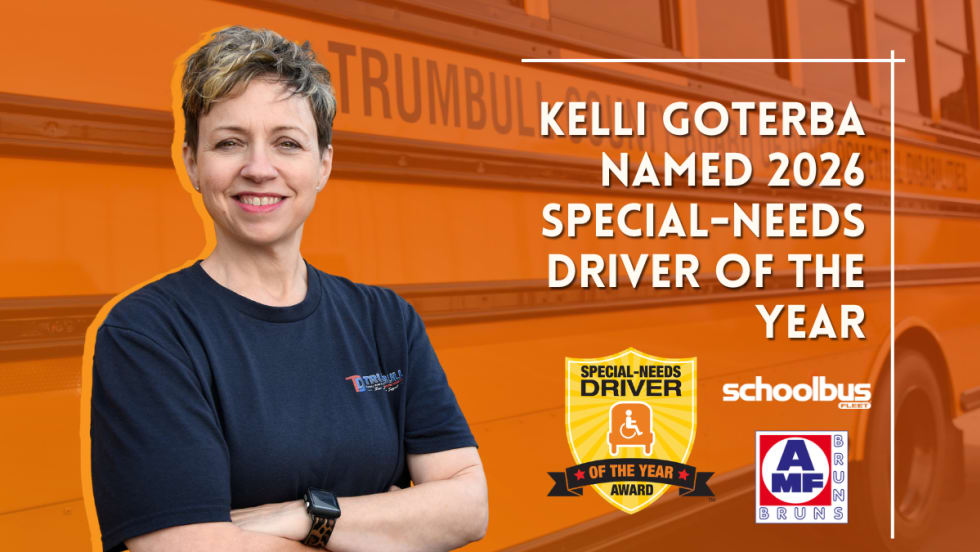
Kelli Goterba Named 2026 Special-Needs School Bus Driver of the Year
Through building trust with students and strengthening her transportation team, Goterba exemplifies the impact special-needs drivers can make.
Read More →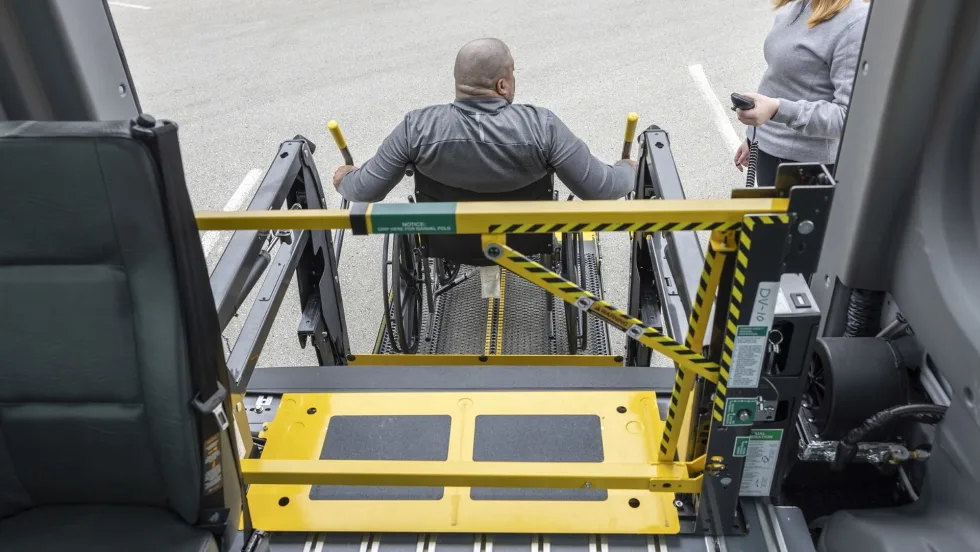
BraunAbility Introduces New Safety Barrier for Wheelchair Lifts
LiftSentinel is designed to add another layer of protection during wheelchair loading and unloading and can be retrofitted to many existing commercial lift installations.
Read More →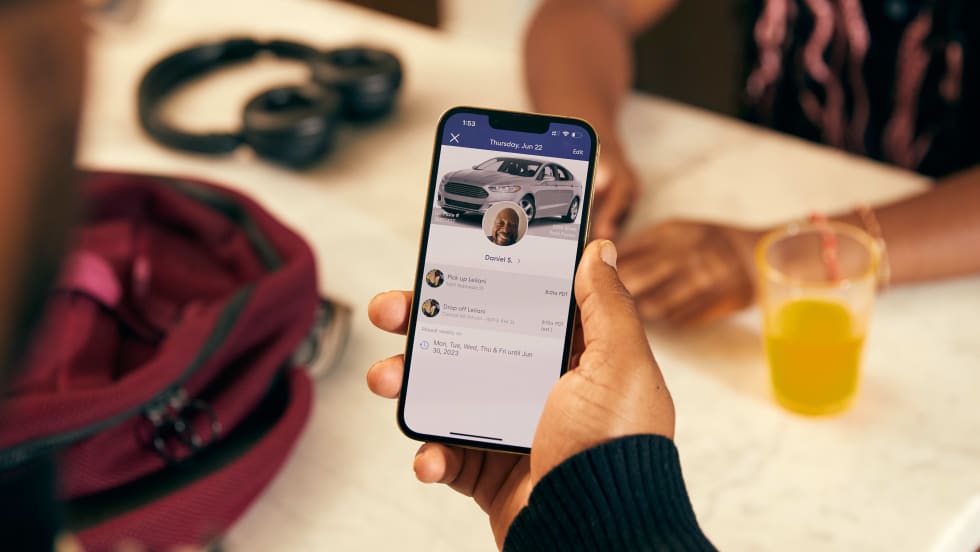
HopSkipDrive Launches New Safety, Driver Consistency Features for 2026-27 School Year
The company’s free ride recording, live ride tracking, and consistent driver assignments aim to improve safety and continuity for diverse student transportation needs.
Read More →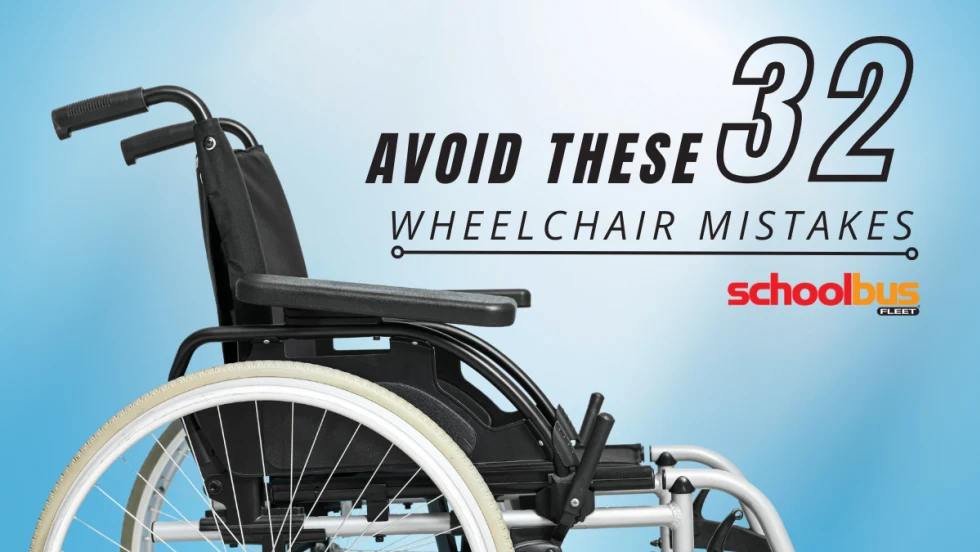
The Most Common Wheelchair Securement Mistakes on School Buses (and How to Fix Them)
Small missteps in wheelchair securement can have serious consequences. Here are 32 tips from experts to reduce risk and increase student safety on the bus.
Read More →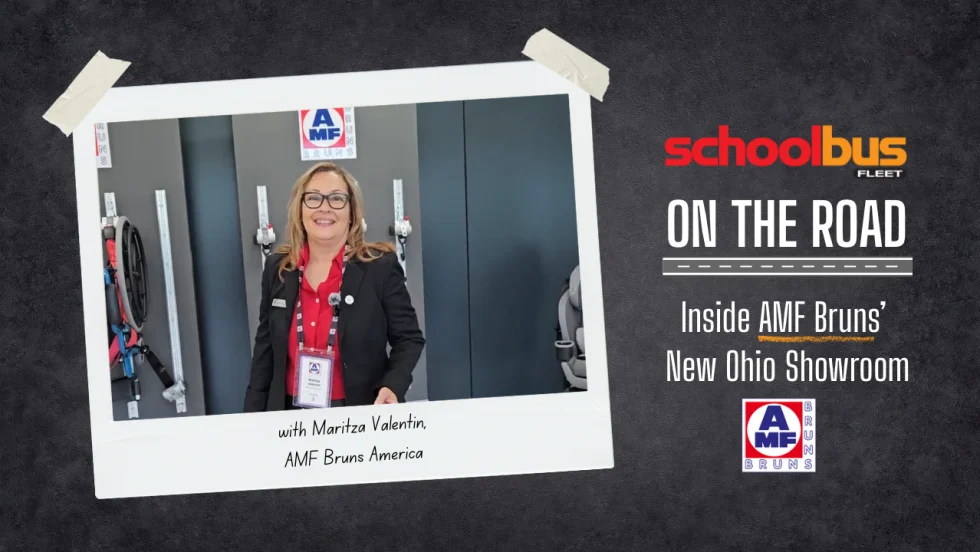
Inside AMF Bruns’ New Showroom: School Bus Securement Solutions Explained
Go inside AMF Bruns America’s new Ohio showroom with Maritza Valentin to see its FutureSafe technology, driver training tools, securement systems, and seating innovations.
Read More →
What AMF Bruns’ New Facility Means for Customers [Video]
Inside AMF Bruns’ new Stow, Ohio, operations: See how expanded space and innovation will enhance customer support and operations.
Read More →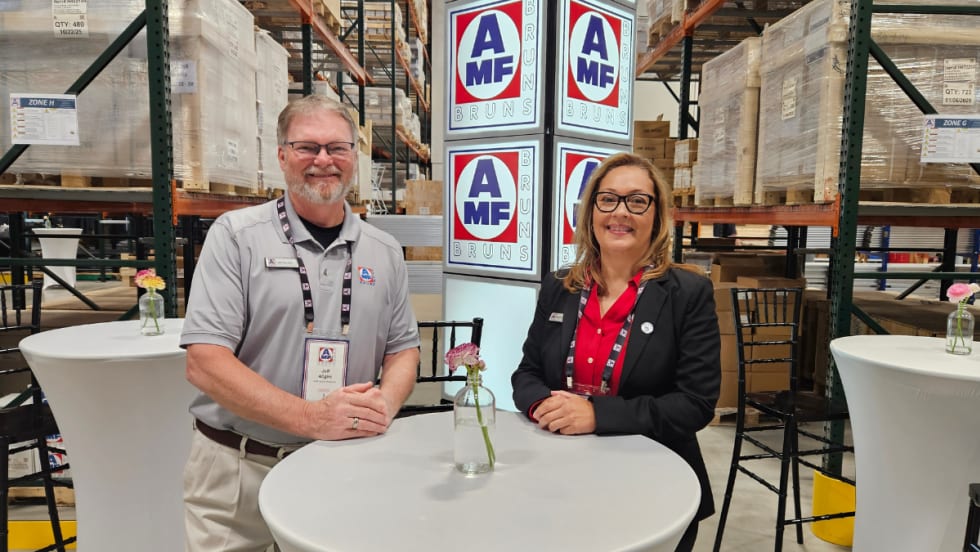
AMF Bruns Expands in Ohio, Investing in Growth and Community
With expanded production space, local investment, and a growing workforce, AMF Bruns is scaling its U.S. presence. Here’s an exclusive first look inside the new Stow, Ohio, HQ.
Read More →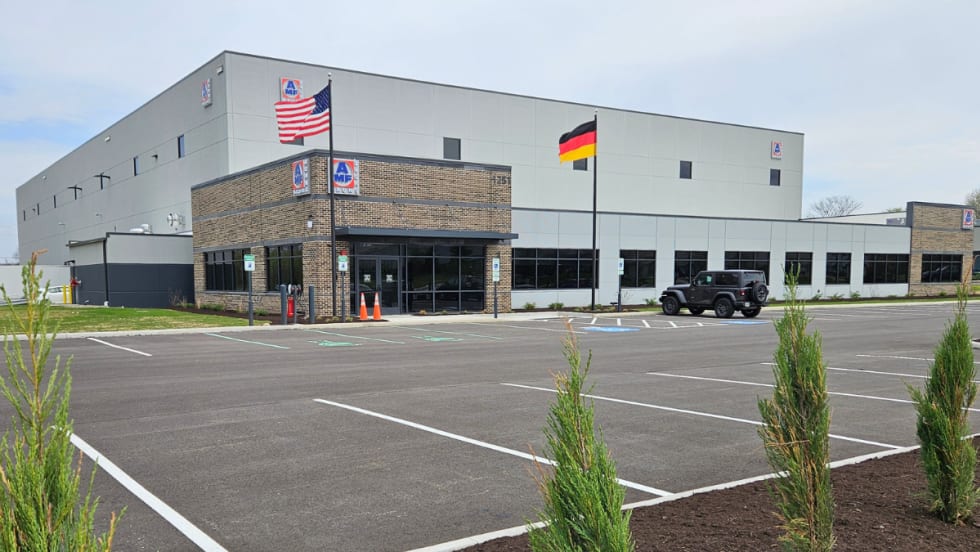
Inside AMF Bruns of America’s New Ohio Manufacturing Facility [Photos]
Take a behind-the-scenes look at AMF Bruns of America’s new 41,000-square-foot Stow, Ohio, headquarters, featuring advanced manufacturing, expanded space, and future-ready mobility solutions.
Read More →
First Student Boosts Student Support in Wichita & Texas
First Student and Wichita Public Schools are using behavioral support strategies to improve student ride experiences, while a separate initiative expands access to after-school programs through a bus donation.
Read More →