





Similar News: N.Y. & N.J. Coalitions Call for Modernized Transportation for Vulnerable Students
Ohio Transportation Workgroup Calls for End to 'Impractical to Transport' Payments
A final report from Ohio's Pupil Transportation Workgroup proposes ending "impractical to transport" payments and expanding transportation options through regional partnerships, but not all industry pros agree on the approach.
July 19, 2026
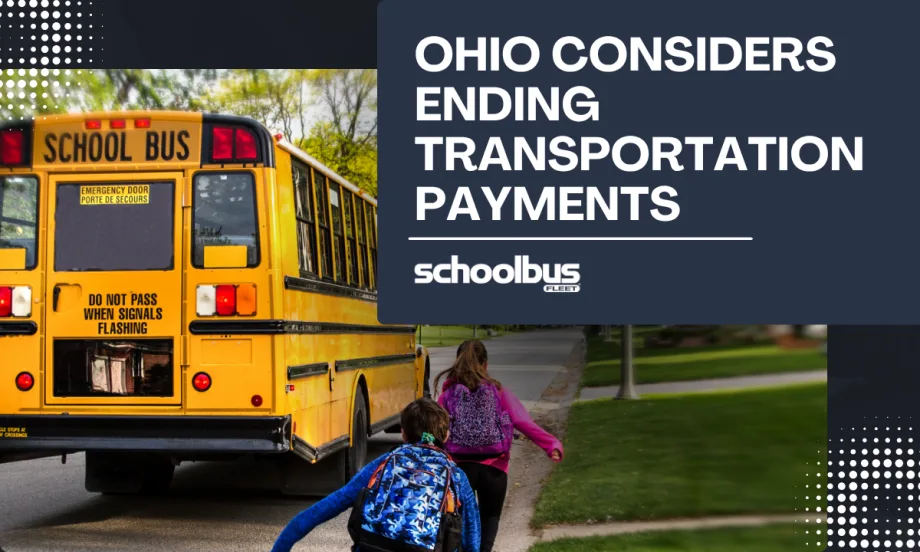
Just over 600 district students — or 0.09% — were declared impractical to transport in FY 2026. Meanwhile, 33.6% of chartered, non-public school students were deemed the same.
Credit:
School Bus Fleet
6 min to read
- Ohio's Pupil Transportation Workgroup recommends discontinuing the "impractical to transport" payments system.
- The group suggests expanding transportation options by fostering regional partnerships.
- The final report aims to enhance pupil transportation efficiency and accessibility in Ohio.
*Summarized by AI
The term "impractical to transport" is a hot-button phrase across Ohio lately, as some school districts have been under fire from parents and the public for not transporting all students within its boundaries.
Now, the Ohio Pupil Transportation Workgroup has issued a final report addressing the concern. The report most notably recommends halting the current process of allowing districts to issue payments to families in lieu of transportation using the "impractical to transport" distinction.
Background
The Ohio Pupil Transportation Workgroup was formed in 2025 by the state legislature to review the efficiency and logistics of student transportation. The group includes lawmakers and school officials. The group’s term ended June 30, 2026, upon which it issued its formal recommendations to the governor and general assembly.
Columbus City Schools has been under public scrutiny for not transporting charter and non-public school students residing within district boundaries, citing it “impractical.” According to reports, alternative options were given to parents, including payment in lieu of transportation. Attorney General Dave Yost sued the district for failing to follow state law (which has required public districts to provide transportation to students regardless where they attend, minus students more than 2 miles from their schools and private and charter students more than 30 minutes from their public school).
However, in 2023, new legislation passed that allowed districts to declare “impracticality of transportation” and offer payment (between $607.15 and $1,214.29, based on the average cost of pupil transportation) to families after assessing six key factors, which include:
- Time and distance required to provide the transportation
- Number of pupils to be transported
- Cost of providing transportation in terms of equipment, maintenance, personnel, and administration
- Whether similar or equivalent service is provided to other pupils eligible for transportation
- Whether and to what extent the additional service unavoidably disrupts current transportation schedules
- Whether other reimbursable types of transportation are available
During the 2024-25 school year, Cleveland schools claimed impracticality for 2,739 students at private schools — more than any other district, followed by Columbus, with 2,501 students between both private and public charter schools.
The report said: “While the overall number of students attending school in Ohio has decreased due to a drop in the number of school-aged children, over the past 10 years the percentage of community school and chartered nonpublic students determined to be impractical to transport has significantly outpaced the number of district students determined to be impractical to transport.”
Final Report Recommendations
- Guarantee transportation for all eligible Ohio students to their school of choice.
- Fully fund transportation mandate to support the statewide guarantee for all eligible students to their school of choice, while continuing to honor local control.
- Expand transportation flexibility within districts and establish Regional Transportation Authorities through ESCs, district consortia, or other appropriate third-party entities to manage transportation collectively at the regional level.
- Designate or develop a statewide transportation database that allows access to basic student data useful to all parties in transportation planning so each student may be equally considered for transportation support.
- Establish strong, collaborative relationships between traditional districts, community schools, chartered nonpublic schools, and families.
- Implement successful bus driver recruitment, training, and retention strategies for districts and schools with additional state support.
- Allocate state funds for a scalable, expanded Regional Transportation Consortia Prototype Program for traditional districts, community schools, and chartered nonpublic schools to pool their collective resources (e.g., drivers, buses, vans) and develop a plan to facilitate transportation for all students within a defined region using a Regional Transportation Authority.
- Improve accountability and transparency by amending current law to require the Ohio Department of Education and Workforce (DEW) to play a statewide oversight role for the outcomes of student transportation.
- Clarify Declarations of Impracticality in the short term; phase out impracticality over time.
Within the overarching recommendations are notes on changed and enhanced reporting, new hub stop establishments, regular consultations between public districts and charter schools, reviewing the driver certification process and training, amending the six factors to consider for practicality, and allowing districts the option of providing their own transportation, contracting a third-party transportation provider, or participating in a Regional Transportation Consortium (partnerships to coordinate buses, drivers, and routing across multiple districts and schools).
The group also noted discussion around designating all students impractical to transport who have similar profiles, regardless of school type; moving from considering the current six factors to providing evidence for determination; increasing payments when offered; gathering additional routing and rider data; and establishing maximum ridership times.
Industry Reactions
Andy Boy, founder and CEO of United Schools, believes the recommendations are a step in the right direction. "It highlights where challenges have been in the past and attempts to make changes that specifically address these problems," he told the Columbus Dispatch.
But the Ohio Association for Pupil Transportation (OAPT) has deep concerns. "The workgroup's final output fails to recognize the severe driver shortage that school districts across Ohio are still battling six years after the COVID-19 pandemic. With a 27% decrease in bus drivers statewide, we continue to expect public schools to do more with less," OPAT Executive Director Todd Silverthorn wrote. "The recommendations being presented will have an immediate and profoundly negative impact on our public schools and our student transportation infrastructure if these recommendations are acted upon."
Silverthorn also told us that the data discussed during the workgroup meetings, which the state collects from districts, is inaccurate. "Some districts only count students who requested transportation services, while others deem an entire school population impractical based on just a few registrations," he said. "We have asked the Ohio Department of Education and Workforce to clarify reporting expectations. This inconsistency is one of the primary reasons we requested a one-year extension for the workgroup; we found the state could not produce data on several items the workgroup wanted to review because that information was never collected in the first place."
According to Silverthorn, he and another workgroup member questioned why there were only two transportation professionals on the committee. "This did not provide a fair representation of Ohio's eight pupil transportation regions," he said. "It is telling that two superintendents stated they were no longer aligned with the workgroup's direction, and a state senator chose to remove themselves from the group entirely."
After the final recommendations changed after the group's last meeting, OAPT discussed if they should withdraw from the group. Ultimately, they decided to stay, and submitted a position paper outlining the challenges, with this message: "You cannot legislate what capacity where it does not exist. ... it will collapse an already fragile infrastructure to the detriment of Ohio's students, families, and communities."
Instead, OAPT asks for a one-year period to map capacity, provide clear expectations, engage on-the-ground leaders, standardize data metrics, and reconvene with expert feedback.
Check out OAPT's summary and comments on the issue on their website here.
School Transportation Industry Considerations
If adopted by the legislature, the group's recommendation would mean upward of 20,000 students who were not accommodated during the most recent school year could need district-provided transportation.
A 2026 survey of Ohio public school districts found that in fiscal year 2025, an average of 15% of open school bus driver jobs were filled, and 34 districts reported that 10% or fewer vacant positions were filled.
Other factors, outside of a driver shortage, contributing to the transportation challenge are lack of public transportation, rising costs, and not enough funding.
The recommendations are advisory only. The Ohio General Assembly, which reconvenes in September, would need to enact legislation before any of the proposed changes take effect.
Note: The Ohio School Bus Safety Working Group is another, separate but active group in the state, formed by Gov. Mike DeWine in 2023, which has suggested 17 recommendations on how to improve school bus safety across the Buckeye state.
More Policy & Regulations
The BUILD America 250 Act Has Big Implications for School Buses, Too [Updated]
Buried within a sweeping federal transportation bill are provisions that could affect school bus driver requirements, illegal passing enforcement, and even the future role of autonomous technology in pupil transportation.
Read More →
School Bus Laws to Watch: New York Delays EV Mandate
Plus, federal lawmakers seek new funding for school bus safety as states weigh stop-arm enforcement, disability protections, and education spending.
Read More →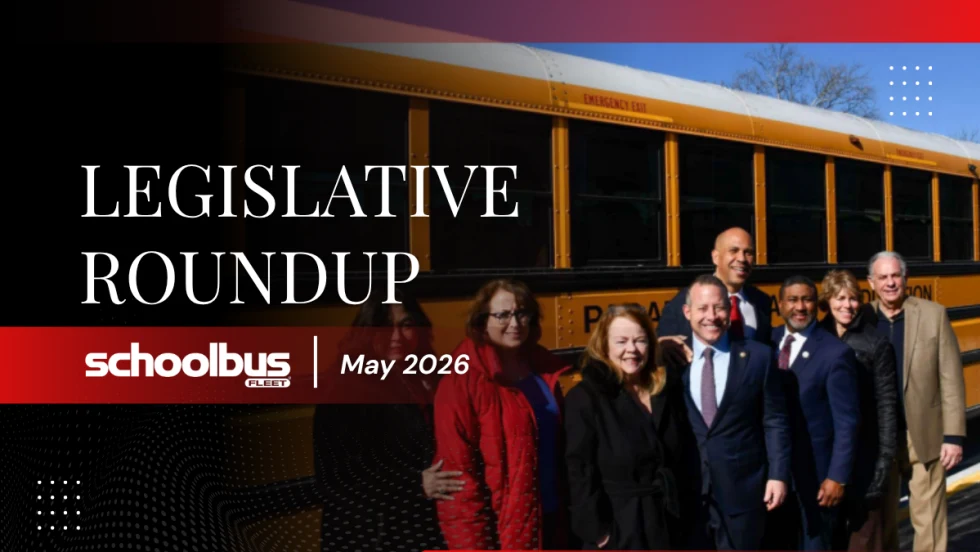
School Bus Laws To Watch: Seat Belt Bills, Funding Fights & EV Changes
From national bills on seat belts and driver oversight to driver awareness campaigns referencing “Finn’s Rule” and ongoing transportation funding debates in Alaska, here’s the latest in school bus legislation across the U.S.
Read More →
School Bus Laws To Watch: Driver Shortages, EV Debates & Safety Upgrades
From driver shortage solutions in Tennessee and rural connectivity debates in Utah to new safety laws in Wisconsin and ongoing electric bus mandate discussions in New York and Connecticut, here’s the latest in school bus legislation across the U.S.
Read More →
School Bus Laws To Watch: Stop-Arm Enforcement, EV Mandates & Seat Belts
From North Dakota public charter school regulations, tracking illegal school bus passing consequences in multiple states, and the continued debate on New York’s electric school bus mandate, here’s the latest in school bus legislation across the U.S.
Read More →
School Bus Laws To Watch: Anti-Trafficking Curriculum, Passing Loopholes & Tougher Penalties
From Nebraska CDL training add-ons, tackling stop arm passing loopholes in Minnesota, and increased penalties for school bus driver DUIs and firearm incidents, here’s the latest in school bus legislation across the U.S.
Read More →
School Bus Laws To Watch: Driver Penalties, Funding Fights & New Safety Initiatives
From New York driver penalty changes to stop-arm camera programs, reliable special education transportation, and a Kentucky budget shortfall, here’s the latest in school bus legislation across the U.S.
Read More →
School Bus Laws To Watch: Stop-Arm Cameras, Safety Retrofits & Driver Shortage Fixes
From Maine bus safety upgrades to stop-arm camera bills, electric bus funding, and an Alabama workforce solution, here’s the latest in school bus legislation across the U.S.
Read More →
State Grant Program Advances School Bus Safety Upgrades Across Ohio
$10 million in state grants will fund safety upgrades and new features on school buses serving students across the Buckeye State.
Read More →
Where EPA School Bus Funding Stands: CSBP, DERA, and Heavy-Duty Grants Update
One program ends, another looks to be reimagined, and the Clean School Bus Program is in a holding pattern — here’s where each EPA program stands and what to expect moving forward.
Read More →