




2025 Trend to Watch: School Bus Safety
Explore key school bus safety issues in 2025, from combating illegal passing and adopting advanced driving tech to funding challenges and new and evolving safety trends.

Advanced enforcement tools like cameras and fines have reduced stop-arm violations by up to 40%, creating safer environments for school children.
Photo: SBF/Canva
We’ve all heard that students are about 70 times more likely to get to school safely when taking a school bus instead of traveling by car (National Highway Traffic Safety Administration).
Much of that is thanks to what happened in 1977, the watershed moment for school bus safety. That year was when we ushered in all the FMVSS standards and guidelines we use today, such as compartmentalization, joint strength, fuel tank integrity, and more. Since then, we’ve continued to fine-tune that crash-worthiness standard.
From 2013 to 2022, there were 1.5 times more fatalities among pedestrians than occupants of school buses in school-bus-related crashes. A total of 198 school-age children died in school-bus-related crashes during that period, either as occupants of school buses, other vehicles, on foot, or bike. Yet many of these incidents are categorized as “school bus crashes.”
In the 2023-24 school year, six students died as a result of loading and unloading injuries.
So, how do we make the yellow bus even safer for passengers, and what other issues will affect this?
Illegal Passing
We all know about the huge problem of the rise in illegal stop-arm passings and speeding in school zones and around the bus. We continue to gather more and more numbers around these issues.
Illegal-passing incidents increased by 4% in the past year, according to the National Association of State Directors of Pupil Transportation Services’ (NASDPTS) 12th annual survey. “The illegal passing of stopped school buses continues to be the greatest safety danger to children,” said NASDPTS President Mike Stier. “We encourage each state to use this information to bring attention to this critical safety issue and engage all resources necessary to ensure each child is protected.”
“Multiple states have introduced statutes allowing the use of stop-arm photo enforcement technology, which has been shown in some cases to reduce violations as much as 40% in the first year, creating a safer environment for children entering and exiting the school bus,” said AngelTrax President and CEO Richie Howard.
Regarding speeding, Verra Mobility recently conducted a study in Jacksonville, Fla., where they caught almost 10,000 speeding violations in just three days in 11 school zones. Ironically, when Floridians were surveyed, 80% said they would support cameras in school zones to catch speeders, and even more support cameras on buses to enforce stop arm laws.
And last fall, the National Highway Traffic Safety Administration released a 190-page report detailing laws nationwide for passing stopped buses. It found large variances across states regarding how they handle illegal passing.
The National School Transportation Association (NSTA) is following the issue closely and trying to devise a lasting solution. They’re pushing for support of HR 3998, the Jackie Walorski Enhancing Necessary Data (END) Illegal School Bus Passings Act.
“Less than 1% of all traffic fatalities involve children on school transportation vehicles,” said Curt Macysyn, NSTA executive director. However, children are more at risk when approaching or leaving a school bus. It’s important for all drivers, as well as parents and students, to understand school bus safety. Student transportation cannot control the behavior of the general motoring public.”
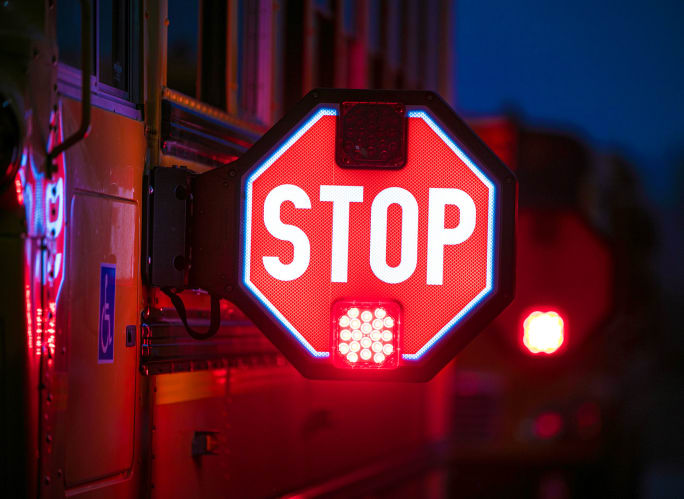
First Light Safety Products conducted an efficacy study on the usefulness of illuminated stop arms. New Braunfels ISD in Texas saw a 100% decrease in violations!
Photo: First Light Safety Products
“We realize one of the biggest successes of any school bus safety program depends on the depth of the public education and outreach around the program,” said Belinda Olivares, general manager, bus safety division at Verra Mobility. “This means taking a deeper approach to communication, and educating everyone, at every level — taking a holistic approach to educating the public.”
Anecdotal evidence does show the needle moving in states that have increased fines and penalties for this, thanks in large part to cameras capturing offenders.
Hillsborough County, Florida, just handed out 13,000 tickets of $225 each in less than two months. Last November, New York enacted tougher penalties for repeat offenders: Those who pass for a third time or subsequent violation within three years now face a fine of $1,500 (first-time offenders pay $250 to $400, and a second offense in three years costs $600 to $750). The Empire State also increased points from five to eight, considering passing a stopped school bus a major offense.
Verra Mobility reports that 98% of drivers who received a citation for illegally passing a stopped school bus do not receive a second.
“The data has shown the best method of changing driver behavior as it relates to overtaking a stopped school bus is issuing citations,” Howard said.
This is also the goal of AngelTrax’s Child Safety Program, which equips schools and local law enforcement to keep kids safer, from violation detection to citation through adjudication.
Gardian Angel also offers flood lights and strobes that work with cross arms to increase visibility.
However, one bus driver pointed out a problem with cameras: not all states require a front plate, and some footage is too blurry to hold someone accountable. Stop-arm camera providers are responding to this challenge with advancing technologies, such as the dual 5MP cameras in the Child Safety Program’s license plate capture system.
Seat Belts & Other Restraints
Tom Sackett, president, Easy Way Safety Services, has been in the industry for 21 years and acknowledges the leaps and bounds we’ve made in keeping kids safe, especially making sure they get on and off.
Sackett also points out that as more children with special needs ride in vans, great technology is being added to passenger vehicles to enhance safety. Things like his own company’s safety vests — which help behaviorally challenged kids ride without being a danger to themselves or others — are now being used on other vehicles. He reports about a 25% growth in the last few years due to this.
Then there are seat belts. “We watch the continued momentum of states and local school districts adopting lap/shoulder belt seats,” said John Barrington, executive director of school bus sales, IMMI. “Every year we see schools adopt lap/shoulder belts in greater numbers. Additionally, we believe Blue Bird’s move to make those belts standard at no additional cost when customers choose our IMMI SafeGuard Sabre seats was a tipping point.”
This topic was discussed at even more length at the recent NASDPTS conference. There, a panel of OEMs referenced a study that showed that one-third of crashes are side impact or rollovers, but 80% of student injuries are from those same crashes — and that seat belts are proven to save lives in those scenarios. The panel collectively opposed retrofitting, but supports three-point belts.
“Advanced safety is the next step in our safety evolution,” Barrington added. “In fact, IMMI is currently in the final stages of development and testing the first-ever driver frontal airbag. This airbag, 4Front, will launch later this year on Blue Bird buses. We feel this is another game changer in the industry.”

Blue Bird announced the most comprehensive safety upgrades to its school buses in the company’s history. The company will install three-point seat belts and 4Front, a driver air bag, as standard equipment.
Image provided by IMMI
Advanced Driving Features
Max Christensen, senior safety advocate at First Light Safety Products, believes we’ll soon see more advanced driving features find their way to school buses.
“School buses tend to be on the tail end of receiving new technology,” he said. “Items that have been available in the automotive world, sometimes for years, won't find their way into the bus industry until those technologies are tried and true. It's always been that way, and it's how it should be; you don’t ‘test’ new tech on kids.”
IC Bus has made the Bendix Wingman Advanced Collision Mitigation system and Electronic Stability Control standard on its CE Series standard (Blue Bird and Thomas Built just have ESC standard).
The FMCSA and NHTSA have a joint rulemaking set to require automatic emergency braking systems on commercial motor vehicles with a unified agenda set for December 2024 (the same time we were writing this). The federal agency is also talking about speed limiters coming back into discussion.
Christensen also hopes to see adaptive cruise control move its way onto school buses soon.
What’s Next for Safety?
AI will most certainly play a pivotal role in enhancing bus safety. Hopefully, more legislation, both federally and on the state level, will roll out, as well as highly visible public awareness campaigns and products.
Funding will always be a challenge for districts. “We are seeing a return to a time where competition for funding is going to be greater,” Barrington said. “School districts need to show the positive safety results they have achieved and why it is important to fund transportation. You very much get the positive results you pay for.”
“The lack of sufficient state legislation and the lack of funds are the most challenging issues facing school districts and local law enforcement,” Howard said. “Local citizens, schools, and local law enforcement can contact legislators at the state level and emphasize the importance of photo enforcement in protecting kids from dangerous drivers.”
One other safety trend to watch is violence around the bus. Schools must equip their drivers with safety training to stay vigilant against threats, armed intruders, or even students bringing weapons on board. To help, the TSA offers active shooter tabletop exercises for school transportation staff. Of course, staying on top of proper evacuation techniques in accidents is always paramount, too.
While technology, legislation, and photo enforcement of stop-arm laws each have their place in increasing safety, each can greatly impact the most important component that must change, which is driver behavior. In addition, more driver training and education will be crucial to reverse unsafe trends.
Editor's Note: This article is part of our 2025 trends analysis exploring key issues to watch this year, from telematics to safety, alt fuels, the driver shortage, and school bus ridership.
Check out the other articles in this series:
More Safety

How to Build a Better School Bus Driver Training Program
Is it time to strengthen your driver training? Here’s how to pick the right talent and improve recruitment, retention, and safety. This video is brought to you by IC Bus.
Read More →
Recent School Bus Accidents Leave 2 Dead, 2 Injured
Four school bus crashes in Florida, Illinois, and Georgia highlight risks in transportation lots, at bus stops, and during student loading and unloading.
Read More →
When Every Second Matters, Clarity Keeps Routes Moving
From routine delays to urgent incidents, strong communication practices help drivers, dispatchers, schools, and families respond with confidence.
Read More →

What Happens When a School Bus Catches Fire — and What Can Help
School bus fires are rare but can be devastating. Learn how advances in fire suppression and asset protection help fleets detect fires earlier, reduce damage, and improve safety.
Read More →
Geotab Launches Tool to Help Fleets Investigate Road Incidents
Geotab Investigations combines telematics data, video, documents, and other evidence to help fleets reconstruct incidents, resolve claims, and determine what happened.
Read More →
Texas Sixth Grader Wins 2026 National School Bus Safety Poster Contest
Sai Darshana Yekolu of Moseley Middle School in Prosper, Texas, was named the newest winner for her artwork, bringing the theme of “Safe Rides, Everyday Heroes” to life.
Read More →
Doing More With Less: How Transportation Directors Can Prioritize Safety Amid Budget Uncertainty
With diesel prices soaring and nearly one-third of transportation directors expecting budget cuts, maintaining student safety has never been more challenging. Download this guide to learn how leading districts are prioritizing risk, funding critical safety technology, and building stronger budget cases with data.
Read More →
Walton County Schools Adds Gatekeeper Stop-Arm Enforcement System
The Florida district will deploy Gatekeeper’s updated Student Protector technology, which now incorporates AI to improve video evidence.
Read More →
How To Build a More Secure School Bus Yard During and After Hours
As thefts and overnight security threats continue, school transportation leaders are combining stronger operational practices with AI-enabled surveillance to better protect buses, facilities, and staff.
Read More →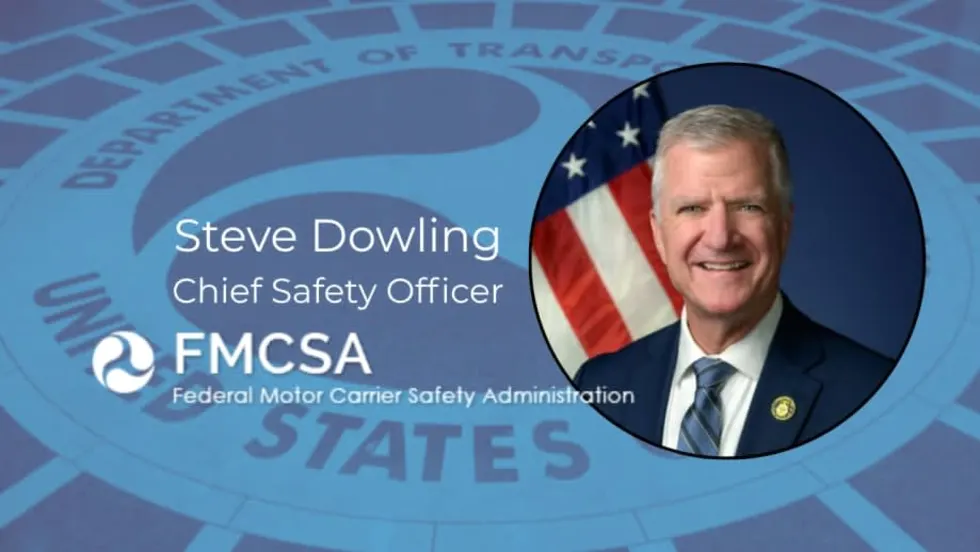
FMCSA Names New Chief Safety Officer: What School Bus Operators Should Know
Steve Dowling is set to lead the federal agency's efforts to advance commercial motor vehicle safety and reduce crashes, fatalities, and injuries on the nation's roadways.
Read More →