




2025 Trend to Watch: Bus Ridership Declines, How are Kids Getting to School?
With fewer children aboard the yellow bus, let’s look at how else our nation’s students are getting to and from the classroom. Here, we analyze alternative transportation, homeschooling, and population trends to make sense of the stats.

One interesting stat to note is that even though fewer students take the bus to school, fewer students are also enrolled in schools.
Photo: SBF/Canva
When compiling SBF’s 2025 Fact Book, we noticed a decline in school bus ridership from the previous school year, coming in at just 50% for the first time in at least 10 years. This made us wonder, how are kids getting to school if not on the yellow bus?
It is often pointed out that the school bus is the safest way for children to travel to and from school. With the many regulations and discussions on how to further improve school bus safety being discussed, this decline in ridership must be coming from somewhere else.
A simple answer is that parents are finding alternative ways to get their kids to school. Parents have a variety of reasons to drive their children themselves instead of relying on transportation provided by the school.
Driver staffing issues can lead schools to extend bus routes to ensure that all students can get to school. A longer bus ride can cut into valuable family time, leading parents to make the trip themselves. HopSkipDrive actually reported that a staggering 79% of parents surveyed said a family member drives them as 41% said that school bus services were eliminated or reduced in their district. And a recent AP story said that as districts cut service, some parents turn to local carpooling apps like Piggyback Network.
While school bus accidents are not common, when they do happen, media attention may be hurting bus ridership. While transportation directors and school administrators know about the safety provided by the yellow bus, parents may be swayed by attention-grabbing headlines written to maximize clicks. Straightening out myths from fact in public forums about school bus safety may be one way districts can get students back on the bus.
Beyond the parents, some students are in situations or have special needs that make bus travel difficult for them. Companies like HopSkipDrive, EverDriven, and First Student all provide alternative transportation services.
HopSkipDrive may provide another way for students to get to school, but they focus on students who don’t fit neatly on a school bus. These students can have a mobile living situation, such as if they are experiencing homelessness or are in the foster care system, or students with individualized transportation needs that a traditional bus cannot accommodate.
“The trend isn’t using alternative transportation services over school buses,” said Emily Uhland, vice president of customer success at HopSkipDrive. “The trend is using them alongside school buses so together, we can ensure every student has the best ride to school. School districts are leaning in fully to optimize a system with a true multimodal transportation setup.”
Ridership for dedicated transportation for students with special needs may be declining; however, that does not mean that they are moving to alternative transportation. With modern Individualized Education Plans (IEPs) put into place, these students can often meet goals or find accommodations that allow them to ride the school bus with the general student population.
“A lot of our students with disabilities that had special transportation can now be accommodated on the general education bus,” said Teena Mitchell, special needs transportation coordinator of Greenville (S.C.) County Schools. “Therefore, they’re moving out of special transportation and to general transportation with some supports. This could show a drop in special transportation because they’re being serviced in a different manner.”
With alternative transportation helping students get to school who would normally have trouble riding the bus, and districts doing everything they can to accommodate them, another reason may be behind the decline.
Some interesting statistics may shed light on the yellow bus's ridership situation.
One trend that may be overlooked is the rise in popularity of homeschooling. Once again, the mass media’s reports on tragedies in school settings and myths about the quality of public education on social media may be a factor leading to the rise of homeschooling.
Johns Hopkins School of Education tracks homeschool enrollment rates over the years, and has reported record growth from 2023 to 2024. While not all states report homeschool enrollment, 19 of the 21 states they received statistics from showed growth in homeschooling. They theorize that parents who switched to homeschooling during the pandemic are sticking with it instead of sending their children back to the classroom.
Unless a homeschooled student is participating in public school activities, there is no reason they would need to ride a school bus.
Another easily overlooked statistic is the population stats of children in the U.S. The number of children in the country has been steadily declining since 2020.
Over the past four years, the child population has dropped from 74.3 million to 71.5 million. This data includes children from newborns to 17 years old, so it does not take long to figure out that schools have lower attendance as a result.
With how school systems are funded and families being more spread out, the drop in students means that they are getting less state funding while expecting them to transport students the same distance. In certain situations, this could lead to bus routes being deemed not worth establishing, putting students in smaller school-owned vehicles, or requiring alternative methods to get to school.
There are myriad reasons why ridership on the yellow bus is falling. This trend will be interesting to watch in 2025 and beyond.
Editor's Note: This article is part of our 2025 trends analysis exploring key issues to watch this year, from telematics to safety, alt fuels, the driver shortage, and school bus ridership.
Check out the other articles in this series:
More Management
How to Build a Better Driver Training Program
Ready to boost up your school bus instructor training? Here’s how to pick the right talent and improve recruitment, retention, and safety.
Read More →
CALSTART and Forth Combine to Form Catalyst Mobility
The new name represents a renewed vision for the nonprofit focused on advancing clean, equitable, and affordable transportation solutions that move people and goods.
Read More →
What Makes a Great School Bus Driver Trainer?
Choosing the right school bus driver trainer takes more than experience. Learn six keys to selecting and developing trainers and evaluating program effectiveness.
Read More →


School Bus Contractors Expand Through New Deals, Acquisitions & Partnerships
STA's Canadian division acquires Ontario-based G&L Stevenson Transport while Durham School Services adds a new district contract in California, First Student adds a New Jersey contract, and Minnesota Coaches acquires Halo Transportation.
Read More →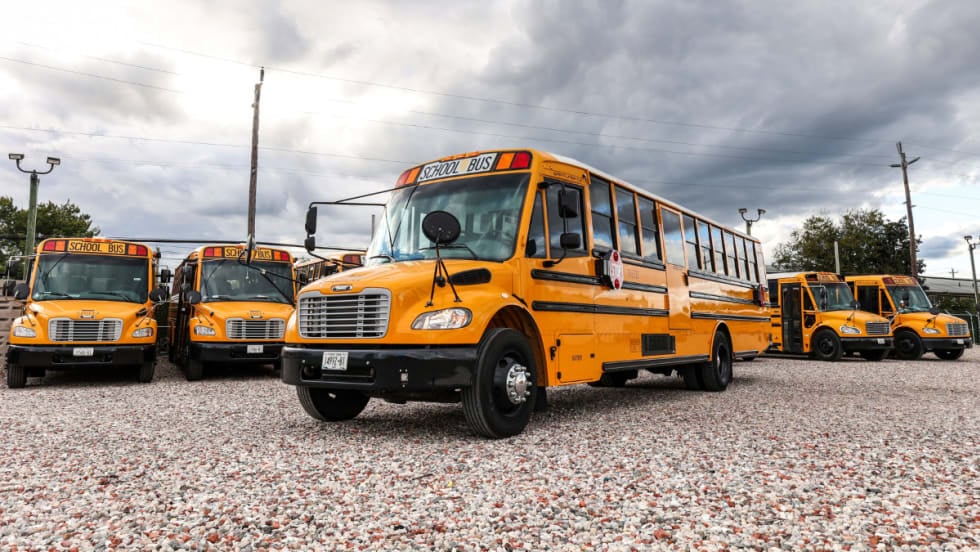
Logan Bus Company Rolls Out AI Phone System for NYC School Bus Families
A summer pilot found that AI agents could handle most routine calls, freeing up time for customer service staff to focus on emergencies and complex family concerns.
Read More →
From Intent to Impact: What I Learned About Leadership from TAPT
A Texas transportation supervisor shares lessons on self-awareness, accountability, managing stress and building trust — and why investing in leadership development matters at every stage of your career.
Read More →
NAPT Names 2026 Award Recipients, Hall of Fame Inductee
Who earned national recognition for their work in student transportation? This year, NAPT named five recipients of its 2026 awards for service, safety, and leadership, plus its newest Hall of Famer.
Read More →
2026 State of Student Transportation Report
Driver shortages. Rising costs. Growing safety expectations. More data, but not enough time to act on it. The 2026 State of Student Transportation Report reveals what transportation leaders say is putting the most pressure on their operations—and where they’re investing next. See how your priorities compare.
Read More →
How to De-Escalate an Angry Person: 5 Steps for Handling Workplace Conflict
What makes emotions run high, and how should you handle an angry colleague or parent? Follow these steps for staying calm, listening, showing empathy, and resolving conflict.
Read More →
What Readiness Looks Like This School Year
Learn about the challenges shaping the 2026–2027 school year, from persistent driver shortages and budget pressure to technology and readiness gaps. See how school districts are responding and adapting in Zonar’s 2026 Back-to-School Readiness Report.
Read More →