





5 Questions: Guiding School Bus Fleets on the Path to Electrification
Maryland Invests $12M in Electric Buses for 7 Districts
New grant funding helps Maryland schools launch or expand electric fleets while prioritizing equity and long-term savings.
August 7, 2025
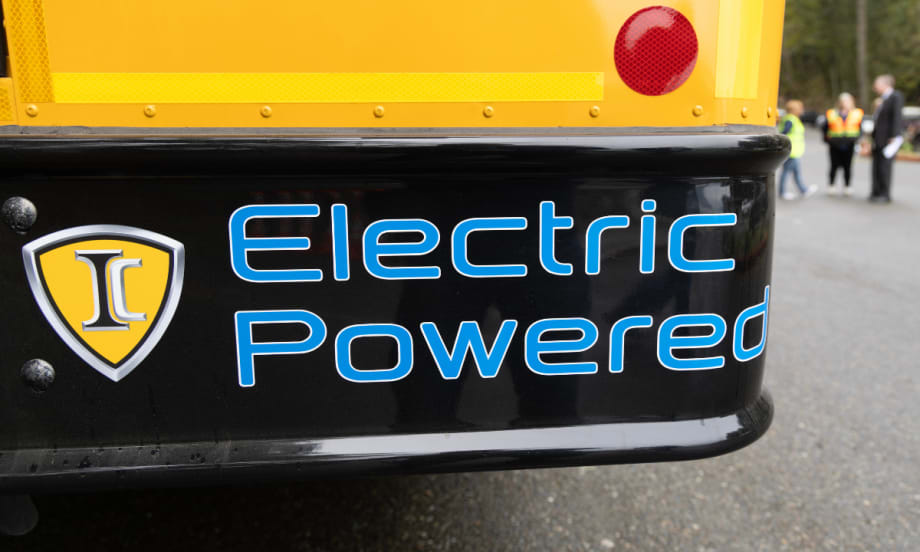
Maryland’s $12M in grant funding will bring the first electric school buses to Kent County and electrify widely used field trip vehicles.
Photo: First Student
2 min to read
New electric school buses may be in store for one Northeastern state. The Maryland Energy Administration recently announced significant new investments in electric school buses and charging infrastructure statewide.
The investment would enable seven total school districts and private fleet operators to cut their long-term operations and maintenance costs while reducing students’ exposure to diesel emissions.
The agency reported more than $12 million in total grant funding through the Fiscal Year 2025 Electric School Bus Grant Program, including grants to bring the first electric vehicles to the Kent County fleet and to begin to electrify some of the most widely used buses that take kids on field trips across the state.
“From rural counties planning their first zero-emission school buses to large districts scaling up ambitious electric fleets, this year’s grants include the purchase of vehicles, infrastructure installation, feasibility studies, and technician training — each of which are important parts of the move toward cleaner transportation,” said Maryland Energy Administration Director Paul G. Pinsky. “The key takeaway is that this program will make improvements in school districts’ operating budgets and in the health of our schoolkids.”
Grants Fund 53 Electric Buses, Planning, and Charger Deployment
Projects funded by the grants include direct bus purchases and leases, critical behind-the-scenes investments in long-term planning, site readiness, and work development. This funding will support the purchase of 53 electric school buses, three electric vehicle (EV) fleet transition and management plans, and 40 EV chargers.
According to a state release, several projects directly serve low-income and historically underserved communities, with 60% of students on free/reduced lunch, rural counties, and economically diverse counties, reinforcing the agency’s commitment to equity.
Fiscal Year 2025 Electric School Bus Grant Awardees:
Baltimore County Public Schools (through Highland Electric Fleets, Inc.) – $3 million to expand an already growing fleet.
Chesapeake Charters (through Highland Electric Fleets, Inc.) – around $2.1 million to initiate fleet electrification.
Howard County Public Schools (through Zum Services, Inc.) – $1.75 million to meet the county’s diverse needs.
Kent County Public Schools (through Highland Electric Fleets, Inc.) – around $850,000 to deploy the first EVs in the county fleet.
Board of Education of Frederick County – $1.8 million to expand an existing fleet and collaborate with Potomac Edison.
Prince George’s County Public Schools – around $2.5 million to grow the electric school bus and charger network.
Washington County Board of Education – $100,000 to explore the feasibility of deploying electric school buses and EV charging.
The total projected lifetime greenhouse gas reduction impact from these grants is more than 9,300 metric tons of carbon dioxide equivalents, comparable to taking over 2,000 passenger cars off the road.
More Alternative Fuels

Alt-Fuel Moves: New Buses, Charging Hubs & Real-World EV Testing
Propane and electric school bus deployments continue to grow as districts add new vehicles, expand charging infrastructure, and gather more real-world operating data.
Read More →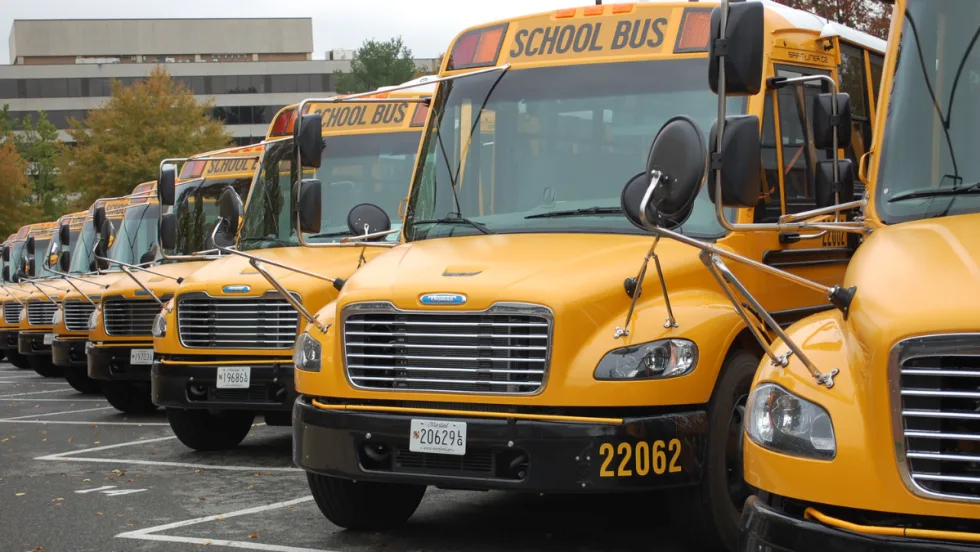
Fewer Electric School Bus Models Reshape the U.S. Market
WRI’s latest buyer’s guide points to a consolidating electric school bus market, but fewer options may reflect a maturing industry rather than fewer meaningful choices for school bus operators.
Read More →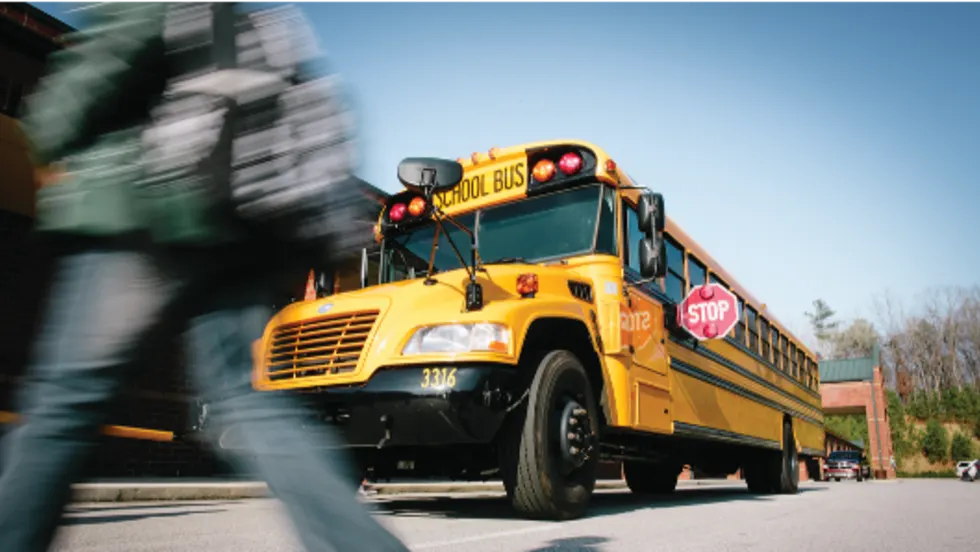
The Fuel Budget You Can Actually Predict: How Propane Autogas Keeps Money in the Classroom
Learn how propane autogas helps school districts manage fuel costs with predictable pricing, lower maintenance, and reduced emissions from former transportation director Joel Stutheit.
Read More →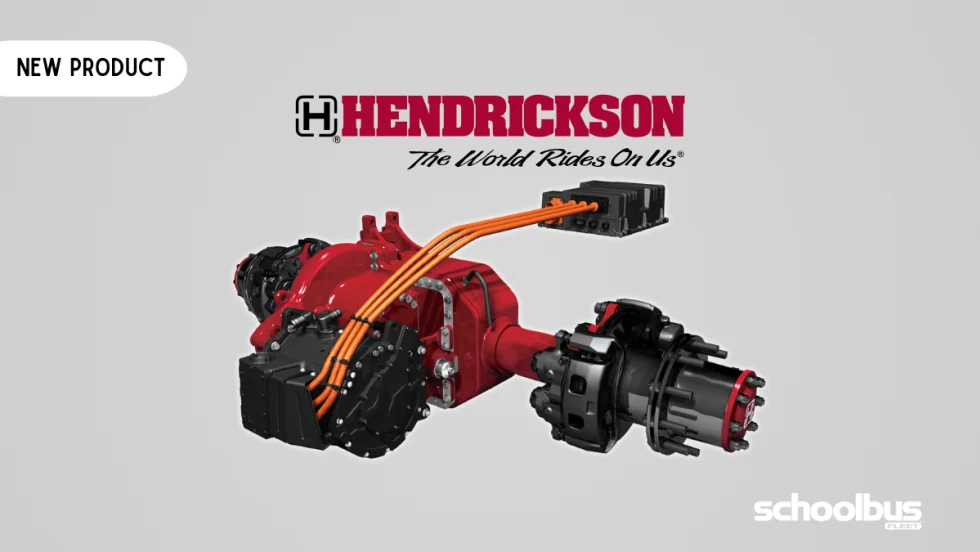
Hendrickson, Driventic Introduce New Electric Powertrain for School Buses
ELECTRAAX, the electrified, lightweight drive axle offers integrated ePowertrain efficiency and modular flexibility for Class 6–7 school bus use.
Read More →
The Mobility House Joins PowerFlex in Fleet Electrification Deal
The acquisition combines intelligent charging software, bidirectional charging expertise, and fleet electrification services to support the growing adoption of electric school buses across North America.
Read More →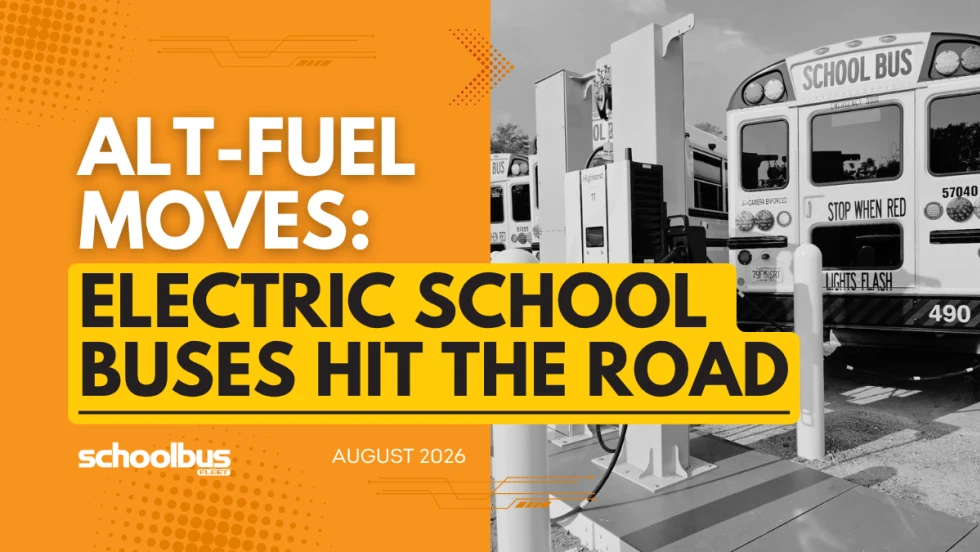
Alt-Fuel Moves: Electric School Bus Investments Hit the Road
See which districts across the U.S. are putting electric school buses into service, expanding charging infrastructure, and planning the next phase of fleet electrification.
Read More →
With Fuel Volatility Ahead, School Districts Turn to Propane
While diesel prices peaked above $5 this spring, districts with propane autogas-powered fleets paid under $2 per gallon, according to PERC.
Read More →
EPA Unveils Proposed Changes to 2027 Heavy-Duty Engine Rules
The federal agency has proposed changes to next year’s targets that would eliminate DEF derates, ease warranty requirements, and retain current NOx emissions standards.
Read More →
Alt-Fuel Moves: EV Charging & Infrastructure Projects Gain Momentum
The latest developments include new funding, charging infrastructure, utility investments, and fleet technologies designed to support the transition to electric school buses nationwide.
Read More →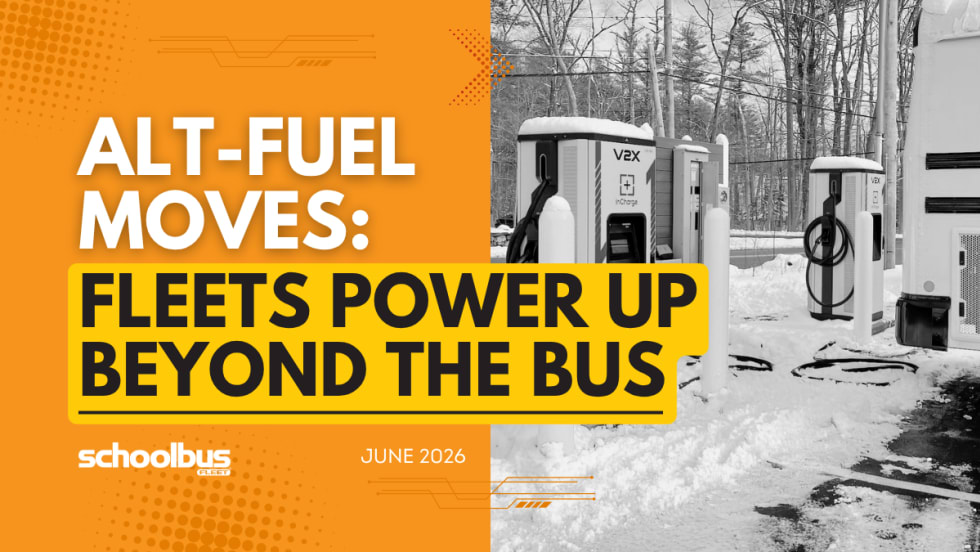
Alt-Fuel Moves: Fleets Power Up Beyond the Bus
See how districts are pairing electric buses with charging, solar, and V2G technology to cut costs, boost resilience, and unlock new fleet value.
Read More →