




Related: 20 Questions (and Answers) on MAP-21
Update: FMCSA Officially Extends ELDT Compliance Deadline
The Federal Motor Carrier Safety Administration officially delays the deadline for the final rule "Minimum Training Requirements for Entry-Level Commercial Motor Vehicle Operators" from Feb. 7, 2020, to Feb. 7, 2022. The agency released the official notice on Feb. 4.

Nicole Schlosser・Former Executive Editor

The Federal Motor Carrier Safety Administration has officially extended the compliance deadline for its federal driver training requirement to Feb. 7, 2022. File photo
3 min to read

The Federal Motor Carrier Safety Administration has officially extended the compliance deadline for its federal driver training requirement to Feb. 7, 2022. File photo
Update: On Tuesday, the Federal Motor Carrier Safety Administration (FMCSA) posted the official notice of the two-year extension of the Entry Level Driver Training compliance deadline. View a copy of the notice here. School Bus Fleet initially reported on the compliance deadline delay on Jan. 29. That story follows below.
WASHINGTON, D.C. — The Federal Motor Carrier Safety Administration (FMCSA) has officially extended the compliance deadline for its federal driver training requirement to 2022.
In an Interim Final Rule, which includes a request for comment, the federal agency announced in a news release on Wednesday that it is amending its Dec. 8, 2016, final rule, "Minimum Training Requirements for Entry-Level Commercial Motor Vehicle Operators" (Entry Level Driver Training or ELDT final rule) deadline from Feb. 7, 2020, to Feb. 7, 2022.
As School Bus Fleet previously reported, Larry Minor, the associate administrator for policy and designated federal officer for the FMCSA, told attendees at the National Association of State Directors of Pupil Transportation Services (NASDPTS) conference in October that the ELDT certification training final rule deadline would be pushed back because of information technology (IT) challenges that would interfere with commercial driver’s license (CDL) training providers’ registration. He added that attendees could still start putting together their training programs if they hadn’t already done so.
The ELDT final rule's Training Provider Registry (TPR) will allow training providers to self-certify that they meet the training requirements and will provide the electronic interface that will receive and store ELDT certification information from training providers and transmit that information to the State Driver Licensing Agencies (SDLAs).
The extension also provides SDLAs time to modify their IT systems and procedures as needed to accommodate their receipt of driver-specific ELDT data from the TPR.
FMCSA is delaying the entire ELDT final rule, as opposed to a partial delay as proposed in July, due to delays in implementation of the TPR that were not foreseen when the proposed rule was published.
The agency noted in the Interim Final Rule that it received 56 comments in response to its July 2019 Notice of Proposed Rulemaking (NPRM) recommending a partial delay of the rule. Forty of those commenters requested that FMCSA delay all provisions of the final rule.
As SBF previously reported, NASDPTS submitted comments in August in response to the agency’s proposal to extend the compliance date of two provisions in the ELDT rule.
The FMCSA was looking at the time to delay the deadline from Feb. 7, 2020, to Feb. 7, 2022 for training providers to upload ELDT certification information into the TPR and for state driver licensing agencies to receive driver-specific ELDT information. NASDPTS encouraged the FMCSA to also delay the compliance date by which training providers must register for the TPR and covered driver applicants must begin receiving the specified training. The association also noted in its comments in August that a “bifurcated” schedule is not consistent with the fully integrated approach that was recommended by NASDPTS, and a “partial” delay can potentially cause confusion about the required actions to be taken and consequences for not complying.
As an Interim Final Rule, the agency is once again seeking comments, which must be submitted within 45 days of the rule’s publication in the Federal Register.
Charles Hood, the executive director for NASDPTS, informed the association’s members of the official extension in an email alert on Wednesday. In the alert, Hood noted that NASDPTS was one of the entities that participated in 2015 in the negotiated rulemaking process and was involved in the recommendations on which the FMCSA's ELDT rulemaking is based.
Hood added that NASDPTS “expects to again submit comments supporting the two-year delay in order to provide for integrated and orderly implementation of these important federal regulations.”
More Safety

How to Build a Better School Bus Driver Training Program
Is it time to strengthen your driver training? Here’s how to pick the right talent and improve recruitment, retention, and safety. This video is brought to you by IC Bus.
Read More →
Recent School Bus Accidents Leave 2 Dead, 2 Injured
Four school bus crashes in Florida, Illinois, and Georgia highlight risks in transportation lots, at bus stops, and during student loading and unloading.
Read More →
Sponsored•September 8, 2026
When Every Second Matters, Clarity Keeps Routes Moving
From routine delays to urgent incidents, strong communication practices help drivers, dispatchers, schools, and families respond with confidence.
Read More →

What Happens When a School Bus Catches Fire — and What Can Help
School bus fires are rare but can be devastating. Learn how advances in fire suppression and asset protection help fleets detect fires earlier, reduce damage, and improve safety.
Read More →
Geotab Launches Tool to Help Fleets Investigate Road Incidents
Geotab Investigations combines telematics data, video, documents, and other evidence to help fleets reconstruct incidents, resolve claims, and determine what happened.
Read More →
Texas Sixth Grader Wins 2026 National School Bus Safety Poster Contest
Sai Darshana Yekolu of Moseley Middle School in Prosper, Texas, was named the newest winner for her artwork, bringing the theme of “Safe Rides, Everyday Heroes” to life.
Read More →
Sponsored•August 27, 2026
Doing More With Less: How Transportation Directors Can Prioritize Safety Amid Budget Uncertainty
With diesel prices soaring and nearly one-third of transportation directors expecting budget cuts, maintaining student safety has never been more challenging. Download this guide to learn how leading districts are prioritizing risk, funding critical safety technology, and building stronger budget cases with data.
Read More →
Walton County Schools Adds Gatekeeper Stop-Arm Enforcement System
The Florida district will deploy Gatekeeper’s updated Student Protector technology, which now incorporates AI to improve video evidence.
Read More →
How To Build a More Secure School Bus Yard During and After Hours
As thefts and overnight security threats continue, school transportation leaders are combining stronger operational practices with AI-enabled surveillance to better protect buses, facilities, and staff.
Read More →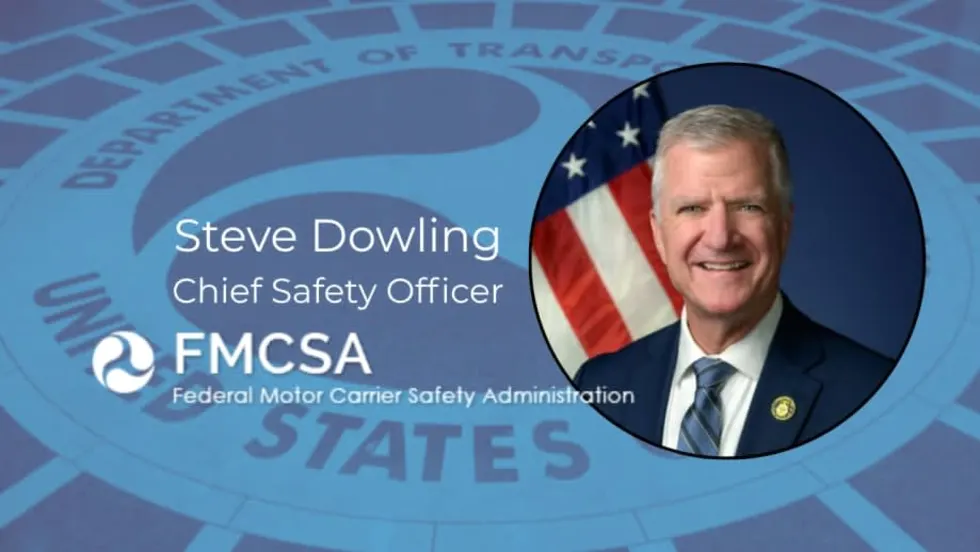
FMCSA Names New Chief Safety Officer: What School Bus Operators Should Know
Steve Dowling is set to lead the federal agency's efforts to advance commercial motor vehicle safety and reduce crashes, fatalities, and injuries on the nation's roadways.
Read More →