




Related: Feds Issue Final Rule Aiming to Cut Costs on CDL Upgrades
20 Questions (and Answers) on MAP-21
The Moving Ahead for Progress in the 21st Century Act includes new transportation regulations that will soon impact training requirements for school bus drivers, with a compliance deadline of Feb. 7, 2020. Here, School Bus Safety Co. shares responses to common questions.

Nicole Schlosser・Former Executive Editor
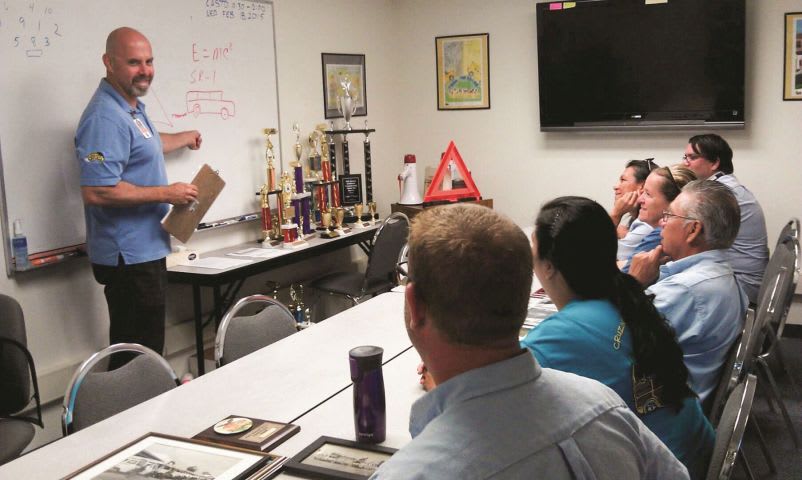
File photo courtesy Newport Mesa (Calif.) USD
8 min to read
File photo courtesy Newport Mesa (Calif.) USD
The Moving Ahead for Progress in the 21st Century Act, also known as MAP-21, includes new transportation regulations that will impact training requirements for school bus drivers as soon as this year. The changes are designed to standardize training and help school districts comply with federal laws that will make students and staff safer while on the road.
MAP-21 is a federal transportation reauthorization bill aimed at helping the Federal Motor Carrier Safety Administration (FMCSA) reduce crashes, injuries, and fatalities involving buses and large trucks. The regulations are designed to improve commercial motor vehicle safety by raising the bar to enter the industry, holding drivers to the highest of standards, and removing risky drivers from operations.
School Bus Safety Company (SBSC) met with FMCSA officials for more details on getting compliant with MAP-21. Here are some of the basics and answers to common questions.
The Basics
The FMCSA has issued new federal criteria for commercial motor vehicle driver training. Vehicles that are designed to carry more than 15 passengers generally are referred to as commercial motor vehicles.
MAP-21 requirements will apply to all drivers who must have a Class A or Class B commercial driver’s license (CDL). Most school bus drivers require a Class B CDL to operate a school vehicle. States can require additional training, but they cannot require less than MAP-21’s minimum criteria.
The deadline to comply with MAP-21 regulations is Feb. 7, 2022. (Update: The year of the deadline has changed from 2020 to 2022. For more information on the new entry level driver training compliance deadline, go here.)
There are three main areas of impact in the legislation: Entry-level Driver Training (ELDT), Training Provider Registry (TPR), and Safety Management System (SMS).
The ELDT sets general training guidelines, but doesn’t specify how to train or the number of training hours required. It is intended to standardize topics at a national level to improve safe outcomes. ELDT sets that baseline for training criteria for Class A and B CDL license holders. Changes do not apply to existing drivers. Any current driver not changing their license or endorsement and who has been trained before Feb. 7, 2020 will be grandfathered in and will not have to comply with MAP-21 training requirements. As of Feb. 7, 2020, new trainees will be required to comply with the ELDT requirements.
There are a total of 93 required topics to be trained on to become a school bus driver holding a basic CDL, passenger endorsement, and school bus endorsement. The requirements are a total of 63 topics of theory, and a total of 30 topics of behind-the-wheel range training.
The TPR is an electronic compliance notification system. Each training location will be required to comply with the system and will be given a specific location training identification number. The TPR provides a record for the FMCSA that minimum training has been achieved and identifies the certifying location through the training ID number. Each driver trainer is not required to register. A training location is required to register.
Each training location will be required to fill out a four-page federal document and submit it to the FMCSA to obtain the location-specific training identification number. This form affirms that the training location teaches an FMCSA-prescribed curriculum and holds the location accountable to those training standards. That document has to be submitted to the FMCSA before Feb. 7, 2020.
Driver trainers will then certify that the required training on the 93 topics has been completed for their entry-level drivers. That will be done through that electronic notification system on the TPR with the training location’s ID number listed. The driver will be required to pass a proficiency test with a passing score of 80% or higher, confirming that they have trained at that registered training location. The FMCSA has not specified how that test is going to be administered, how many questions to ask, or what materials to use; it just requires a record of the trainee passing a proficiency exam with 80% or higher.
Federal regulations 49 CFR, parts 380, 383, and 384, which can be found here, list all of the required training topics. After identifying those topics, trainers should be trained on what they will need to know and how to comply with the new TPR.
Each state will be responsible for creating its own notification system to the FMCSA. The systems will be available before the MAP-21 compliance deadline.
The SMS is the new safety regulatory framework that will focus on organization-wide safety policies at training locations. The idea is to control risk better, detect problems earlier, and help analyze safety data more efficiently by identifying the hazards at a location. Training providers have to have a file documenting their safety management system and the actions taken to mitigate those hazards.
SBSC will provide an addendum to its current Driver Training Course with updated topics relevant to MAP-21. For more information and updates, visit SBSC’s MAP-21 Resource Center.

MAP-21 will apply to all drivers with a Class A or Class B commercial driver’s license. File photo courtesy Scott Goble
FAQs
Q: If a driver’s endorsements were temporarily suspended, once the suspension is lifted, will the requirements apply to them?
A: If a driver is suspended and not yet re-instated before Feb. 7, 2020, then they will have to adhere to all requirements of MAP-21 ELDT.
Q: When will the FMCSA ELDT Provider Identification Report be available?
A: It is available now. You can access the report here.
Q: How will we be informed that the TPR is accepting registrations?
A: Once the TPR form is available, the FMCSA will accept location report filings.
Q: Will locations that are not employing new drivers fall under MAP-21?
A: Only locations that train drivers will need to adhere to the ELDT and TPR. All locations will need to adhere to the SMS.
Q: Will the School Bus Safety Company Driver Training Course final exam be sufficient to submit to the FMCSA?
A: Yes. The SBSC final exam qualifies for the ELDT exam requirements.
Q: Do all people who help train drivers to pass the CDL driving test have to be certified?
A: Not people, but training locations will need to register with the FMCSA. There is no formal certification process.
Q: My drivers get their permits through the DMV. Will I need to know what they score on the written exams?
A: You will not be required to know what trainees’ CDL permit test scores are. The test score of 80% will be from a test you provide the trainee at your location.
Q: Are independent contractors certified federally or through the state?
A: Training locations register with the FMCSA.
Q: How will this affect recruitment of new drivers?
A: As long as you’ve got your system in place, it should be seamless for the candidate. This should not impact the ability to hire drivers.
Q: Can smaller companies go to another facility if they aren’t able to become a training facility?
A: Yes. If you don’t provide behind-the-wheel or classroom training for your trainees, then you’re not required to be on the TPR. You can train at a separate location, as long as it is listed on the TPR.
Q: On night operation training, can early morning routes before sunrise count?
A: As long as it is dark. The sun cannot be up. Early morning before the sun rises, as well as after the sun goes down, counts as night operation.
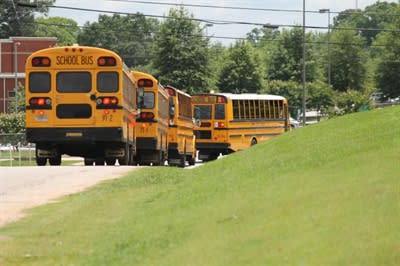
File photo courtesy JD Hardin
Q: If the driver only drives 14-passenger school buses, are they required to meet MAP-21 requirements?
A: When in doubt, train to the standards on ELDT. That is the guidance we’ve been given by FMCSA and DOT.
Q: It appears that all districts will need a driver training or driver trainer on staff. Is that correct?
A: If you’re going to train at a location, you’ve got to have somebody that trains and certifies that the training has been completed. If you choose to train, a responsible party has to upload those documents and verify them through the TPR.
Q: How does this affect the hiring of drivers that started driving before Feb. 7, 2020?
A: As long as they don’t change their class of license from A to B, or B to A to C or change their endorsements, they are grandfathered in and not required to train.
Q: Does this mean that people getting CDLs on or after Feb. 7, 2020 need MAP-21 training to get the CDL before they can drive for us?
A: It’s not required before you hire them, but you’re going to have to train them if you hire them. If you’ve hired them on or after Feb. 7, 2020, they need to go through entry-level driver training and be registered on the TPR. That can be done by someone else before they come to you, or you have to train them at your location.
Q: Will trainers need to be certified?
A: No. As a trainer, you need to know the required training topics and how to upload to the TPR. You’ll probably need to know how to store your files and how to accurately make sure that you’re in compliance.
Q: If we choose to train, are we required to train people outside our districts?
A: You’re not required to train anyone that you don’t want to train. You can train people from another district, should you choose to. However, you need to understand that as a training location, you’re the responsible party, should people not be trained properly.
Q: I am a certified instructor for my state. Will my certification need to be updated or amended?
A: That’s going to have to go through your state specifically, because that is above and beyond the ELDT requirements. When it’s above and beyond those requirements, the state supersedes that.
Q: As a contractor with multiple locations, would we need one TPR to cover all locations or a number for all locations?
A: You need a TPR number specific for each training location. For example, if you have 10 locations, but you only train at five of them, then your five training locations would each have an individual TPR number. The ones that you don’t train at would not be required to have one.
Q: Will there be anything different on the driver’s license to show the driver is MAP-21 compliant?
A: No. The license will still come from your state and you shouldn’t see any difference.
Subscribe to Our Newsletter
More Management
How to Build a Better Driver Training Program
Ready to boost up your school bus instructor training? Here’s how to pick the right talent and improve recruitment, retention, and safety.
Read More →
CALSTART and Forth Combine to Form Catalyst Mobility
The new name represents a renewed vision for the nonprofit focused on advancing clean, equitable, and affordable transportation solutions that move people and goods.
Read More →
What Makes a Great School Bus Driver Trainer?
Choosing the right school bus driver trainer takes more than experience. Learn six keys to selecting and developing trainers and evaluating program effectiveness.
Read More →


School Bus Contractors Expand Through New Deals, Acquisitions & Partnerships
STA's Canadian division acquires Ontario-based G&L Stevenson Transport while Durham School Services adds a new district contract in California, First Student adds a New Jersey contract, and Minnesota Coaches acquires Halo Transportation.
Read More →
Logan Bus Company Rolls Out AI Phone System for NYC School Bus Families
A summer pilot found that AI agents could handle most routine calls, freeing up time for customer service staff to focus on emergencies and complex family concerns.
Read More →
From Intent to Impact: What I Learned About Leadership from TAPT
A Texas transportation supervisor shares lessons on self-awareness, accountability, managing stress and building trust — and why investing in leadership development matters at every stage of your career.
Read More →
NAPT Names 2026 Award Recipients, Hall of Fame Inductee
Who earned national recognition for their work in student transportation? This year, NAPT named five recipients of its 2026 awards for service, safety, and leadership, plus its newest Hall of Famer.
Read More →
Sponsored•September 2, 2026
2026 State of Student Transportation Report
Driver shortages. Rising costs. Growing safety expectations. More data, but not enough time to act on it. The 2026 State of Student Transportation Report reveals what transportation leaders say is putting the most pressure on their operations—and where they’re investing next. See how your priorities compare.
Read More →
How to De-Escalate an Angry Person: 5 Steps for Handling Workplace Conflict
What makes emotions run high, and how should you handle an angry colleague or parent? Follow these steps for staying calm, listening, showing empathy, and resolving conflict.
Read More →
Sponsored•September 1, 2026
What Readiness Looks Like This School Year
Learn about the challenges shaping the 2026–2027 school year, from persistent driver shortages and budget pressure to technology and readiness gaps. See how school districts are responding and adapting in Zonar’s 2026 Back-to-School Readiness Report.
Read More →