




In Other News: EPA Nearly Doubles Available Funds for Clean School Bus Rebates
North Carolina Awards Schools $30M for Clean Buses
The funding from the N.C. Volkswagen Settlement Program is earmarked primarily for rural counties, especially under-resourced communities. It will go toward buying 161 electric, propane, and lower-emission diesel school buses throughout North Carolina.
by SBF Staff
October 18, 2022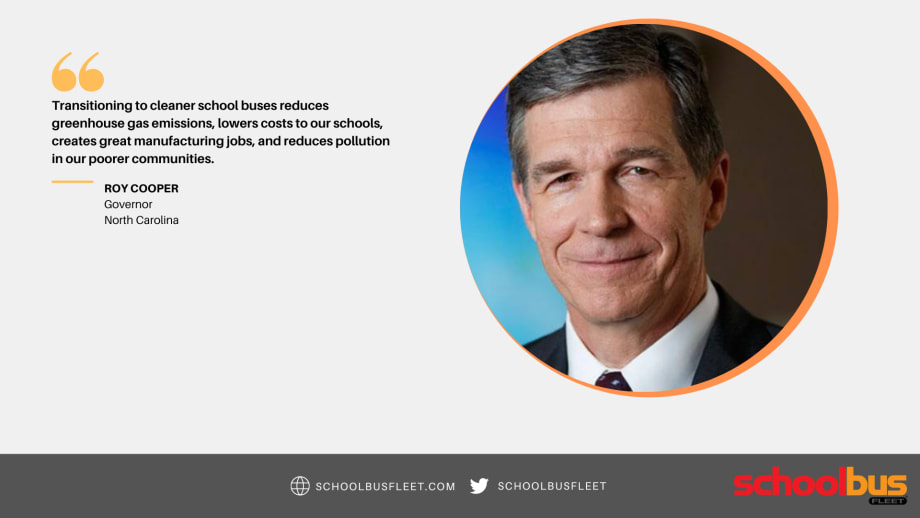
Image: Canva/Gov. Roy Cooper
3 min to read
The North Carolina Department of Environmental Quality (DEQ) is distributing more than $30.1 million from the state’s Volkswagen Settlement Program for 161 clean school buses.
“Today is a good day for the health and pocketbooks of North Carolinians as we continue on our path to clean transportation,” said Gov. Roy Cooper. “Transitioning to cleaner school buses reduces greenhouse gas emissions, lowers costs to our schools, creates great manufacturing jobs, and reduces pollution in our poorer communities.”
According to a news release, the new zero- and low-emission school buses will replace some of the dirtiest diesel buses in the state, “including some older than 30 years that emit more than 20 times the nitrogen oxides (NOx) and particulate matter of today’s clean buses."
Said DEQ Secretary Elizabeth S. Biser: “Switching to new low- and zero-emission school buses has immediate public health benefits for the children who ride them and improves air quality in our communities.”
The new buses are expected to reduced NOx emissions by 126 tons over their combined lifetimes. More than $16.5 million will fund 43 electric school buses and associated charging infrastructure.
Grant recipients include public, charter, and tribal schools in 84 North Carolina counties. Most of the buses, 130, are going to rural counties. Of those, 80 school buses are awarded to schools in 37 historically under-resourced counties targeted by DEQ for extra outreach and support during the application process.
As clean buses are ordered and delivered, the old school buses will be destroyed.
Kevin Bangston, president and CEO of Thomas Built Buses - based in High Point, N.C. - praised the governor's announcement: "We applaud Gov. Cooper's continued support of North Carolina's transition to a clean energy economy through the allocation of additional funding from DEQ. Replacing old diesel buses with emission-free electric, newer clean diesel, and other alternative-fueled vehicles furthers our mission of providing sustainable, lower-emission transportation options for kids, drivers, and communities in our home state."
Recipients of the school transportation grants and their replacement school bus types include:
Alexander County Schools (Diesel)
Anson County Schools (Diesel)
Beaufort County Schools (Diesel)
Caldwell County Schools (Electric)
Chapel Hill-Carrboro City Schools (Electric)
Charlotte-Mecklenburg Board of Education (Electric)
Chatham County Schools (Diesel)
Cherokee County Schools (Diesel)
Clay County Schools (Diesel)
Cleveland County Board of Education (Diesel)
Duplin County Schools (Diesel)
Edenton-Chowan Schools Board of Education (Diesel)
Graham County Schools (Diesel)
Haliwa Saponi Tribal School (Diesel)
Johnston County Public Schools (Electric)
Lenoir County Public Schools (Electric)
Northampton County Schools (Diesel)
N.C. Department of Public Instruction (Electric/Diesel/Propane)
Old Main STREAM Academy Inc. (Electric)
Perquimans County Schools (Diesel)
Person County Board of Education (Diesel)
Polk County Schools (Diesel)
Public Schools of Robeson County (Diesel)
Reaching All Minds Academy (Electric)
Rockingham County Schools (Diesel)
Rowan-Salisbury Schools (Diesel)
Rutherford County Schools (Diesel)
Sampson County Schools (Diesel)
Surry County School System (Electric)
Washington County Board of Education (Diesel)
Yadkin County Public Schools (Diesel)
Yancey County Schools (Diesel)
The DEQ’s Division of Air Quality received 42 applications seeking more than $58 million for more than 330 clean school buses. The selection committee fully or partially funded at least one requested bus from each county that applied.
The state also awarded more than $1 million in Volkswagen Settlement funds to state agencies to install Level 2 zero-emission vehicle charging infrastructure. These 103 charging ports are set for installation at 25 sites, including state parks, museums, aquariums, government office buildings, universities, and community colleges.
More Alternative Fuels

CALSTART and Forth Combine to Form Catalyst Mobility
The new name represents a renewed vision for the nonprofit focused on advancing clean, equitable, and affordable transportation solutions that move people and goods.
Read More →
Alt-Fuel Moves: New Buses, Charging Hubs & Real-World EV Testing
Propane and electric school bus deployments continue to grow as districts add new vehicles, expand charging infrastructure, and gather more real-world operating data.
Read More →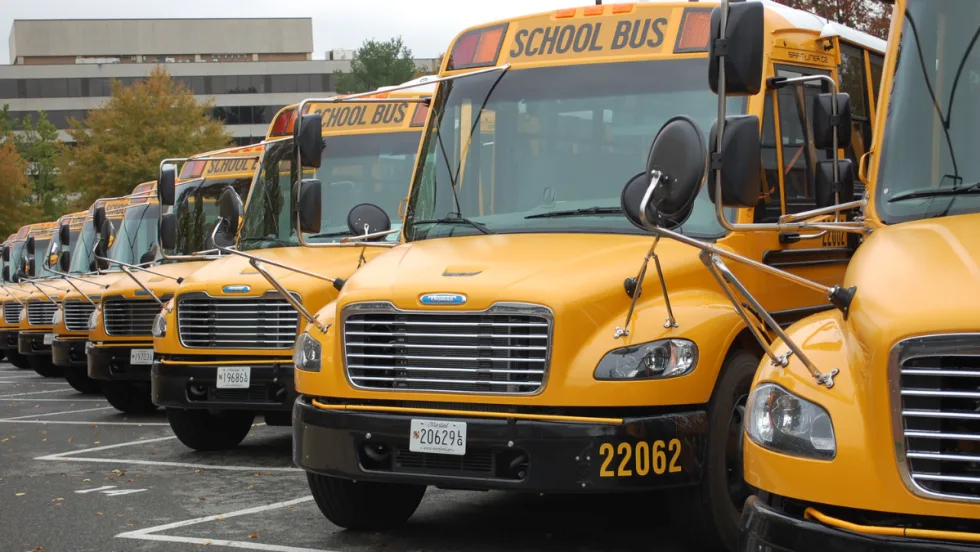
Fewer Electric School Bus Models Reshape the U.S. Market
WRI’s latest buyer’s guide points to a consolidating electric school bus market, but fewer options may reflect a maturing industry rather than fewer meaningful choices for school bus operators.
Read More →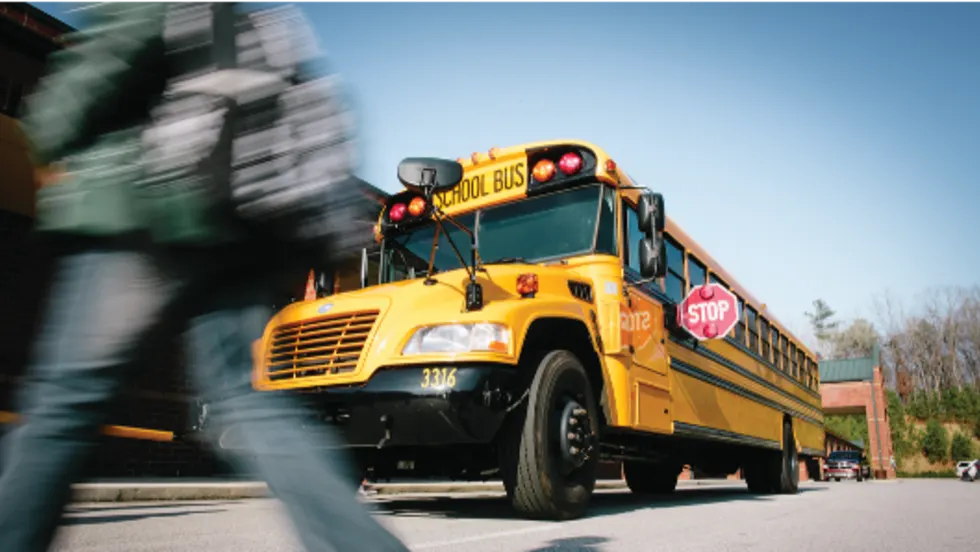
The Fuel Budget You Can Actually Predict: How Propane Autogas Keeps Money in the Classroom
Learn how propane autogas helps school districts manage fuel costs with predictable pricing, lower maintenance, and reduced emissions from former transportation director Joel Stutheit.
Read More →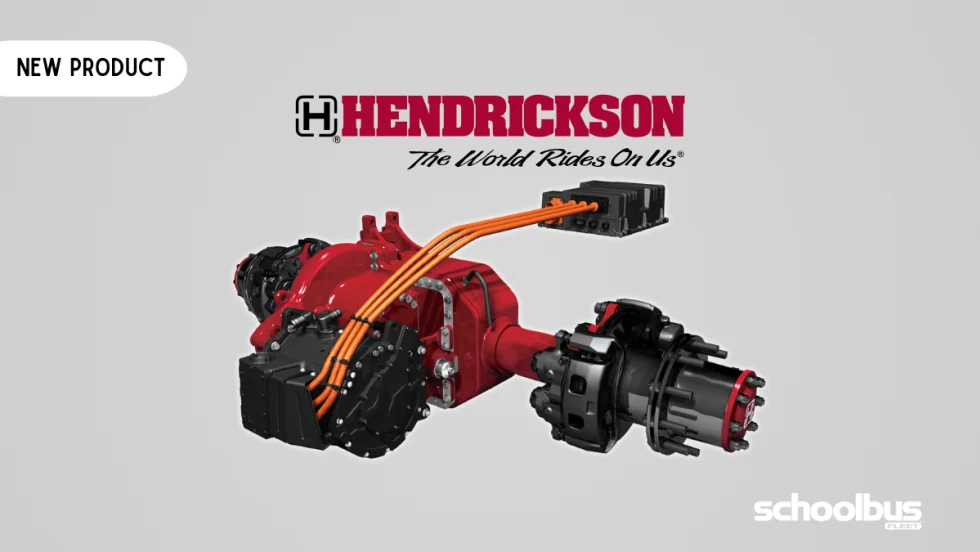
Hendrickson, Driventic Introduce New Electric Powertrain for School Buses
ELECTRAAX, the electrified, lightweight drive axle offers integrated ePowertrain efficiency and modular flexibility for Class 6–7 school bus use.
Read More →
The Mobility House Joins PowerFlex in Fleet Electrification Deal
The acquisition combines intelligent charging software, bidirectional charging expertise, and fleet electrification services to support the growing adoption of electric school buses across North America.
Read More →
Alt-Fuel Moves: Electric School Bus Investments Hit the Road
See which districts across the U.S. are putting electric school buses into service, expanding charging infrastructure, and planning the next phase of fleet electrification.
Read More →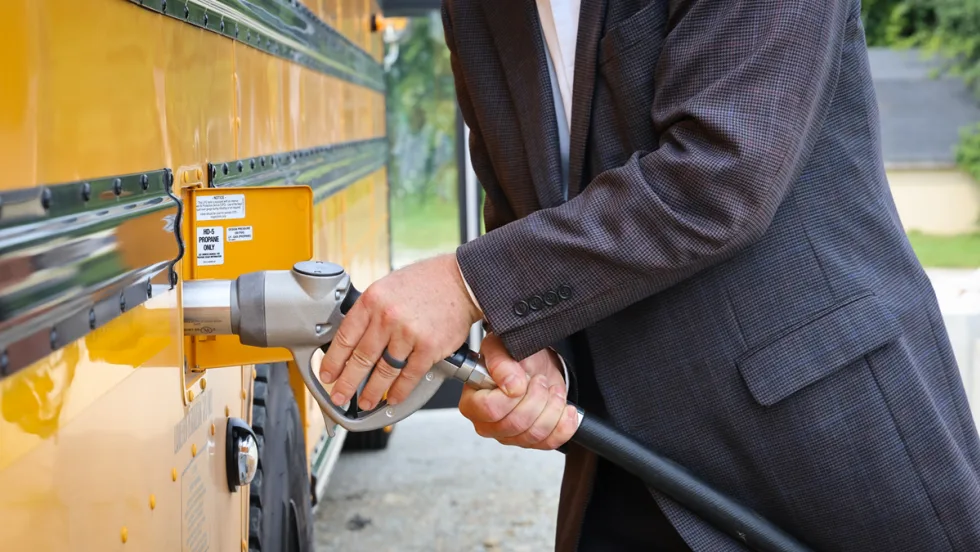
With Fuel Volatility Ahead, School Districts Turn to Propane
While diesel prices peaked above $5 this spring, districts with propane autogas-powered fleets paid under $2 per gallon, according to PERC.
Read More →
EPA Unveils Proposed Changes to 2027 Heavy-Duty Engine Rules
The federal agency has proposed changes to next year’s targets that would eliminate DEF derates, ease warranty requirements, and retain current NOx emissions standards.
Read More →
Alt-Fuel Moves: EV Charging & Infrastructure Projects Gain Momentum
The latest developments include new funding, charging infrastructure, utility investments, and fleet technologies designed to support the transition to electric school buses nationwide.
Read More →