




Read More: 5 Tips for Electric School Bus Training with First Responders
REACHING OUT
The Beneficial Electrification League launched an initiative meant to help rural districts prepare and get federal funds for clean school bus fleets.

Christy Grimes・Former Senior Editor
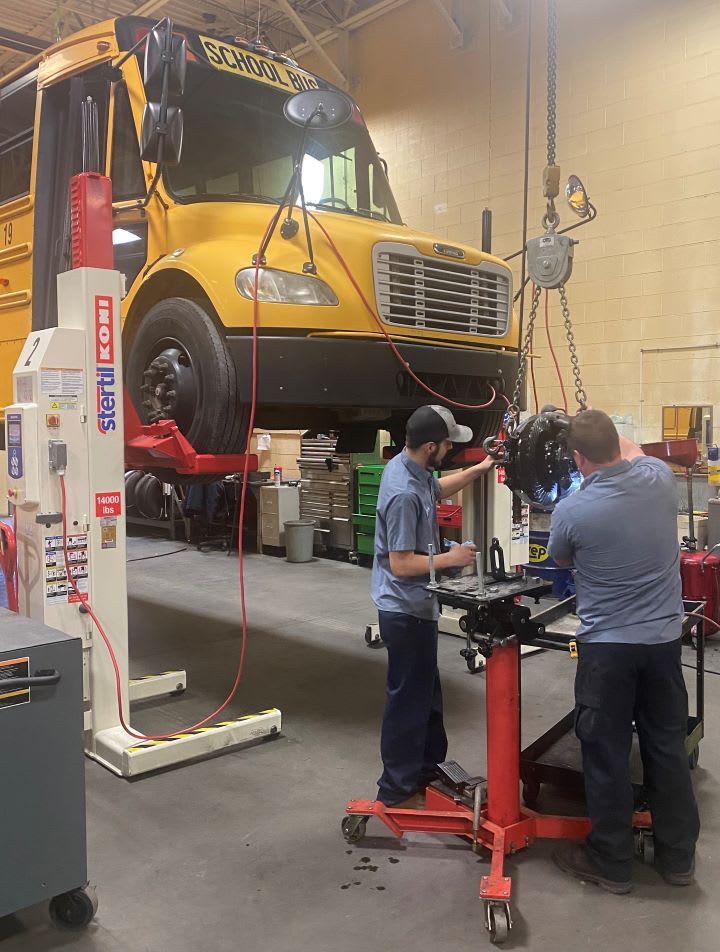
Maintenance workers in Randolph County Schools’ bus garage are familiar with Thomas Built Bus diesel vehicles. This summer, though, they’re set to try something new when the rural North Carolina district pilots electric bus operation using one of the manufacturer’s Jouley buses.
Photo: Wes Platt
5 min to read
More and more school transportation departments and pupil transportation companies are electrifying their fleets. An organization has stepped up to offer a hand to rural school districts across America to sort out funding available to help purchase those new clean buses.
The Beneficial Electrification League (BEL) launched the electric school bus initiative earlier this year. It’s aimed at helping rural school districts more easily use the funds that will be made available in the Clean School Bus program through the Environmental Protection Agency (EPA) from the 2021 Bipartisan Infrastructure Law. The BEL program will partner school district transportation departments and bus transportation companies with electricity distribution cooperatives or statewide organizations that can help them navigate through what they will need to operate electric school buses, like the charging infrastructure.
Funding Opportunities
Through the infrastructure law, $5 billion will be made available for school districts and pupil transportation companies to replace existing school buses with low- or zero-emission school buses. Each year through 2026, $500 million will be made available through the program.
According to its website, the EPA will offer grants and rebates to assist fleets in buying the buses, as well as the associated charging and fueling infrastructure. To start, the EPA only will offer rebates. At this writing, the agency is writing the rules for the program and is expected to release more details soon. Per the infrastructure law, the EPA may prioritize applications that propose to replace buses that serve rural areas.
The BEL hopes to communicate the benefits of electric school buses through its program.
The Benefits of Electrifying
“This is just a superior technology to the conventional diesel fuel buses. And there are many advantages,” explains Tracy Warren, director of external outreach for the BEL. “While they are expensive up front—and we expect that cost will go down—but while they’re expensive on the front end, they cost less to maintain, you don’t have fuel costs, you don’t have diesel fumes, you don’t have a whole fleet of diesel engines huffing out unpleasant air.”
The transportation department for Randolph County Schools in North Carolina is getting ready to bring on its first electric school bus, a Thomas Built Saf-T-Liner C2 Jouley.
Wendy Anderson, transportation director for the school district, says her department received an electric bus to try as part of a pilot program through the North Carolina Department of Public Instruction. Her team met with a local electric co-op, Randolph Electric Membership Corp., to work out charging infrastructure details.
“It is the future and so vastly different from what we know that we took this as an opportunity to be prepared for what lies ahead,” says Anderson.
Warren believes electrifying school bus fleets will have a domino effect: as one school system begins electrifying its fleet, neighboring districts will see it working and follow suit.
The hope is that this program will cover the cost of one electric school bus per school district that applies for the funding, according to Warren.
Do Electric School Buses Perform Well?
One of the major concerns school transportation departments tend to have is whether electric school buses can perform in cold weather.
Alaska-based Tok Transportation has reported success with its first electric school bus, another Thomas Built Jouley. Last fall, co-owner Gerald Blackard told Alaska Public Media that the bus was able to perform in temperatures as low as nearly 40 degrees below zero.
Warren says the buses also perform well in rural areas like hills and mountains.
As with anything new, there inevitably will be a learning curve for transportation departments that choose to add an electric school bus to their fleet. Warren says some rural school districts had concerns about who would service the vehicles. These are things they will have to figure out. But Warren hopes the BEL’s program will help alleviate the concerns that transportation departments have with being able to afford the buses.
Electric Co-Ops Step Up to Help
Darrick Moe, CEO of the Minnesota Rural Electric Association (MREA), one of the statewide agencies taking part in the program, says he hopes the MREA can make the barrier of entry as low as possible for interested pupil transportation programs.
He says this program addresses two of the major concerns for departments: education and funding. The participating co-ops, some of which are MREA members, will educate transportation departments on what is needed to power the buses and ways to save money while doing so, and the EPA funding will provide the buses.
Moe believes electrifying will have multiples benefits for school transportation providers.
“We see this as a good opportunity to try to help those rural communities in the state participate in something that in the long run should be really beneficial for them in a number of ways,” Moe says.
Alan Shedd, director of emerging technologies for Oglethorpe Power Corp. in Georgia—one of the statewide generation and transmission cooperatives partnering with the BEL for the program—says not every learning curve, or surprise that comes with an electric school bus, is a bad thing.
Shedd says he has heard students don’t have to yell on the electric buses, because they’re quieter than traditional internal combustion engine (ICE) buses. Warren tells School Bus Fleet that also helps drivers, so they can focus.
“What we would encourage is that anybody who is interested at all should find a way to go and experience one of these buses firsthand,” says Warren. “You can read about it, but driving it, being in the bus, it’s a different experience. And we want to make sure as many people get that experience as possible.”
Joining the Program
Pupil transportation directors who are interested in using the BEL to work through the funding are encouraged to check whether the local co-op or statewide organization is participating. Click here to search the national directory by state. Don’t have a co-op in the area? The BEL still wants to help.
Subscribe to Our Newsletter
More Alternative Fuels

CALSTART and Forth Combine to Form Catalyst Mobility
The new name represents a renewed vision for the nonprofit focused on advancing clean, equitable, and affordable transportation solutions that move people and goods.
Read More →
Alt-Fuel Moves: New Buses, Charging Hubs & Real-World EV Testing
Propane and electric school bus deployments continue to grow as districts add new vehicles, expand charging infrastructure, and gather more real-world operating data.
Read More →
Fewer Electric School Bus Models Reshape the U.S. Market
WRI’s latest buyer’s guide points to a consolidating electric school bus market, but fewer options may reflect a maturing industry rather than fewer meaningful choices for school bus operators.
Read More →
The Fuel Budget You Can Actually Predict: How Propane Autogas Keeps Money in the Classroom
Learn how propane autogas helps school districts manage fuel costs with predictable pricing, lower maintenance, and reduced emissions from former transportation director Joel Stutheit.
Read More →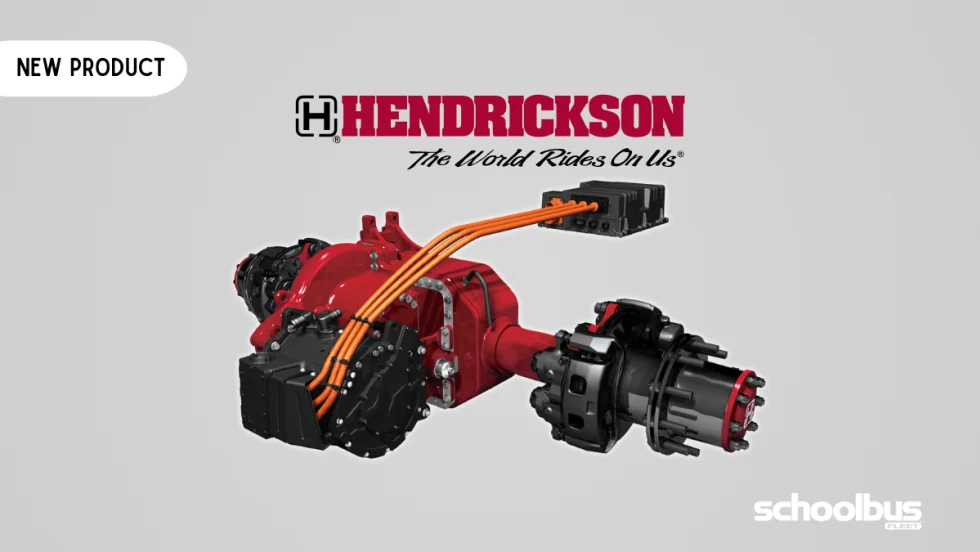
Hendrickson, Driventic Introduce New Electric Powertrain for School Buses
ELECTRAAX, the electrified, lightweight drive axle offers integrated ePowertrain efficiency and modular flexibility for Class 6–7 school bus use.
Read More →
The Mobility House Joins PowerFlex in Fleet Electrification Deal
The acquisition combines intelligent charging software, bidirectional charging expertise, and fleet electrification services to support the growing adoption of electric school buses across North America.
Read More →
Alt-Fuel Moves: Electric School Bus Investments Hit the Road
See which districts across the U.S. are putting electric school buses into service, expanding charging infrastructure, and planning the next phase of fleet electrification.
Read More →
With Fuel Volatility Ahead, School Districts Turn to Propane
While diesel prices peaked above $5 this spring, districts with propane autogas-powered fleets paid under $2 per gallon, according to PERC.
Read More →
EPA Unveils Proposed Changes to 2027 Heavy-Duty Engine Rules
The federal agency has proposed changes to next year’s targets that would eliminate DEF derates, ease warranty requirements, and retain current NOx emissions standards.
Read More →
Alt-Fuel Moves: EV Charging & Infrastructure Projects Gain Momentum
The latest developments include new funding, charging infrastructure, utility investments, and fleet technologies designed to support the transition to electric school buses nationwide.
Read More →