




Wisconsin District Sees Cost Savings With Propane School Buses
New Engine, Fuel System Coming for Blue Bird Propane, Gasoline School Buses
As of this spring, the Vision propane and gasoline school buses will include Ford’s new 7.3L V8 engine and Gen 5, Roush CleanTech’s advanced fuel system technology.
by SBF Staff
January 19, 2021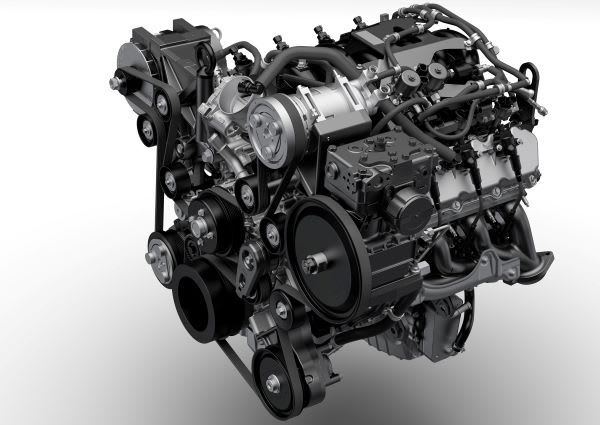
Blue Bird's Vision propane and gasoline school buses will soon include Ford’s new 7.3L V8 engine (shown here) and Gen 5, Roush CleanTech’s advanced fuel system technology.
Photo courtesy Roush CleanTech
2 min to read
Blue Bird will begin integrating Ford’s new 7.3L V8 engine and a purpose-built fuel system into its propane and gasoline Vision school buses this spring.
Roush CleanTech designed Gen 5, the advanced fuel system technology, which is engineered specifically for school buses, according to a news release from the school bus manufacturer and fuel systems supplier.
The 2022 Blue Bird Vision with the propane and gasoline 7.3L engine features a best-in-class combination of horsepower and torque. In addition, the compact and lighter weight 7.3L engine is expected to achieve improved fuel economy over the 6.8L engine.
Roush CleanTech has manufactured over 30,000 propane and gasoline fuel systems for Blue Bird buses equipped with Ford’s 6.8L engine.
“The exclusive partnership between Blue Bird, Roush CleanTech, and Ford continues to flourish as we launch Ford’s new engine with cutting-edge fuel systems in our Vision and Micro Bird school buses,” said Phil Horlock, president and CEO of Blue Bird Corp. “We’ve already heard excitement from our customers about this compact, more powerful, and easier-to-maintain engine with better fuel economy.”
The propane and gasoline Vision buses will also incorporate the newly engineered routing of the wiring and fuel lines, centered between the frame rails for improved quality, simplicity of maintenance, and product longevity. Additionally, a newly designed grille will bring a fresh face to a familiar brand, according to Blue Bird and Roush CleanTech.
Ford’s new 350-horsepower 7.3L engine is narrower than the previous 6.8L, which can allow more room for service work. New features of the fuel system include stronger and lighter forged fuel rails and unique routing that keeps the engine-fuel distribution organized. The system benefits from Ford’s performance and quality characteristics, such as horsepower, torque, and towing, and maintains the OEM factory warranty.
“Backed by 45 years of Roush engineering, the Gen 5 is the next advancement in powertrain technology, delivering lots of power in a smaller package,” said Todd Mouw, president of Roush CleanTech. “Our advanced fuel system integrates seamlessly with the new Ford engine to give school bus customers the most cost-effective product on the market.”
The Gen 5 propane engine is certified to the California Air Resources Board’s optional low nitrogen oxide (NOx) emissions standard of 0.05 grams per brake horsepower-hour (g/bhp-hr). The Gen 5 system reduces NOx and greenhouse gas emissions, which helps optimize fuel efficiency. It can also operate on renewable propane for further potential reduction of emissions and carbon levels. The engine is designed to meet current and future emissions requirements, according to Blue Bird and Roush CleanTech.
Orders are now being taken for Blue Bird’s Vision school buses with the new engine and fuel system.
More Alternative Fuels
Alt-Fuel Moves: Electric Bus Rollouts, Bidirectional Charging & Propane Growth
See which fleets are adding electric and propane school buses as districts and operators invest in charging infrastructure, bidirectional technology, and alternative-fuel expansion.
Read More →
Nobody Told Diesel Prices They Were Supposed to Come Down
With diesel prices surging, school bus fleets have new reason to stress-test fuel costs, consider diversification, and calculate what each route really costs to operate.
Read More →
Why Gasoline School Buses Are Making a Comeback
Gasoline is gaining ground in full-size school buses. See how today’s options stack up against diesel on cost, maintenance, emissions, performance, and more.
Read More →
EPA Opens $180M DERA Funding Round for Diesel Upgrades
The 2026 Diesel Emissions Reduction Act program seeks applications from eligible organizations to accelerate the retirement of legacy diesel vehicles.
Read More →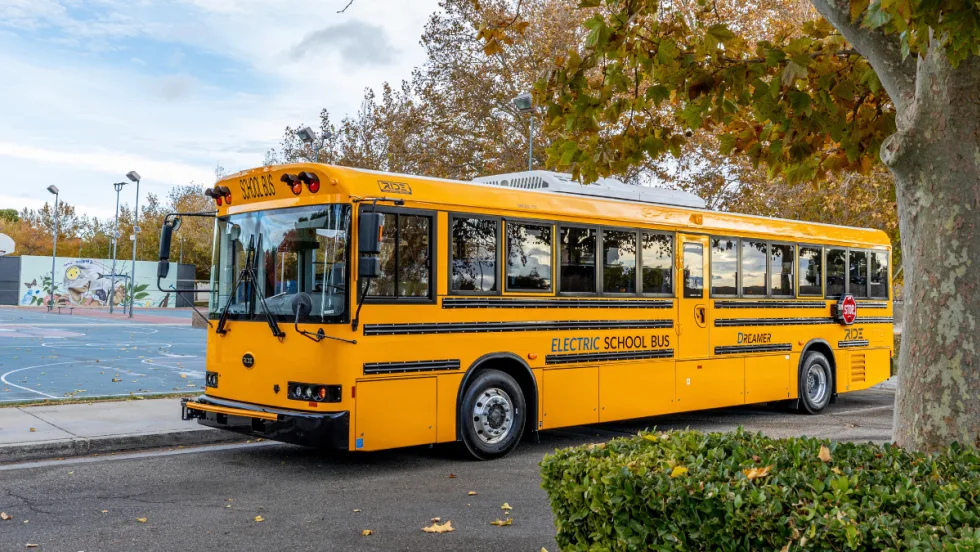
The Secret Life of an Electric School Bus Battery
Batteries change throughout years of daily routes, but degradation doesn’t necessarily mean the end. Here’s what operators should know about performance, safety, and second life.
Read More →
CALSTART and Forth Combine to Form Catalyst Mobility
The new name represents a renewed vision for the nonprofit focused on advancing clean, equitable, and affordable transportation solutions that move people and goods.
Read More →
Alt-Fuel Moves: New Buses, Charging Hubs & Real-World EV Testing
Propane and electric school bus deployments continue to grow as districts add new vehicles, expand charging infrastructure, and gather more real-world operating data.
Read More →
Fewer Electric School Bus Models Reshape the U.S. Market
WRI’s latest buyer’s guide points to a consolidating electric school bus market, but fewer options may reflect a maturing industry rather than fewer meaningful choices for school bus operators.
Read More →
The Fuel Budget You Can Actually Predict: How Propane Autogas Keeps Money in the Classroom
Learn how propane autogas helps school districts manage fuel costs with predictable pricing, lower maintenance, and reduced emissions from former transportation director Joel Stutheit.
Read More →
Hendrickson, Driventic Introduce New Electric Powertrain for School Buses
ELECTRAAX, the electrified, lightweight drive axle offers integrated ePowertrain efficiency and modular flexibility for Class 6–7 school bus use.
Read More →