

Videos
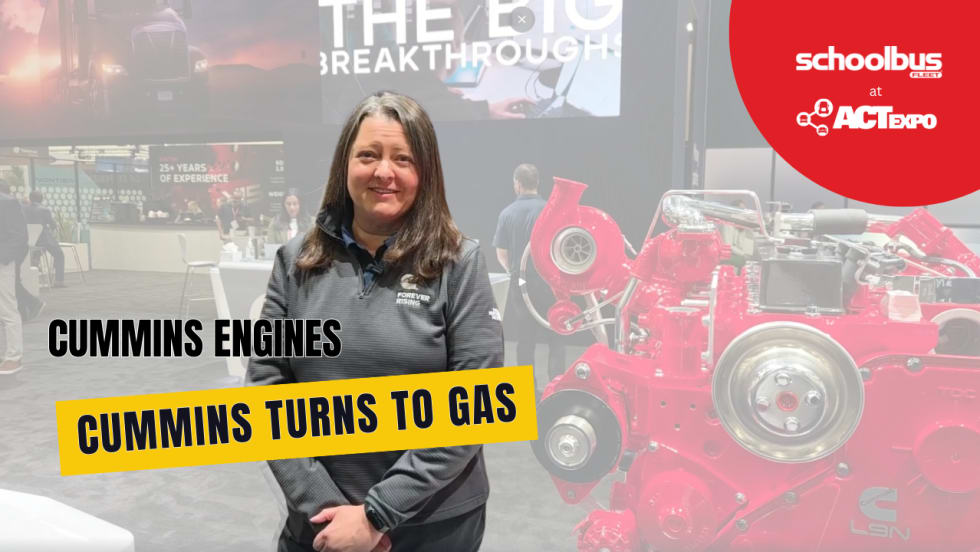
Cummins on Smarter, Simpler Engine Innovation
Cummins discusses its first-ever gasoline engine for school buses, EPA 2027, and why bus fleets still want durable, simpler internal combustion options.
Read More → MENU
MENU SEARCH
Cummins discusses its first-ever gasoline engine for school buses, EPA 2027, and why bus fleets still want durable, simpler internal combustion options.
Read More →
First, determine how the bus will be used. Second, rate the importance of performance, fuel economy and serviceability. Third, consider affordability.
Read More →In a head-to-head comparison of diesel fuel vs. natural gas in heavy trucks, the Harvard Center for Risk Analysis found, as you might expect, advantages and disadvantages for each fuel, depending on the criteria.
Read More →Computerized systems can improve parts department efficiency and make a mechanic's job easier.
Read More →To proof your buses against frigid temperatures, pay attention to tires, fuel, belts and hoses. And don't ignore driver training.
Read More →When to change the oil in your school bus engine is a controversial question. The answer is an important one because it affects your operational costs and the environment.
Read More →The major benefits of light-emitting diodes are increased safety and longevity, but do they outweigh the higher initial costs?
Read More →The service manager or the fleet maintenance manager or whatever title you want to use is a pivotal figure of a school bus operation.
Read More →Finding the right balance between ride, handling and longevity requires planning and research.
Read More →Our survey found something that at first glance might seem the opposite of what you might expect. We asked: "Do you have problems recruiting and/or retaining mechanics?" The study found that managers of larger fleets were far more likely to say yes to that question than smaller fleets.
Read More →How do you choose from all the motor oils on the market? How do you even know you get what you're paying for?
Read More →