




Defining the role of the service manager
The service manager or the fleet maintenance manager or whatever title you want to use is a pivotal figure of a school bus operation.
The service manager or the fleet maintenance manager or whatever title you want to use is a pivotal figure of a school bus operation. Normally, he is responsible for establishing the preventive maintenance program, overseeing the parts room, monitoring the budget, determining maintenance costs per mile and evaluating productivity and efficiency. These duties require that the service manager have technical knowledge and, more importantly, the ability to manage a maintenance program like a business. Understanding of accounting, budget analysis and computerized fleet maintenance systems is essential. The service manager should also have the ability to evaluate the effectiveness of the maintenance program, determine problem areas and implement programs to fix and eliminate any problems. For example, let’s say that battery costs seem unusually high. The service manager should investigate the possible causes. Is the battery maintenance program operating properly? Are batteries being cleaned, checked and properly load tested on a regular basis? Or are the batteries part of a defective batch from the manufacturer? There is probably a simple explanation, but it’s up to the service manager to spot the problem and find the solution.
Business acumen helps
The service manager must also be capable of analyzing the fleet maintenance program with the intent of reducing all costs per mile. He must have the capability to ensure that warranty programs are in place and properly administered. Formal education cannot be overemphasized for the service manager. Courses in business administration, such as accounting, management, computer science and communication, are invaluable. You might consider some type of incentive program for the service manager to attend college-level classes. The service manager also needs to manage the shop safety program, ensuring that the facility is clean, well-lighted and properly ventilated. He should set up a basic tool requirement and keep an inventory of each mechanic’s toolbox. An allowance is a good incentive for mechanics to maintain their tools. Overseeing the training program for mechanics is another duty of the service manager, who needs to evaluate skill levels and recommend proper training. To maintain a harmonious, productive work force, he also needs people skills and to be fair, firm and honest.
Form a Quality Circle?
At some school districts, service managers have instituted Quality Circle programs to involve employees in the process. Management usually fears these types of programs because it believes that they can undermine its authority. If you do implement such a program, it must be driven by the service manager. These programs can turn into bitch sessions if not properly structured and controlled. For example, pay is usually the first thing that the committee brings up. As a service manager, you probably don’t have control over wages. Guide the committee into areas that can be controlled, such as shop safety, tools and equipment, lighting, parts and shift assignments. These Quality Circle programs can be helpful if properly managed. The biggest challenge is choosing a committee of employees who are willing to put some extra time into the project. The service manager should let the committee members bring forth suggestions for improvement, moderate discussion and then guide the group to resolve the problem. This type of program can be an asset or a hindrance, depending on how you lead the committee.
Author Charles E. Long Sr. is former transportation director at Brevard County School District in Cocoa, Fla.
More Maintenance
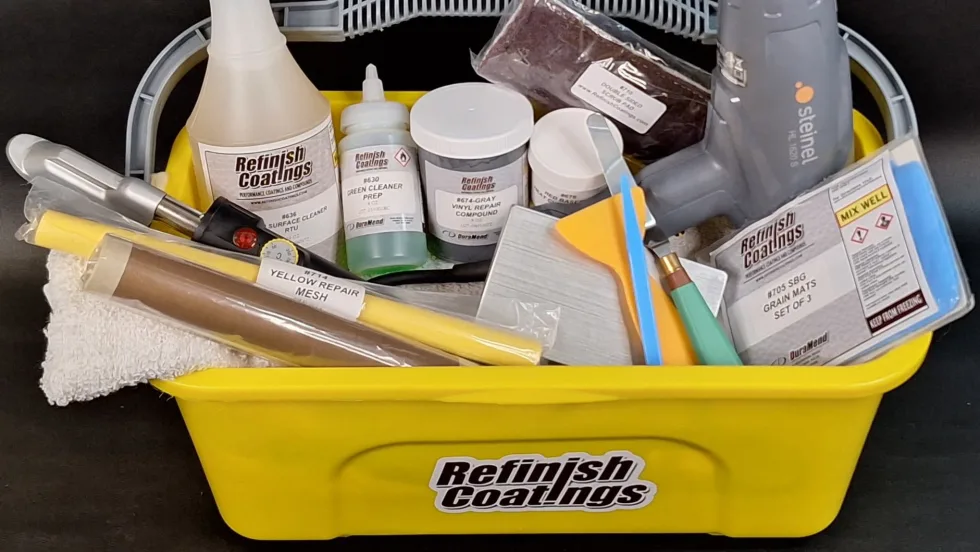
Refinish Coatings Launches School Bus Seat Repair Kit
A new all-in-one vinyl seat repair kit comes with color-matched compounds, tools, and supplies to fix tears, holes, and punctures that kids won't be able to pick.
Read More →
Easy Ways to Reduce School Bus Emissions: Q&A with John Gonzales
Learn how preventive maintenance, driver training, reduced idling, smarter routing, and the right fuel choices can help districts reduce emissions — without investing in new buses.
Read More →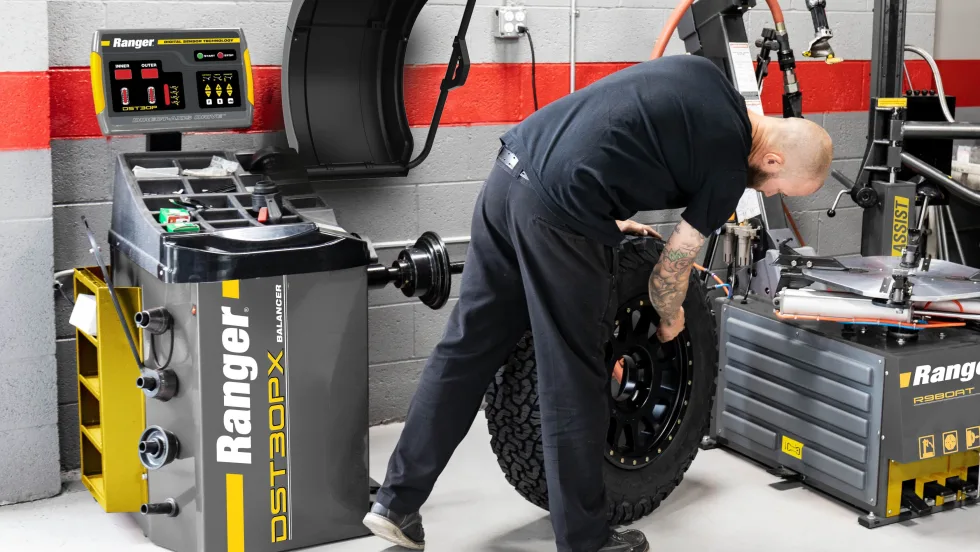
BendPak Launches Ranger DST30PX Wheel Balancer
BendPak's new wheel balancer handles tires up to 43 inches in diameter, with a reinforced design, precise weight placement, and faster service cycles.
Read More →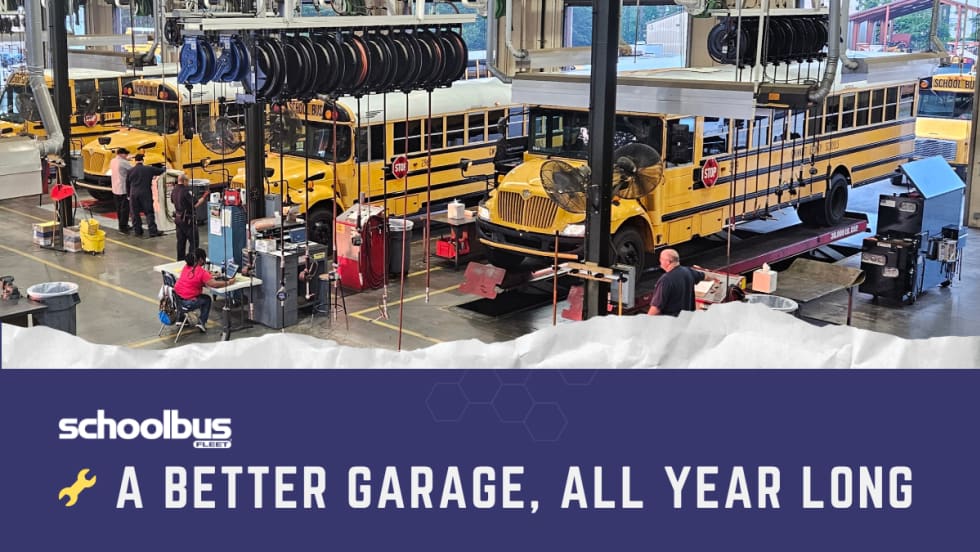
Tips for Ensuring School Bus Garages Are Safe and Warm Year-Round
Cold maintenance bays and rising heating costs? Learn how school bus garages can improve comfort with targeted heating, better airflow, and winter preparation.
Read More →
ASE Highlights School Bus Technician Certification Requirements
ASE is encouraging school bus maintenance professionals to maintain their certifications, highlighting seven specialized tests and five-year renewal requirements.
Read More →
International Adds E-Commerce Capabilities to Fleetrite.com
IC Bus customers can now browse, buy, and track shipments for more than 400,000 aftermarket parts online.
Read More →
The Most Expensive Thing You Do Before Selling a School Bus: Wait
When should you sell an aging school bus? Learn how maintenance, mileage, corrosion, specifications, and timing can affect resale value long before the auction.
Read More →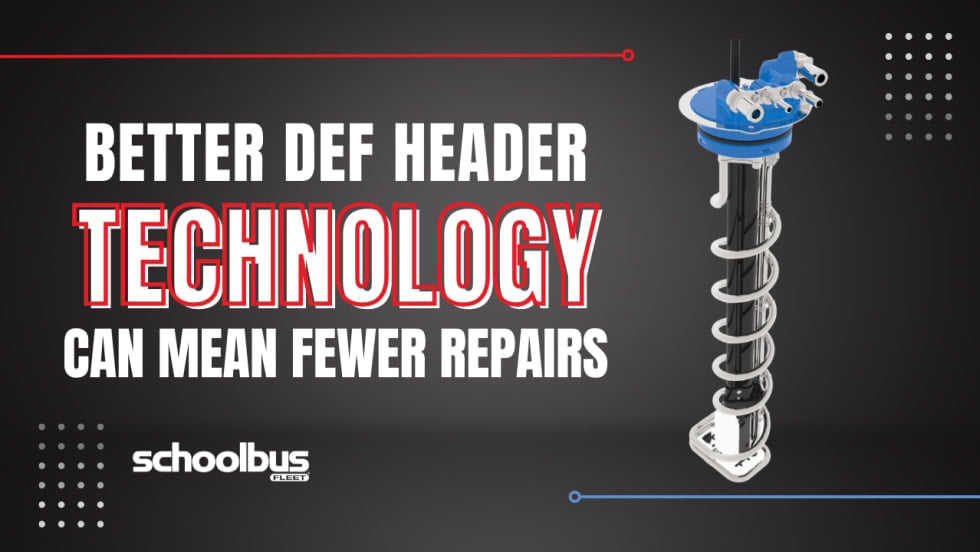
The Evolution of DEF Header Technology: What School Bus Operations Should Know at Replacement Time
See what school bus fleets should consider when replacing DEF headers to improve reliability, reduce repeat repairs, and control maintenance costs.
Read More →
The Essential Guide to School Bus Maintenance and Student Safety
Your district's buses carry students to school every day. This guide shows how predictive maintenance powered by fleet data helps keep buses reliable, drivers accountable and students safer from the first bell to the last stop.
Read More →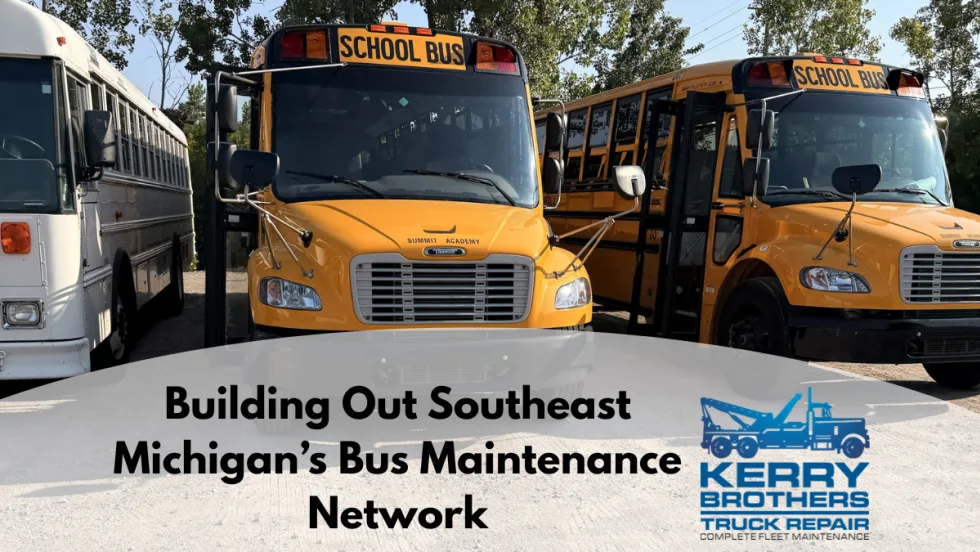
Kerry Brothers Grows Michigan School Bus Repair Network
The acquisition of Downriver Truck and Bus expands Kerry Brothers’ school bus maintenance footprint across southeast Michigan, adding repair capacity, diagnostic resources, and state inspection support.
Read More →