




Take a Brake: How School Bus Air Disc, Drum & Hydraulic Systems Compare
Is it time to rethink your school bus brake system? Let’s break down cost, performance, maintenance, and real-world fleet experiences.

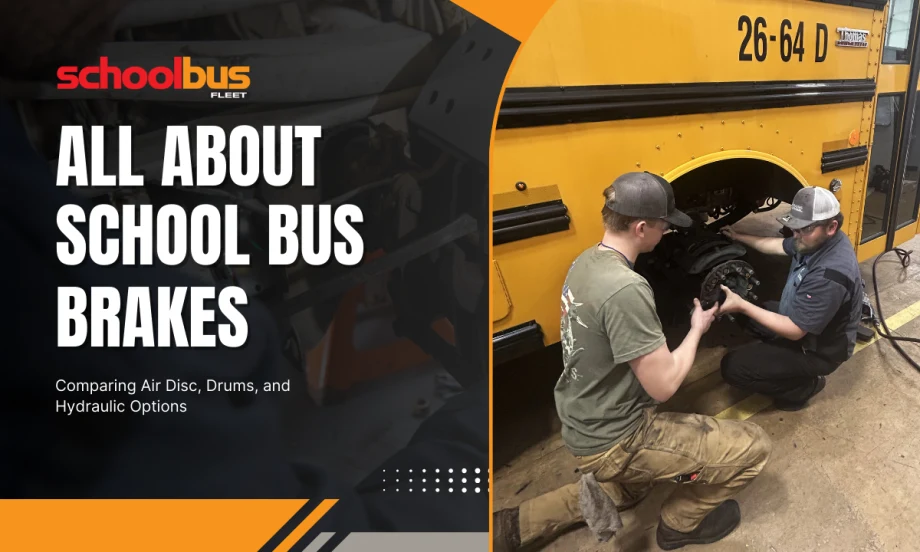
School bus braking technology has advanced significantly over the last decade, yet many fleets still hesitate to move away from traditional air drum brakes. Wilson County Schools was not.
Wilson County Schools/School Bus Fleet
- The article examines the differences in cost, performance, and maintenance among school bus air disc, drum, and hydraulic brake systems.
- It analyzes how each brake system performs within real-world fleet operations, providing insights into their practical advantages and drawbacks.
- The post encourages readers to consider whether it's time to evaluate and possibly upgrade their current school bus brake systems based on these factors and expert opinions.
*Summarized by AI
Pepsi or Coke, cats or dogs, air disc or air drum brakes. The things we all probably feel strongly about — or at least those who work in a garage for the last part, specifically.
Whether your school buses run with air disc, air drum, or hydraulic, you’re probably loyal to the system you know and trust. For most, that means the traditional air drum brakes. But some say it might be time to consider a change (if your state allows), as air disc systems gain popularity.
One of those is Shane Cook, fleet manager for Wilson County Schools in Tennessee. “We made the switch to air disc brakes in 2017 and have not looked back,” he told us. So, we asked more to learn what led to the change of heart.
But first, the basics.
A Quick Comparison of the Most Common School Bus Brake Systems
Air Drum Brakes
Long considered the standard for heavy-duty vehicles.
- How they work: Compressed air pushes brake shoes outward against a drum to slow the bus.
- Pros: Simple and widely known among mechanics. Easy parts availability. Durable, cost-effective, and provides proven braking power.
- Cons: Prone to fade and more maintenance. Very heavy drums.
- Best for: Type C and D buses on established routes with predictable traffic and flat to gently rolling terrain.
Air Disc Brakes (ADBs)
Recently gaining more popularity.
- How they work: Compressed air squeezes brake pads against a rotor.
- Pros: Better cooling and consistent stopping power, easier maintenance.
- Cons: Higher priced upfront, more specialized parts needs, and technicians may require more training.
- Best for: Type C and D buses on hilly, high-speed, and/or longer-mileage routes and heavier loads.
Hydraulic Brakes
Used more often on smaller vehicles with lighter loads.
- How they work: Compressed brake fluid (not air) squeezes brake pads against a rotor.
- Pros: Similar feel to automotive brakes, relatively easy maintenance, no special CDL certification for air brakes.
- Cons: Requires fluid to function, prone to rust.
- Best for: Type A buses or MFSABs operating at lower speeds with frequent stops.
Brakes of Choice Across Bus Fleets
While air drums have been king for decades, there is a slow shift happening.
We already mentioned that Wilson County School made the switch to air discs, as did Wisconsin-based contractor Kobussen Buses, for its new bus orders.
Meanwhile, Summit School Services specs both hydraulic and air brake systems. The choice comes down to the location, driver and maintenance staff qualification profiles, operating parameters, and customer requirements.
Summit previously piloted air disc brakes, and the experience was mixed with significantly higher pad wear on the front disc rotor, Wayne Skinner, senior vice president, fleet, maintenance, & procurement, said. The company’s new Type C EVs (118 and counting) all have air disc brakes, which they plan to evaluate for reliability and cost savings.
For operators of electric school buses, air disc brakes’ lessened likelihood of brake fade can be a concern for EVs that rely on regenerative braking to recover energy. Air disc brakes remain the preferred option for Class 8 commercial battery-electric vehicles (BEVs), according to Bendix.
Maintenance Considerations
Air drums are a heavy lift — literally. An individual drum can clock in anywhere between 80 and 160 pounds. You’ve gotta be a physically strong person to handle those, Dan Kobussen commented, “and there seems to be fewer folks out there willing to do that,” he said, noting the higher potential for workers’ comp claims.
Air disc brakes bring their own considerations.
“The biggest maintenance mistake we see users make is not periodically inspecting the foundation brake,” Brian Screeton, manager of technical training and service at Bendix Commercial Vehicle Systems, said. “This lack of attention will let small issues turn into larger, more expensive issues, especially with air disc brakes.”
Jacob Lawless, fleet manager at Kobussen Buses, cites the drawback of frequent pad changes on air disc brakes. “New techs can miss the window to replace pads and cause costly damage to the rotor and/or caliper,” he warned.
While it may be harder to detect air disc brake wear, pad replacement is faster and easier. Bendix estimates it takes about one-quarter of the time compared to drum systems, with longer service intervals due to extended friction life and reduced component wear.
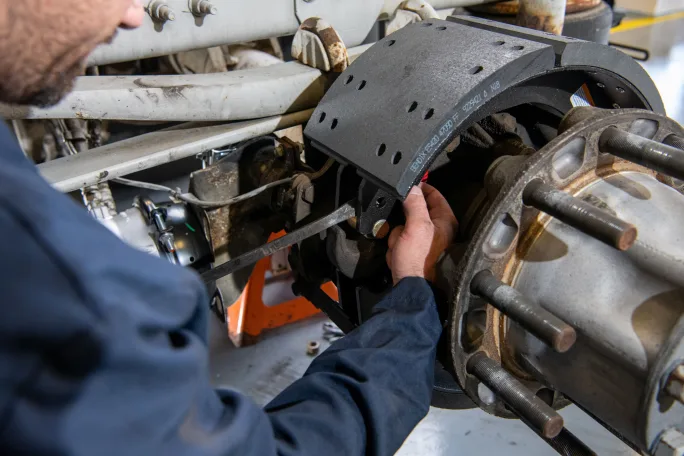
Bendix recommends checking drum brake adjustment weekly by looking at the brake stroke either visually or by measuring it.
Bendix Commercial Vehicle Systems
To ensure a seamless switch from drums to discs at Wilson County Schools, Cook made sure his technicians were properly trained on the differences in components, inspection, and repair. They brought in trainers from Bendix to deliver a class on the ADB22X system.
They also needed some new tools to do the job right. Cook’s team invested in the DBD-200, a disc brake dolly that handles both calipers and rotors to save some heavy lifting, as well as the X1HD brake lathe from Pro-Cut Solutions. The latter was used to turn rotors instead of replacing them each time.
One benefit to the air disc over the air drum is that there is no brake stroke to check, Cook said, since the internal chamber is connected to the caliper. However, Bendix advises that while checking tire pressure (or every four months), techs should inspect the caliper running clearance, brake pad thickness, and rotor.
Hydraulic brake setups on Class 6 buses provide reliable performance, Skinner noted, though supplier variety at the OEM level results in different diagnostic tool requirements and repair procedures.
Over time, Summit did see a change in fluid viscosity, absorption of moisture, and in its stop-and-go cycle during pick-up and drop off. “It is imperative that brake fluid quality remains important, and replacement brake fluids used are of the appropriate type,” he said. “Rotors and pads are to be checked regularly during preventive maintenance inspection.”
All of Summit’s air brake systems now have automatic slack adjusters, and Skinner reminds that checking for proper function or replacing them promptly will ensure optimal performance.
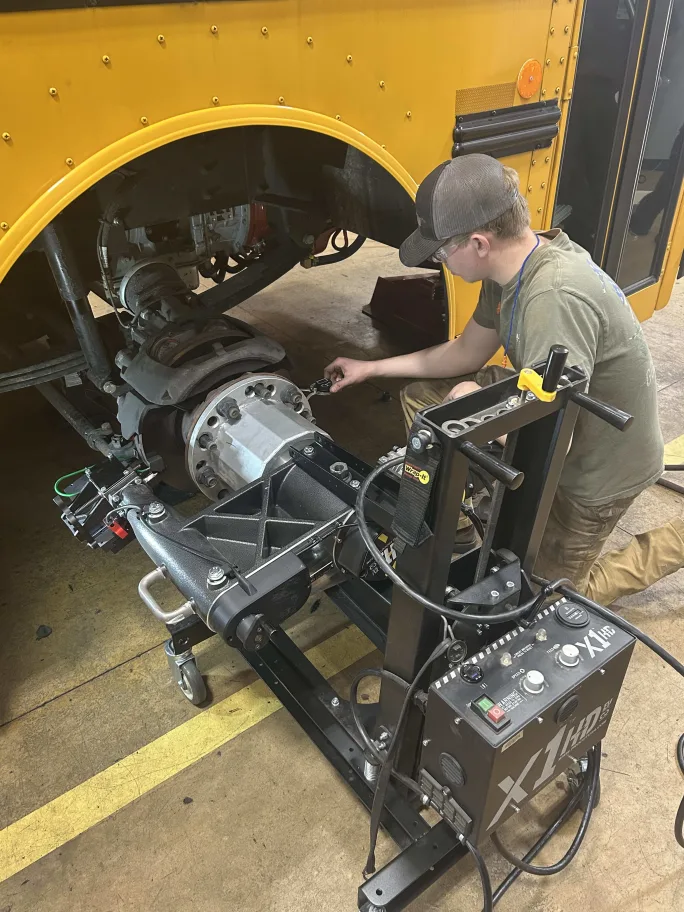
A technician at Wilson County Schools uses the Pro-Cut Solutions X1 air disc brake lathe.
Wilson County Schools
Performance: Stopping Distance, Fade, and Control
For hybrid systems (when ADBs are on the steer axle and drum brakes are on the drive axle), stopping distance is shorter than it is on all-drum vehicles. If ADBs are on all axles, it will have the shortest stopping distance, according to Bendix.
Brake squeal and noise with their previous drum brake systems were a constant issue on Wilson County school buses. When they switched to air disc, complaints declined by over 90%. And the district’s drivers like the greater stopping distance since they feel more like brakes on passenger vehicles.
Since brake fade is prevalent on drum brake systems from thermal expansion, there is greater running clearance. This means the drum brake must compensate for the increased clearance to initiate braking, resulting in longer stopping distances.
Lawless also compliments air disc’s stopping distance, noting it “greatly improved” by up to 40%, mostly gained in reduced brake fade.
Maintenance & Lifecycle Costs
While air disc brakes can be more costly up front, they can save in the long run.
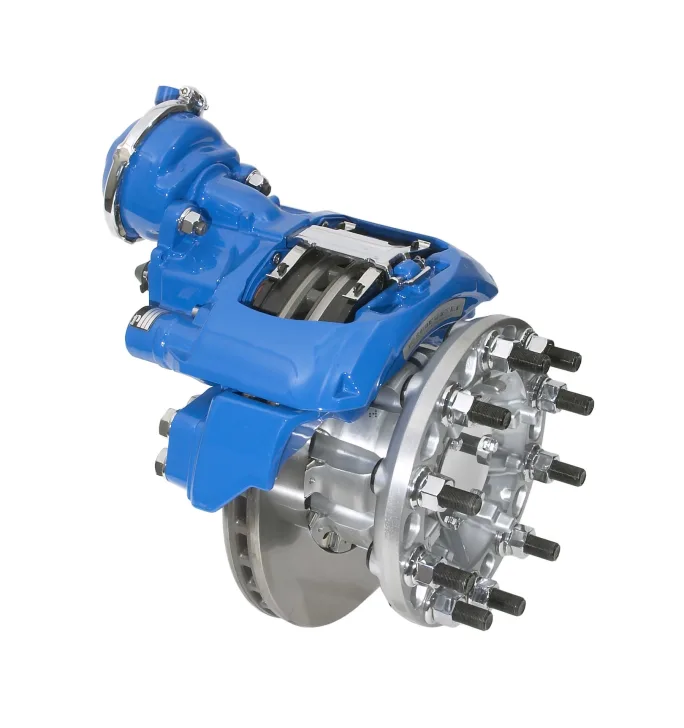
Bendix’s air disc brake model ADB22X was introduced to the school bus market in 2008 and has continued to grow in adoption.
Bendix Commercial Vehicle Systems
“Our maintenance costs have gone down due to not having to purchase shoes and drums on air drums, to just replacing the pads and turning the rotors on the air disc,” Cook said.
Wilson County found that parts for the drum brake shoe kit and two brake drums averaged $250 to $300 each for replacement. Air disc pads, on average, range from $110 to $140 per axle. “We also save extra money by not having to replace the automatic slack adjusters and brake chambers that fail more often on drum brake systems,” he explained.
Lawless said that, so far, Kobussen Buses hasn’t seen cost savings with air discs. He reported that the rotors last longer, but parts are steeper, with calipers about 3-5 times more expensive.
However, as Screeton points out, parts and labor have risen over the years across the board. Projections through 2028 indicate a 20% higher labor demand than expected, pushing wages upward as shops compete for a limited workforce.
Further, distributors and dealers report increases of 15% to 25% across truck parts, with brake drums seeing even steeper increases of 40% to 60%.
“From a Bendix brake perspective, our ADB22X air disc brakes are manufactured in Bowling Green, Kentucky, and are USMCA compliant for North American content,” Screeton said. “In general, rising labor costs continue to be influenced by the lingering effects of prior years’ high inflation.”
Driver Experience & Safety Features
According to Kobussen, the only drawback of air disc brakes is that they are spring-loaded, so if you lose air, you need an air pump driven off the engine. In most school buses, the pump is driven by a belt, and that belt can come off or wear out, leaving the bus dead in the water if you have no air.
Beyond braking performance, air disc brakes at the wheel ends help optimize the performance of higher-level safety systems, Bendix said. And, they can play a role in supporting quiet, low-emission vehicle environments. “The brake’s consistent engagement and lower NVH (noise, vibration, and harshness) profile help reduce noise pollution and contribute to a smoother, more comfortable driving experience,” Rick Conklin, director of engineering, Wheel-End, at Bendix, said.
Plus, ADBs help mitigate accident risk from its shorter stopping distance performance.
In both air disc and air drum brake systems, emergency brakes are designed to lock on if air pressure is lost, providing an additional layer of safety.
Anti-lock braking systems (ABS) and electronic stability control (ESC) features have become standard across both systems. Make sure drivers fully understand the performance of these safety-assist features.
As collision mitigation systems gain acceptance, air disc brakes can enhance them by providing consistent, predictable braking performance, noted Bendix. Summit School Services appreciates this extra layer of safety, though they note not all locations have air brake-qualified/endorsed drivers.
When it comes to hydraulics, if there was a brake line failure, the system is designed to prioritize safety. Alarms alert the driver immediately, and the parking brake will engage once brake fluid is consumed. This mechanism ensures the vehicle comes to a complete, secure stop.
No matter what brake system is used, make sure drivers give them a check as part of their pre-trip. For hydraulic brake vehicles, that involves a visual inspection for fluid leaks, dash gauge notifications, and pedal feel.
The Future of School Bus Brakes
The industry appears to be slowly moving toward air disc brakes, and Keith McComsey, Bendix technical sales lead, Wheel-End, says thousands of new school buses are equipped with them each year. All major North American school bus manufacturers, including Blue Bird, IC Bus, and Thomas Built Buses, offer the Bendix ADB22X as a factory-installed option.
To evolve with the market as electric vehicles ramp up, Bendix is ready to support emerging needs, from compatibility with regenerative braking strategies to tighter integration with electronic control systems and diagnostics.
As much as Cook loves air discs, he wishes there was a better way of knowing when pads need replacement. He hopes to see a day when it’s standard for sensors to be installed on the brake pads to alert the driver via a dashboard when replacement is needed.
One of Skinner’s long-term brake wishes is for lower maintenance costs for air disc systems, especially since they can be prone to corrosion due to road salt. “As these systems improve, we would expect the transition to disc brakes would be more appropriate for school buses,” he said. (To add to that, he also mentions hope for a brake shoe life predictability indicator system to alert shop managers based on driver behavior, temperatures, prior repairs, or replacement timing).
“We hope that school systems continue to want safer braking systems adopted in their school bus specs, gravitating toward variations of air disc brakes, whether on steer only and/or on all axles,” McComsey said. “The more ADB axles there are, the shorter the stopping distance, and the more reliable/consistent the stops are, time after time.”
Regardless of which brake system makes your buses stop, remember that regular preventive maintenance remains crucial to peak performance and condition.
Quick Answers
Rethinking your school bus brake system can lead to improved cost-efficiency, enhanced performance, and reduced maintenance needs, all of which contribute to safer and more reliable operations.
*Summarized by AI
More Maintenance
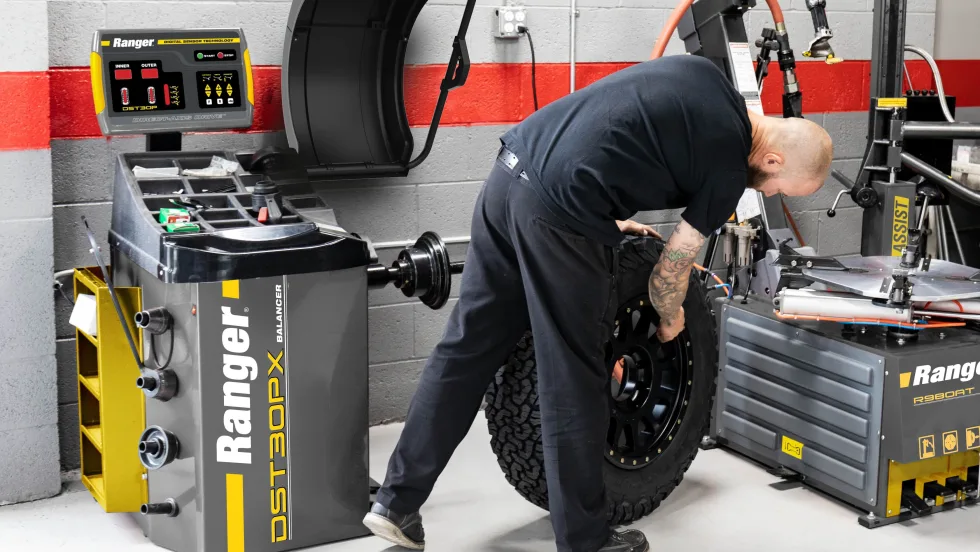
BendPak Launches Ranger DST30PX Wheel Balancer
BendPak's new wheel balancer handles tires up to 43 inches in diameter, with a reinforced design, precise weight placement, and faster service cycles.
Read More →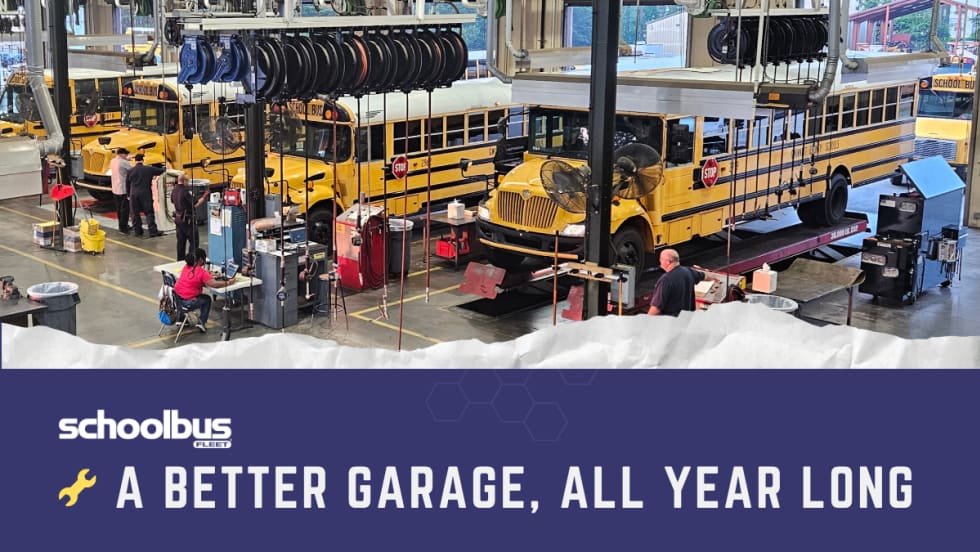
Tips for Ensuring School Bus Garages Are Safe and Warm Year-Round
Cold maintenance bays and rising heating costs? Learn how school bus garages can improve comfort with targeted heating, better airflow, and winter preparation.
Read More →
ASE Highlights School Bus Technician Certification Requirements
ASE is encouraging school bus maintenance professionals to maintain their certifications, highlighting seven specialized tests and five-year renewal requirements.
Read More →
International Adds E-Commerce Capabilities to Fleetrite.com
IC Bus customers can now browse, buy, and track shipments for more than 400,000 aftermarket parts online.
Read More →
The Most Expensive Thing You Do Before Selling a School Bus: Wait
When should you sell an aging school bus? Learn how maintenance, mileage, corrosion, specifications, and timing can affect resale value long before the auction.
Read More →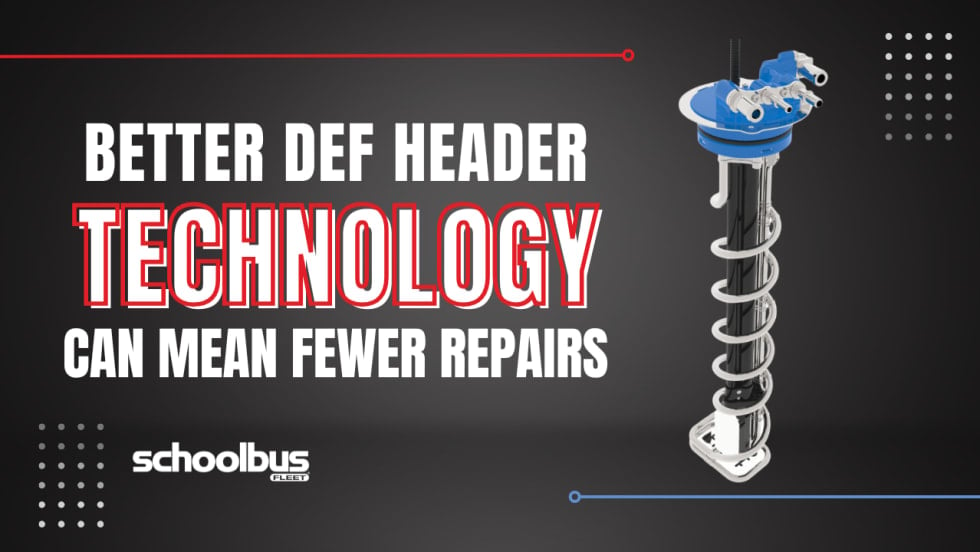
The Evolution of DEF Header Technology: What School Bus Operations Should Know at Replacement Time
See what school bus fleets should consider when replacing DEF headers to improve reliability, reduce repeat repairs, and control maintenance costs.
Read More →
The Essential Guide to School Bus Maintenance and Student Safety
Your district's buses carry students to school every day. This guide shows how predictive maintenance powered by fleet data helps keep buses reliable, drivers accountable and students safer from the first bell to the last stop.
Read More →
Kerry Brothers Grows Michigan School Bus Repair Network
The acquisition of Downriver Truck and Bus expands Kerry Brothers’ school bus maintenance footprint across southeast Michigan, adding repair capacity, diagnostic resources, and state inspection support.
Read More →
Noregon Introduces CAN Bus Diagnostic Tool, Expands JPRO Features
CAN Mentor and the latest JPRO update aim to simplify vehicle network diagnostics and improve repair efficiency for technicians of all experience levels.
Read More →
Cummins on Smarter, Simpler Engine Innovation
Cummins discusses its first-ever gasoline engine for school buses, EPA 2027, and why bus fleets still want durable, simpler internal combustion options.
Read More →