




Rating an oil's quality can be a slippery task
How do you choose from all the motor oils on the market? How do you even know you get what you're paying for?
Mechanics are fond of saying only two things will kill an engine: excessive heat or lack of lubrication. And that is more true today than it ever was, because modern engines are not only designed to burn cleaner, but also run hotter. So what's the right oil for your buses? How do you choose from all the motor oils on the market? How do you even know you get what you're paying for?
There are many sources for the answers to those questions, but one place you can get easy-to-understand charts, backed up by technical data, is the Institute of Materials (IOM) in Midland, Mich. IOM is an independent organization that produces research reports on oil samples it collects from around the world, then makes them available to oil companies, automakers and, more recently, fleet managers. They are called VoxPop™ reports, and can be ordered at $20 apiece on any brand of oil by phoning 800/561-8247 or sending an e-mail to voxpop@savantgroup.com.
With all of that information you should know which oil - of all those available on the market - is best. Right? Wrong. The best oil among all the choices falls under the heading of, "it depends." It depends on what you need. For instance, some oils pump better in cold weather; others have a superior ability to maintain their integrity at high temperatures; and there are still others that tend to burn off at running temperature. So here's the $64,000 question: If you're in New York in the dead of winter, do you really car about oil burn-off so long as the oil pumps quickly to the bearing when you start the motor? Of course not. But there are a lot of other considerations, too. Just to make sure everyone is on the same wavelength, the IOM has produced some basic definitions to help people understand the nature of oil and how the classifications are established:
Viscosity. How fast an oil flows. This is the single, most important property of an oil. At any given temperature, the oil must be thick enough to separate rubbing surfaces (such as bearings from the crankshaft), yet thin enough to flow to areas needing lubrication (valve lifters, for instance).
Grade. The grade of an oil is the measurement of how fast it flows (viscosity). A rating system was established many years ago by the Society of Automotive Engineers (SAE) to determine each oil's viscosity and assign it a specific grade number. Thicker oil flows slower and has a higher SAE number.
Multigrade oils. Oils that have two SAE grades - for low and high temperature characteristics. Take SAE 5W-30, for example. The number before the "W" (for winter) tells you that when it's cold, the oil is thin and flows fast; the second number (30) indicates that when the oil is hot, it becomes thick and flows slower. Thus, in cold weather you want to use a multigrade oil with good start-up and flow behavior, such as a 5W-30. An older engine, or one that operates in a warm climate or at high temperatures, would perform better with a higher viscosity oil, such as a single grade 30 or 40, or a multigrade 10W-30.
Mineral oils. Also referred to as fossil-fuel oils, they come from petroleum deposits in the ground, created eons ago, and vary greatly in quality, sulfur content, how cleanly they burn and in the amount of carbonized deposits they leave on internal engine parts.
Synthetic oils. Can be either completely man-made or super-refined from mineral oils. Synthetics tend to have lubricating qualities that are resistant to high temperature breakdown and deposit formation. But since synthetics lack natural lubricating properties, additives are required. For that reason, the manufacturing process of synthetics is very important, which means not all synthetics are equal. Some high-quality mineral oils are better than some synthetics. In general, the best application for synthetics is in turbocharged/high-performance engines with tight tolerances and high operating temperatures. They need an oil that lubricates properly at start-up and protects the engine when hot. So consider using a synthetic or semi-synthetic oil, say a 5W-40.
Service classification. Set by the American Petroleum Institute, the classification appears in the donut-shaped ring on oil containers. The letter "S" followed by another letter refers to oil suitable for gasoline engines. The letter "C" followed by another letter and/or number refers to oil for diesel engines. Right about now, the question forming in your mind is: "Just because an oil company places the higher service classification on the oil can, how do I know the oil actually meets the standard?" Well, you don't. Since the IOM started testing random samples collected throughout North America 15 years ago, it has discovered some variance between claimed performance and reality: Many oils meet the specifications, but some don't. More importantly, there are significant differences among those that do. The IOM's research information shows that oil properties can vary widely. For instance, many oil companies produce an oil designed to compete for marketshare, and, in fact, it meets certain critical specifications - but just barely. Some also make a premium product that exceeds the specs. So while they claim to meet the same specs, there is a reason they have different marketing labels and prices: quality. Despite such variances, the overall quality of oil is generally good and improving across the board. When the IOM first began its random testing, 15 to 20 percent of the samples failed to meet specifications. Now only 7 to 10 percent fail.
Jeff Hansen is copy editor for Automotive Fleet magazine.
More Maintenance
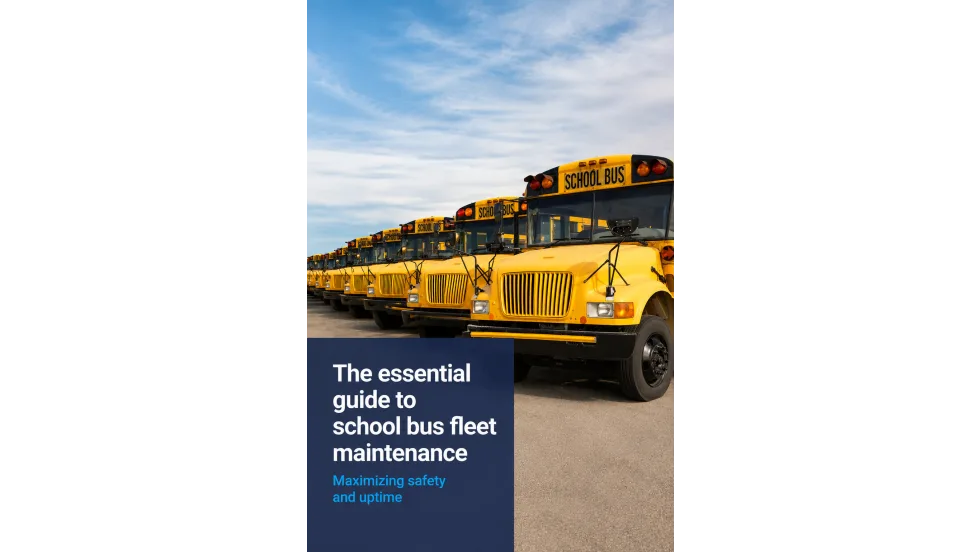
The Essential Guide to School Bus Maintenance and Student Safety
Your district's buses carry students to school every day. This guide shows how predictive maintenance powered by fleet data helps keep buses reliable, drivers accountable and students safer from the first bell to the last stop.
Read More →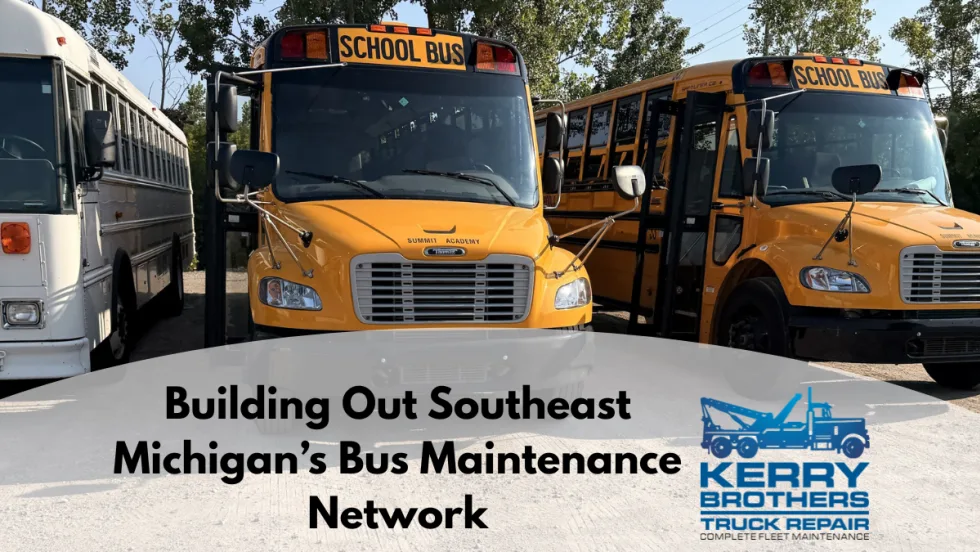
Kerry Brothers Grows Michigan School Bus Repair Network
The acquisition of Downriver Truck and Bus expands Kerry Brothers’ school bus maintenance footprint across southeast Michigan, adding repair capacity, diagnostic resources, and state inspection support.
Read More →
Noregon Introduces CAN Bus Diagnostic Tool, Expands JPRO Features
CAN Mentor and the latest JPRO update aim to simplify vehicle network diagnostics and improve repair efficiency for technicians of all experience levels.
Read More →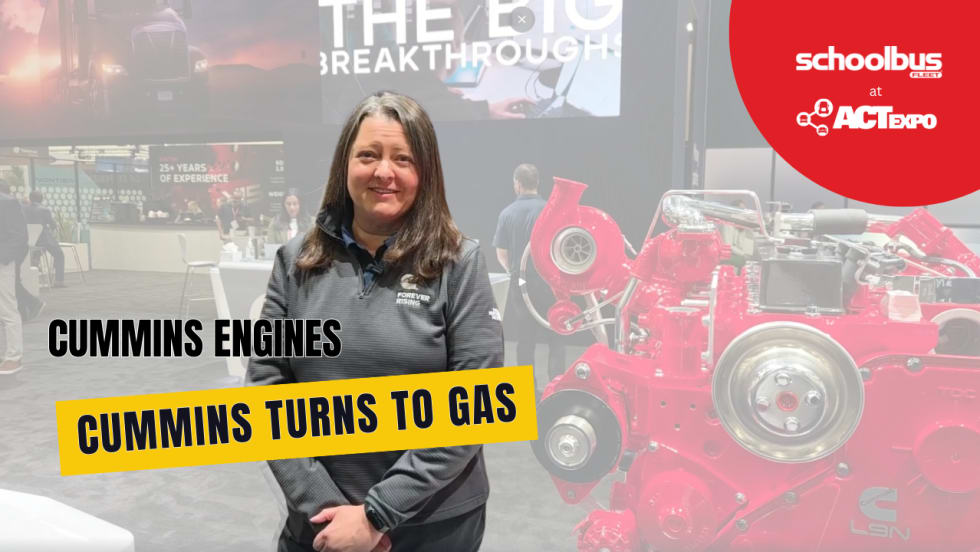
Cummins on Smarter, Simpler Engine Innovation
Cummins discusses its first-ever gasoline engine for school buses, EPA 2027, and why bus fleets still want durable, simpler internal combustion options.
Read More →
Report: 72% of Diesel School Buses Now Use Advanced Low-Emission Engines
New data shows advanced low-emission diesel technology continues expanding across school bus fleets, even as electric bus adoption gains momentum.
Read More →
Vampire Tools' CAIMAN 7.5-Inch Multi-Purpose Screw Extractor Long-Nose Pliers with Crimper
Vampire Tools introduced the VAMPLIERS Caiman 7.5-inch multi-purpose pliers, combining screw extraction, cutting, crimping, and gripping functions into a single tool designed for fleet maintenance professionals.
Read More →
How Advanced Diagnostics Helps Bus Fleets Stay Ahead of Repairs
Chat with Noregon’s Kevin Smallhorn at ACT Expo about bus diagnostic tools, telematics integration, CNG maintenance support, and strategies to help reduce downtime and improve uptime.
Read More →
How School Bus Fleets are Getting Ahead of Breakdowns
Don’t let bus downtime wear you down. Here’s how bus operators are shifting from manual processes to AI-powered, data-driven maintenance systems for improved reliability and safety.
Read More →
Pennsylvania School Bus Maintenance Team Praised for Dedication to Safety
Matthews Bus Company’s West Jefferson received a letter of commendation from the Pennsylvania State Police for their fleet inspections.
Read More →
From Chaos to Clarity: How School Districts Are Running Leaner Transportation Operations
Covering 38 routes on a Friday afternoon. Buses idling while routes overlap. Parents calling nonstop about late arrivals. Sound familiar? This whitepaper explores how district transportation leaders solved these exact problems — and what measurable results followed.
Read More →