




LEDs Poised for a Breakthrough in School Buses?
The major benefits of light-emitting diodes are increased safety and longevity, but do they outweigh the higher initial costs?
With their greater longevity, efficiency, reliability and safety, LEDs (light-emitting diodes) are beginning to make inroads into the school bus industry, albeit slowly. There are hurdles to overcome, however, not the least of which is significantly higher initial costs. There’s also the reluctance of fleet managers to forsake the tried-and-true for a relatively untested newcomer. “This will not be one of those quantum leaps,” says Tom Turner, engineering manager at Blue Bird Body Co. in Fort Valley, Ga. “It may be several years before LEDs become dominant.” Over the next few years, however, fleet managers will begin to spec LEDs with greater frequency as body manufacturers expand their LED product options. The trucking industry already has begun to embrace LEDs for their ability to reduce labor and downtime costs. “I think it’s something that’s going to pick up in the next year or 18 months,” says Vance Nofziger, sales manager at Mid Bus Inc. in Bluffton, Ohio. School bus fleet operators, he says, are seeing the LED units on large trucks and transit buses and beginning to inquire about their application on school buses. Mike Sykes, marketing manager at Carpenter Mfg. in Richmond, Ind., says he’s seeing an influx of orders. “I’m starting to see it pop up in the seven-inch turn signals and stop and taillights,” he says. “I think you’re going to see a lot more volume, because of the longevity factor. They just don’t burn out.” “LED seems to be the up and coming thing,” agrees Howard Berke, sales manager at Whelen Engineering in Chester, Conn. His company manufactures LED products for fire trucks, police cars and ambulances. “We’ve noticed over the past few years that LEDs are coming on strong,” Berke says. His company now is developing LED products such as brake lights, taillights and turn signals for the school bus industry.
Initial cost is key issue
But cost will play a large role in LED’s growth, especially in the budget-conscious school bus industry. Sykes says the factory will charge approximately $150 more to install a four-inch LED lamp than its incandescent cousin. “If that’s what the customer specifies, that’s fine, but he’s going to pay for it,” he says. “We can’t offer it as a standard, not with that kind of additional cost.” “For school buses, this is a new technology that is establishing itself in terms of durability, longevity and safety,” says Turner, of Blue Bird Body Co. “We think the demand for LED systems will increase. And as the volume goes up, the unit prices will come down.” Because the upfront cost of LEDs is substantially higher than incandescents, few fleet supervisors have been willing to gamble on LEDs without a critical mass of evidence that the higher initial investment will be recouped through increased longevity.
Florida LEDs the way
But some fleets have already taken the plunge. In Florida, LEDs already have a presence on more than 4,000 school buses. Bill Schroyer, director of school bus fleet management for the Florida Department of Education, says the state has been requiring LED taillights on new school buses since 1996. “They have worked astoundingly well for us thus far,” he says. “They don’t require any maintenance.” Schroyer estimated that the cost of the LED taillight is about seven times greater than a similar incandescent unit. The higher initial cost of the LED, however, is more than offset by its longevity. “We save the time and labor of replacing incandescent bulbs, plus the cost of the bulbs themselves,” Schroyer says, adding that the typical incandescent taillight needs to be replaced every three to six months. In 1997, Clark County School District in Las Vegas, Nev., received approximately 118 buses with LED clearance lights. So far, none of them has needed replacement. “They’ve been trouble-free,” says Frank Giordano, garage manager at the district, which operates 980 buses. By comparison, he estimates “a handful” of incandescent lights probably would have needed replacement. Because of its success with the clearance lights, the district has become more ambitious with its use of LEDs. Giordano says the district recently received 74 buses outfitted with LED turn signal lights, taillights and brake lights. “These seven-inch LEDs just became available to us,” he says. Giordano believes that the higher buy-in for LEDs may be preventing some fleet managers from installing the units. He concedes that it may be several years before he knows if his district’s investment in LEDs is successful. “We’re banking on the long term,” Giordano says. “When a light goes out, the driver has to bring the bus in and somebody has to bring out a ladder and take the lens off and replace the bulb. This keeps us from having to deal with that constantly.”
Safety benefits lauded
In February, the Richland School District in Richland, Wash., held a press conference to herald the arrival of a Mid Bus school bus equipped with LED brake lights, turn signals and running lights. The emphasis was on LEDs as a safety feature. Chuck Keane, who has since left his position as Richland’s transportation director for the same post at Kyrene School District in Tempe, Ariz., cited two school bus accidents in western Washington that might have been prevented with LED brake lights. Because LEDs respond instantaneously, they maximize the amount of time that a trailing motorist has to react. Incandescent lights, on the other hand, require about 0.2 seconds to heat up and attain full brightness. “At 60 mph, that makes a difference of about a car length, which can be critical,” says Brandon Billingsley of Heavy Duty Bus Parts in Willis, Texas. Billingsley is working with CRS Electronics in The Woodlands, Texas, to bring LED technology to the warning-light systems on school buses. Billingsley says the LED warning light is a high-intensity strobe system that pulses four times when triggered. The unit has been displayed at summer trade shows, drawing enthusiastic response. “We feel that it’s going to be a much safer light,” he says. In addition to lasting longer than incandescent lights, LEDs also require less power. They draw only 15 to 20 percent of the amperage that an incandescent does. That reduces the drain on the alternator. “Anything that is more efficient is an advantage,” says Blue Bird’s Turner. “If you can reduce school bus lighting energy by a percent or two, it might make a difference.”
The future of LED
Diode technology is constantly improving. LED manufacturers are finding ways to increase the intensity of each diode. This allows them to use fewer diodes per lighting installation, resulting in lower costs. LED lamps can also be programmed to flash in a pattern. For example, diodes configured in concentric circles could be programmed to flash from the inside out or vice versa, giving the illusion of a bull’s-eye pattern. Turn signals could be programmed to flash from left to right for a right turn or in the opposite direction for a left turn. But these “special effects” would increase the cost of what’s already a relatively expensive option. With the extraordinary life expectancy of the LED lamp, the weak link in the replacement chain has moved from the lamp to the lens. Many LED manufacturers now use polycarbonate or acrylic to produce sturdier lenses, and coatings have been developed to provide better UV protection. Down the line there could be a push to add LEDs to the bus body section of the National Guidelines for School Transportation, the document produced by the National Conference on School Transportation, which meets every five years. Although LEDs most likely will not be addressed next year at the 13th conference in Warrensburg, Mo., the following meeting in 2005 could generate some serious discussion about the merits of LEDs.
More Maintenance
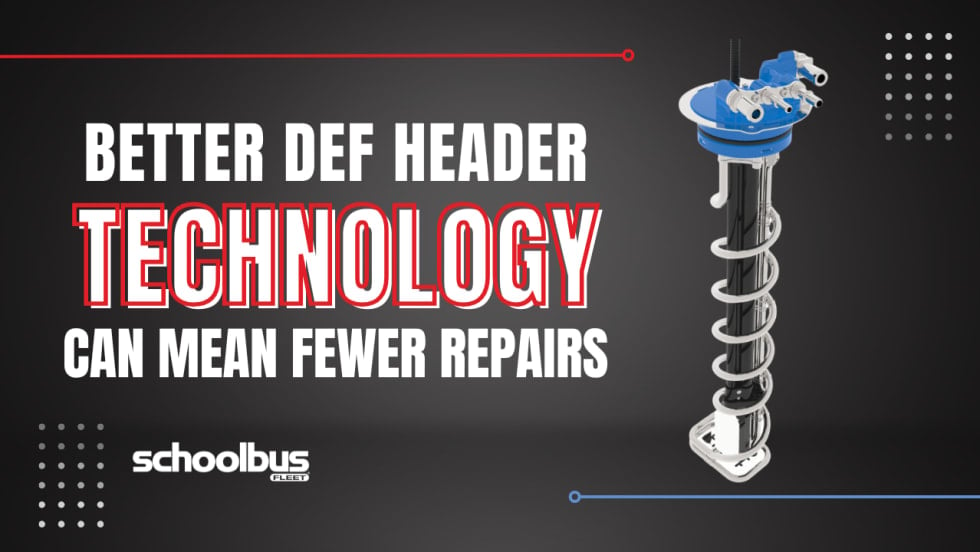
The Evolution of DEF Header Technology: What School Bus Operations Should Know at Replacement Time
See what school bus fleets should consider when replacing DEF headers to improve reliability, reduce repeat repairs, and control maintenance costs.
Read More →
The Essential Guide to School Bus Maintenance and Student Safety
Your district's buses carry students to school every day. This guide shows how predictive maintenance powered by fleet data helps keep buses reliable, drivers accountable and students safer from the first bell to the last stop.
Read More →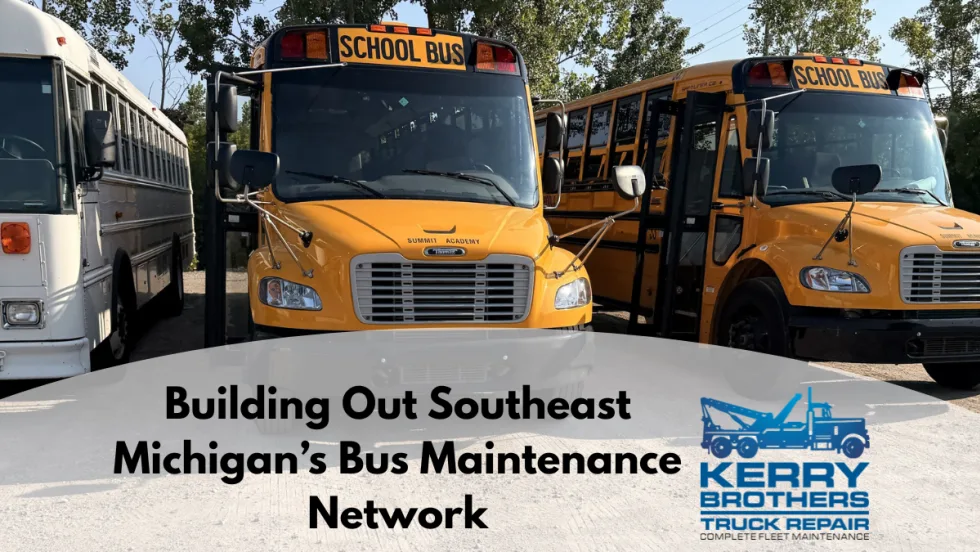
Kerry Brothers Grows Michigan School Bus Repair Network
The acquisition of Downriver Truck and Bus expands Kerry Brothers’ school bus maintenance footprint across southeast Michigan, adding repair capacity, diagnostic resources, and state inspection support.
Read More →
Noregon Introduces CAN Bus Diagnostic Tool, Expands JPRO Features
CAN Mentor and the latest JPRO update aim to simplify vehicle network diagnostics and improve repair efficiency for technicians of all experience levels.
Read More →
Cummins on Smarter, Simpler Engine Innovation
Cummins discusses its first-ever gasoline engine for school buses, EPA 2027, and why bus fleets still want durable, simpler internal combustion options.
Read More →
Report: 72% of Diesel School Buses Now Use Advanced Low-Emission Engines
New data shows advanced low-emission diesel technology continues expanding across school bus fleets, even as electric bus adoption gains momentum.
Read More →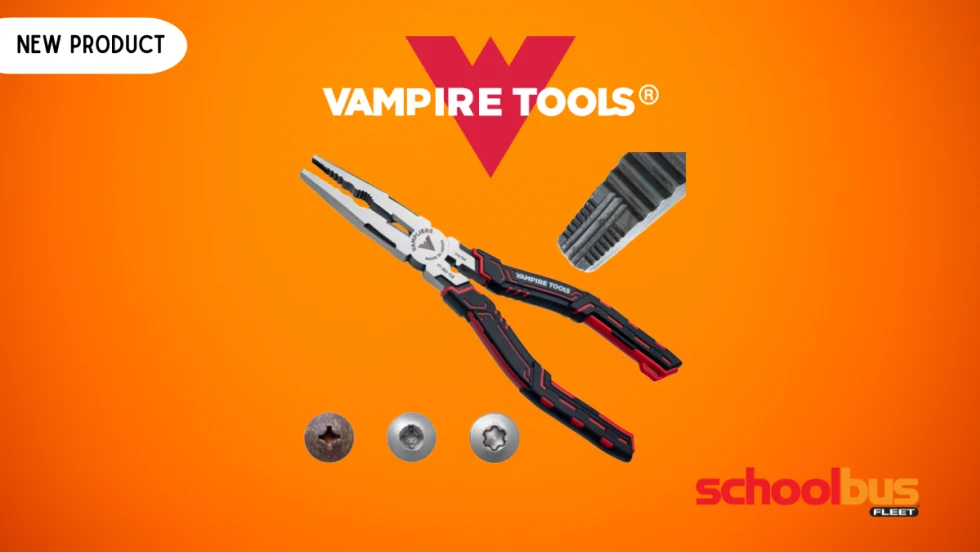
Vampire Tools' CAIMAN 7.5-Inch Multi-Purpose Screw Extractor Long-Nose Pliers with Crimper
Vampire Tools introduced the VAMPLIERS Caiman 7.5-inch multi-purpose pliers, combining screw extraction, cutting, crimping, and gripping functions into a single tool designed for fleet maintenance professionals.
Read More →
How Advanced Diagnostics Helps Bus Fleets Stay Ahead of Repairs
Chat with Noregon’s Kevin Smallhorn at ACT Expo about bus diagnostic tools, telematics integration, CNG maintenance support, and strategies to help reduce downtime and improve uptime.
Read More →
How School Bus Fleets are Getting Ahead of Breakdowns
Don’t let bus downtime wear you down. Here’s how bus operators are shifting from manual processes to AI-powered, data-driven maintenance systems for improved reliability and safety.
Read More →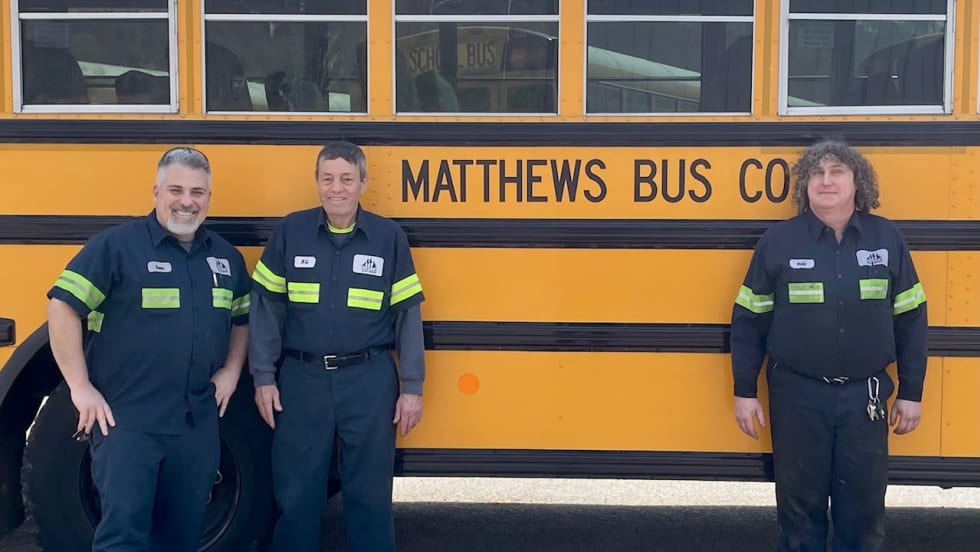
Pennsylvania School Bus Maintenance Team Praised for Dedication to Safety
Matthews Bus Company’s West Jefferson received a letter of commendation from the Pennsylvania State Police for their fleet inspections.
Read More →