




New maintenance survey highlights need for mechanics
Our survey found something that at first glance might seem the opposite of what you might expect. We asked: "Do you have problems recruiting and/or retaining mechanics?" The study found that managers of larger fleets were far more likely to say yes to that question than smaller fleets.
Our feature article, "Brakes and Mechanic Staffing Top List of Maintenance Concerns," (April/May 1999) illuminates a growing concern over finding and keeping good mechanics. These results are consistent with trends throughout other transportation industries. Although not as well reported, this trend is just as serious as the need to hire and retain good bus drivers. In fact, in many ways that we'll discuss below, good mechanics might be even more valuable to a school bus operation than good drivers.
Challenge grows with size
Our survey found something that at first glance might seem the opposite of what you might expect. We asked: "Do you have problems recruiting and/or retaining mechanics?" The study found that managers of larger fleets were far more likely to say yes to that question than smaller fleets. You might think that larger fleets should have fewer problems than smaller ones. After all, they tend to command larger maintenance budgets and staffs. Our survey findings imply that despite these size advantages, resources are not keeping pace with the challenges facing medium-size and large operations. The problem of mechanic retention is consistent with another of this survey's findings - that mechanics at larger district transportation departments and contractors work under more challenging conditions than their counterparts. For example, larger fleets expect their maintenance crews to service more buses (19.8 per mechanic) than the smallest fleets (12.8). In addition, larger fleets tend to be located in suburban and inner-city areas, where labor competition and wage pressures are highest. Thus, it becomes easier for mechanics and drivers to find higher-paying jobs elsewhere. This has also been true of two other transportation industries: public transit and commercial trucking.
Do not underestimate the issue
The message of this survey is two-fold. First, the pupil transportation industry must increase the attention level to this problem. It should be just as high on the radar screen as finding and keeping good drivers. In fact, it might be more important. After all, poorly maintained buses are also a very common cause of accidents. These maintenance-related factors include bad brakes, wheels out of alignment and malfunctioning lights, windshield wipers and mirrors. Think of it this way: A shortage of one driver puts one bus out of commission. However, one missing mechanic can put a significant portion of your fleet out of service - nearly 17 buses, according to our survey. There is another area in which good mechanics are valuable, and that is the bottom line. Properly maintained buses maximize the investment in them; conversely, as we all know, poor fleet maintenance is a "pay me later" approach. The second message of this survey is that you can't rob Peter the mechanic out of competitive wages and working conditions to pay Paul the driver adequately. Both are important to everyday operation and safety. Moreover, these messages must be communicated to your district business staff and school board. Let me put it another way: The industry forcefully advocates for the investment required to implement a reasonable replacement cycle and to keep up with enrollment growth. It has also been actively trying to keep up with growing driver competition so we make sure someone competent is behind the wheel of all those school buses. Should we do any less for those people working under the hood?
More Maintenance
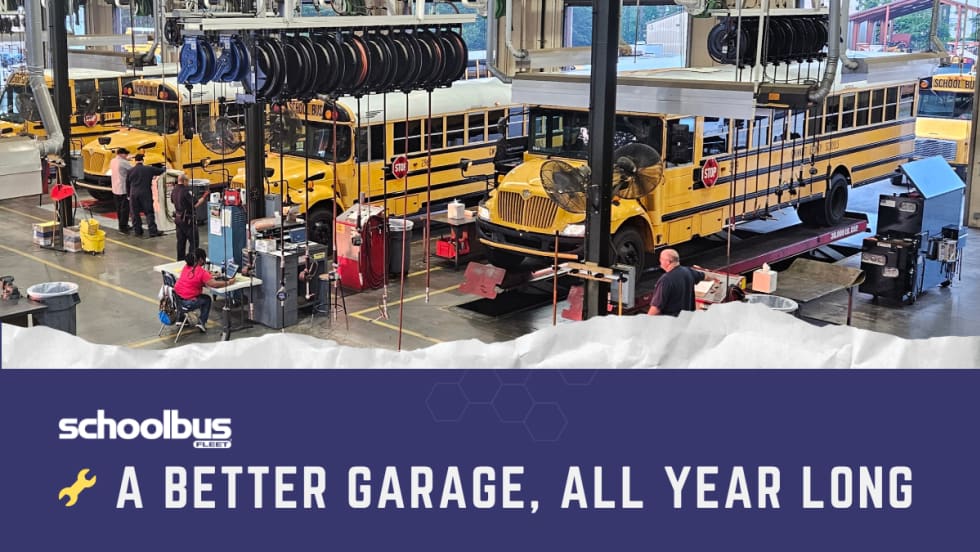
Tips for Ensuring School Bus Garages Are Safe and Warm Year-Round
Cold maintenance bays and rising heating costs? Learn how school bus garages can improve comfort with targeted heating, better airflow, and winter preparation.
Read More →
ASE Highlights School Bus Technician Certification Requirements
ASE is encouraging school bus maintenance professionals to maintain their certifications, highlighting seven specialized tests and five-year renewal requirements.
Read More →
International Adds E-Commerce Capabilities to Fleetrite.com
IC Bus customers can now browse, buy, and track shipments for more than 400,000 aftermarket parts online.
Read More →
The Most Expensive Thing You Do Before Selling a School Bus: Wait
When should you sell an aging school bus? Learn how maintenance, mileage, corrosion, specifications, and timing can affect resale value long before the auction.
Read More →
The Evolution of DEF Header Technology: What School Bus Operations Should Know at Replacement Time
See what school bus fleets should consider when replacing DEF headers to improve reliability, reduce repeat repairs, and control maintenance costs.
Read More →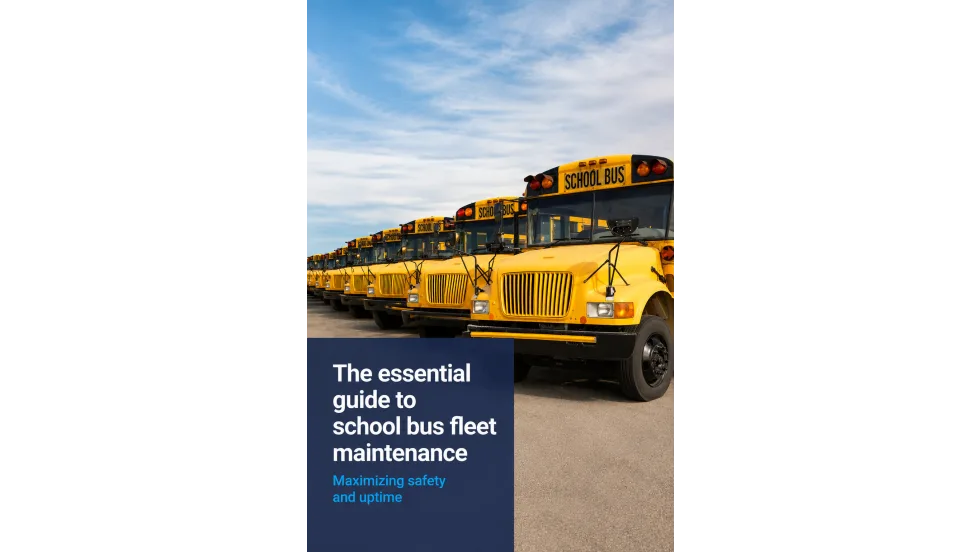
The Essential Guide to School Bus Maintenance and Student Safety
Your district's buses carry students to school every day. This guide shows how predictive maintenance powered by fleet data helps keep buses reliable, drivers accountable and students safer from the first bell to the last stop.
Read More →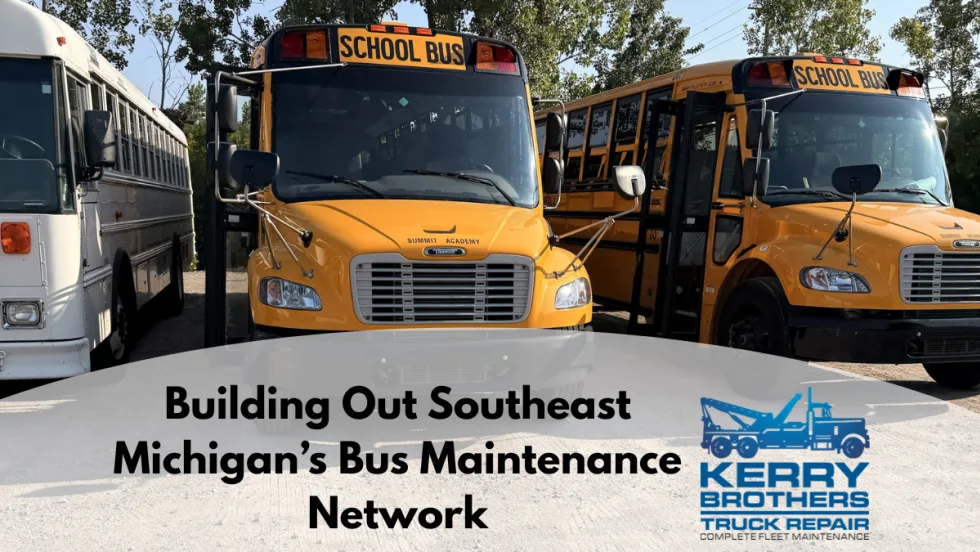
Kerry Brothers Grows Michigan School Bus Repair Network
The acquisition of Downriver Truck and Bus expands Kerry Brothers’ school bus maintenance footprint across southeast Michigan, adding repair capacity, diagnostic resources, and state inspection support.
Read More →
Noregon Introduces CAN Bus Diagnostic Tool, Expands JPRO Features
CAN Mentor and the latest JPRO update aim to simplify vehicle network diagnostics and improve repair efficiency for technicians of all experience levels.
Read More →
Cummins on Smarter, Simpler Engine Innovation
Cummins discusses its first-ever gasoline engine for school buses, EPA 2027, and why bus fleets still want durable, simpler internal combustion options.
Read More →
Report: 72% of Diesel School Buses Now Use Advanced Low-Emission Engines
New data shows advanced low-emission diesel technology continues expanding across school bus fleets, even as electric bus adoption gains momentum.
Read More →