




Harvard researchers compare diesel fuel and natural gas
In a head-to-head comparison of diesel fuel vs. natural gas in heavy trucks, the Harvard Center for Risk Analysis found, as you might expect, advantages and disadvantages for each fuel, depending on the criteria.

In a head-to-head comparison of diesel fuel vs. natural gas in heavy trucks, the Harvard Center for Risk Analysis found, as you might expect, advantages and disadvantages for each fuel, depending on the criteria. The center issued a report in January that compared the fuels based on emissions (particulates, nitrogen oxides and greenhouse gases), safety, performance and cost. The study was commissioned by Navistar International, a proponent of diesel fuel, but officials at the center say the report was unbiased. Although the report focuses on heavy-duty trucks, many of the findings apply equally well to school buses. Here’s what the three Harvard researchers (Edmund Toy, John D. Graham and James K. Hammitt) reported. . .
Pollution — Particulate: Because natural gas burns cleaner than diesel fuel, it produces fewer emissions of fine particulates, which have been linked to adverse health effects such as lung diseases like bronchitis and asthma. However, the use of regenerative particulate traps with low-sulfur diesel fuel, known as "green diesel," could significantly reduce the emission of fine particulates. Edge: Natural gas
Pollution — Nitrogen oxides: Natural gas engines have an advantage over diesel engines when it comes to nitrogen oxide (NOx) emissions. Although advances in "green diesel" technology could reduce NOx emissions, the tradeoff is a likely increase in particulate emissions. Edge: Natural gas
Pollution — Greenhouse gases: Because diesel engines are generally more efficient than natural gas engines, they burn less fuel and emit less carbon dioxide, which contributes to the greenhouse effect (global warming). Moreover, natural gas is primarily methane (another greenhouse gas), which can escape into the atmosphere during refueling. Edge: Diesel
Safety: Clearly, the use of natural gas poses greater safety concerns than diesel. Natural gas is highly flammable and must be stored under extreme pressure and temperatures, both with compressed natural gas (CNG) and liquefied natural gas (LNG). Diesel, although less flammable, has its own safety concerns, including the potential that it could leak into the environment and expose workers to toxic chemicals. Edge: Diesel
Performance: Diesel engines have performance benefits such as power and high fuel economy. In contrast, natural gas vehicles have poor fuel economy and a more limited driving range. In addition, the limited infrastructure for natural gas vehicles usually requires that fleet vehicles return to a central facility for refueling. Edge: Diesel
Cost: The cost of natural gas vehicles, including school buses, is typically higher than their diesel-powered counterparts. One study found that natural gas transit buses cost from $45,000 to $75,000 more than diesel buses. However, prices of natural gas buses would likely decrease if production was increased. In addition, the cost of diesel vehicles is likely to increase with the adoption of "green diesel" technologies. Fuel costs also have to be considered. The cost of diesel fuel fluctuates widely, making it hard to compare against natural gas. A gallon of LNG is generally less expensive than a gallon of diesel, but a valid comparison would require an analysis of energy equivalents. (Natural gas contains less energy per unit volume than diesel.) In addition, a transition to natural gas would require an investment in fueling stations, which can cost as much as $500,000. Maintenance facilities would also need to be upgraded to improve ventilation and leak detection systems. Edge: Diesel
Conclusions
Policy-makers need to consider the trade-offs that the use of each fuel necessitates. Neither fuel has a decided edge. A broader assessment might include fuel options such as liquid petroleum gas, alcohol fuels (methanol and ethanol) and hydrogen.
More Alternative Fuels
Bipartisan Bill Seeks to Extend Clean School Bus Program Through 2031
The proposed legislation would renew federal support for cleaner school buses as districts navigate funding uncertainty, rising fuel and infrastructure costs, and fleet replacement needs.
Read More →
Alt-Fuel Moves: Electric Bus Rollouts, Bidirectional Charging & Propane Growth
See which fleets are adding electric and propane school buses as districts and operators invest in charging infrastructure, bidirectional technology, and alternative-fuel expansion.
Read More →
Nobody Told Diesel Prices They Were Supposed to Come Down
With diesel prices surging, school bus fleets have new reason to stress-test fuel costs, consider diversification, and calculate what each route really costs to operate.
Read More →
Why Gasoline School Buses Are Making a Comeback
Gasoline is gaining ground in full-size school buses. See how today’s options stack up against diesel on cost, maintenance, emissions, performance, and more.
Read More →
EPA Opens $180M DERA Funding Round for Diesel Upgrades
The 2026 Diesel Emissions Reduction Act program seeks applications from eligible organizations to accelerate the retirement of legacy diesel vehicles.
Read More →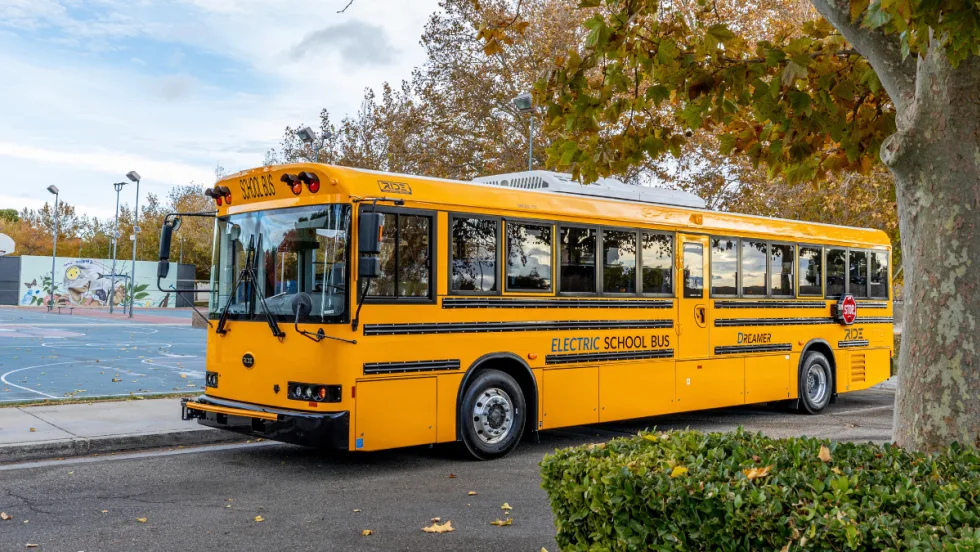
The Secret Life of an Electric School Bus Battery
Batteries change throughout years of daily routes, but degradation doesn’t necessarily mean the end. Here’s what operators should know about performance, safety, and second life.
Read More →
CALSTART and Forth Combine to Form Catalyst Mobility
The new name represents a renewed vision for the nonprofit focused on advancing clean, equitable, and affordable transportation solutions that move people and goods.
Read More →
Alt-Fuel Moves: New Buses, Charging Hubs & Real-World EV Testing
Propane and electric school bus deployments continue to grow as districts add new vehicles, expand charging infrastructure, and gather more real-world operating data.
Read More →
Fewer Electric School Bus Models Reshape the U.S. Market
WRI’s latest buyer’s guide points to a consolidating electric school bus market, but fewer options may reflect a maturing industry rather than fewer meaningful choices for school bus operators.
Read More →
The Fuel Budget You Can Actually Predict: How Propane Autogas Keeps Money in the Classroom
Learn how propane autogas helps school districts manage fuel costs with predictable pricing, lower maintenance, and reduced emissions from former transportation director Joel Stutheit.
Read More →