




Many options for alternative fuels
Alternative fuels are already being derived from an eclectic range of sources; the future will surely hold many more.
Beyond the environmental and economic benefits, one of the most exciting aspects of alternative fuels is the seemingly endless possibilities.
Alternative fuels are already being derived from an eclectic range of sources; the future will surely hold many more.
For example, we did a story last year about a Swedish company using black liquor, a byproduct of the pulp and paper industry, to produce an alternative fuel called BioDME. The company touts the fuel, a form of dimethyl ether (DME), as a renewable and cleaner alternative to diesel.
A few years ago, we wrote about a San Diego firm that says it can produce crude oil from a process using algae, sunlight, water and carbon dioxide. The "green crude" is reportedly chemically identical to petroleum, and the firm said it has used it to produce diesel, 91-octane gasoline and jet fuel.
Solid options
It remains to be seen whether some of these more exotic alt-fuel projects will pan out in the long term, but this type of innovative development is important in advancing the green movement.
For now, the pupil transportation industry has several proven alternative-fuel options available. School bus manufacturers offer models powered by propane, compressed natural gas (CNG) and hybrid-electric systems. Now, Trans Tech Bus is debuting an all-electric 42-passenger school bus.
Also, many operations have been running their school buses on biodiesel. Our latest Equipment Survey found that 10 percent of respondents have some or all of their buses powered by biodiesel. Seven percent are using some CNG, 3 percent are using some propane and 2 percent have some hybrid buses.
Those numbers aren't overwhelming at this point, but there's certainly a lot of room for growth.
If you're attending this year's National Association for Pupil Transportation conference in Cincinnati, be sure to attend the alternative-fuel technology forum. I've been asked to moderate this panel of experts from the major school bus manufacturers, who will discuss the features and benefits of the various alternative fuels and associated bus offerings.
Looking to the future
On the cover of the February 1965 issue of SCHOOL BUS FLEET was an intriguing illustration with the caption "School Bus of the Future."
The conceptual "bus," which was thought up by engineers and designers at Wayne Works, looked like something from a Jetsons episode. The craft would "float on a cushion of air," and the driver would "sit in a plastic bubble, operating a 'uni-control,' which replaces the steering wheel, accelerator and brakes."
Who knows? Maybe these space-age buses will be flying kids to school in the next century. But I would imagine that the "School Bus of the Near Future" won't look all that different from the big, yellow vehicles we have now.
The key change may be a "power shift" away from foreign oil and toward domestically produced, renewable energy sources. In other words, our school buses may always be yellow on the outside, but they'll keep getting greener inside.
More Alternative Fuels

Alt-Fuel Moves: New Buses, Charging Hubs & Real-World EV Testing
Propane and electric school bus deployments continue to grow as districts add new vehicles, expand charging infrastructure, and gather more real-world operating data.
Read More →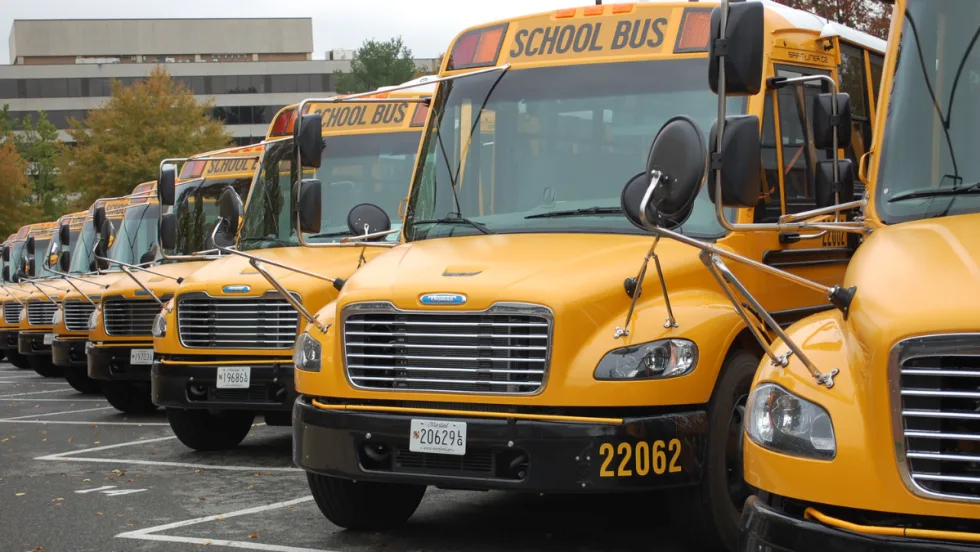
Fewer Electric School Bus Models Reshape the U.S. Market
WRI’s latest buyer’s guide points to a consolidating electric school bus market, but fewer options may reflect a maturing industry rather than fewer meaningful choices for school bus operators.
Read More →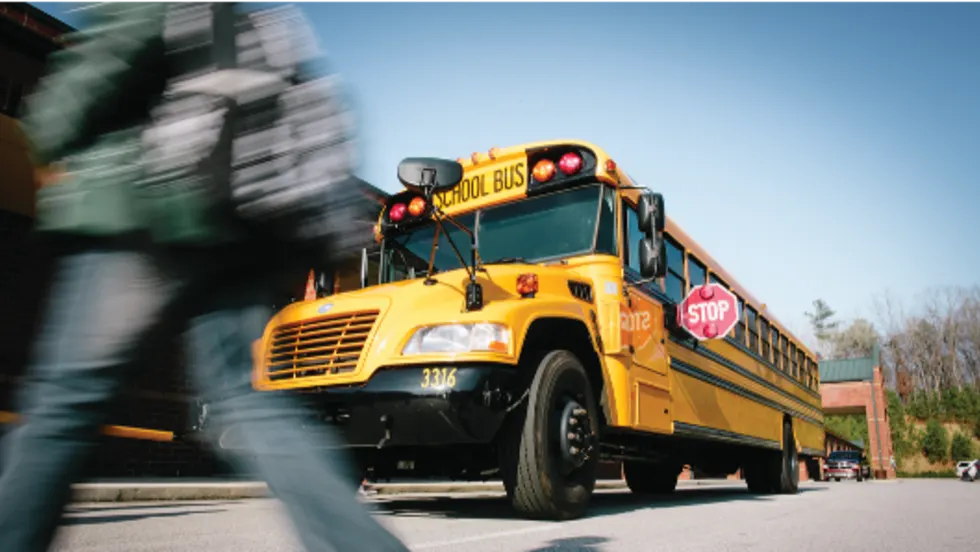
The Fuel Budget You Can Actually Predict: How Propane Autogas Keeps Money in the Classroom
Learn how propane autogas helps school districts manage fuel costs with predictable pricing, lower maintenance, and reduced emissions from former transportation director Joel Stutheit.
Read More →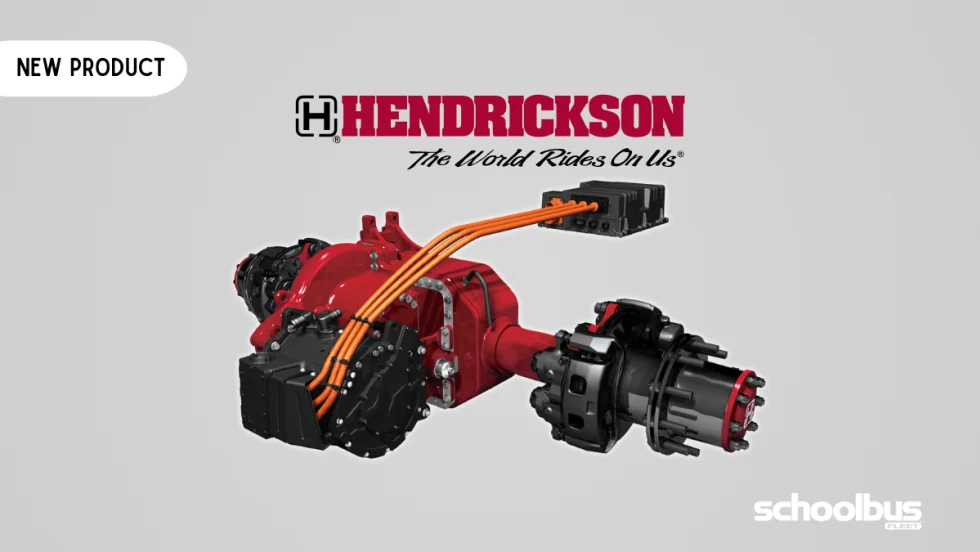
Hendrickson, Driventic Introduce New Electric Powertrain for School Buses
ELECTRAAX, the electrified, lightweight drive axle offers integrated ePowertrain efficiency and modular flexibility for Class 6–7 school bus use.
Read More →
The Mobility House Joins PowerFlex in Fleet Electrification Deal
The acquisition combines intelligent charging software, bidirectional charging expertise, and fleet electrification services to support the growing adoption of electric school buses across North America.
Read More →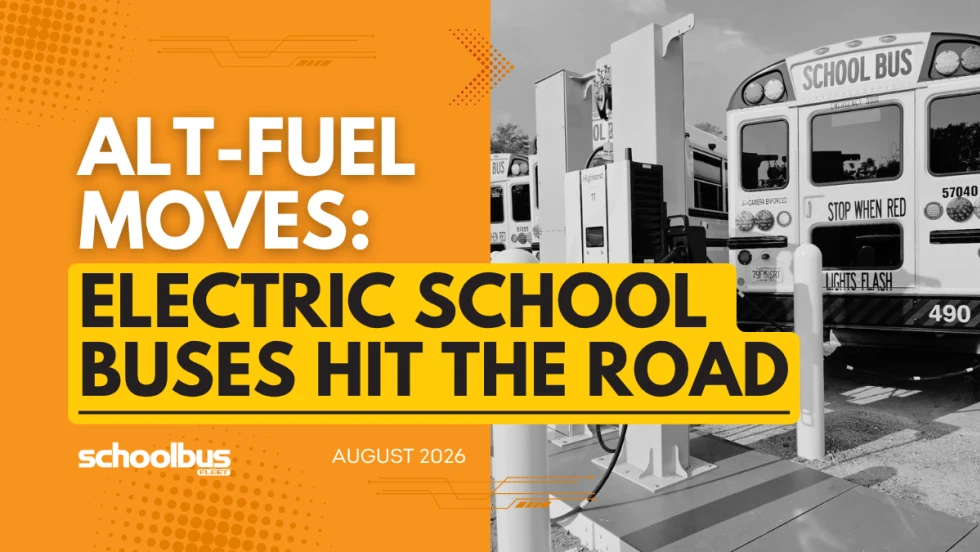
Alt-Fuel Moves: Electric School Bus Investments Hit the Road
See which districts across the U.S. are putting electric school buses into service, expanding charging infrastructure, and planning the next phase of fleet electrification.
Read More →
With Fuel Volatility Ahead, School Districts Turn to Propane
While diesel prices peaked above $5 this spring, districts with propane autogas-powered fleets paid under $2 per gallon, according to PERC.
Read More →
EPA Unveils Proposed Changes to 2027 Heavy-Duty Engine Rules
The federal agency has proposed changes to next year’s targets that would eliminate DEF derates, ease warranty requirements, and retain current NOx emissions standards.
Read More →
Alt-Fuel Moves: EV Charging & Infrastructure Projects Gain Momentum
The latest developments include new funding, charging infrastructure, utility investments, and fleet technologies designed to support the transition to electric school buses nationwide.
Read More →
Alt-Fuel Moves: Fleets Power Up Beyond the Bus
See how districts are pairing electric buses with charging, solar, and V2G technology to cut costs, boost resilience, and unlock new fleet value.
Read More →