





Closer Look: Southern States Among Largest Round 1 Clean School Bus Beneficiaries
Closer Look: What School Transportation Leaders Need to Know About the EPA’s 2023 Rebate Program
What’s different this time? Who qualifies as prioritized? What about repowers? We take a deeper dive into the latest Clean School Bus Program funding opportunity.
October 5, 2023
A comprehensive rundown of what applicants need to know before the Jan. 31, 2024 deadline for the latest Clean School Bus Program rebates.
Image: Canva
8 min to read
The Environmental Protection Agency is now accepting applications for the next round of rebate funding under the Clean School Bus Program – and some changes have been implemented since 2022.
For example, private contractor fleets are eligible to apply for funding and school districts that may not have qualified for prioritization status because, taken as a whole, they didn’t fall under the poverty threshold, can self-certify if subdistricts or individual schools within the district would qualify.
Also, the new rebate program includes an exception to the requirement that a new bus must serve the school district for a minimum of five years should a private bus fleet’s contract end and the bus goes on to serve a similarly prioritized district.
But some things haven’t changed:
The Clean School Bus funding ($500 million this time) is earmarked for replacing existing school buses with clean and zero-emission models. The program seeks to replace internal-combustion engine buses with electric, propane, or compressed natural gas (CNG) school buses. The funds also help with electric vehicle supply equipment (EVSE) infrastructure and installations.
The program offers a tiered funding approach based on a district’s prioritization.
Private schools aren’t eligible to apply.
Charter schools with a National Center for Education Statistics (NCES) district ID are eligible to apply.
Buses must be for use within the United States and U.S. territories, including Puerto Rico, the U.S. Virgin Islands, Guam, American Samoa, and the Commonwealth of the Northern Mariana Islands.
For every clean school bus received, a district must remove an older vehicle from its fleet.
What else do you need to know about the application process? Top of the list: the application deadline is 4 p.m. Eastern on Jan. 31, 2024.
All About Clean School Bus Eligibility
Public school districts with an NCES ID and charter school districts that can buy, lease, license, or contract school bus services are eligible to apply for the Clean School Bus Program’s 2023 rebate. So are third-parties, such as nonprofit school transportation associations, original equipment manufacturers, and contractor fleets.
Prioritized applicants include:
School districts listed in the Small Area Income and Poverty Estimates (SAIPE) School District Estimates for 2021 with at least 20% of students living in poverty.
Title I-funded school districts and charter school districts not listed in the SAIPE data set.
Title I-funded large school public-school districts with more than 35,000 and/or 45 public schools, that are in SAIPE but don’t meet the 20% poverty threshold if they choose to self-certify their low-income prioritization status.
School districts in U.S. territories.
Rural school districts.
Bureau of Indian Affairs-funded school districts.
Head Start and community-based childcare programs can’t directly apply for funds, but if they operate as part of an eligible school district, the district could apply for funding to replace Head Start’s buses. Such a project couldn’t use other federal funds, however.
Technical school districts that provide bus service to elementary and/or secondary schools also are eligible to apply.
Indian tribes, tribal organizations, or tribally controlled elementary and secondary school districts can apply, but tribal colleges cannot.
Electric vehicle charging companies count as eligible contractors under the Clean School Bus Program and therefore can apply for funding.
New buses can be electric, CNG, propane, or a combination. However, the EPA doesn’t accept engine replacements, upgrades, conversions, or retrofits.
Older buses to be replaced should be:
Model year 2010 or older diesel-powered.
Gross vehicle weight rating (GVWR) of at least 10,001 pounds.
Operational at the time of application submission.
Actively serving a public school district at least three days per week on average during the 2022-2023 school year.
The replacement bus should be model year 2022 or newer, conforming to all applicable Federal Motor Vehicle Safety Standards. The buses must be purchased; they can’t be leased. That said: the Clean School Bus Program does allow districts to replace buses that are currently leased.
School buses under the program are exempt from the Build America, Buy America (BABA) requirements, but electric charging infrastructure must comply with BABA. The program doesn’t cover propane or CNG fueling infrastructure.
None of this can happen without knowledge of school boards. According to the EPA, school transportation directors or others applying for funding must obtain a certificate of awareness from their school boards to ensure their eligibility.
“Some school boards may have internal policies requiring a resolution before applying for federal funds,” stated an EPA Q&A document. “EPA encourages applicants to work with their school board early in the application process to ensure that, if selected for funding, the project can move forward as expeditiously as possible.”
Detailing EPA Funding Amounts
Applicants can seek funds to replace as many as 25 school buses. The maximum rebate amount an applicant might receive is based on the replacement bus fuel type, bus size, and prioritization status.
Applicants that meet at least one prioritization criteria can get up to $345,000 per zero-emission Type C or D bus and charging infrastructure. Smaller zero-emission buses along with charging infrastructure could be covered as much as $265,000. The program offers rebates for CNG buses between a maximum of $30,000 and $45,000 and for propane vehicles between a maximum of $30,000 and $35,000.
Non-prioritized applicants can get as much as $200,000 for the full-sized bus and charging infrastructure, while smaller vehicles would have up to $145,000 in rebate funding. The rebate for CNG buses would fall between a maximum of $20,000 and $30,000, while propane vehicles get a rebate between a maximum of $20,000 and $25,000.
Applicants also can request up to $20,000 per bus in additional funds to equip ADA-compliant buses with wheelchair lifts. School districts in Alaska, Hawaii, Puerto Rico, the U.S. Virgin Islands, Guam, American Samoa, and the Commonwealth of the Northern Mariana Islands, or anyone applying on their behalf, can also get up to $20,000 per bus in shipping costs.
Those who are selected may get further funding relief thanks to tax credits available through the Inflation Reduction Act. The Commercial Clean Vehicle Credit provides as much as $40,000 for buses. The Alternative Fuel Vehicle Refueling Property Credit offers up to $100,000 for charging and refueling infrastructure.
Selection and Notification Process
Bus rebate applications received by the deadline will go through a threshold eligibility check before entering lottery selection. Applications that fall below the threshold don’t go to the lottery. Eligible applications then go onto a single ordered list with a random number generator lottery process.
Then the lottery follows five steps:
The highest-ranked applications from each state and territory that submitted an application is selected regardless of vehicle type and prioritization status for the Clean School Bus Funding Pool.
Other applications seeking zero-emission, CNG, propane, or any combination of those and that meet at least one prioritization criteria are selected for the Clean School Bus Funding Pool until the pool is allocated.
Other applications from districts that don’t meet prioritization criteria go next until the Clean School Bus Funding Pool is allocated.
Remaining applications that solely sought zero-emission buses meeting prioritization criteria are selected for the Zero-Emissions Funding Pool until that pool is allocated.
Finally, applications just for ZE buses that aren’t prioritized are selected for the Zero-Emissions Funding Pool until that’s allocated.
Once that process is finished, the EPA reviews the applications to confirm all necessary documentation is available and that the applicants meet all requirements.
Applications that aren’t selected during the lottery go in random number order on a waitlist, so if a selectee doesn’t finish the remaining required steps, drops out, or is deemed ineligible, the funds allocated to them might be made available to another applicant on the waitlist.
The EPA expects to notify selectees within 60 days after the application deadline in January.
Getting Those EPA Funds to the Applicants
After selection, selectees have six months to submit an online payment request form (PRF) with documentation that shows the applicant ordered their replacement school buses, eligible charging infrastructure, and other expenses.
The selectees also must get that approval from their local school boards.
Documentation to go along with the PRF should include purchase orders on school district letterhead or sales orders on vendor letterhead with purchaser/vendor signatures. The date on the order document can’t pre-date selection notification and must be dated within 45 days of the initial PRF submission.
Selectees can submit documentation for bus purchases, as well as infrastructure equipment and labor required for installation.
Dealing with the Outgoing School Buses
Ultimately, selectees must remove older buses from their fleets to receive their new clean buses with EPA funding. The buses can be scrapped, donated, or sold. But even though the older buses must be replaced before the project period ends, the EPA allows for overlap. According to the Clean School Bus Program Guide:
“For example, a fleet that takes delivery of replacement ZE buses six months before the project period deadline might retain the existing buses as backups for up to six months before replacing them as they train drivers on operation and charging procedures for the replacement buses.”
For scrappage of old buses, selectees are expected to cut a three-inch-by-three-inch hole in the engine block (where the cylinders are) and to cut or crush one chassis rail between the axles. Then the selectee must provide photos of the scrapped bus along with the last four digits of the vehicle identification number, along with a signed letter from a representative of the scrap yard with a list of VINs, dates of scrappage, details of scrappage method, and contact information.
Components that aren’t part of the engine or chassis on the old bus – seats or tires, for example – can be salvaged for use elsewhere.
Subscribe to Our Newsletter
More Alternative Fuels

CALSTART and Forth Combine to Form Catalyst Mobility
The new name represents a renewed vision for the nonprofit focused on advancing clean, equitable, and affordable transportation solutions that move people and goods.
Read More →
Alt-Fuel Moves: New Buses, Charging Hubs & Real-World EV Testing
Propane and electric school bus deployments continue to grow as districts add new vehicles, expand charging infrastructure, and gather more real-world operating data.
Read More →
Fewer Electric School Bus Models Reshape the U.S. Market
WRI’s latest buyer’s guide points to a consolidating electric school bus market, but fewer options may reflect a maturing industry rather than fewer meaningful choices for school bus operators.
Read More →
The Fuel Budget You Can Actually Predict: How Propane Autogas Keeps Money in the Classroom
Learn how propane autogas helps school districts manage fuel costs with predictable pricing, lower maintenance, and reduced emissions from former transportation director Joel Stutheit.
Read More →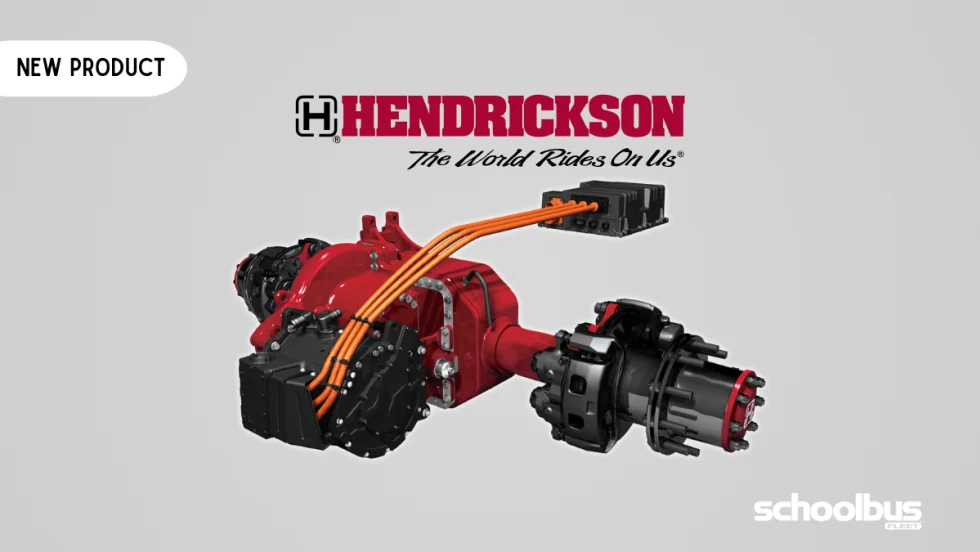
Hendrickson, Driventic Introduce New Electric Powertrain for School Buses
ELECTRAAX, the electrified, lightweight drive axle offers integrated ePowertrain efficiency and modular flexibility for Class 6–7 school bus use.
Read More →
The Mobility House Joins PowerFlex in Fleet Electrification Deal
The acquisition combines intelligent charging software, bidirectional charging expertise, and fleet electrification services to support the growing adoption of electric school buses across North America.
Read More →
Alt-Fuel Moves: Electric School Bus Investments Hit the Road
See which districts across the U.S. are putting electric school buses into service, expanding charging infrastructure, and planning the next phase of fleet electrification.
Read More →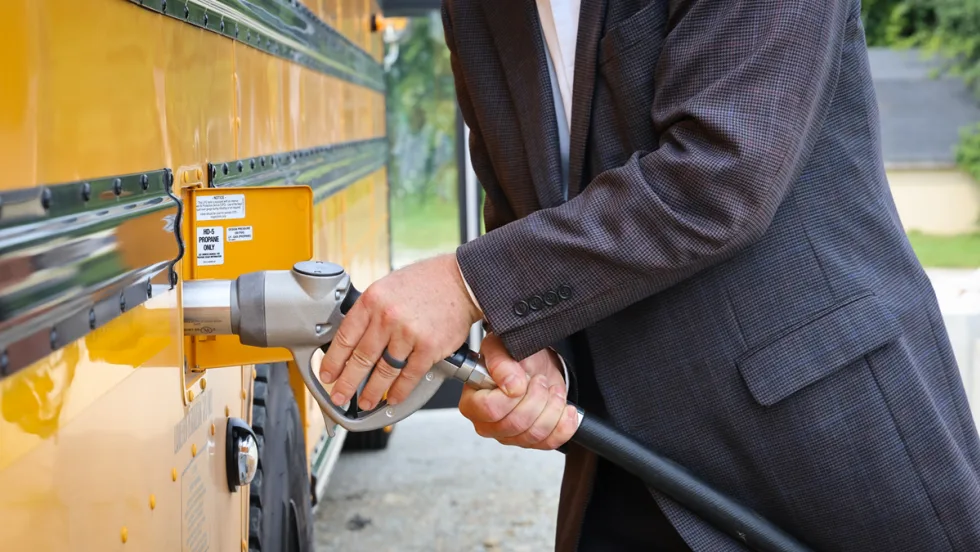
With Fuel Volatility Ahead, School Districts Turn to Propane
While diesel prices peaked above $5 this spring, districts with propane autogas-powered fleets paid under $2 per gallon, according to PERC.
Read More →
EPA Unveils Proposed Changes to 2027 Heavy-Duty Engine Rules
The federal agency has proposed changes to next year’s targets that would eliminate DEF derates, ease warranty requirements, and retain current NOx emissions standards.
Read More →
Alt-Fuel Moves: EV Charging & Infrastructure Projects Gain Momentum
The latest developments include new funding, charging infrastructure, utility investments, and fleet technologies designed to support the transition to electric school buses nationwide.
Read More →