





The Illegal Passing Problem: Reducing School Bus Stop-Arm Violations
National Leaders Sound Alarm on Student Safety at New Summit
Last week, the first National School Bus Safety Summit brought together leaders from government, public safety, technology, and education to address the growing threat of illegal stop-arm passing.
December 18, 2025
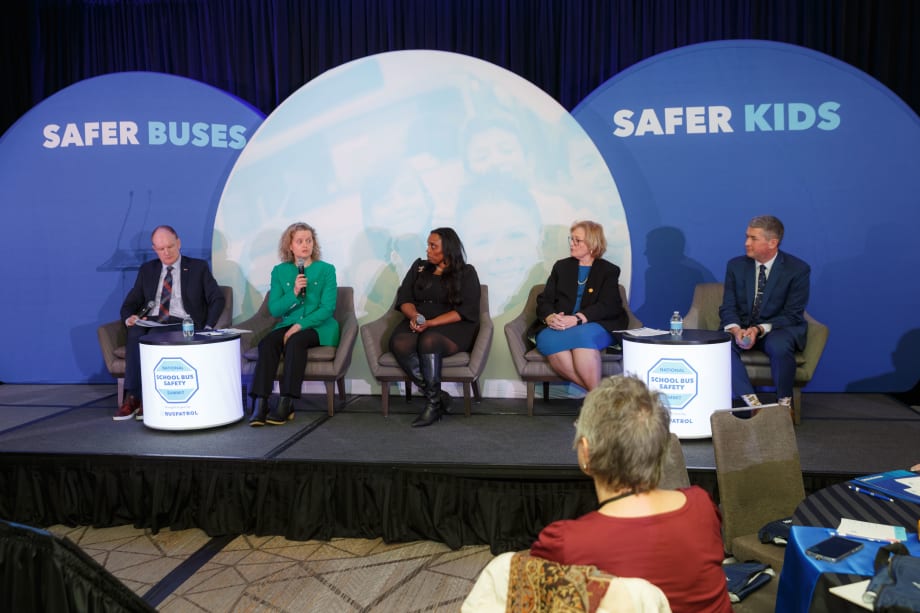
Molly McGee-Hewitt, NAPT CEO and executive director, sits on a panel with other agencies to discuss the landscape around school bus safety.
Photo: BusPatrol
3 min to read

The event was held on December 10 in Washington, D.C., with approximately 400 in attendance.
Photo: Derek Graham
Last week, leaders across various industry and federal agencies convened in Washington for the first-ever National School Bus Safety Summit.
There, more than 400 national leaders across government, public safety, technology, law enforcement, education, and child advocacy discussed the escalating dangers children face around school buses. The Summit, hosted by BusPatrol and supported by the Governor’s Highway Safety Association (GHSA) and Safe Kids Worldwide, was the first coordinated national effort to accelerate solutions addressing the millions of illegal school bus stop-arm violations that occur each year.
In the months ahead, GHSA, in collaboration with BusPatrol, will develop a comprehensive national blueprint for action — a strategic framework for policymakers, law enforcement, educators, and transportation leaders to strengthen school bus safety nationwide and build on the momentum generated at the summit.
Throughout the day, attendees listened to panel with leading experts on topics like "Aboard the Bus: The Landscape of School Bus Safety," "Enforcement Changing Behavior: The Role of Law Enforcement & Courts," "Communities Working Together: On/Off the Bus," "Public/Private Partnerships: Fueling a Mission, Changing Culture," and "Advocacy in Action: Policies That Save Lives."
Data, Tragedy, and the Push for Stronger Enforcement
Keynote addresses were delivered by Justin Meyers, president and chief innovation officer at BusPatrol, and Karoon Monfared, CEO of BusPatrol, who shared his own emotional story of witnessing a childhood friend struck by a vehicle while disembarking from a school bus — an experience that has shaped his lifelong commitment to student safety.
Every day across the U.S., thousands of drivers illegally pass stopped school buses even when red lights are flashing and stop arms are deployed. With almost 500,000 school buses operating daily, this results in millions of violations each year, placing children in immediate danger.
A recent survey by the National Association of State Directors of Pupil Transportation Services found that in a single day, school bus drivers reported over 67,000 illegal passes, which is easily more than 39 million incidents over one school year.
To confront this issue, officials emphasized the importance of implementing the safety roadmap outlined by the National Transportation Safety Board following the 2018 fatal crash in Rochester, Indiana. Those recommendations call for a three-pronged strategy combining education, traditional law enforcement, and automated enforcement technology.
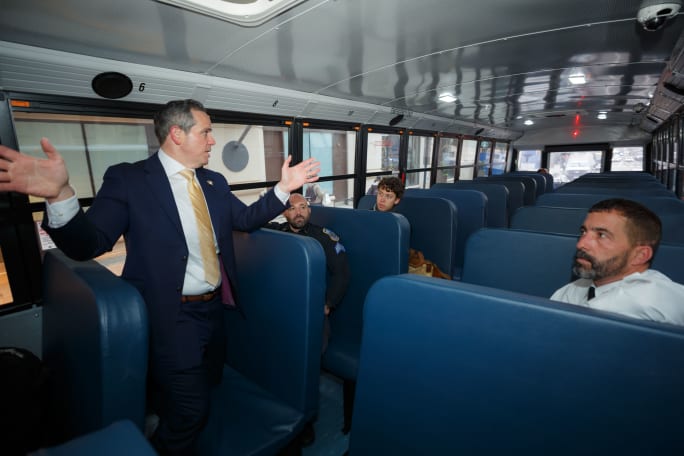
The Governor’s Highway Safety Association plans to develop a comprehensive national blueprint to guide policymakers and local officials to strengthen school bus safety.
Photo: BusPatrol
Since the release of that report, at least 30 states have passed laws enabling the deployment of camera-based stop-arm enforcement tools, paving the way for companies like BusPatrol and others to assist communities nationwide.
Accelerating School Bus Safety With Tech and Youth Voices
The summit also highlighted how school districts across the country are increasingly adopting AI-powered enforcement tools to monitor and document dangerous driver behavior.
BusPatrol, which launched in 2017, has grown into a large North American provider of school bus safety technology, with high-definition cameras and AI models installed on more than 40,000 buses across nearly two dozen states.
"When a child loses their life, it’s more than any community can bear. It’s more than any of us can bear. And so what do we do when an unspeakable tragedy occurs? We respond, and we take action," Meyers said.
This technology has supplied districts and law enforcement agencies with unprecedented visibility into the magnitude of the danger children face on their way to and from school.
"The National School Bus Safety Summit elevated the youth voice in this issue, as millions of students board the bus every day," said Jessica Hugdahl, acting CEO of Students Against Destructive Decisions (SADD).
"Today cannot be the end of the conversation but must be the beginning of a coordinated, relentless push to accelerate school bus safety in every state, every district, and every community," Meyers said.
More Safety

How to Build a Better School Bus Driver Training Program
Is it time to strengthen your driver training? Here’s how to pick the right talent and improve recruitment, retention, and safety. This video is brought to you by IC Bus.
Read More →
Recent School Bus Accidents Leave 2 Dead, 2 Injured
Four school bus crashes in Florida, Illinois, and Georgia highlight risks in transportation lots, at bus stops, and during student loading and unloading.
Read More →
Sponsored•September 8, 2026
When Every Second Matters, Clarity Keeps Routes Moving
From routine delays to urgent incidents, strong communication practices help drivers, dispatchers, schools, and families respond with confidence.
Read More →

What Happens When a School Bus Catches Fire — and What Can Help
School bus fires are rare but can be devastating. Learn how advances in fire suppression and asset protection help fleets detect fires earlier, reduce damage, and improve safety.
Read More →
Geotab Launches Tool to Help Fleets Investigate Road Incidents
Geotab Investigations combines telematics data, video, documents, and other evidence to help fleets reconstruct incidents, resolve claims, and determine what happened.
Read More →
Texas Sixth Grader Wins 2026 National School Bus Safety Poster Contest
Sai Darshana Yekolu of Moseley Middle School in Prosper, Texas, was named the newest winner for her artwork, bringing the theme of “Safe Rides, Everyday Heroes” to life.
Read More →
Sponsored•August 27, 2026
Doing More With Less: How Transportation Directors Can Prioritize Safety Amid Budget Uncertainty
With diesel prices soaring and nearly one-third of transportation directors expecting budget cuts, maintaining student safety has never been more challenging. Download this guide to learn how leading districts are prioritizing risk, funding critical safety technology, and building stronger budget cases with data.
Read More →
Walton County Schools Adds Gatekeeper Stop-Arm Enforcement System
The Florida district will deploy Gatekeeper’s updated Student Protector technology, which now incorporates AI to improve video evidence.
Read More →
How To Build a More Secure School Bus Yard During and After Hours
As thefts and overnight security threats continue, school transportation leaders are combining stronger operational practices with AI-enabled surveillance to better protect buses, facilities, and staff.
Read More →
FMCSA Names New Chief Safety Officer: What School Bus Operators Should Know
Steve Dowling is set to lead the federal agency's efforts to advance commercial motor vehicle safety and reduce crashes, fatalities, and injuries on the nation's roadways.
Read More →