




Also from NASDPTS: 6 Students Died from School Bus Loading/Unloading in 2024-25
2025 NASDPTS Annual Conference Highlights in Photos
Held Nov. 13-16, 2025, at the Ritz-Carlton Pentagon City in Washington, D.C., over 30 state transportation directors, suppliers, and industry stakeholders gathered in the nation’s capital to learn from each other, hear federal updates from key partner agencies, and mix and mingle, at the National Association of State Directors of Pupil Transportation Services (NASDPTS) event. Top trends discussed through the event were safety, seat belts, crash stats, technology, transporting charter students, alternative transportation, special-needs student support, security measures, and emergency preparedness.
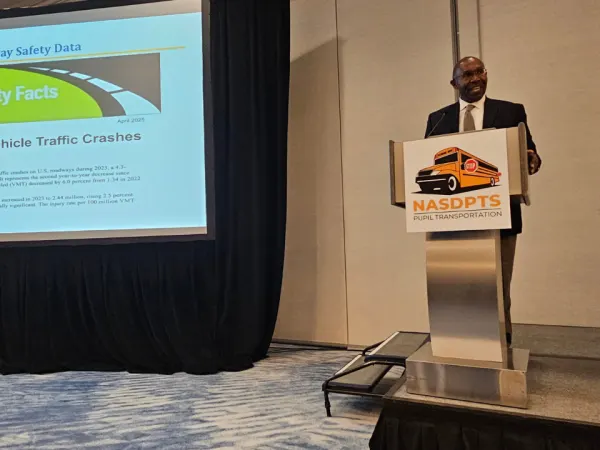
Larry Minor from the Federal Motor Carrier Safety Administration (FMCSA) discussed recent improvements in highway safety, noting an 8% reduction in roadway fatalities over the past year. He summarized recent agency activity and regulations (and de-regulations), including English Language Proficiencies, non-domiciled CDL holder rules, the national registrar program for medical certificates, and drug and alcohol enforcement.
Photo: Amanda Huggett
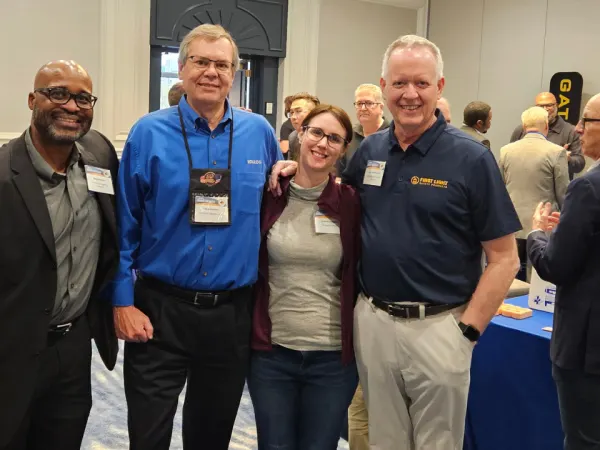
Three of School Bus Fleet’s editorial advisory board members Greg Jackson, Derek Graham, and Max Christensen, stand with editor Amanda Huggett during the supplier showcase.
Photo: Amanda Huggett
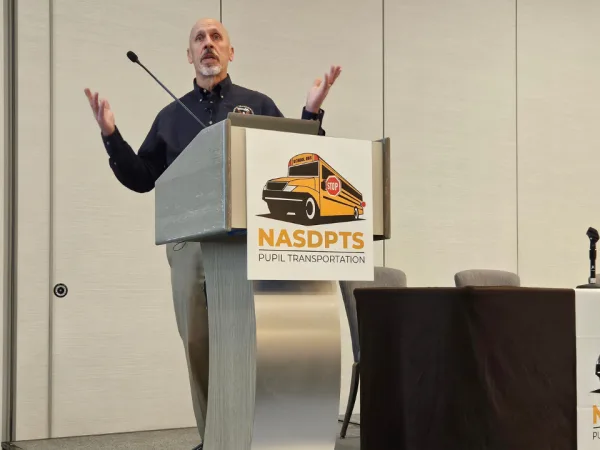
Presenting a National Transportation Safety Board (NTSB) update, Michael Graham discussed the ongoing NTSB investigation of the recent school bus crash in Leander, Texas, and seat belt use. He noted some seat belt barriers, such as cost, legislative actions, enforcement, and administrative follow-through.
Photo: Amanda Huggett
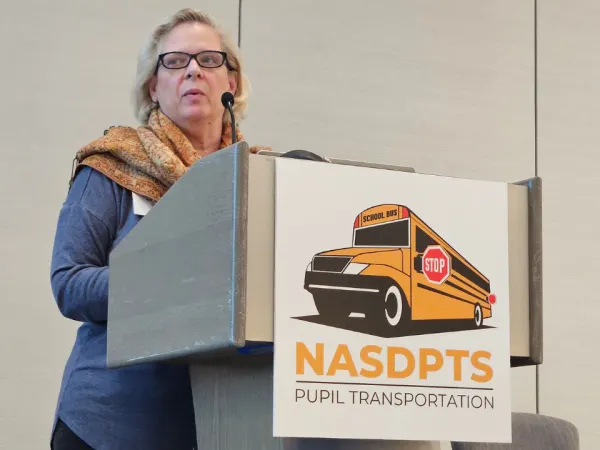
Ronna Weber, NASDPTS’ executive director, presented the National Highway Traffic Safety Administration (NHTSA) update. She shared that there were 39,345 traffic fatalities in 2024, and that between 2000-2022, there were 55 fatalities involving a driver illegally passing a school bus. From 2013-2022, there were 1.5 times more fatalities among pedestrians than occupants of school buses in school bus-related crashes. She also summarized the recent Waymo incident and investigation.
Photo: Amanda Huggett
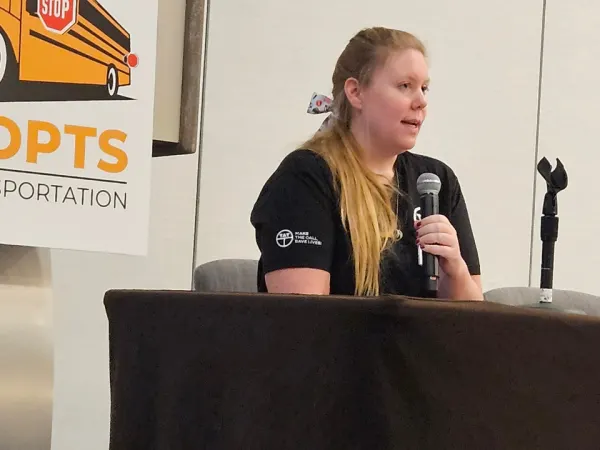
Lexi Higgins from Truckers Against Trafficking (TAT) returned this year to share the importance of knowing the warning signs of human trafficking around school buses and shared resources that the nonprofit can offer to the school transportation industry.
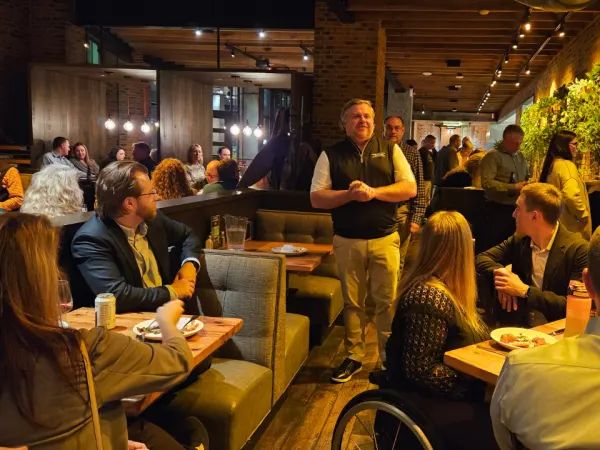
The conference’s second night dinner was held at Matchbox Restaurant and was sponsored by Thomas Built Buses. Here, Chris Foster welcomes attendees.
Photo: Amanda Huggett
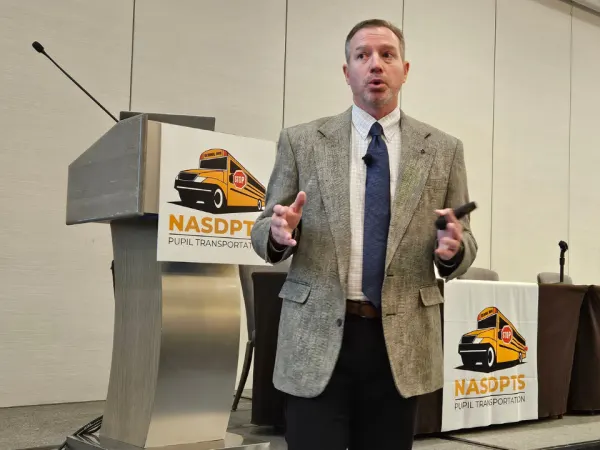
Bret Brooks of Gray Ram Tactical, presented the conference’s opening session on “School Bus Active Shooters, Intruders, and Hijackers | How to Respond and How to De-Escalate.” He noted a significant increase in violent incidents since 2007, and shared that a school bus is hijacked every 3.5 days in the U.S. Training our school bus drivers and staff is critical to responding appropriately in every stressful and unexpected situation.
Photo: Amanda Huggett
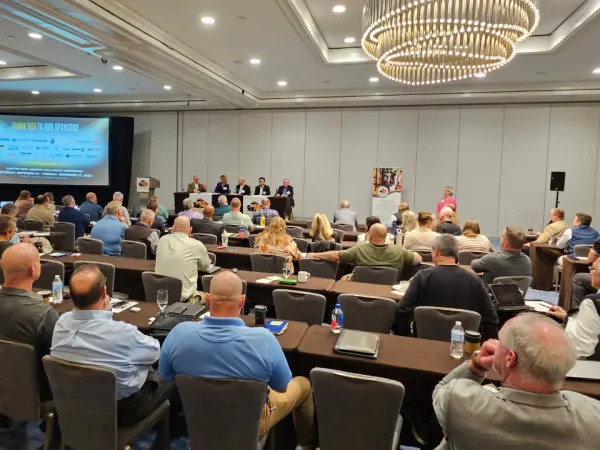
In an OEM panel on budget forecasting and evolving technology, Blue Bird’s Tim Gordon, Collins Bus’ Libby Kimmel, IC Bus’ Ryan Kauffman, Thomas Built’s Vance Nofziger, and RIDE’s Jason Yan discussed safety technologies, bus model updates, and alternative transportation.
Photo: Amanda Huggett
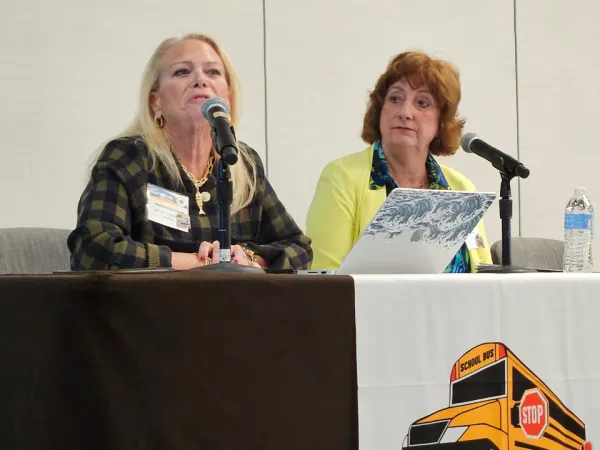
Special needs transportation experts Alex Robinson and Sue Shutrump took the stage to discuss why 2025 and beyond looks a bit different when it comes to transporting students with disabilities. Together, they talked about the rise in autism (now affecting 1 in 31), and the overall increase in students with special needs and IEPs. Robinson reminded attendees to use the least restrictive environment, that students without disabilities can still use a special-needs bus if the route makes sense, to use child-first language, to use the term safety vest instead of harness, and that all students are good even when their behavior is not. Shutrump provided an overview of special-needs rules, equipment, standards, and best practices.
Photo: Amanda Huggett
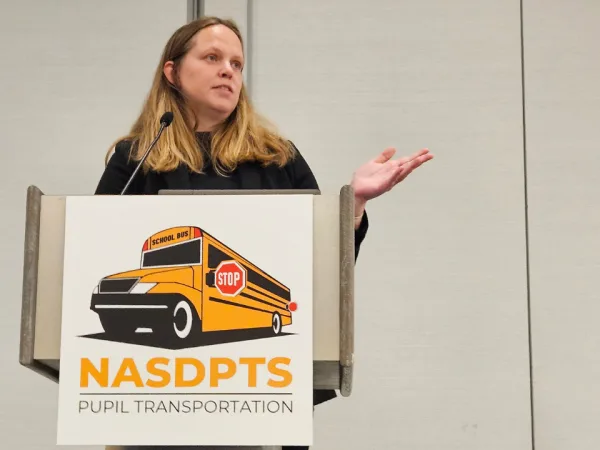
Christine Koester from the Environmental Protection Agency (EPA) updated attendees on the agency’s three funding programs. Its Clean School Bus program has awarded $3 billion for 8,500 buses so far, with the last two rounds still in a holding pattern and $2 billion remaining. The Clean Heavy Duty program has funded 60 awards for 2,000 vehicles, 1,200 of which were for school transportation. She said there is not anticipated future funding for this program. Finally, DERA (the Diesel Emissions Reduction Act) is its most popular program, and “the agency is working towards a new funding opportunity there in 2026.”
Photo: Amanda Huggett
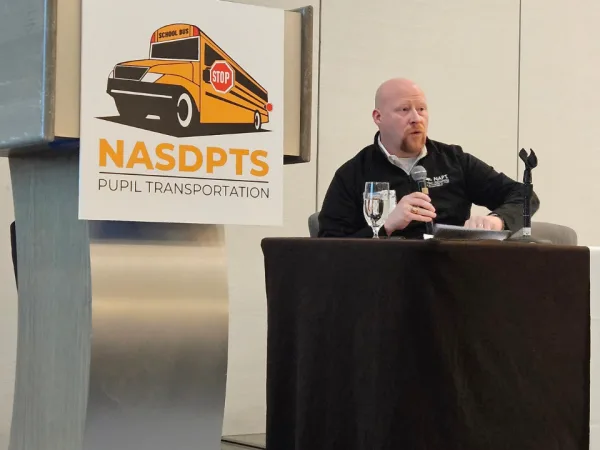
Keith Kaup, newly installed president of NAPT, provided an update from NAPT as a partner association. He updated on new bylaws, new regions, conference plans, and the new public awareness campaign.
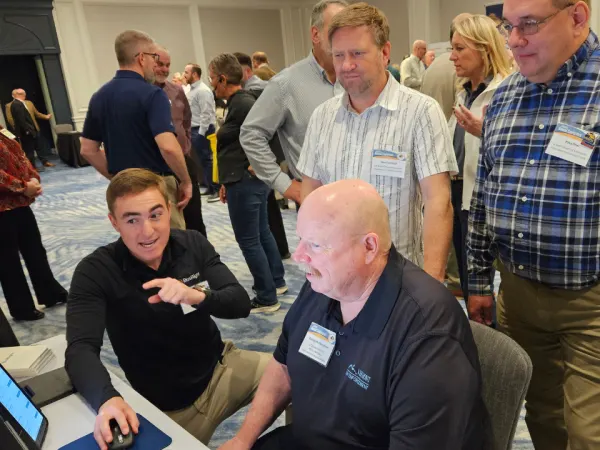
Here, Keith Corso, founder of BusRight, shows Vermont’s Patrick McManamon, Utah’s Ron Litchfield, and Illinois’ Mike Stier how the company’s routing system and parent app works.
Photo: Amanda Huggett
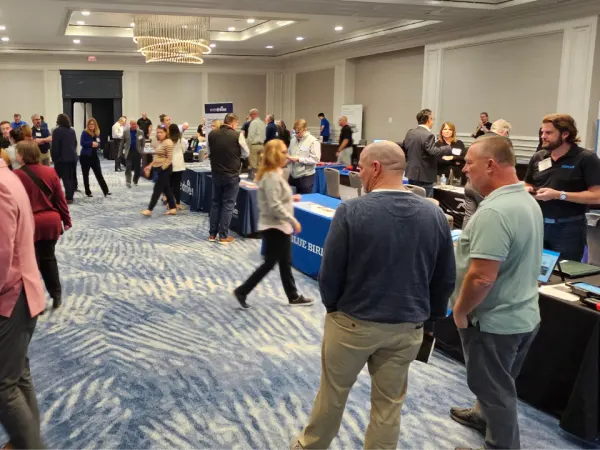
A supplier showcase and networking session was held for the fourth time, allowing NASDPTS’ supplier council members to meet with transportation directors to discuss technologies and solutions that are serving the industry.
Photo: Amanda Huggett
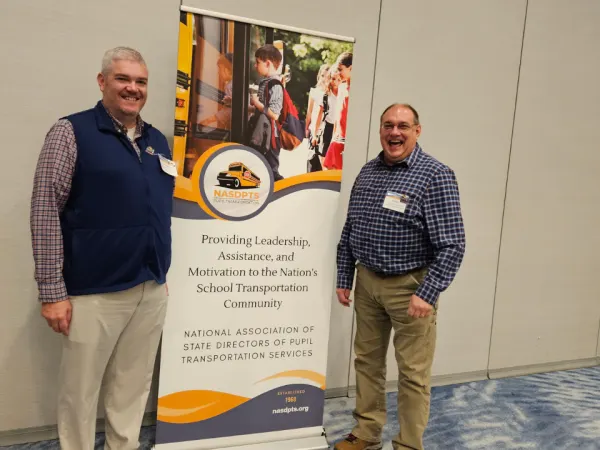
Tyler Bryan, Delaware, and Mike Stier, Illinois, are NASDPTS’ current president and president-elect, respectively. They each served as conference moderators and announcers.
Photo: Amanda Huggett
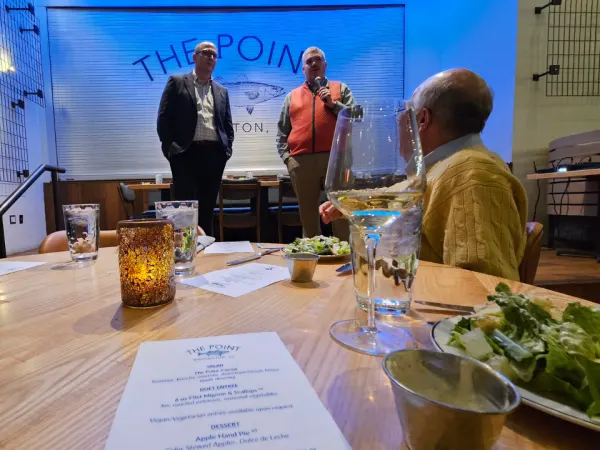
The conference’s first night dinner was held at local seafood restaurant The Point, sponsored by Safe Fleet/Seon. Here, Safe Fleet president Mike Hagan and NASDPTS’ Tyler Bryan welcome attendees.
Photo: Amanda Huggett
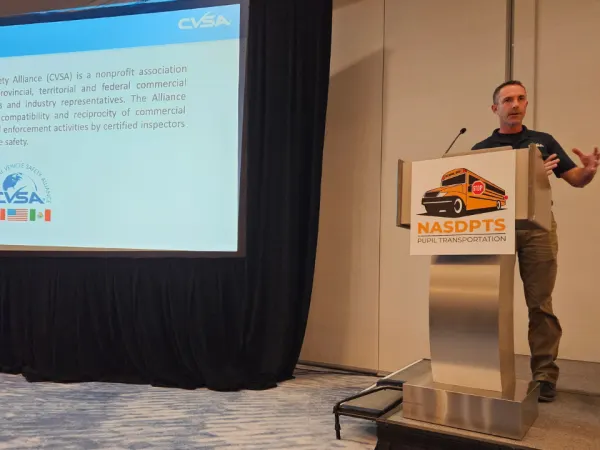
Jeremy Disbrow from the Commercial Vehicle Safety Alliance (CVSA) addressed the recent changes in English proficiency requirements for CDL holders, non-domiciled CDLs, and modernized skills testing. He explained how the roadside inspection process works after a collision: “The driver interview is only going to be used in English now, so the use of translating apps is no longer allowed. They're going to have to be able to understand basic things like, where are you going, where are you coming from, do you have your license registration? If the initial instructions are not understood, that's when the test is going to begin. So inspectors are not out there testing every single driver,” he clarified.
Photo: Amanda Huggett
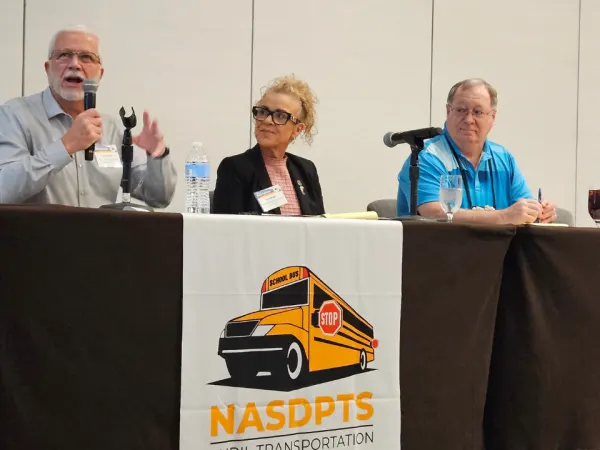
Three state directors — Anna Borges from California, Keith Dreiling from Kansas, and Mike LaRocco from Indiana — hosted a panel on the Top 10 Things New State Directors Should Know, offering advice on how to stay connected to and communicate with district contacts.
Photo: Amanda Huggett
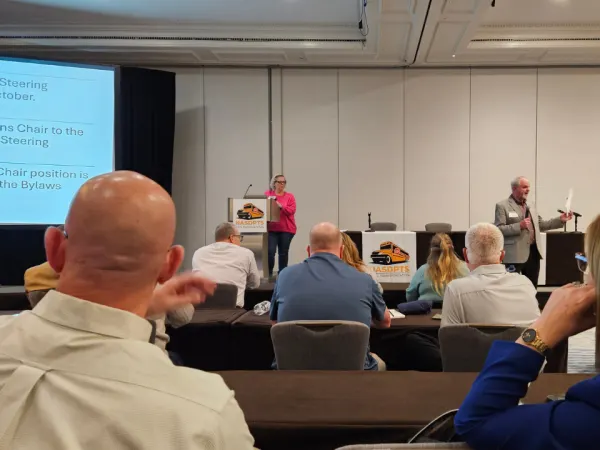
The Supplier Council Annual Meeting and NASDPTS Annual Meeting were held to recognize association members and positions, approve business, offer a financial report and bylaws update, and elect a new association secretary, which went to Fred Stewart from Colorado.