





Earlier This Year: Thomas Built Buses Launches Saf-T-Liner EFX2
Thomas Built Buses Unveils Its First Electric Type D Bus
Wattson is the company's largest electrified school bus built on Thomas’ HDX2 platform and powered by Accelera’s 14Xe electric axle.
October 21, 2025
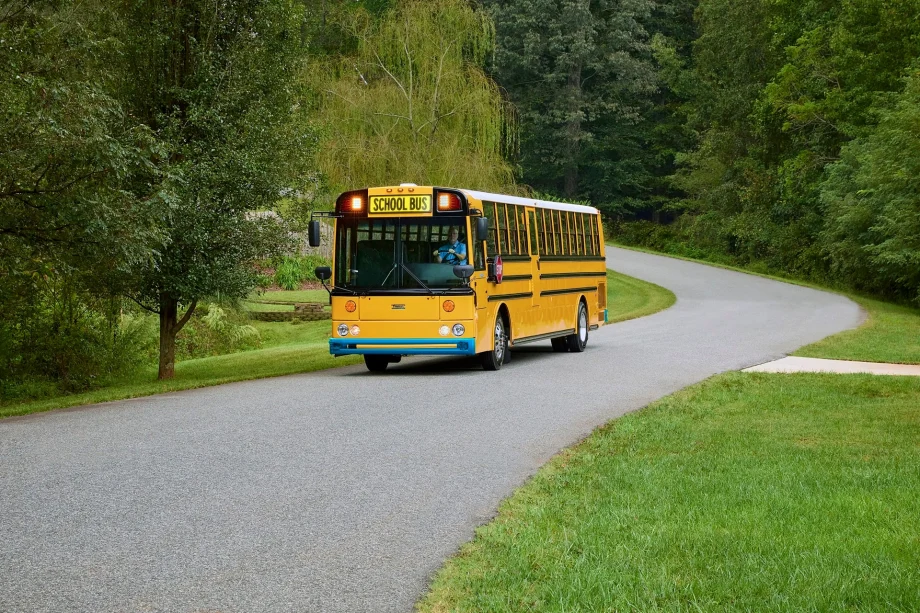
Wattson buses can be ordered in late 2025, with initial deliveries scheduled for late 2026.
Photo: Thomas Built Buses
2 min to read
Thomas Built Buses, a division of Daimler Truck Specialty Vehicles, today announced the launch of the company's new Saf-T-Liner eHDX2 Wattson, its first electric Type D school bus.
Built on Thomas Built’s HDX2 platform and designed for districts ready to take the next step in electrification, Wattson draws from years of EV manufacturing experience and customer input to deliver a solution engineered for long-term fleet planning, according to the company.
“Wattson represents our next step in electrification,” said T.J. Reed, president and CEO of Daimler Truck Specialty Vehicles. “It reflects our belief that the best electric solutions are the ones that feel familiar, fit within your fleet, and are built to last. That’s what we’ve heard from our customers, and that’s what we’re delivering.”
Wattson is powered by Accelera’s 14Xe electric axle, the same system featured in Jouley Gen 2. The integrated e-axle combines the motor, gearbox, and power electronics into a single, compact unit. This results in smoother driving performance and fewer mechanical parts, which means less maintenance and fewer service disruptions, according to the company.
Wattson's feature highlights include:
Battery capacity: 246 kWh
Estimated range: Up to 150 miles
Charging: Standard SAE CCS1 charging; 2–3 hours at a DC fast-charging station (minimum 60 kW output); V2G-capable system; optional AC/DC SAE J1772 CCS1 charging with 20kW onboard charger for additional flexibility while on the road
Charging range: 20kW (AC); 120kW (DC)
Torque and power: 295 peak horsepower; 750 lb-ft of torque
Two-speed transmission
Liquid-cooled battery system
277” wheelbase
LCD instrument cluster providing real-time vehicle and diagnostic data
Optional 69” pass-through luggage compartments for activity or dual-use buses
Standard rear charging port, with optional front charging available
“We know electrification can feel like a big step,” Reed added. “With Wattson, we’re making that step easier by giving districts a familiar Type D solution they already trust – now in electric.”
Wattson will be available for order by the end of 2025, with initial deliveries scheduled for late 2026.
Type D, or “transit-style” buses, are the largest buses in the industry, featuring a flat front, high seating capacity, and greater visibility for drivers.
More Alternative Fuels
Bipartisan Bill Seeks to Extend Clean School Bus Program Through 2031
The proposed legislation would renew federal support for cleaner school buses as districts navigate funding uncertainty, rising fuel and infrastructure costs, and fleet replacement needs.
Read More →
Alt-Fuel Moves: Electric Bus Rollouts, Bidirectional Charging & Propane Growth
See which fleets are adding electric and propane school buses as districts and operators invest in charging infrastructure, bidirectional technology, and alternative-fuel expansion.
Read More →
Nobody Told Diesel Prices They Were Supposed to Come Down
With diesel prices surging, school bus fleets have new reason to stress-test fuel costs, consider diversification, and calculate what each route really costs to operate.
Read More →
Why Gasoline School Buses Are Making a Comeback
Gasoline is gaining ground in full-size school buses. See how today’s options stack up against diesel on cost, maintenance, emissions, performance, and more.
Read More →
EPA Opens $180M DERA Funding Round for Diesel Upgrades
The 2026 Diesel Emissions Reduction Act program seeks applications from eligible organizations to accelerate the retirement of legacy diesel vehicles.
Read More →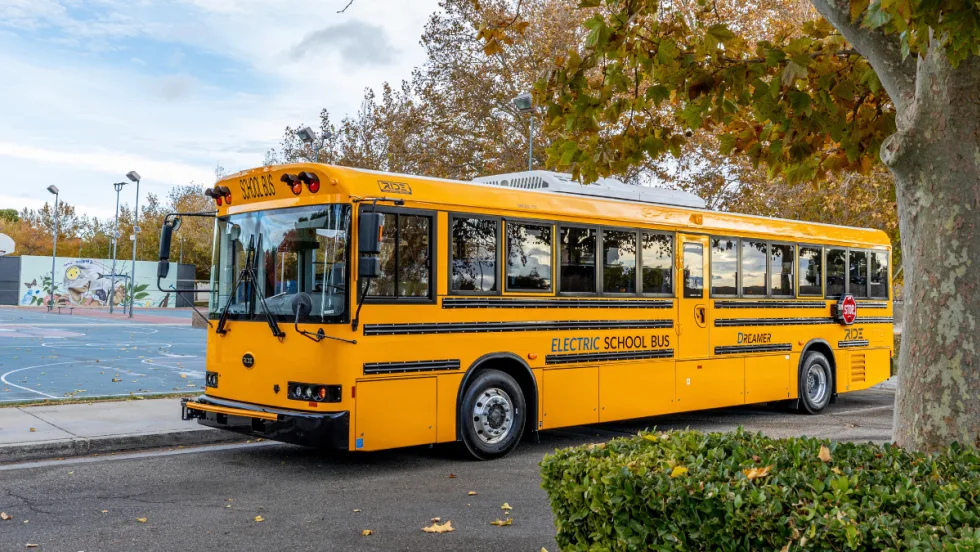
The Secret Life of an Electric School Bus Battery
Batteries change throughout years of daily routes, but degradation doesn’t necessarily mean the end. Here’s what operators should know about performance, safety, and second life.
Read More →
CALSTART and Forth Combine to Form Catalyst Mobility
The new name represents a renewed vision for the nonprofit focused on advancing clean, equitable, and affordable transportation solutions that move people and goods.
Read More →
Alt-Fuel Moves: New Buses, Charging Hubs & Real-World EV Testing
Propane and electric school bus deployments continue to grow as districts add new vehicles, expand charging infrastructure, and gather more real-world operating data.
Read More →
Fewer Electric School Bus Models Reshape the U.S. Market
WRI’s latest buyer’s guide points to a consolidating electric school bus market, but fewer options may reflect a maturing industry rather than fewer meaningful choices for school bus operators.
Read More →
The Fuel Budget You Can Actually Predict: How Propane Autogas Keeps Money in the Classroom
Learn how propane autogas helps school districts manage fuel costs with predictable pricing, lower maintenance, and reduced emissions from former transportation director Joel Stutheit.
Read More →