





First Look at Thomas Built Buses' Second-Gen Jouley Electric School Bus
5 Questions: T.J. Reed on Thomas Built Buses Strategy, Innovation, and Future
New leadership, continued commitment. Thomas Built Buses’ new CEO talks with SBF about industry trends, product architecture, and what’s coming next for the big yellow bus.
March 4, 2025
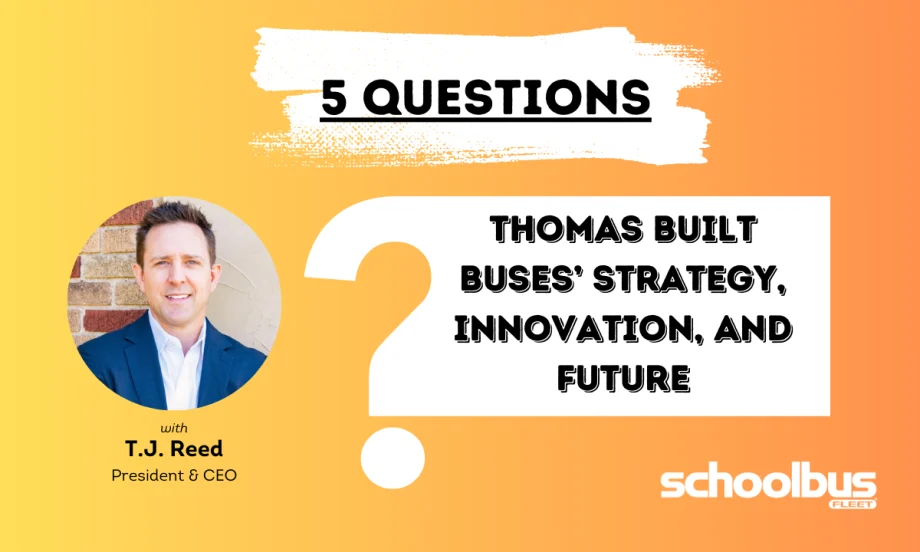
Reed’s appointment was effective Sept. 9, 2024.
Photo: Daimler Truck North America
6 min to read
Last September, a new leader stepped in at Thomas Built Buses (and Freightliner Custom Chassis), taking the reins from Kevin Bangston.
T.J. Reed, now president and CEO, isn’t completely foreign to the business, though; he joined parent company Daimler Truck North America in 1998. Since, he’s acquired plenty of experience in truck manufacturing and product development. Now, he steers the bus manufacturer’s specialty vehicles sales and operations strategy.
Let’s get to know Reed’s perspective and vision, and his take on the Thomas Built business here.
Q: Tell us about your first few months in this role and what you’ve learned so far.
Reed: It’s been great. I am going on my 27th year in commercial vehicles, and this is my first assignment on the school bus side. What impressed me right out of the gate was the passion from the team at Thomas and the overall industry. Walking the floor at NAPT, it became clear to me that everybody has the same objective and the same mission of getting people to and from school safely, efficiently, and more sustainably. I learned the nuances of the business, how each district has unique requirements and different ways they specify, build, and operate their buses. It just really gave me a broader perspective in terms of how important this is. It was really thrilling and motivating.
Coming from trucking, the themes and the approach are the same, but the differences are in use case, duty cycle, the end customer, and your payload, which is our most precious cargo. At the end of the day, we're making a commercial vehicle. We want to have a quality design, listen to customers, and build relationships. So, the big question is, how are we a good business partner?
Thomas is a storied brand, it has this tremendous legacy and history, and you bolt that together with the capability of Daimler Truck, and it’s pretty powerful. It’s something that I don't take lightly.
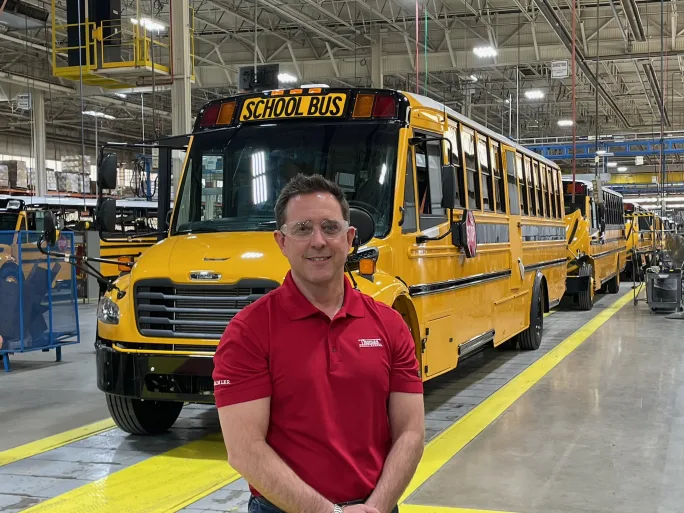
T.J. Reed stands in the Thomas Built Buses plant in North Carolina.
Photo: Chris Foster/Thomas Built Buses
Q: How have Thomas Built’s buses evolved over the years, and what has customer reception been like?
Reed: With the advent of technology — mainly the capabilities with advanced electrical architectures — it's significant. We obviously build with better quality and manage costs for everyone. But when you look at the capabilities around active safety — collision mitigation systems, camera technology, connected vehicles — all these things are very powerful, and they're evolving at such a fast rate.
What's similar to the truck side is you've got to attract drivers who are comfortable and want to drive these vehicles day in and day out. Now, most truck drivers don't have a classroom behind them, so it's an added degree of difficulty. But at the end of day, they step out of their passenger car into this vehicle, and they want that human-machine interface: instrument clusters, dash switches, controls on steering wheels. They want the latest capability that they would have in a passenger car, and that's something that we can carry through to buses. But then it comes down to safety and how we can help the driver be the best that they can be, knowing that they've got a lot on their plate.
Q: How do you gather feedback from users to inform your product development?
Reed: A key competitive advantage, and one of our strengths, is the experience and know-how of our dealer network. We’ve got a lot of businesses and people that have been in the industry for a very long time and with significant insight. We capture feedback directly from them, then we put that feedback into projects that can address both technical and commercial needs. After we have gathered all of the appropriate inputs, we work closely with our partners and suppliers on go-to-market strategies
Another key aspect is when customers visit the plant, because they're seeing their product online, and sometimes that drives a discussion on features or benefits. There's no secret there; you've got to be an active listener for your customers. You’ve got to have your pulse on the market and understand what new technologies are available. Maybe something isn’t ready for series production, but you gauge their interest, and as that technology matures, bring it in and deliver it.
At the end of the day too, our customers have operating budgets. They need to be more efficient and safer. When you stack those things together, there is an arc of the product in how it's improving its performance in fuel economy, safety, reliability, durability. These buses stay in use for a while, so the expectation is that they can live up to the task.
Q: What steps are being taken to strengthen relationships with your dealer network and customers?
Reed: I’ve been fortunate to come into something that's already very healthy. We have a strategic vision of where we want to take the business, how we grow together, and what we need to do to help our customers. We meet regularly with the Advisory Council for dealers that represent the broader network. We have an all-hands dealer meeting once a month to talk about what's going on. There is a lot of communication and information sharing that goes both ways, and that just makes us better partners for both each other and our customers.
Q: What's new or yet to come from Thomas Built Buses?
Reed: As I stepped into the role, what was really exciting and attractive is the amount of investment in the product and in our operations. We're in probably the most comprehensive new product era that we've ever had. You can look at it on the powertrain side; we've got emissions requirements for new engines, different modes of propulsion. We'll be bringing a gasoline engine to the market. Battery electric is a significant part of our business.
Improvements to performance, cost, capability, and design are happening so fast, we want to make sure that we're delivering the best product. On the operations side, we’re looking at an investment in quality and throughput. Where we automate, where we can help the team at our High Point plant, all those things go together to make sure that we're meeting our customers’ expectations.
There will be continued methodical improvement from an efficiency and sustainability perspective in how we manufacture these buses. When you have the backing of the world's largest truck manufacturer, you've got assets and tools available to you. And with significant emissions changes on the horizon, there's a lot of work to get those vehicles ready. To employ a new electric architecture is going to give us a lot more capability, and because we're pulling from the truck side, that opens up faster processing speeds.
On the battery-electric side, what you'll continue to see is this product offensive. We’ll be building on the Jouley platform, evolving it with drive systems and improvements, and also expanding the market. You'll see more soon, and we're excited about what's coming.
Subscribe to Our Newsletter
More Management
Samsara Launches Free Driver Rewards Program
The new Driver Perks program gives eligible professional drivers access to discounts and offers without adding a cost for participating fleets.
Read More →
How Tax-Exempt Municipal Leases Can Help Finance School Buses
Let’s explore school bus financing options, including municipal leases, vendor payable accounts, and balloon payments, and how they can help stretch fleet budgets.
Read More →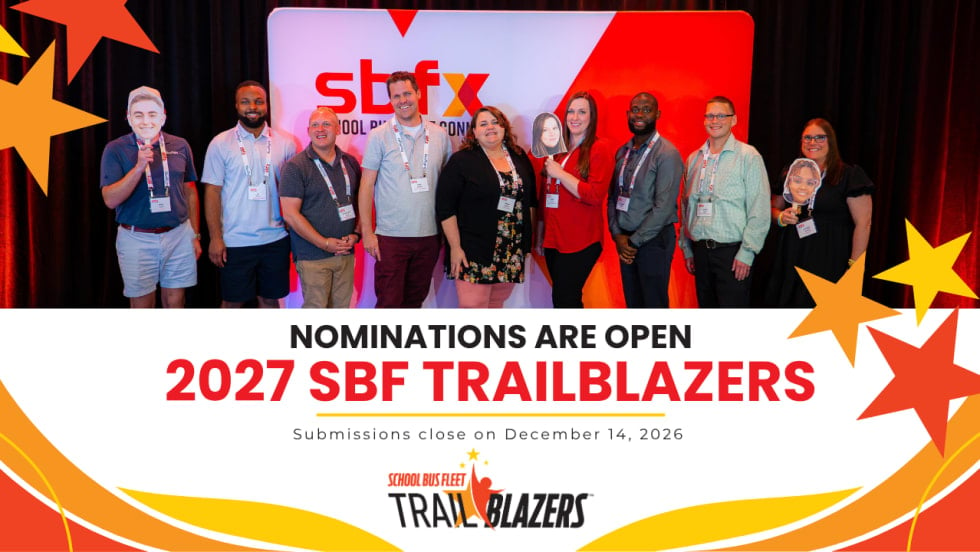
Nominate Rising School Transportation Pros Under 40!
We’re searching for the next generation of leaders making an impact across the K-12 student transportation industry to recognize as SBF’s 2027 Trailblazers. Nominations are open now!
Read More →

Changing Lanes: BusWhere, EverDriven, InterMotive, Summit School Services, Switzer-Carty & Thomas Built Buses
Check out who's been hired, promoted, and appointed to leadership positions at various school transportation suppliers, contractors, and manufacturers.
Read More →
The Most Expensive Thing You Do Before Selling a School Bus: Wait
When should you sell an aging school bus? Learn how maintenance, mileage, corrosion, specifications, and timing can affect resale value long before the auction.
Read More →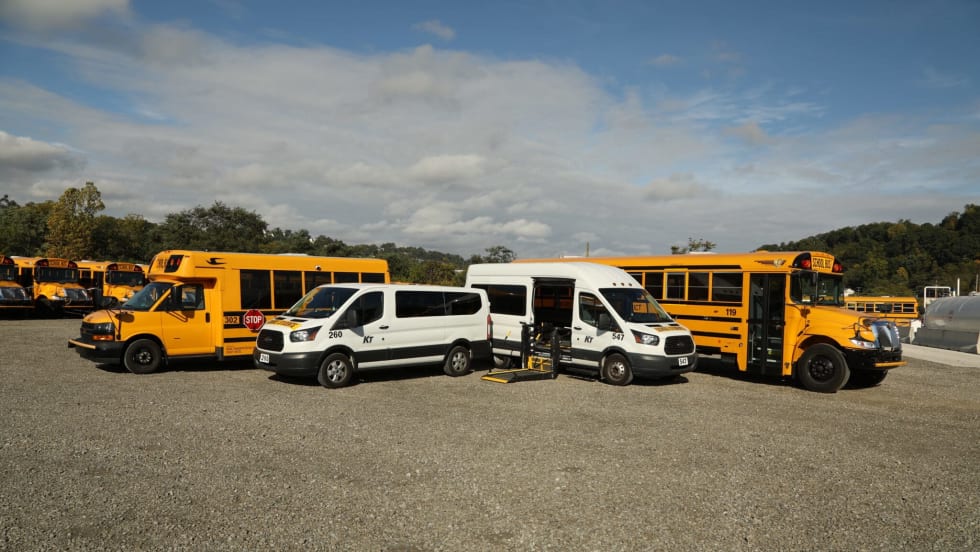
American Student Transportation Partners Acquires AJ Myers and Sons
A new deal brings a 75-year Pennsylvania student transportation provider into one of the nation’s largest private school bus contracting groups.
Read More →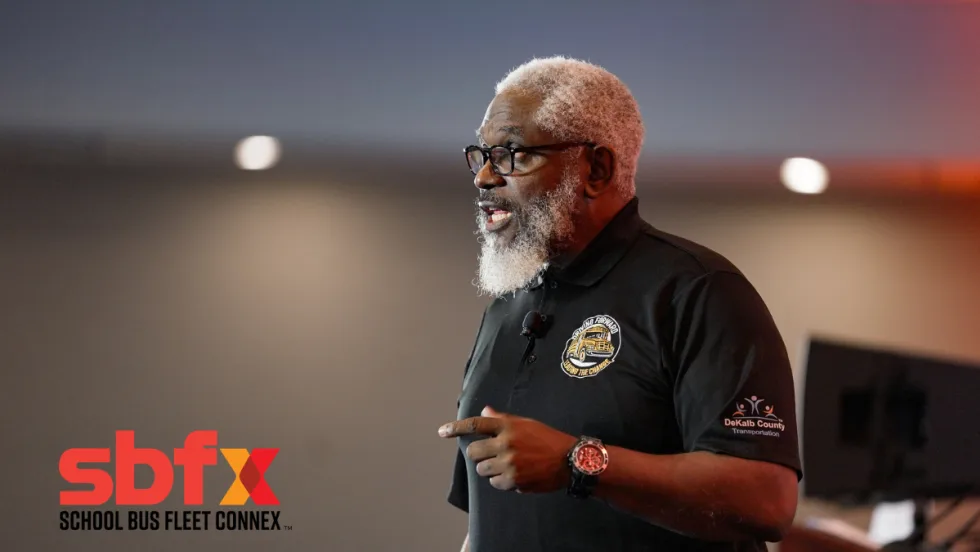
What I Brought Home From SBFX: Relationships, Leadership, and Preparing What's Next
Who could lead your transportation operation tomorrow if you couldn't? Bernando Brown explores succession planning, mentorship, and preparing emerging leaders to step up.
Read More →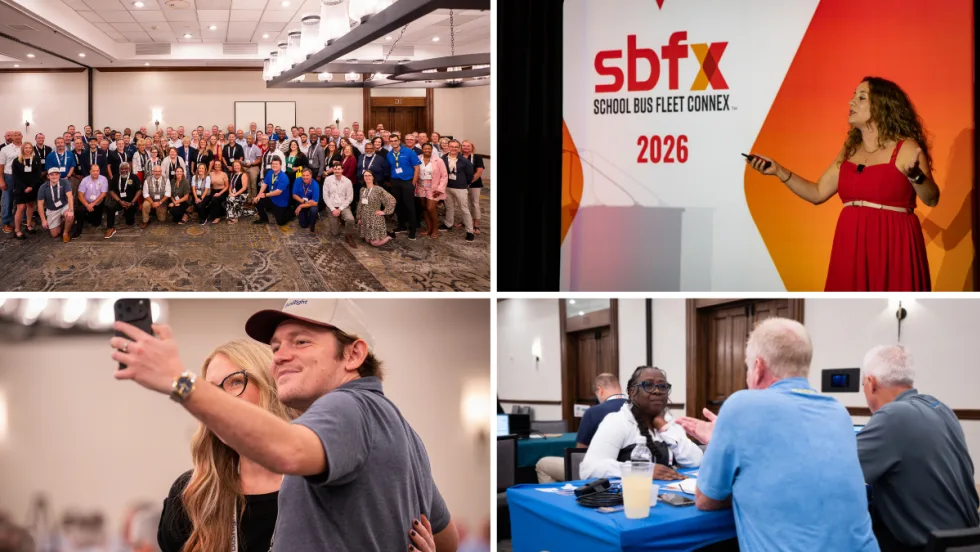
Inside School Bus Fleet ConneX 2026: Industry Leaders Connect in Scottsdale [Photos]
See highlights from SBFX 2026 in Arizona, where school bus operators and suppliers gathered for meetings, education, networking, awards, and more.
Read More →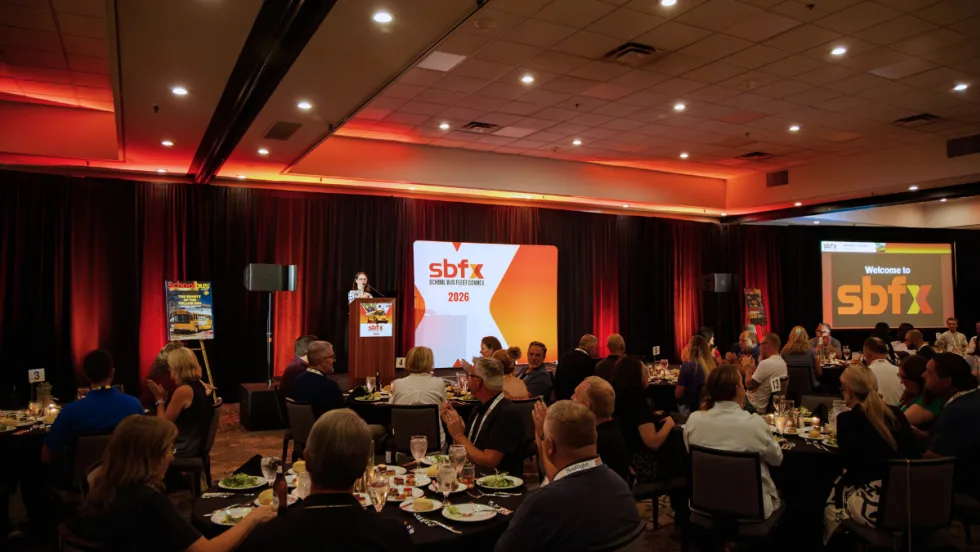
School Transportation’s Biggest Pressures and Opportunities: SBFX Attendees Weigh In
School bus operators point to rising costs, staffing, and vehicle prices as immediate pressures while identifying technology, training, and routing as opportunities for growth.
Read More →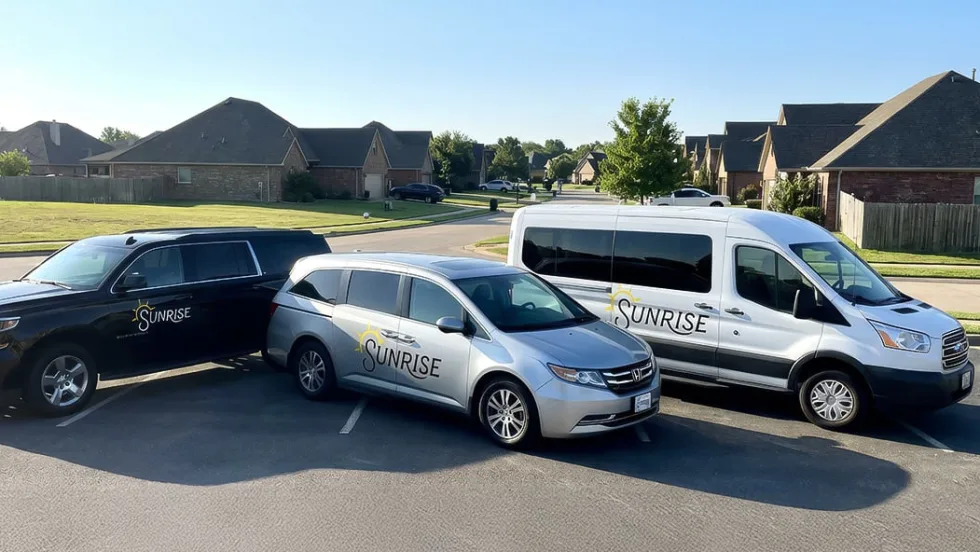
STA Acquires Sunrise Transportation
Student Transportation of America expands in Illinois and Connecticut through Sunrise's fleet of nearly 1,000 vehicles.
Read More →