




The ABCs of Proper HVAC System Maintenance
Advice from an expert on keeping your school bus HVAC system running cozy.

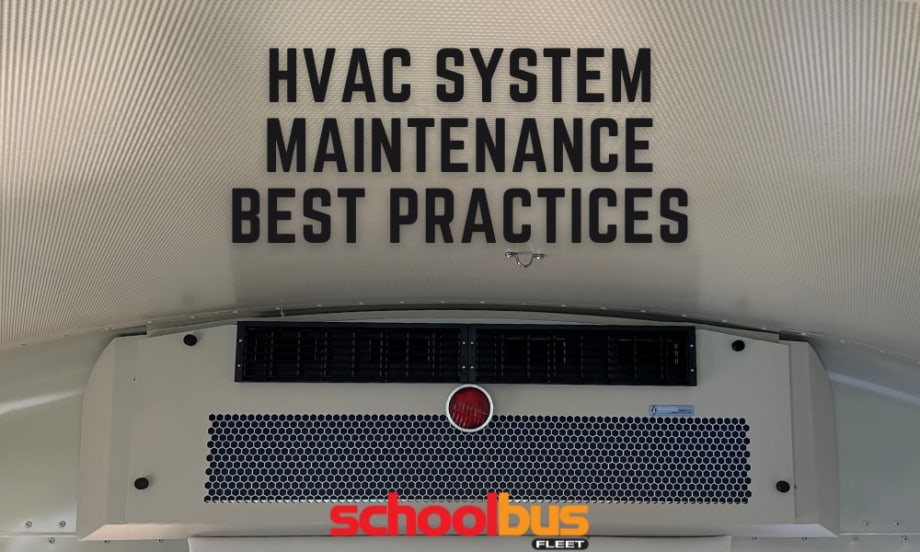
Some HVAC system best practices include applying regular preventive maintenance and being intentional about making repairs.
Photo: Trans/Air/School Bus Fleet
The comfort and safety of students on school buses is of the utmost importance, and a well-maintained HVAC system is a key component in achieving this goal. Proper temperature control not only keeps students comfortable, but it also helps prevent distractions and keeps them alert on their way to school. In addition, HVAC systems help maintain proper air quality, reducing the risk of the transmission of germs and illnesses.
A professionally maintained HVAC system can also save money for school districts and their transportation operations.
School Bus Fleet shares advice from a seasoned HVAC technician, as well as a look at some of the latest HVAC offerings for school buses.
Apply Regular Preventive Maintenance
In the same way that a school bus engine needs to have regular preventive maintenance performed to continue operating, HVAC systems also need continuous attention.
A dirty cabin air filter is the root cause of many HVAC system issues, Shae Harkleroad of Pennsylvania-based Raystown Transit says. Performing a simple inspection of the filter can make all the difference.
“When [the cabin air filter] becomes plugged up, the whole efficiency of the system goes down. It makes the compressor run more, it makes it run harder, and it makes the condenser hotter,” Harkleroad explains. “If it's not changed regularly, that starts the downfall of the whole system right there. You can have the best temperature controls and humidity controls. But if you have a dirty air filter and it's not allowing the air to flow freely, you're going to start seeing other issues creep up.”
When changing out the filters, it’s important not to forget the filter in the chassis air conditioning system in the driver compartment on the bus. While the filter in the main compartments of the bus is typically easy to change, the one in the chassis system can be more time-consuming because it’s behind a panel. Be sure to remember to perform regular maintenance on that system as well.
Another part of the system that’s important to maintain: the condenser. Make sure to keep it clean and ensure that the fans are working. Additionally, make sure the belt that drives the compressor on the engine is in good condition. And lastly, maintain the proper A/C charge in the refrigerant system.
“A robust preventive maintenance program that includes monitoring operation, addressing any unusual noises, checking belts, and refrigerant ‘sight-glass’ for a dry and tight system is critical,” Trans/Air Manufacturing President Rick Lehnert says.
Be Intentional About Making Repairs
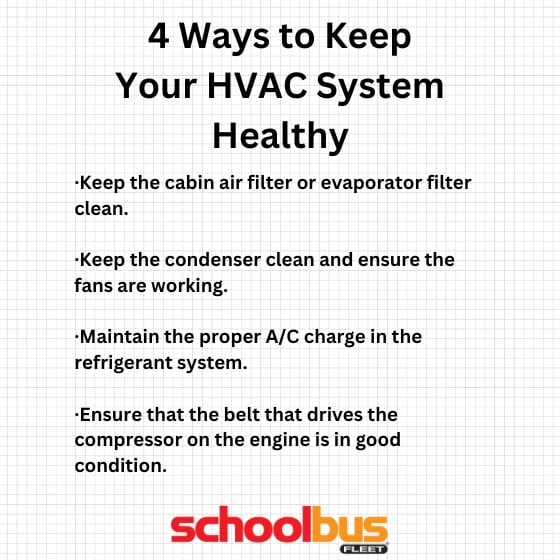
Photo: Canva
With all that school bus technicians have on their plate, it can be easy to put HVAC system maintenance on ice. And when the system goes out, it’s also easy for the technicians to simply ask the driver to open the windows on the bus, seeing a properly operating system as a luxury, Harkleroad says. But ignoring issues as they arise on the system will only lead to more problems. The same is true for avoiding regular cabin air filter changes. As mentioned earlier, a dirty filter can lead to more issues on the HVAC system, which can lead to a higher repair cost or a shorter life for the system.
In states where colder temperatures are more common, school buses are less likely to have A/C systems installed. However, heating systems typically come standard on school buses. It’s just as important to maintain the heating systems as it is the A/C systems.
Consider Training Opportunities
While it’s important to make these repairs, it isn’t always easy if technicians aren’t familiar with the system. Working on HVAC systems requires a bit of specialty knowledge. While putting time and resources into training opportunities for your staff may be costly up front, it can end up saving your department money, helping you avoid outsourcing the work.
Reach out to your HVAC system provider to see what training opportunities or resources may be available for your technicians. Giving technicians a chance to do hands-on training can help them familiarize themselves with the system as well.
Don't Overlook the Benefits
No matter what approach you take to maintaining HVAC systems for your school bus fleet, make sure you have a plan in place to keep them running well.
“In my opinion, climate control is an important safety component of the school bus,” Lehnert says. “Maintaining a comfortable and quieter environment for the driver improves their concentration and satisfaction.”
As driver shortages roll on, Lehnert believes driver comfort can significantly improve their satisfaction, so school districts and contractors can retain their drivers. Additionally, having properly working systems can also have an impact on students.
“The students’ behavior is better without windows open, or riding in a bus that is too hot or too cold, especially with students riding on the bus longer.”
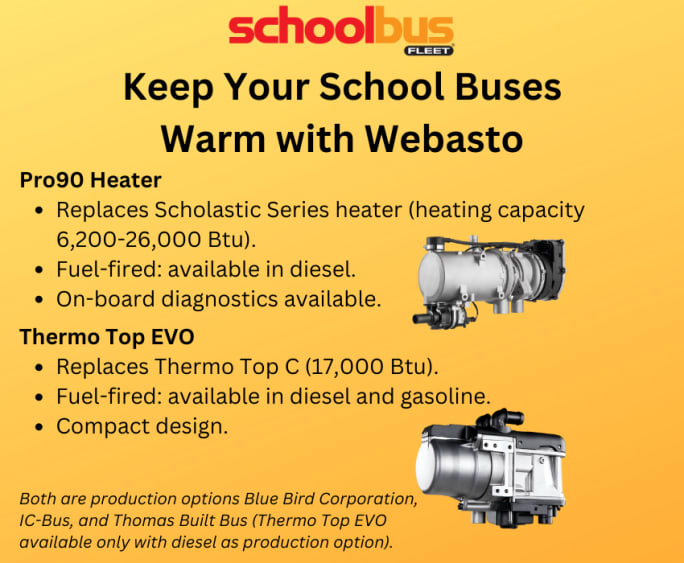
Photo: Webasto/Canva
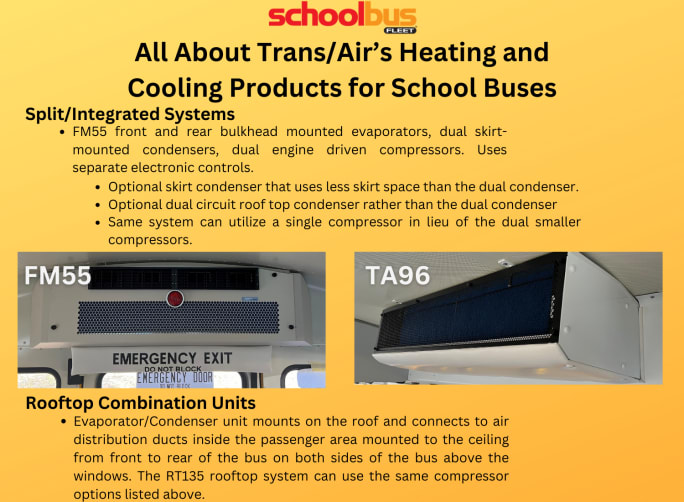
Photo: Trans/Air/Canva
More Maintenance
The Essential Guide to School Bus Maintenance and Student Safety
Your district's buses carry students to school every day. This guide shows how predictive maintenance powered by fleet data helps keep buses reliable, drivers accountable and students safer from the first bell to the last stop.
Read More →
Kerry Brothers Grows Michigan School Bus Repair Network
The acquisition of Downriver Truck and Bus expands Kerry Brothers’ school bus maintenance footprint across southeast Michigan, adding repair capacity, diagnostic resources, and state inspection support.
Read More →
Noregon Introduces CAN Bus Diagnostic Tool, Expands JPRO Features
CAN Mentor and the latest JPRO update aim to simplify vehicle network diagnostics and improve repair efficiency for technicians of all experience levels.
Read More →
Cummins on Smarter, Simpler Engine Innovation
Cummins discusses its first-ever gasoline engine for school buses, EPA 2027, and why bus fleets still want durable, simpler internal combustion options.
Read More →
Report: 72% of Diesel School Buses Now Use Advanced Low-Emission Engines
New data shows advanced low-emission diesel technology continues expanding across school bus fleets, even as electric bus adoption gains momentum.
Read More →
Vampire Tools' CAIMAN 7.5-Inch Multi-Purpose Screw Extractor Long-Nose Pliers with Crimper
Vampire Tools introduced the VAMPLIERS Caiman 7.5-inch multi-purpose pliers, combining screw extraction, cutting, crimping, and gripping functions into a single tool designed for fleet maintenance professionals.
Read More →
How Advanced Diagnostics Helps Bus Fleets Stay Ahead of Repairs
Chat with Noregon’s Kevin Smallhorn at ACT Expo about bus diagnostic tools, telematics integration, CNG maintenance support, and strategies to help reduce downtime and improve uptime.
Read More →
How School Bus Fleets are Getting Ahead of Breakdowns
Don’t let bus downtime wear you down. Here’s how bus operators are shifting from manual processes to AI-powered, data-driven maintenance systems for improved reliability and safety.
Read More →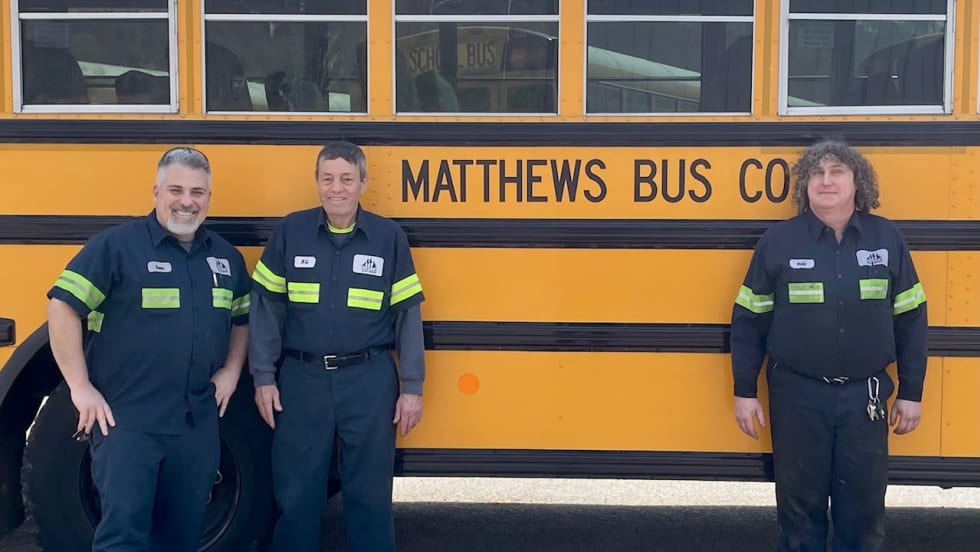
Pennsylvania School Bus Maintenance Team Praised for Dedication to Safety
Matthews Bus Company’s West Jefferson received a letter of commendation from the Pennsylvania State Police for their fleet inspections.
Read More →
From Chaos to Clarity: How School Districts Are Running Leaner Transportation Operations
Covering 38 routes on a Friday afternoon. Buses idling while routes overlap. Parents calling nonstop about late arrivals. Sound familiar? This whitepaper explores how district transportation leaders solved these exact problems — and what measurable results followed.
Read More →