Cooling System Suppliers Expand School Bus Offerings
Equipment options ranging from three-unit air-conditioning systems to roof-mount and electric applications are designed to enhance reliability and cooling efficiency for school bus fleets.
Sadiah Thompson・Assistant Editor
June 19, 2019
4 min to read
Photo courtesy Bergstrom Inc.
As more technology and new features are being added to school buses, the more air-conditioning manufacturers are designing their systems and equipment with reliability and maintenance in mind.
With several options available for pupil transportation, including traditional ceiling mount systems and bulkhead or in-wall evaporators, many air-conditioning systems and equipment suppliers are noting roof-mount systems as a popular choice for school bus fleets.
Ad Loading...
Forrest Fields, the director of aftermarket bus air-conditioning systems for Bergstrom Inc., says that customers will often request rooftop condensers and complete rooftop systems for their buses.
“Locating the air-conditioning system on the roof simplifies the air-conditioning piping and wiring while allowing the system to use cooler, cleaner air through heat exchangers,” says Dave Oberdorff, the vice president of sales for Proair.
Additionally, some of the more recent developments for air-conditioning systems in school buses have included options for electric buses.
“Electrification of all components, including the HVAC, is the leading trend across all segments, and school bus fleets will be affected by legislation in leading markets like California,” says Steve Johnson, Thermo King’s product marketing manager for bus HVAC. “While not necessarily new requests, fleets continue to demand improvements in operating costs, efficiency, and safety … and electrification of buses and components are key enablers.”
As the school bus market continues to shift and more features become available, the following systems and equipment options are designed to enhance reliability and cooling efficiency for multiple pupil transportation applications.
Ad Loading...
Three-Unit Air-Conditioning System
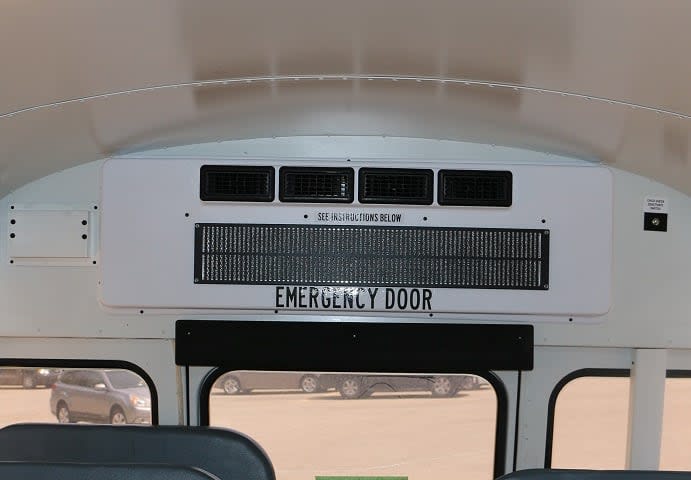
Bergstrom Inc. recently introduced its Cool Zone system, designed for school bus fleets. The system consists of front and rear bulkhead units and a midship unit with two three-fan condensers and two compressors. The Cool Zone features accessible filters for cleaning or replacing, and allows easy access to the skirt condenser for cleaning the coils, according to the company. The system’s receiver driers are also equipped with a sight glass to ensure there is no moisture in the system.
Each Cool Zone system is customizable and can consist of any combination of bus HVAC systems. Factors that determine the different types of packages vary by each application, including the size of the school bus, state regulations, and average weather temperatures in the region.
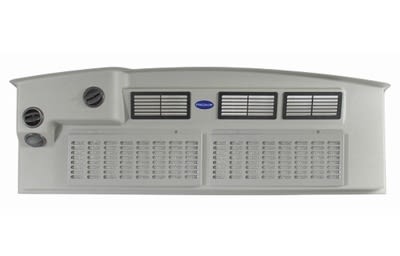
With the integration of American Cooling Technology and Bus Air Manufacturing into Proair LLC, the company continues to expand its school bus air-conditioning product line. With Proair’s release of the new Pro Series EV-70 and EV-96 evaporators, it now offers in-wall systems available in a capacity range from 35,000 Btu/hr to 96,000 Btu/hr per evaporator.
The EV-70 is designed to fit into both the front and rear of the school bus bulkhead, and is available with a durable ABS cover using fixed or adjustable louvers. The EV-70 also features a 12- or 24-volt motor, and has accessible air filters to reduce maintenance time.
Ad Loading...
In addition, Proair recently expanded its rooftop product line to include the CR-9 rooftop condenser and RTS-290 complete rooftop system.
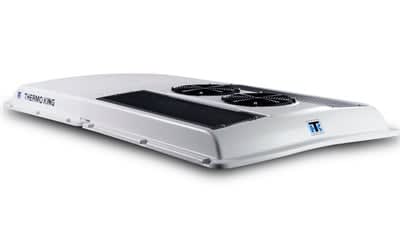
Thermo King’s SLR Series features a low-profile, one-piece roof mount application designed with the company’s ComforTEK air delivery system. The low-profile design is 6 inches above the roofline on the exterior, and provides maximum headroom clearance for the interior walk aisle. The condenser features micro-channel coils, a structural foam ABS chassis, and a protective wireframe grille for the coils and fans. The SLR Series also has up to 20-feet reduction in hose lengths, and offers three controller options, including Thermo King’s IntelligAire advanced microprocessor.
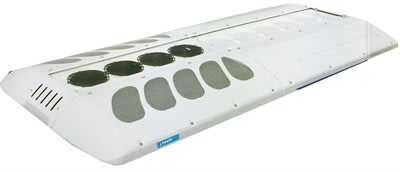
This year, Trans/Air is celebrating its 40th year in the bus air-conditioning industry. The company’s latest offering, the RT170, is a heavy-duty rooftop climate control system designed for rear-engine school buses. The system, which can accommodate buses up to 42 feet in length, can offer up to 170,000 Btu/hr cooling, and is also available with heating. The RT170 includes a fully integrated control panel and provisions for added dash air capacity, if that option is selected by the user. The RT170, and a full line of other Trans/Air systems, are also available in electric models for hybrid or all-electric buses.
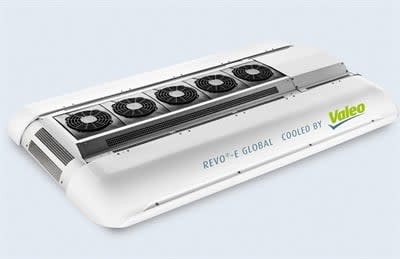
Valeo’s REVO family of air-conditioning systems are designed with composite panels for a lightweight casing design. Nearly all of the systems’ refrigerant-carrying components are made of aluminum to help decrease the weight and increase the reliability of the system.
The modular REVO system is available in multiple versions, with the REVO-E and REVO-E Global being the new roof-mounted systems for hybrid and electric buses. Both REVO-E models offer a heat pump and optional battery cooling. In addition, both REVO air-conditioning systems require minimal maintenance, reducing the long term cost of ownership, according to the company.
The new name represents a renewed vision for the nonprofit focused on advancing clean, equitable, and affordable transportation solutions that move people and goods.
Choosing the right school bus driver trainer takes more than experience. Learn six keys to selecting and developing trainers and evaluating program effectiveness.
STA's Canadian division acquires Ontario-based G&L Stevenson Transport while Durham School Services adds a new district contract in California, First Student adds a New Jersey contract, and Minnesota Coaches acquires Halo Transportation.
A summer pilot found that AI agents could handle most routine calls, freeing up time for customer service staff to focus on emergencies and complex family concerns.
A Texas transportation supervisor shares lessons on self-awareness, accountability, managing stress and building trust — and why investing in leadership development matters at every stage of your career.
Who earned national recognition for their work in student transportation? This year, NAPT named five recipients of its 2026 awards for service, safety, and leadership, plus its newest Hall of Famer.
Driver shortages. Rising costs. Growing safety expectations. More data, but not enough time to act on it. The 2026 State of Student Transportation Report reveals what transportation leaders say is putting the most pressure on their operations—and where they’re investing next. See how your priorities compare.
What makes emotions run high, and how should you handle an angry colleague or parent? Follow these steps for staying calm, listening, showing empathy, and resolving conflict.
Learn about the challenges shaping the 2026–2027 school year, from persistent driver shortages and budget pressure to technology and readiness gaps. See how school districts are responding and adapting in Zonar’s 2026 Back-to-School Readiness Report.