




2023 SBF Maintenance Survey: Wages Increase Along with Expenses for Parts
The average hourly starting pay for school bus maintenance works is up more than $1 compared to last year, but more than half of student transportation operations surveyed indicated that their technicians are expected to cover bus routes often or daily due to driver shortages.

Nearly 200 respondents from school districts and other school transportation operations across the United States participated in the annual School Bus Fleet maintenance survey.
Image: Canva
Technicians getting their start in a school transportation operation can expect to make just under $22 per hour, according to the latest School Bus Fleet annual maintenance survey.
The average hourly wage rose $1.46 over last year, from $20.50 to $21.96.
Unfortunately, more than half the respondents indicated that their technicians still are called on to serve as backup drivers of the buses they maintain due to the ongoing driver shortage.
Noted one respondent, it’s tough for mechanics to focus on bus maintenance when they’re also called on to drive and manage routing and scheduling.
“With technicians covering routes, we are limited on the number of available hours during the day,” wrote a respondent. “Our technicians are working nights and weekends, and we worry about burnout factor.”
When they’re covering routes, said another, “that is four hours that they aren’t being productive.”
And when they’re working on maintenance, the average technician has 26 school buses to worry about. Nearly two-third (64%) of survey respondents are expected to handle upkeep on vehicles from two or three manufacturers.
Maintenance Pain Points
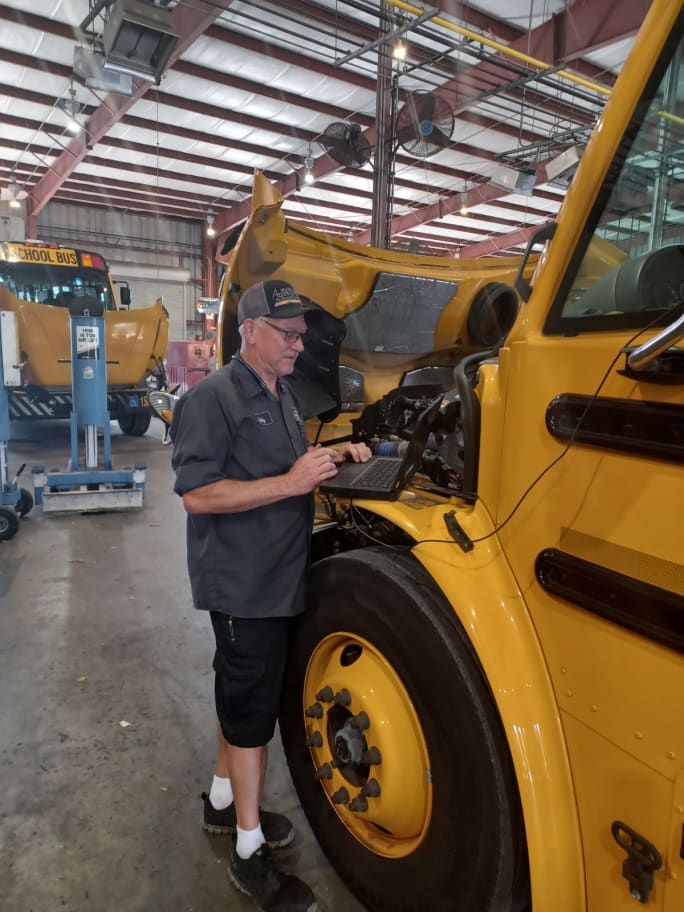
Technician Billy Joe Groover diagnoses a school bus in the garage for Polk County (Florida) Schools.
Photo: Polk County Schools
Good help continues to be hard to find, with respondents struggling to keep up with technology and finding technicians who are experienced at working on school buses at all (let alone vehicles from multiple brands). Only 6% of surveyed fleets reported that they had at least one female technician on staff.
And it may not be surprising to learn that 97% of those surveyed reported that they’ve seen another spike in prices for parts, from tires, batteries, and brakes to fluids, electronics, and engine components.
“Electronic and metal components are the highest,” said one respondent. “Average of 19% increase from last school year on our top 10 parts.”
Adding to the pain: when parts can be purchased, they may be unavailable or backlogged. Plus, fleets also find themselves waiting for delivery of new buses that have been slowed by their own supply chain struggles in recent years.
Some technicians also chafe at the shift to zero-emission school buses encouraged by projects like the Environmental Protection Agency’s Clean School Bus Program, especially moving to electric buses “without proper infrastructure.” Wrote one respondent: “The utility companies can’t provide the power necessary if and when we do get the chargers and wiring in place.”
More Survey Highlights
Other highlights of the 2023 survey include:
More than two-thirds (68%) of school transportation operations indicated they planned to buy new buses this year.
Fleets are getting younger. The average age of a school bus fell to 8.8 (compared to 9.3 years in 2022).
97% of fleets surveyed reported that they use diesel-fueled school buses. More than half use gasoline. But a rising number are fueled by propane and electricity.
88% of fleets maintain Type C school buses. More than half have Type A school buses.
Less than a third (28%) reported that they buy used school buses.
More than half (53%) of shops use fleet maintenance software, up slightly from 2022.
Thanks to everyone who participated, sharing their insights and pain points. Check out the complete survey details in the March print edition of School Bus Fleet. Didn't get to participate but still want to let us know your maintenance situation? Feel free to send comments to info@schoolbusfleet.com.
More Maintenance
The Essential Guide to School Bus Maintenance and Student Safety
Your district's buses carry students to school every day. This guide shows how predictive maintenance powered by fleet data helps keep buses reliable, drivers accountable and students safer from the first bell to the last stop.
Read More →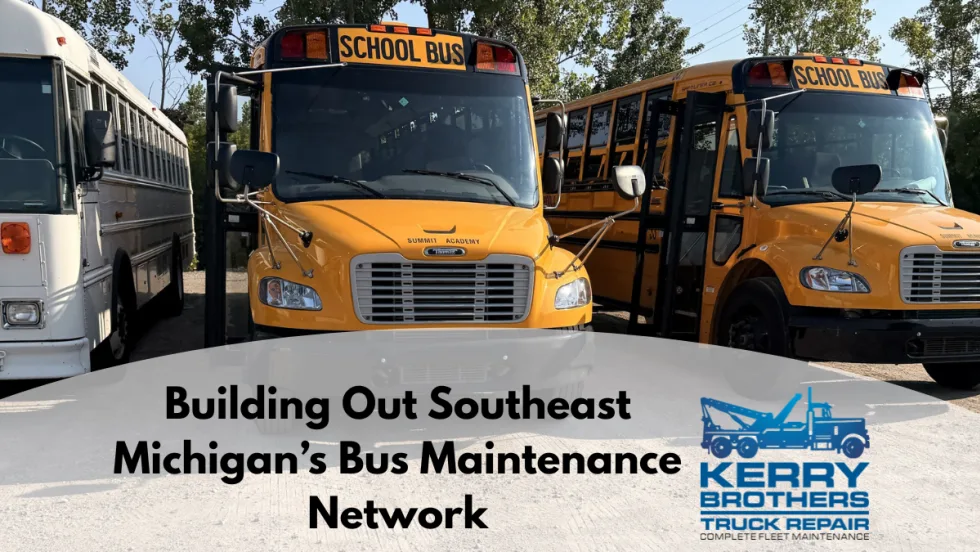
Kerry Brothers Grows Michigan School Bus Repair Network
The acquisition of Downriver Truck and Bus expands Kerry Brothers’ school bus maintenance footprint across southeast Michigan, adding repair capacity, diagnostic resources, and state inspection support.
Read More →
Noregon Introduces CAN Bus Diagnostic Tool, Expands JPRO Features
CAN Mentor and the latest JPRO update aim to simplify vehicle network diagnostics and improve repair efficiency for technicians of all experience levels.
Read More →
Cummins on Smarter, Simpler Engine Innovation
Cummins discusses its first-ever gasoline engine for school buses, EPA 2027, and why bus fleets still want durable, simpler internal combustion options.
Read More →
Report: 72% of Diesel School Buses Now Use Advanced Low-Emission Engines
New data shows advanced low-emission diesel technology continues expanding across school bus fleets, even as electric bus adoption gains momentum.
Read More →
Vampire Tools' CAIMAN 7.5-Inch Multi-Purpose Screw Extractor Long-Nose Pliers with Crimper
Vampire Tools introduced the VAMPLIERS Caiman 7.5-inch multi-purpose pliers, combining screw extraction, cutting, crimping, and gripping functions into a single tool designed for fleet maintenance professionals.
Read More →
How Advanced Diagnostics Helps Bus Fleets Stay Ahead of Repairs
Chat with Noregon’s Kevin Smallhorn at ACT Expo about bus diagnostic tools, telematics integration, CNG maintenance support, and strategies to help reduce downtime and improve uptime.
Read More →
How School Bus Fleets are Getting Ahead of Breakdowns
Don’t let bus downtime wear you down. Here’s how bus operators are shifting from manual processes to AI-powered, data-driven maintenance systems for improved reliability and safety.
Read More →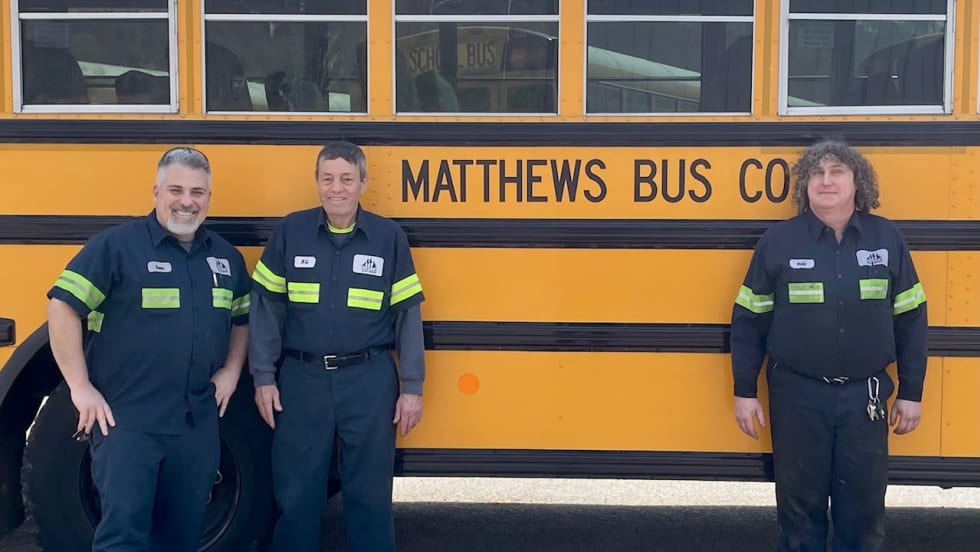
Pennsylvania School Bus Maintenance Team Praised for Dedication to Safety
Matthews Bus Company’s West Jefferson received a letter of commendation from the Pennsylvania State Police for their fleet inspections.
Read More →
From Chaos to Clarity: How School Districts Are Running Leaner Transportation Operations
Covering 38 routes on a Friday afternoon. Buses idling while routes overlap. Parents calling nonstop about late arrivals. Sound familiar? This whitepaper explores how district transportation leaders solved these exact problems — and what measurable results followed.
Read More →