





Check Out: Report Examines Transit, School Bus Fueling Choices
Minnesota School Districts Could Get Matching Dollars for Clean Buses
The Minnesota Pollution Control Agency aims to help non-prioritized applicants get the most funding possible for new battery-electric school buses in tandem with the EPA's Clean School Bus Program.
August 2, 2022

The state program is designed to give Minnesota applicants a better chance to buy electric buses on tight budgets.
Image: MPCA
2 min to read
The Minnesota Pollution Control Agency is offering matching funds for some school districts that apply for the U.S. Environmental Protection Agency’s Clean School Bus Program.
“Our match program was established because the Minnesota Pollution Control Agency wanted to encourage as many Minnesota schools to apply for the federal funds as possible,” said Lauren Lewandowski, spokesperson for the MPCA. “The federal funds are distributed through a ‘lottery’ process, so the more Minnesota schools that apply, the better chance we have of getting more electric buses in the state.”
The program also makes it possible for those school districts to receive as much money as possible for their electrification projects.
“If they don’t reach the top amount from the EPA, we will help schools and bus companies reach that amount, giving them a better chance to be able to afford an electric bus on already tight budgets,” Lewandowski said.
Calling all Minnesota schools, school districts, and school bus companies!🚌 If you are selected for @EPA's Clean School Bus Program, @MnPCA will match it with up to $125,000.👀 Don’t miss your chance to apply to EPA’s program now. Details: https://t.co/BemxZQxd4v. pic.twitter.com/7Z81GTlelh
— Minnesotans for Clean Cars (@MNforCleanCars) August 1, 2022
Qualifying for the Minnesota Matching Funds
The steps involved include:
Apply for the Clean School Bus rebate program before the Aug. 19 deadline.
If selected by the EPA, apply to the MPCA for additional funds. The state agency has as much as $125,000 per school district or eligible applicant to match EPA money and as much as $7,000 for a charging station.
Requirements for MPCA application:
Notification from the EPA that your district has been selected to get either $190,000 for a class 4 through 6 bus or $250,000 for a class 7 or 8 bus.
VIN number of the 2009 or older engine model year bus that will be destroyed and replaced with a new electric bus.
Primary address where the bus will operate.
Quotes for the bus and charging unit.
Who's Ineligible for the Matching Funds?
Don’t apply for MPCA funds if:
Your district is prioritized under the EPA program so that it can receive $285,000 for class 4-6 or $375,000 for class 7 and 8 buses.
You have a class 3 bus. Class 3 buses are ineligible for matching dollars.
Your bus is engine model 2010 or newer.
You don’t plan to destroy your 2009 or older bus. Selling or trading the bus isn’t an eligible option.
Your bus operates outside the state of Minnesota.
You already bought your new electric bus.
More details of the matching program are expected after the August deadline passes for the first phase of the Clean School Bus Program.
More Alternative Fuels
Bipartisan Bill Seeks to Extend Clean School Bus Program Through 2031
The proposed legislation would renew federal support for cleaner school buses as districts navigate funding uncertainty, rising fuel and infrastructure costs, and fleet replacement needs.
Read More →
Alt-Fuel Moves: Electric Bus Rollouts, Bidirectional Charging & Propane Growth
See which fleets are adding electric and propane school buses as districts and operators invest in charging infrastructure, bidirectional technology, and alternative-fuel expansion.
Read More →
Nobody Told Diesel Prices They Were Supposed to Come Down
With diesel prices surging, school bus fleets have new reason to stress-test fuel costs, consider diversification, and calculate what each route really costs to operate.
Read More →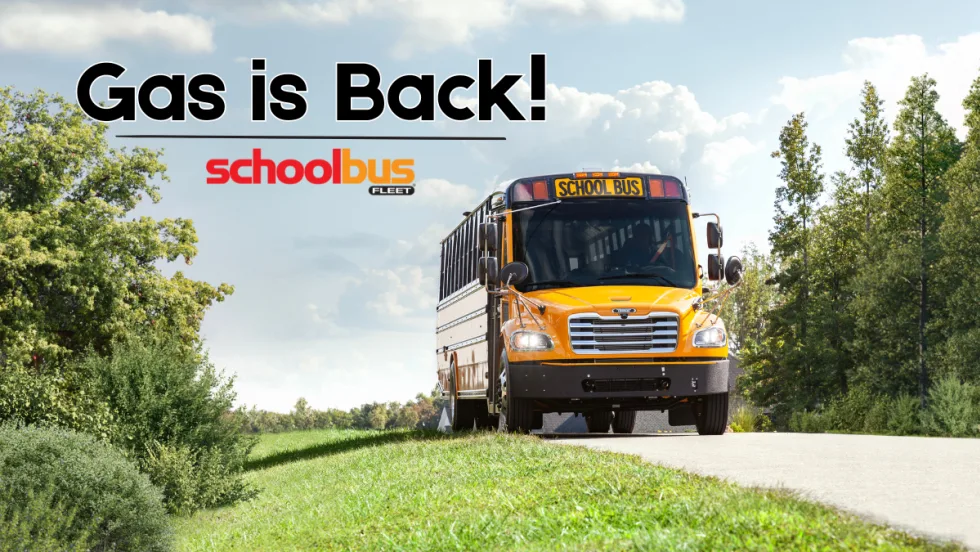
Why Gasoline School Buses Are Making a Comeback
Gasoline is gaining ground in full-size school buses. See how today’s options stack up against diesel on cost, maintenance, emissions, performance, and more.
Read More →
EPA Opens $180M DERA Funding Round for Diesel Upgrades
The 2026 Diesel Emissions Reduction Act program seeks applications from eligible organizations to accelerate the retirement of legacy diesel vehicles.
Read More →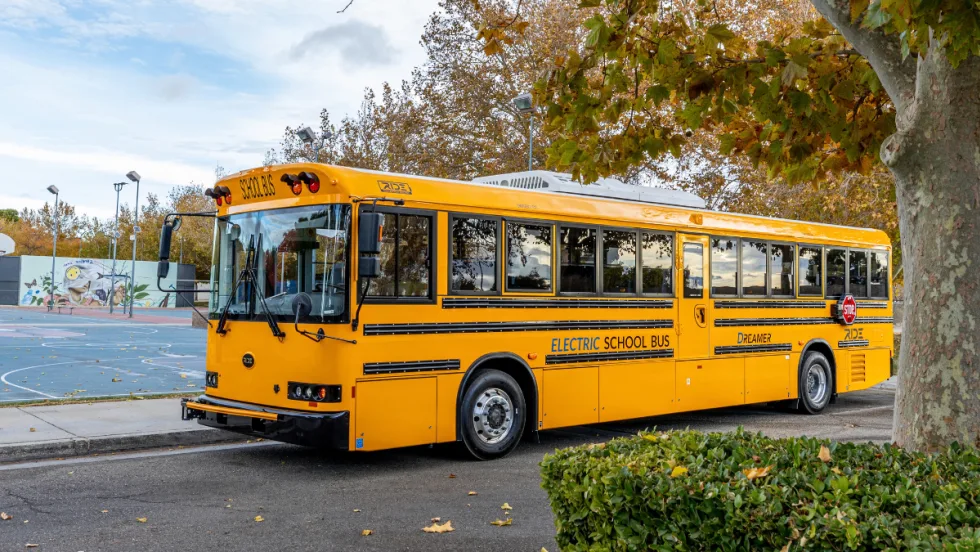
The Secret Life of an Electric School Bus Battery
Batteries change throughout years of daily routes, but degradation doesn’t necessarily mean the end. Here’s what operators should know about performance, safety, and second life.
Read More →
CALSTART and Forth Combine to Form Catalyst Mobility
The new name represents a renewed vision for the nonprofit focused on advancing clean, equitable, and affordable transportation solutions that move people and goods.
Read More →
Alt-Fuel Moves: New Buses, Charging Hubs & Real-World EV Testing
Propane and electric school bus deployments continue to grow as districts add new vehicles, expand charging infrastructure, and gather more real-world operating data.
Read More →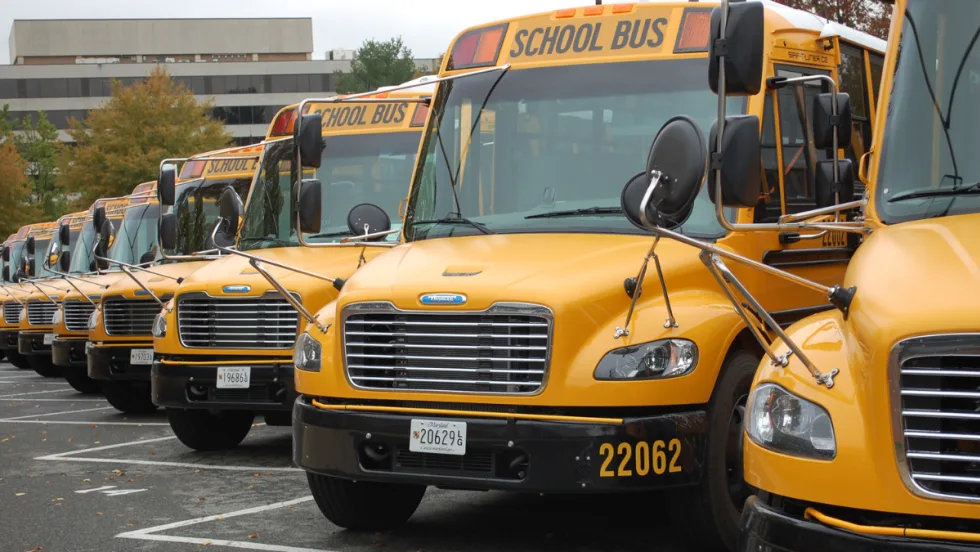
Fewer Electric School Bus Models Reshape the U.S. Market
WRI’s latest buyer’s guide points to a consolidating electric school bus market, but fewer options may reflect a maturing industry rather than fewer meaningful choices for school bus operators.
Read More →
The Fuel Budget You Can Actually Predict: How Propane Autogas Keeps Money in the Classroom
Learn how propane autogas helps school districts manage fuel costs with predictable pricing, lower maintenance, and reduced emissions from former transportation director Joel Stutheit.
Read More →