




Related: California District, College Team to Train Tomorrow's Technicians
District Continues Move to All-Electric Fleet with EV Software Supplier
Twin Rivers Unified School District in California is working with Electriphi on charging management and data collection as it plans to transition to an all-electric bus fleet.

Nicole Schlosser・Former Executive Editor
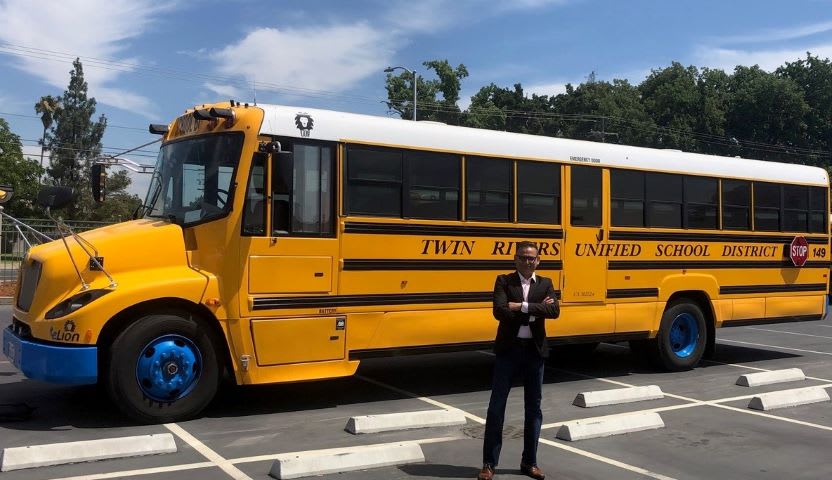
Twin Rivers Unified School District in California is working with Electriphi on charging management and data collection as it plans to transition to an all-electric bus fleet. Shown here is Muffi Ghadiali, Electriphi’s co-founder and CEO. Photo courtesy Electriphi
3 min to read
Twin Rivers Unified School District in California is working with Electriphi on charging management and data collection as it plans to transition to an all-electric bus fleet. Shown here is Muffi Ghadiali, Electriphi’s co-founder and CEO. Photo courtesy Electriphi
MCCLELLAN PARK, Calif. — A school district here is partnering with an electric vehicle software supplier for charging management and data collection as it plans to transition to an all-electric bus fleet.
Twin Rivers Unified School District is working with Electriphi, a software solutions supplier for electric vehicle fleets and energy management.
Electriphi’s platform offers solutions that are designed to significantly reduce operational costs while accelerating infrastructure and electric vehicle deployment, according to a news release from the supplier. Features include telematics integration, dynamic scheduling, fault reporting, route management, and service tracking.
Electriphi also helps customers transition to a fully electric fleet, providing analytics, real-time simulations, and return-on-investment (ROI) calculations. The supplier’s solution is compatible with any charging infrastructure or vehicle type.
Thirty of the school district’s 120 school buses are electric, Tim Shannon, the director of transportation for Twin Rivers Unified School District, told School Bus Fleet. In addition, the district’s fleet will soon grow when it receives five more electric buses this summer as a result of the California Energy Commission grant program.
Twin Rivers USD has also applied for funding to cover up to 23 electric buses and the required infrastructure from the Sacramento Metropolitan Air Quality Management District and for Diesel Emissions Reduction Act and Volkswagen settlement funding from the San Joaquin Valley Air Pollution Control District, Shannon added.
"Twin Rivers Unified School District has the largest fleet of electric school buses in North America, and our ambition is to transition to a fully electric fleet in the coming years,” Shannon said. “This is a significant undertaking, and we needed a trusted partner that could provide us state-of-the-art charging management and help us with data collection and monitoring. Electriphi has absolutely been that partner to us, by helping reduce operational costs and simplifying our data collection and reporting.”
Electriphi started deployment at Twin Rivers in June of 2019, Shannon added. The charging management platform is offered as a software-as-a-service (SaaS) on an annual renewal basis.
For Twin Rivers’ electric buses, Shannon said, Electriphi’s charging management system collects data that includes energy dispensed, vehicle efficiencies, charging station uptime, fleet vehicle routes, utility rates, and impact of weather conditions. It also covers energy reporting on items such as Low Carbon Fuel Standards (LCFS) credits for external agencies.
Muffi Ghadiali, Electriphi’s co-founder and CEO, said that operators in a variety of transportation markets are looking to adapt to electric vehicles.
“Our customers have been clear: the transition to clean transportation is inevitable and they need fleet and energy management solutions to keep their vehicles charged and ready while keeping operational costs in check,” Ghadiali said. “Our open architecture and standards-based approach has demonstrated scalability by signing customers across various industry segments and deploying across a variety of charging infrastructure and vehicle OEMs.”
The supplier, which has signed customer contracts across multiple industry segments, has also announced that it received $3.5 million in seed funding to fuel customer growth, scale its services, and enter new markets.
More Alternative Fuels

Alt-Fuel Moves: New Buses, Charging Hubs & Real-World EV Testing
Propane and electric school bus deployments continue to grow as districts add new vehicles, expand charging infrastructure, and gather more real-world operating data.
Read More →
Fewer Electric School Bus Models Reshape the U.S. Market
WRI’s latest buyer’s guide points to a consolidating electric school bus market, but fewer options may reflect a maturing industry rather than fewer meaningful choices for school bus operators.
Read More →
The Fuel Budget You Can Actually Predict: How Propane Autogas Keeps Money in the Classroom
Learn how propane autogas helps school districts manage fuel costs with predictable pricing, lower maintenance, and reduced emissions from former transportation director Joel Stutheit.
Read More →
Hendrickson, Driventic Introduce New Electric Powertrain for School Buses
ELECTRAAX, the electrified, lightweight drive axle offers integrated ePowertrain efficiency and modular flexibility for Class 6–7 school bus use.
Read More →
The Mobility House Joins PowerFlex in Fleet Electrification Deal
The acquisition combines intelligent charging software, bidirectional charging expertise, and fleet electrification services to support the growing adoption of electric school buses across North America.
Read More →
Alt-Fuel Moves: Electric School Bus Investments Hit the Road
See which districts across the U.S. are putting electric school buses into service, expanding charging infrastructure, and planning the next phase of fleet electrification.
Read More →
With Fuel Volatility Ahead, School Districts Turn to Propane
While diesel prices peaked above $5 this spring, districts with propane autogas-powered fleets paid under $2 per gallon, according to PERC.
Read More →
EPA Unveils Proposed Changes to 2027 Heavy-Duty Engine Rules
The federal agency has proposed changes to next year’s targets that would eliminate DEF derates, ease warranty requirements, and retain current NOx emissions standards.
Read More →
Alt-Fuel Moves: EV Charging & Infrastructure Projects Gain Momentum
The latest developments include new funding, charging infrastructure, utility investments, and fleet technologies designed to support the transition to electric school buses nationwide.
Read More →
Alt-Fuel Moves: Fleets Power Up Beyond the Bus
See how districts are pairing electric buses with charging, solar, and V2G technology to cut costs, boost resilience, and unlock new fleet value.
Read More →