




Speakers draw safety lessons from school bus tragedies
Keynote speakers at the NAPT Summit share some powerful safety messages — powerful in particular because they are based on fatal school bus accidents. The family of Hunter Pitt, who was killed when his bus ran over him, watches a video they worked on with Missouri organizations.

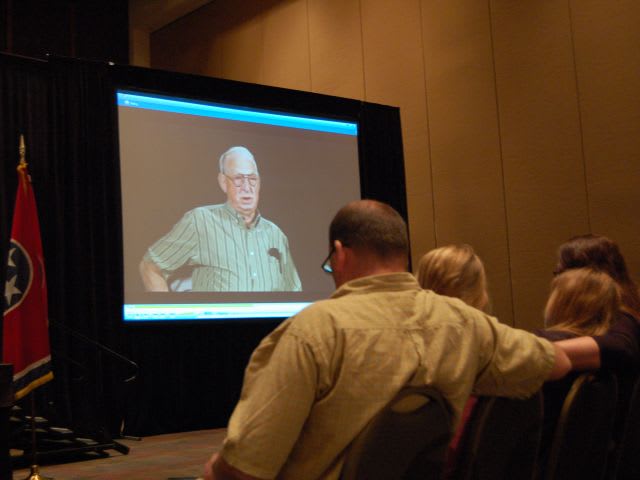
The family of Hunter Pitt, who was killed when his school bus ran over him, watches a safety video they worked on with Missouri organizations. On screen is the driver of the bus that ran over Hunter, Willie Leonberger.
MEMPHIS, Tenn. — Keynote speakers at the National Association for Pupil Transportation (NAPT) Summit here on Monday morning shared some powerful safety messages — powerful in particular because they were based on fatal school bus accidents.
Christopher Hart, vice chairman of the National Transportation Safety Board (NTSB), addressed recent crashes that the agency has investigated or is still investigating.
In August 2010 in Gray Summit, Mo., a pickup truck ran into the back of a truck-tractor that had slowed for a construction zone. The pickup truck, in turn, was struck from behind by a school bus. That school bus was then hit by a second school bus that had been following. Two people died, and 38 others were injured.
NTSB's investigation revealed that the pickup driver sent and received 11 text messages in the 11 minutes preceding the accident. The last text was received moments before the pickup struck the truck-tractor.
The agency determined that the probable cause of the initial collision was distraction, likely due to a text messaging conversation being conducted by the pickup driver.
NTSB found that the second collision, between the lead school bus and the pickup, was the result of the bus driver's inattention to the forward roadway due to excessive focus on a motorcoach parked on the shoulder of the road.
And the final collision, the agency said, was due to the driver of the following school bus not maintaining the recommended minimum distance from the lead school bus in the seconds preceding the accident. “That’s a training issue,” Hart said of the following distance problem.
Cell phone use is a “huge” problem in all modes of transportation, and “it’s going to get worse before it gets better,” he told NAPT attendees. “It’s very important to have a corporate policy on cell phone use.”
Hart touched on two ongoing investigations of fatal school bus accidents that occurred earlier this year, in St. Lucie County, Fla., and Chesterfield, N.J. The buses in both crashes were equipped with lap belts, which Hart said made them good candidates for investigation.
“We have not been in favor of lap-only seat belts,” the NTSB vice chairman said.
Also during his presentation, Hart expressed his personal interest in pupil transportation safety.
“I take this issue to heart,” he said. “My 9-year-old daughter rides the school bus every day.”
Another Monday morning presentation also took a hard look at a tragic school bus accident.
Hunter Pitt, a 6-year-old in Callaway County, Mo., was killed in January 2011 when his school bus ran over him as he crossed in front. The boy’s parents later worked with the Missouri Association for Pupil Transportation, the Missouri Department of Elementary and Secondary Education and other state organizations to create a video that explains the accident and emphasizes the importance of school bus drivers staying focused, particularly when children are loading and unloading.
Adding to the video’s impact is an appearance by the driver of the bus that ran over Hunter, Willie Leonberger, who was convicted of involuntary manslaughter.
Leonberger, also a pastor, said that a commotion on the bus distracted him as Hunter was unloading, and he also pointed to complacency as a factor.
“I believe when we get into a routine, we can lose our focus on what we are doing,” the former bus driver said in the video. “That accident changed my life and caused a lot of heartbreak and sorrow for Hunter’s family.”
Hunter’s family came to the NAPT Summit for the presentation.
“This ripped our family to the core,” Matthew Pitt, Hunter’s father, told NAPT attendees. He said that the family chose to not remain angry but to “make changes for the better.”
To view the video, go to www.moapt.org.
Other news from the 2012 NAPT Summit:
More Safety
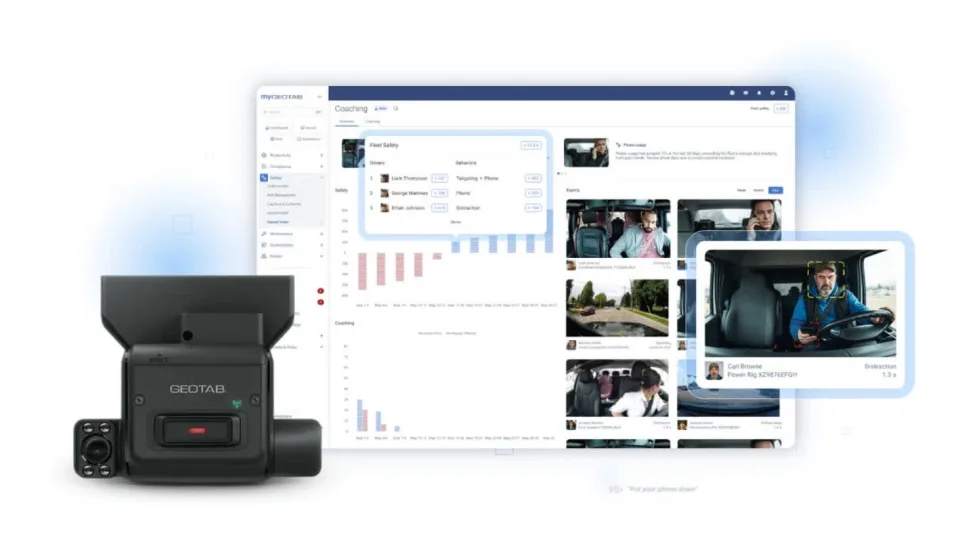
Geotab Expands Fleet Safety Tools With Video Coaching, Risk Insights
New safety and video capabilities aim to help fleet managers assess risk, support drivers, and take targeted action through video coaching, red-light violation detection, and more.
Read More →
How to Build a Better School Bus Driver Training Program
Is it time to strengthen your driver training? Here’s how to pick the right talent and improve recruitment, retention, and safety. This video is brought to you by IC Bus.
Read More →
Recent School Bus Accidents Leave 2 Dead, 2 Injured
Four school bus crashes in Florida, Illinois, and Georgia highlight risks in transportation lots, at bus stops, and during student loading and unloading.
Read More →

When Every Second Matters, Clarity Keeps Routes Moving
From routine delays to urgent incidents, strong communication practices help drivers, dispatchers, schools, and families respond with confidence.
Read More →
What Happens When a School Bus Catches Fire — and What Can Help
School bus fires are rare but can be devastating. Learn how advances in fire suppression and asset protection help fleets detect fires earlier, reduce damage, and improve safety.
Read More →
Geotab Launches Tool to Help Fleets Investigate Road Incidents
Geotab Investigations combines telematics data, video, documents, and other evidence to help fleets reconstruct incidents, resolve claims, and determine what happened.
Read More →
Texas Sixth Grader Wins 2026 National School Bus Safety Poster Contest
Sai Darshana Yekolu of Moseley Middle School in Prosper, Texas, was named the newest winner for her artwork, bringing the theme of “Safe Rides, Everyday Heroes” to life.
Read More →
Doing More With Less: How Transportation Directors Can Prioritize Safety Amid Budget Uncertainty
With diesel prices soaring and nearly one-third of transportation directors expecting budget cuts, maintaining student safety has never been more challenging. Download this guide to learn how leading districts are prioritizing risk, funding critical safety technology, and building stronger budget cases with data.
Read More →
Walton County Schools Adds Gatekeeper Stop-Arm Enforcement System
The Florida district will deploy Gatekeeper’s updated Student Protector technology, which now incorporates AI to improve video evidence.
Read More →
How To Build a More Secure School Bus Yard During and After Hours
As thefts and overnight security threats continue, school transportation leaders are combining stronger operational practices with AI-enabled surveillance to better protect buses, facilities, and staff.
Read More →