





Everyone Aboard? U.S. School Bus Dealerships Offer Insights in Their Vehicle Market
Lightning eMotors Eligible for Commercial Clean Vehicle Credit
The Internal Revenue Service offers a credit of up to $40,000 per electric vehicle, which can be stacked with other federal and state incentive programs.
October 10, 2023

Electric medium-duty vehicles, such as these Lightning eMotors Type A school buses, are eligible for multiple federal and state grants and incentives.
Photo: Lightning eMotors
2 min to read
Lightning eMotors, a provider of zero-emission, medium-duty commercial vehicles and electric vehicle (EV) technology for fleets, announced that its commercial vehicle customers can now receive an up to $40,000 credit toward the purchase of select Lightning vehicles. The Commercial Clean Vehicle Credit became available to Lightning customers as a result of the company’s acceptance as a qualified manufacturer into the IRS Commercial Clean Vehicle Credit program. The list of eligible manufacturers can be viewed here.
“Intelligent and targeted grant programs are a key component to accelerating electric vehicle adoption, and we are fortunate to have so many compelling programs available in the United States and Canada,” said Lightning eMotors CEO and co-founder Tim Reeser. “The Commercial Clean Vehicle Credit program joins our robust stack of incentive programs, providing yet another reason for commercial passenger, cargo and vocational fleets to electrify with Lightning.”
The IRS Commercial Clean Vehicle Credit joins several other federal and state incentive programs that Lightning vehicles are eligible for, many of which stack, in some cases, to reduce the cost of an electric vehicle to nearly free. These programs include, but are not limited to:
The Environmental Protection Agency (EPA) Clean School Bus Program
California’s Hybrid and Zero-Emission Truck and Bus Voucher Incentive Project (HVIP)
The Colorado Clean Fleet Vehicle & Technology Grant Program
The New Jersey Zero-Emission Incentive Program (NJZIP)
The New York Truck Voucher Incentive Program (NYTVIP)
“The ability to stack the various grant, rebate and credit programs is designed to support accelerated electric vehicle adoption and help the market reach critical mass faster to the benefit of both the national transportation ecosystem and our environmental well-being,” said Nick Bettis, vice president, marketing and sales operations for Lightning eMotors. “For example, a Type A school bus may be obtained by a school district or operator at essentially no cost and be operated with significantly lower costs as well. That’s a huge win for the district, the students and the environment.”
“To provide the best value to our customers, our sales team has been helping them optimize their EV fleet purchases with the various funding programs for several years, and they are eager to utilize the addition of this IRS clean vehicle credit to maximize our customers’ savings,” added Bettis.
More Alternative Fuels

Alt-Fuel Moves: Electric Bus Rollouts, Bidirectional Charging & Propane Growth
See which fleets are adding electric and propane school buses as districts and operators invest in charging infrastructure, bidirectional technology, and alternative-fuel expansion.
Read More →
Nobody Told Diesel Prices They Were Supposed to Come Down
With diesel prices surging, school bus fleets have new reason to stress-test fuel costs, consider diversification, and calculate what each route really costs to operate.
Read More →
Why Gasoline School Buses Are Making a Comeback
Gasoline is gaining ground in full-size school buses. See how today’s options stack up against diesel on cost, maintenance, emissions, performance, and more.
Read More →
EPA Opens $180M DERA Funding Round for Diesel Upgrades
The 2026 Diesel Emissions Reduction Act program seeks applications from eligible organizations to accelerate the retirement of legacy diesel vehicles.
Read More →
The Secret Life of an Electric School Bus Battery
Batteries change throughout years of daily routes, but degradation doesn’t necessarily mean the end. Here’s what operators should know about performance, safety, and second life.
Read More →
CALSTART and Forth Combine to Form Catalyst Mobility
The new name represents a renewed vision for the nonprofit focused on advancing clean, equitable, and affordable transportation solutions that move people and goods.
Read More →
Alt-Fuel Moves: New Buses, Charging Hubs & Real-World EV Testing
Propane and electric school bus deployments continue to grow as districts add new vehicles, expand charging infrastructure, and gather more real-world operating data.
Read More →
Fewer Electric School Bus Models Reshape the U.S. Market
WRI’s latest buyer’s guide points to a consolidating electric school bus market, but fewer options may reflect a maturing industry rather than fewer meaningful choices for school bus operators.
Read More →
The Fuel Budget You Can Actually Predict: How Propane Autogas Keeps Money in the Classroom
Learn how propane autogas helps school districts manage fuel costs with predictable pricing, lower maintenance, and reduced emissions from former transportation director Joel Stutheit.
Read More →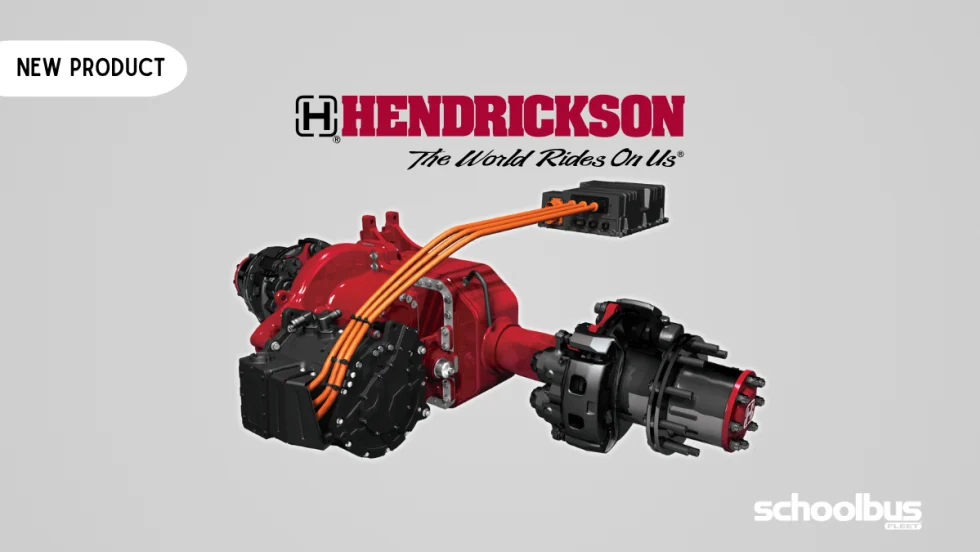
Hendrickson, Driventic Introduce New Electric Powertrain for School Buses
ELECTRAAX, the electrified, lightweight drive axle offers integrated ePowertrain efficiency and modular flexibility for Class 6–7 school bus use.
Read More →