




Related: 4 Keys for Enforcing Seat Belt Use
Iowa to Require Seat Belts on All New School Buses
Lap-shoulder belts will be required on all new school buses ordered as of Oct. 2. Safety equipment such as a second stop arm, hand rails, exterior boarding lights, and fire-resistant crash barriers are also required.

Nicole Schlosser・Former Executive Editor
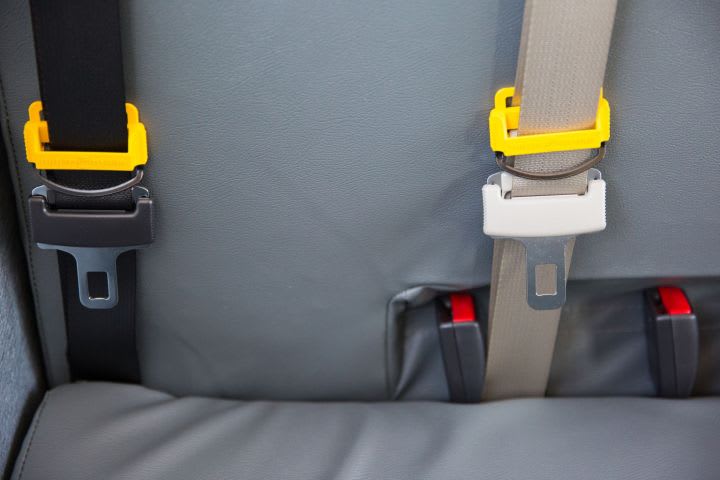
In Iowa, lap-shoulder belts will be required on all new school buses ordered as of Oct. 2.
Photo: Des Moines (Iowa) Public Schools
3 min to read
Iowa is joining eight other states in requiring seat belts, as well as mandating other safety equipment, on all new school buses this fall.
As of Oct. 2, the Iowa State Board of Education adopted a rule to require lap-shoulder, also known as three-point, belts in all new school buses ordered by Iowa school districts and state-accredited non-public schools. As School Bus Fleet previously reported, the Iowa State Board of Education on Aug. 1 adopted new rules on the requirement for students to wear seat belts. (The rule carries the same weight as law.)
The requirement also extends to other safety equipment, such as one additional stop arm per bus, hand rails, exterior boarding lights, and fire-resistant crash barriers between the front bus seat and the bus driver, on new school buses. Additionally, fire suppression systems will be allowed, Max Christensen, an executive officer for school transportation at the Iowa Department of Education, told SBF.
Rules were also adopted to require mandatory bus inspections for all school vehicles that take students to and from school activities, and to require documentation that mandatory school bus evacuation drills are completed twice a year as required by law, Christensen confirmed.
Orders for school buses currently in the pipeline and buses ordered through Oct. 1 will be grandfathered in via a waiver between the school and the state Department of Education, he said.
“Buses that are manufactured after Oct. 2 but ordered prior to that date will technically need to comply with new rules, but due to the order/build process, will be unable to, thus the waiver,” Christensen added. “The waiver will acknowledge the existence of the new rules, but will also acknowledge the fact that certain buses built after the effective date of the new rules cannot meet those new rules.”
Despite school buses already being very safe, adding lap-shoulder belts to all new school buses in the state will add “an extra layer of safety and protection in certain accident scenarios,” he said.
Using three-point belts in buses has also consistently shown improved student behavior and fewer discipline problems, which also makes school buses safer, he added.
“The driver will be able to spend more time actually driving the bus than disciplining the children,” Christensen said. “Additionally, better behavior on the bus may improve the hiring dynamics for new drivers and help with the retention of current drivers.”
“It's been a long journey getting to this point, but I believe it was a journey worth taking for the benefit of the students riding the school buses here in Iowa," he added.
Iowa is the ninth state to require seat belts in school buses. Seat belt laws and requirements also have been adopted in New Jersey, New York, Florida, Nevada, and California. Texas requires three-point belts unless the district's board of education determines that the district can't afford it. Louisiana passed a school bus seat belt bill, but it is contingent on funding being allocated to pay for the restraints. Since the mandate remains unfunded, it has not been enforced. Meanwhile, Arkansas requires the restraints if they are authorized by a local petition.
More Safety

How to Build a Better School Bus Driver Training Program
Is it time to strengthen your driver training? Here’s how to pick the right talent and improve recruitment, retention, and safety. This video is brought to you by IC Bus.
Read More →
Recent School Bus Accidents Leave 2 Dead, 2 Injured
Four school bus crashes in Florida, Illinois, and Georgia highlight risks in transportation lots, at bus stops, and during student loading and unloading.
Read More →
Sponsored•September 8, 2026
When Every Second Matters, Clarity Keeps Routes Moving
From routine delays to urgent incidents, strong communication practices help drivers, dispatchers, schools, and families respond with confidence.
Read More →

What Happens When a School Bus Catches Fire — and What Can Help
School bus fires are rare but can be devastating. Learn how advances in fire suppression and asset protection help fleets detect fires earlier, reduce damage, and improve safety.
Read More →
Geotab Launches Tool to Help Fleets Investigate Road Incidents
Geotab Investigations combines telematics data, video, documents, and other evidence to help fleets reconstruct incidents, resolve claims, and determine what happened.
Read More →
Texas Sixth Grader Wins 2026 National School Bus Safety Poster Contest
Sai Darshana Yekolu of Moseley Middle School in Prosper, Texas, was named the newest winner for her artwork, bringing the theme of “Safe Rides, Everyday Heroes” to life.
Read More →
Sponsored•August 27, 2026
Doing More With Less: How Transportation Directors Can Prioritize Safety Amid Budget Uncertainty
With diesel prices soaring and nearly one-third of transportation directors expecting budget cuts, maintaining student safety has never been more challenging. Download this guide to learn how leading districts are prioritizing risk, funding critical safety technology, and building stronger budget cases with data.
Read More →
Walton County Schools Adds Gatekeeper Stop-Arm Enforcement System
The Florida district will deploy Gatekeeper’s updated Student Protector technology, which now incorporates AI to improve video evidence.
Read More →
How To Build a More Secure School Bus Yard During and After Hours
As thefts and overnight security threats continue, school transportation leaders are combining stronger operational practices with AI-enabled surveillance to better protect buses, facilities, and staff.
Read More →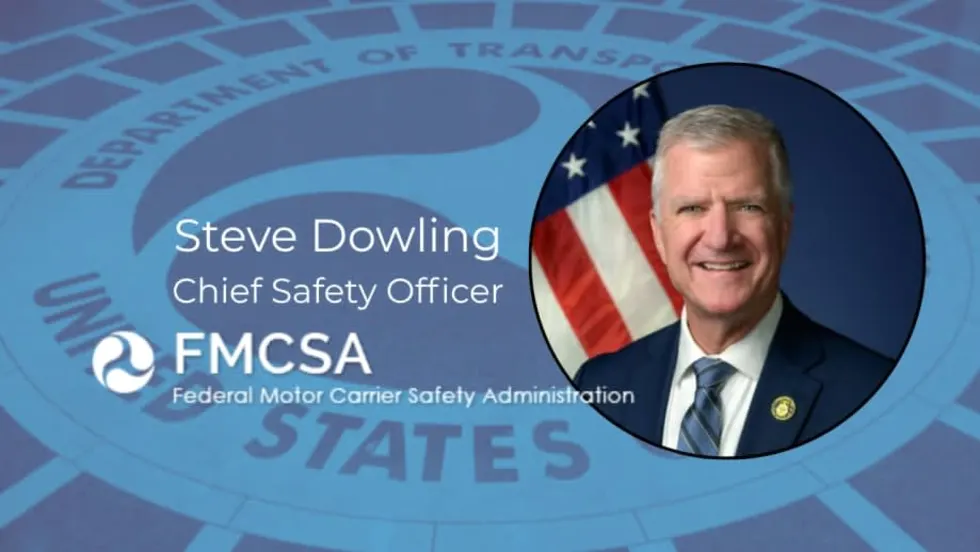
FMCSA Names New Chief Safety Officer: What School Bus Operators Should Know
Steve Dowling is set to lead the federal agency's efforts to advance commercial motor vehicle safety and reduce crashes, fatalities, and injuries on the nation's roadways.
Read More →