




GreenPower Takes Possession of West Virginia Facility in August
Ramped-up production of BEAST and Nano BEAST electric school buses is expected to begin at the East Coast facility in September.

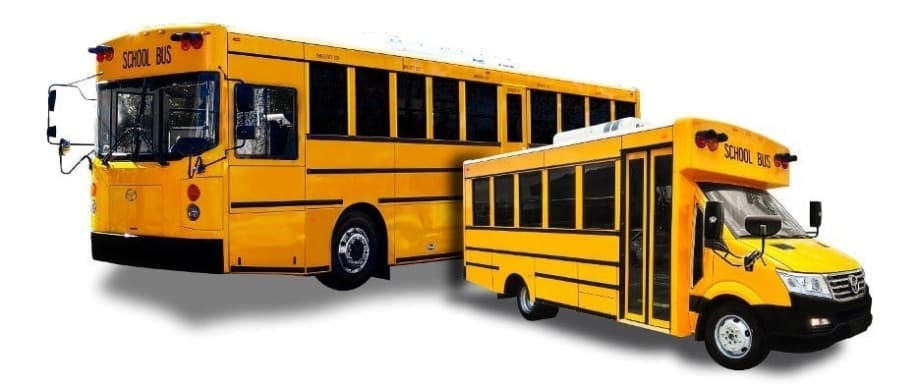
Production of BEAST and Nano BEAST electric school buses is slated to start in September at the new West Virginia facility.
Image: GreenPower Motor Company
GreenPower Motor Company Inc., manufacturer and distributor of zero-emission, electric-powered, medium and heavy-duty vehicles, announced the company's timeline to begin manufacturing zero-emission, all-electric school buses in its newly-acquired facility in South Charleston, West Virginia.
"GreenPower will take possession of the West Virginia manufacturing facility in August and production will begin in September," said Fraser Atkinson, CEO and board chairman of GreenPower. "The facility will be instrumental in ramping up production of our all-electric school buses, the BEAST and Nano BEAST, in time to meet the demand created by EPA's Clean School Bus Program and state legislative mandates."
In January, GreenPower and Gov. Jim Justice announced plans for GreenPower to produce zero-emission, all-electric vehicles in West Virginia. Since then, efforts have been underway to begin manufacturing with buses rolling off the line by the third quarter of this fiscal year.
"Our West Virginia operations will serve as a cornerstone for U.S. manufacturing to deliver electric school buses to our customers on the East Coast and adjacent regions," said Brendan Riley, president and director of GreenPower. "Gov. Justice, members of his cabinet and staff, state legislators, city officials and educators at BridgeValley have all worked tirelessly to ensure we are up and running by late summer."
During a Capitol press briefing, Gov. Justice directed his Secretary of Economic Development Mitch Carmichael to work with GreenPower to develop a pilot project that will demonstrate GreenPower's all-electric school buses in school districts across the state of West Virginia. The goal of the pilot project will be to provide real-world testing of the vehicles in all areas of the state, both rural and urban, so that school districts have a better feel for the operations of the buses, including the needs and requirements of the charging infrastructure.
GreenPower's production announcement and pilot project come at a time when the federal government is offering new funding under the Bipartisan Infrastructure Law to assist school districts with the purchase of all-electric school buses. The Environmental Protection Agency's (EPA) Clean School Bus Program Funding will provide for up to $375,000 for the larger Type D school buses (The BEAST) and up to $285,000 for the smaller Type A school buses (Nano BEAST). The EPA is also providing funding of up to $20,000 per bus for charging infrastructure for Level 2 charging systems.
The West Virginia state legislature this year also increased the incentive for West Virginia school districts to deploy electric school buses made in the state. HB 4571, which was passed by the legislature and signed into law by the Governor, increased the School Foundation Allowance by 10% for using an electric school bus and an additional 5% for the portion of buses manufactured in West Virginia.
"GreenPower is excited to begin this next chapter of the company's production in West Virginia. Increasing our supply of purpose-built, zero-emission, all-electric school buses to meet the demand of school districts and parents up and down the eastern seaboard through this facility meets the goals set forth when reaching expansion agreements with the state," said Atkinson.
Check Out: EPA Clean School Bus Program Rebate Portal Now Open
More Alternative Fuels

CALSTART and Forth Combine to Form Catalyst Mobility
The new name represents a renewed vision for the nonprofit focused on advancing clean, equitable, and affordable transportation solutions that move people and goods.
Read More →
Alt-Fuel Moves: New Buses, Charging Hubs & Real-World EV Testing
Propane and electric school bus deployments continue to grow as districts add new vehicles, expand charging infrastructure, and gather more real-world operating data.
Read More →
Fewer Electric School Bus Models Reshape the U.S. Market
WRI’s latest buyer’s guide points to a consolidating electric school bus market, but fewer options may reflect a maturing industry rather than fewer meaningful choices for school bus operators.
Read More →
The Fuel Budget You Can Actually Predict: How Propane Autogas Keeps Money in the Classroom
Learn how propane autogas helps school districts manage fuel costs with predictable pricing, lower maintenance, and reduced emissions from former transportation director Joel Stutheit.
Read More →
Hendrickson, Driventic Introduce New Electric Powertrain for School Buses
ELECTRAAX, the electrified, lightweight drive axle offers integrated ePowertrain efficiency and modular flexibility for Class 6–7 school bus use.
Read More →
The Mobility House Joins PowerFlex in Fleet Electrification Deal
The acquisition combines intelligent charging software, bidirectional charging expertise, and fleet electrification services to support the growing adoption of electric school buses across North America.
Read More →
Alt-Fuel Moves: Electric School Bus Investments Hit the Road
See which districts across the U.S. are putting electric school buses into service, expanding charging infrastructure, and planning the next phase of fleet electrification.
Read More →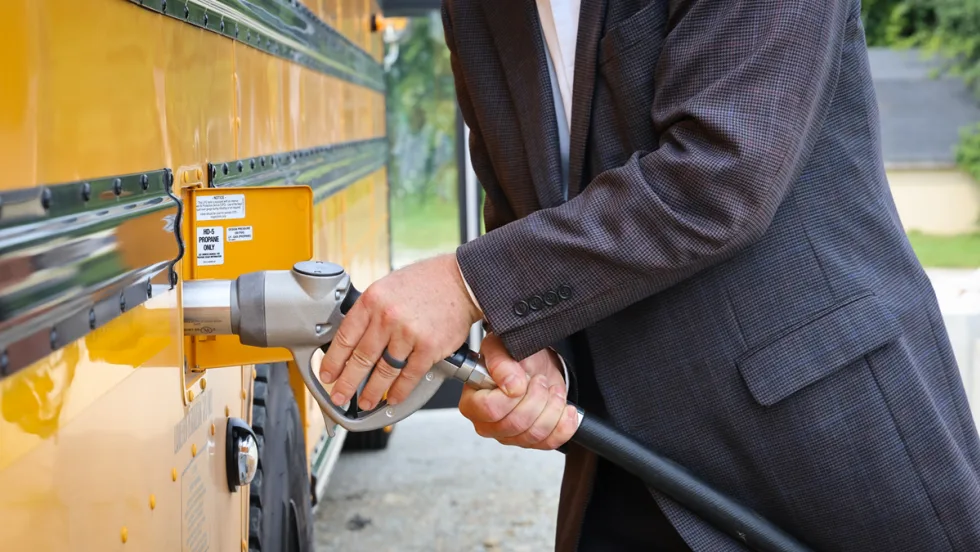
With Fuel Volatility Ahead, School Districts Turn to Propane
While diesel prices peaked above $5 this spring, districts with propane autogas-powered fleets paid under $2 per gallon, according to PERC.
Read More →
EPA Unveils Proposed Changes to 2027 Heavy-Duty Engine Rules
The federal agency has proposed changes to next year’s targets that would eliminate DEF derates, ease warranty requirements, and retain current NOx emissions standards.
Read More →
Alt-Fuel Moves: EV Charging & Infrastructure Projects Gain Momentum
The latest developments include new funding, charging infrastructure, utility investments, and fleet technologies designed to support the transition to electric school buses nationwide.
Read More →