





Catch a Ride on The Route: EV Ambitions
Blueprint Lays Out Transportation Decarbonization Plan
The strategy, developed by four federal agencies, builds on the Bipartisan Infrastructure Law and the Inflation Reduction Act. It includes a push for 100% zero-emission vehicle sales by 2040 and a net-zero economy by 2050.
January 11, 2023
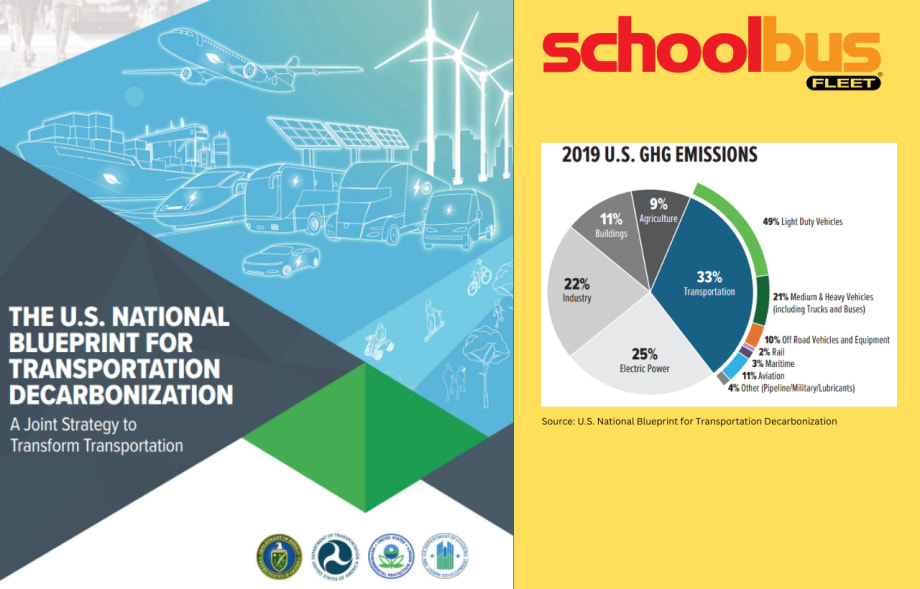
The transportation sector represents about 33% of the nation's greenhouse gas emissions. Of that share, 21% comes from medium and heavy vehicles, including school buses.
Image: Canva/Biden-Harris Administration
2 min to read
The Biden-Harris Administration wants 30% of new vehicle sales, including school bus fleets, by 2030 to be zero-emission and 100% by 2040, aiming for a net-zero economy by 2050.
The plan is set out in the newly released U.S. National Blueprint for Transportation Decarbonization, which builds on the Bipartisan Infrastructure Law and the Inflation Reduction Act. The blueprint was developed by the departments of Energy, Transportation, Housing and Urban Development, and the Environmental Protection Agency.
Building the Plan
It comes in the wake of a September 2022 memorandum of understanding that pushed for aggressive reductions in greenhouse gas emissions (GHG), calling on the transportation sector to “play a leading role in achieving our climate, economic, and equity goals, which requires a comprehensive and coordinated approach across all modes of passenger and freight transportation, as well as the associated infrastructure and energy supply.”
“The domestic transportation sector presents an enormous opportunity to drastically reduce emissions that accelerate climate change and reduce harmful pollution,” said Jennifer Granholm, secretary of energy. “DOE is prepared to implement this blueprint alongside our partners within the Biden-Harris Administration to ensure all Americans feel the benefits of the clean transportation transition: good-paying manufacturing jobs, better air quality, and lower transportation costs.”
The transportation sector accounts for about a third of all domestic greenhouse gas emissions, affecting health outcomes. Buses and medium- and heavy-duty trucks produce 21% of greenhouse gas emissions in the transportation sector, second only to light-duty vehicles.
Setting the Goals
“Achieving a net-zero economy by 2050 will require major transformations across all sectors and effective integration between them,” the blueprint report states.
The strategy calls for converting older fossil fuel-powered vehicles to:
Battery electric.
Hydrogen fuel cell.
Sustainable fuels for vehicles that are harder to electrify.
Said U.S. Secretary of Transportation Pete Buttigieg: “Transportation policy is inseparable from housing and energy policy, and transportation accounts for a major share of U.S. greenhouse gas emissions, so we must work together in an integrated way to confront the climate crisis. Every decision about transportation is also an opportunity to build a cleaner, healthier, and more prosperous future. When our air is cleaner; when more people can get good-paying jobs; when everyone stays connected to the resources they need and the people they love, we are all better off.”
The next step in the process is to develop more detailed sector-specific action plans, according to the administration.
More Alternative Fuels

CALSTART and Forth Combine to Form Catalyst Mobility
The new name represents a renewed vision for the nonprofit focused on advancing clean, equitable, and affordable transportation solutions that move people and goods.
Read More →
Alt-Fuel Moves: New Buses, Charging Hubs & Real-World EV Testing
Propane and electric school bus deployments continue to grow as districts add new vehicles, expand charging infrastructure, and gather more real-world operating data.
Read More →
Fewer Electric School Bus Models Reshape the U.S. Market
WRI’s latest buyer’s guide points to a consolidating electric school bus market, but fewer options may reflect a maturing industry rather than fewer meaningful choices for school bus operators.
Read More →
The Fuel Budget You Can Actually Predict: How Propane Autogas Keeps Money in the Classroom
Learn how propane autogas helps school districts manage fuel costs with predictable pricing, lower maintenance, and reduced emissions from former transportation director Joel Stutheit.
Read More →
Hendrickson, Driventic Introduce New Electric Powertrain for School Buses
ELECTRAAX, the electrified, lightweight drive axle offers integrated ePowertrain efficiency and modular flexibility for Class 6–7 school bus use.
Read More →
The Mobility House Joins PowerFlex in Fleet Electrification Deal
The acquisition combines intelligent charging software, bidirectional charging expertise, and fleet electrification services to support the growing adoption of electric school buses across North America.
Read More →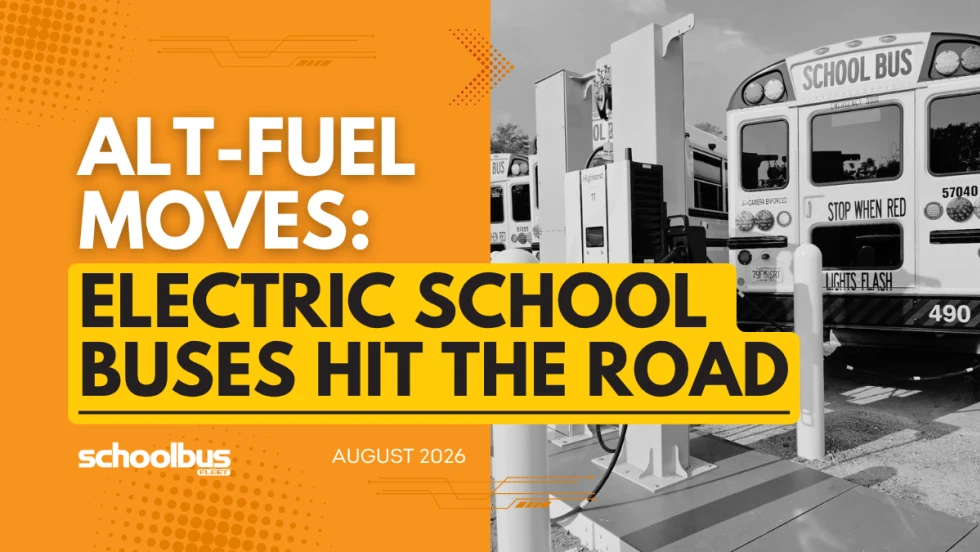
Alt-Fuel Moves: Electric School Bus Investments Hit the Road
See which districts across the U.S. are putting electric school buses into service, expanding charging infrastructure, and planning the next phase of fleet electrification.
Read More →
With Fuel Volatility Ahead, School Districts Turn to Propane
While diesel prices peaked above $5 this spring, districts with propane autogas-powered fleets paid under $2 per gallon, according to PERC.
Read More →
EPA Unveils Proposed Changes to 2027 Heavy-Duty Engine Rules
The federal agency has proposed changes to next year’s targets that would eliminate DEF derates, ease warranty requirements, and retain current NOx emissions standards.
Read More →
Alt-Fuel Moves: EV Charging & Infrastructure Projects Gain Momentum
The latest developments include new funding, charging infrastructure, utility investments, and fleet technologies designed to support the transition to electric school buses nationwide.
Read More →