





Buying Buses: How and When to Buy a Used School Bus
Trip Sheet: Pursuit of Clean School Buses Requires Time, Money, and Commitment
From diesel to electric or propane, the ambitious endeavor of replacing the U.S. school bus fleet comes with a hefty price tag. The potential cost and time required for a complete transformation is pretty staggering.
June 16, 2023

It could take $180 billion and roughly 400 years to replace the entire U.S. school bus fleet with electric alternatives. The federal government has committed five years of funding - a total of $5 billion.
Image: Canva
3 min to read
The noble effort of transitioning from diesel-powered school buses to cleaner counterparts is a commendable goal in pursuit of a greener and more sustainable future.
However, the scope of this endeavor is vast, as there are approximately 480,000 school buses in the United States alone. While the EPA's Clean School Bus Program has allocated $5 billion and set a timeline of five years to distribute this money via competitive grants and rebates, it is essential to recognize that this ambitious initiative requires a far greater investment of time and resources.
Replacing every diesel school bus with an electric alternative demands substantial funding and an extended period, considering the scale of production, infrastructure development, and logistical challenges associated with such a colossal transformation.
The Projected Cost of a U.S. Electric School Bus Fleet
To calculate the cost of replacing all the school buses in the United States with electric alternatives, we can multiply the number of buses by the cost of one electric bus:
Cost per electric bus: $375,000 (approximate).
Number of school buses in the United States: 480,000 (approximate).
Total cost = Cost per electric bus * Number of school buses.
Total cost = $375,000 * 480,000.
Total cost = $180,000,000,000.
So, it would cost about $180 billion to replace all the school buses in the United States with electric alternatives.
Now let's calculate the time it would take to complete their replacement based on production times:
Time to produce one electric bus: 6-8 months (depending on lead times).
To estimate the time to replace all the buses, let's assume the production time is eight months for each bus (the maximum estimate). We also need to consider that the manufacturer can produce multiple buses simultaneously. Let's assume they can produce 100 buses at a time.
Number of buses produced in 8 months: 100.
Total time to replace all the buses = (Number of school buses) / (Number of buses produced in 8 months).
Total time = 480,000 / 100.
Total time = 4,800 months.
Converting months to years: Total time in years = Total time (in months) / 12.
Total time in years = 4,800 / 12.
Total time in years = 400 years.
Based on these calculations, it would take about four centuries to complete the replacement of all the school buses in the United States with electric alternatives. It’s a rough estimate, though, and doesn’t account for factors such as scaled-up production capacity or potential advancements in production techniques or improved supply chain that could reduce production time.
[NOTE: Calculations suggest that it might take about the same amount of time to replace diesel buses with propane-powered vehicles, but it would cost about $47 billion – still much more than the $5 billion offered by the federal government, but about 26% the cost of replacing with electric.]
Are the Price Tag and the Challenge Worth the Effort?
While the EPA's Clean School Bus Program is a step in the right direction, the complete replacement of diesel school buses with cleaner alternatives will require significantly more time and financial investment than the allotted five years and $5 billion. Achieving this goal necessitates long-term commitment and substantial resources to create a sustainable and eco-friendly transportation system for our schools.
But is it worth it? Should we bother?
I think so. Sure, it’s challenging, but moving to electric buses (for example) offers several benefits, including reduced greenhouse gas emissions, improved air quality, and quieter operation.
It also makes a point to future generations, emphasizing the importance of sustainable transportation practices. While the task might be daunting, taking action to minimize our environmental impact and prioritize the well-being of our communities is a responsibility worth embracing.
Subscribe to Our Newsletter
More Blog Posts

The Sound of Summer Starting [Guest Editorial]
That unmistakable school bus rumble? It carries childhood memories, community routines, and a whole lot of unseen work behind the scenes.
Read More →
The Technology Power Combo That Enables EV Charging on Difficult Sites
As the pace of fleet electrification increases and charging infrastructure continues to pose challenges, many fleets find themselves puzzling over the question: how do I install charging infrastructure faster and more cost-efficiently?
Read More →
Trip Sheet: Farewell, Faithful Readers – Keep on Rolling
Executive Editor Wes Platt offers parting thoughts as he parks the School Bus Fleet bus to focus on ultra-local community journalism, making way for someone else to take the wheel as the pupil transportation industry continues to evolve.
Read More →
Trip Sheet: School Transportation Pros Can Champion Children's Mental Health
Children's Mental Health Awareness Day underscores the significance of school bus drivers in fostering supportive environments during students' journeys. SAMHSA's initiatives, including stigma reduction and access to resources, complement the Biden-Harris administration's funding efforts to enhance youth mental health services and workforce development.
Read More →
Trip Sheet: Is It Time for Daylight Saving Time to Clock Out?
How do you think the potential shift to permanent Daylight Saving Time or standard time would impact our daily lives and routines, especially considering the divided approach across various states?
Read More →
Trip Sheet: Meeting a Hero in My Own Back Yard
I remain impressed by the matter-of-fact heroism that’s often demonstrated by school bus drivers like Deona Washington who are caught in these situations where the best of us might lose our cool and panic. But, then again, bus drivers are a unique breed.
Read More →
Trip Sheet: 3 Takeaways from the EPA Clean School Bus Grant Program
Most applicants sought grant funding to acquire electric school buses, with propane coming in a distant second. No one indicated plans to purchase compressed natural gas (CNG) buses in this round. That’s not terribly surprising, I suppose, given how few school districts listed the inclusion of CNG buses in their fleets for our 2023 top district fleets survey.
Read More →
Trip Sheet: Let's Get Rolling: What's Coming in 2024?
Calendar pages keep flipping toward the mandates set in states like New York and California to transition their school bus fleets from diesel to zero-emission, but there’s plenty of reluctance and pushback.
Read More →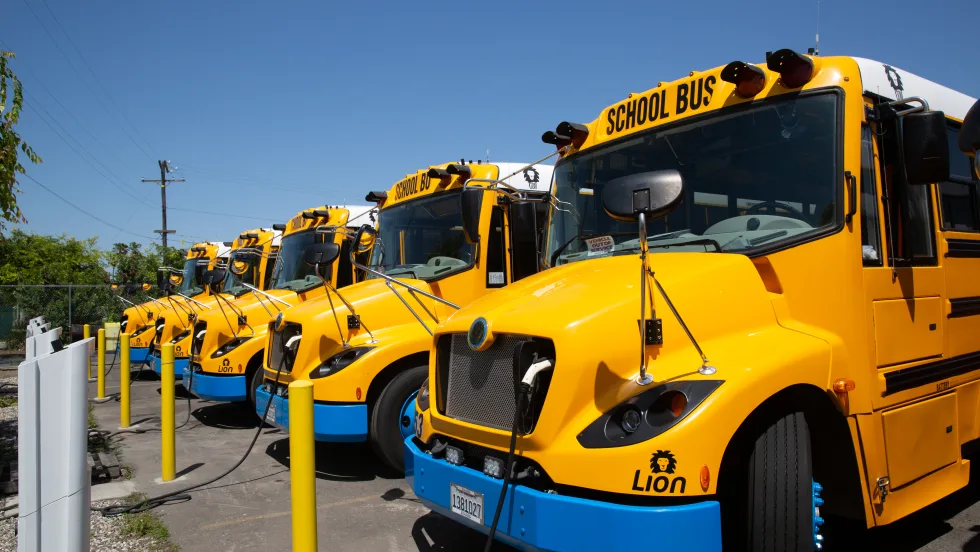
California School Children Ride in Green School Buses
Today, California prides itself on utilizing the most zero-emission (ZE) school buses in the country with over 1,689 being used by California school districts; and while the state is on a positive health trajectory thanks to a decree to eliminate gas and diesel vehicles, more work needs to be done to improve children’s well-being.
Read More →
Behind The Wheel of Childrens’ Safety Aboard the School Bus
Bus drivers are the primary caretakers of children during their commute and thus bear responsibility for their safety. By prioritizing proper operating procedures, maintenance checks, and additional precautions, drivers can help avoid the loss of precious young lives under their care.
Read More →