




Did You See: 4 ChatGPT Prompts for Transportation Directors Collaborating with School Boards
Seeing Clearly for Safer School Bus Transportation: The Power of Vision Technology
Illegal bus passings and stop arm violations can be hazardous to the loading/unloading passengers process, but technologies like cameras, monitors, and sensors can help make it safer.

Christian Lopez・Former Assistant Editor
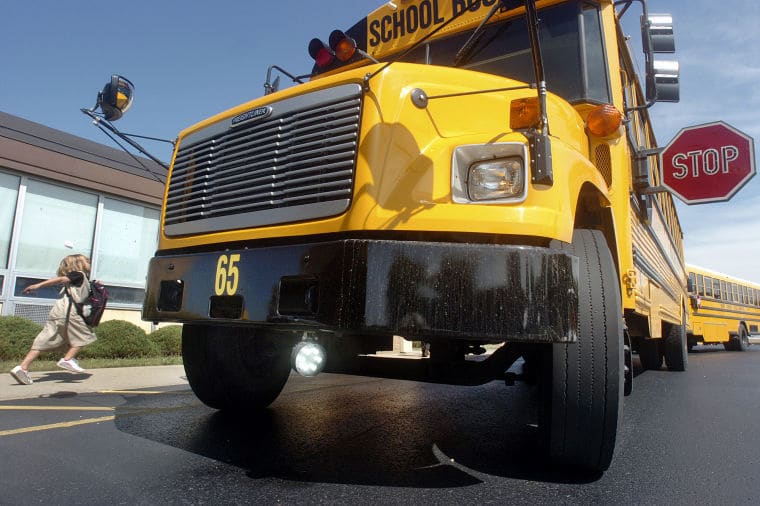
When it comes to school bus safety, stop-arm violations and illegal passings are among the hardest to prevent. One solution to this troublesome problem comes from modern technologies being able to be fitted upon school buses, such as cameras, monitors, lights, and sensors.
Photo: Gardian Angel LLC
3 min to read
Parents have trusted the iconic yellow school bus as a key element of school transportation since its introduction into public life in 1939.
It is because of this that transportation safety must be first priority. Students are at their most vulnerable when loading/unloading and illegal bus passings and stop-arm violations endanger their lives. That’s why that area around the bus is known as the “danger zone.”
The National Association of State Directors of Pupil Transportation Services (NASDPTS) released a survey conducted from almost 95,000 bus drivers across 33 states. The data indicated that there were 62,000 illegal passings in any given day, and when adjusted to all bus drivers, comes to almost 42 million for this school year.
This number causes more concern when compared to the fact that at least 20 million students ride the bus to school nationally, so each student is symbolically facing two cars going by as they load/unload from the bus.
When it comes to school bus safety, stop arm violations and illegal passes are among the hardest to prevent.
One solution to this troublesome problem comes from modern technologies being able to be fitted upon school buses, such as cameras, monitors, lighting, and sensors.
The Latest School Bus Safety Technologies
BusPatrol is one of the companies that has been developing technologies to help solve these problems.
One product they have is the stop-arm camera box, set right against the left side of the bus. It turns on automatically once the stop arm is activated. The camera is designed to aim at the license plate of drivers passing by, which may then be followed up with action by law enforcement for fines and other penalties.
In combination with this device, they also have a wireless antenna on the roof of the school bus that transmits footage captured by the camera box.
This also has the advantage of transmitting additional, legitimate data beyond the surveys from the NASDPTS.
SafetyVision is developing similar technologies. Their most efficient, they say, is the TotalView360. Similar to the stop-arm camera box, but with a few differences.
“It provides a complete 360° view around the bus targeting the Danger Zone area,” says Leah Alonzo, marketing coordinator at Safety Vision. “This can help ensure that kids don’t slide under the bus or get their backpacks caught in the door, for example. With Safety Vision, this view is not only a vision enhancement for the driver, but it is also being recorded for incident review and training purposes.”
The TotalView360 also offers:
Customizable stop-arm solutions.
View up to six lanes across.
AI violation monitoring.
Fully automated ticketing.
Other technologies include white LED flood lights from Gardian Angel, attached to the bus.
“The Gardian Angel lighting systems are very affordable products that illuminate a path of light on the ground so that students are visible in darkness allowing motorists in front of, and behind the bus a clear view of children crossing the street in darkness,” says Steve Gardner, founder and president of Gardian Angel. “Additionally, the bus operator can clearly see the child from the point of safety, till they board the bus.”
This technology is currently available in half the country as the company continues pushing to get cooperation from additional states.
Safer Tomorrow with AI, Data, and More
Safety Vision has expressed other ways in the future that may help uphold safety as a priority.
“We will use AI and machine learning to provide smart data points to improve fleet management for the client,” says Alonzo. “Bus stop and route safety improvement, driver coaching and scoring, passenger counting, bullying and harassment monitoring, and object detection are a few things to look toward in the future.”
Gardian Angel meanwhile, has looked more towards further federal cooperation.
“Ideally, we would like to have better cooperation with directors at state and local levels, politicians, law enforcement, and a national governing body so we don’t have to go state to state to get our product approved,” says Gardner.
Subscribe to Our Newsletter
More Safety

How to Build a Better School Bus Driver Training Program
Is it time to strengthen your driver training? Here’s how to pick the right talent and improve recruitment, retention, and safety. This video is brought to you by IC Bus.
Read More →
Recent School Bus Accidents Leave 2 Dead, 2 Injured
Four school bus crashes in Florida, Illinois, and Georgia highlight risks in transportation lots, at bus stops, and during student loading and unloading.
Read More →
Sponsored•September 8, 2026
When Every Second Matters, Clarity Keeps Routes Moving
From routine delays to urgent incidents, strong communication practices help drivers, dispatchers, schools, and families respond with confidence.
Read More →

What Happens When a School Bus Catches Fire — and What Can Help
School bus fires are rare but can be devastating. Learn how advances in fire suppression and asset protection help fleets detect fires earlier, reduce damage, and improve safety.
Read More →
Geotab Launches Tool to Help Fleets Investigate Road Incidents
Geotab Investigations combines telematics data, video, documents, and other evidence to help fleets reconstruct incidents, resolve claims, and determine what happened.
Read More →
Texas Sixth Grader Wins 2026 National School Bus Safety Poster Contest
Sai Darshana Yekolu of Moseley Middle School in Prosper, Texas, was named the newest winner for her artwork, bringing the theme of “Safe Rides, Everyday Heroes” to life.
Read More →
Sponsored•August 27, 2026
Doing More With Less: How Transportation Directors Can Prioritize Safety Amid Budget Uncertainty
With diesel prices soaring and nearly one-third of transportation directors expecting budget cuts, maintaining student safety has never been more challenging. Download this guide to learn how leading districts are prioritizing risk, funding critical safety technology, and building stronger budget cases with data.
Read More →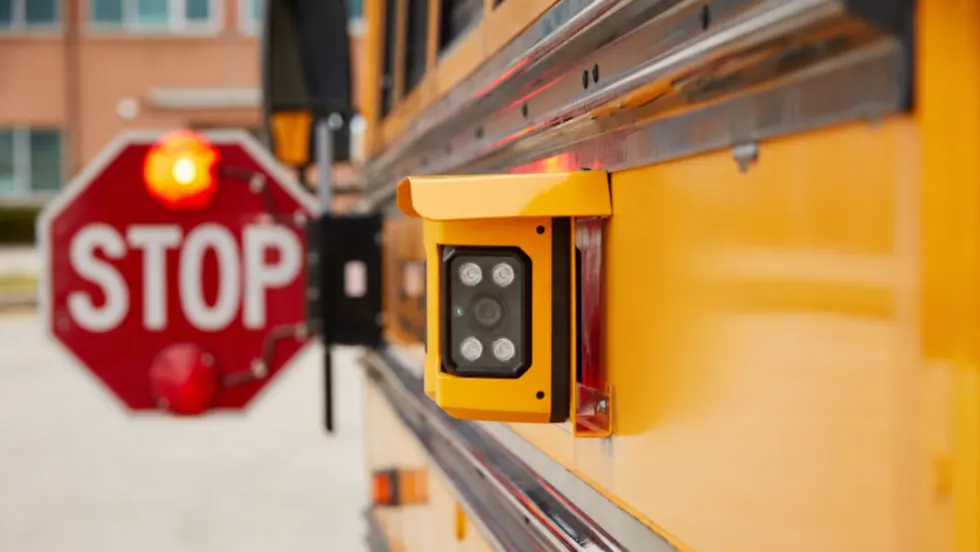
Walton County Schools Adds Gatekeeper Stop-Arm Enforcement System
The Florida district will deploy Gatekeeper’s updated Student Protector technology, which now incorporates AI to improve video evidence.
Read More →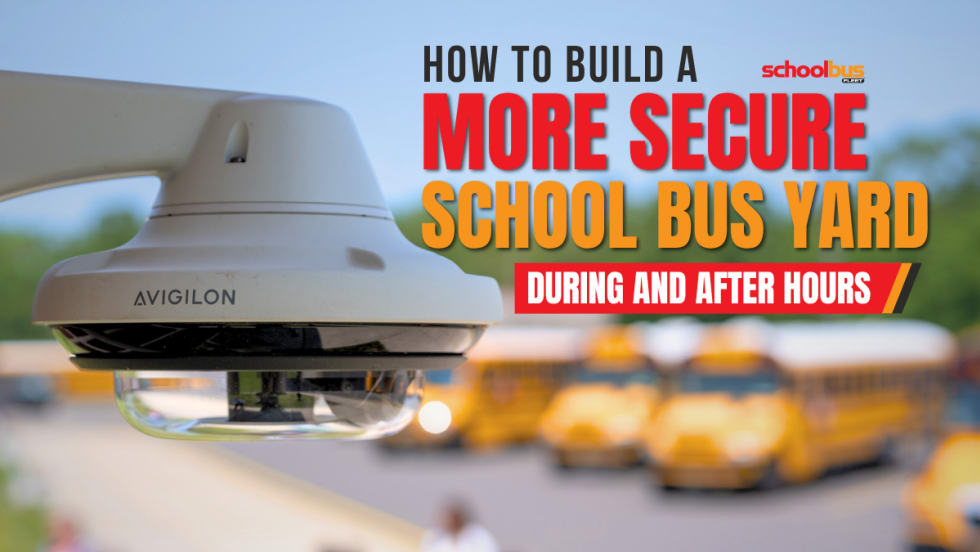
How To Build a More Secure School Bus Yard During and After Hours
As thefts and overnight security threats continue, school transportation leaders are combining stronger operational practices with AI-enabled surveillance to better protect buses, facilities, and staff.
Read More →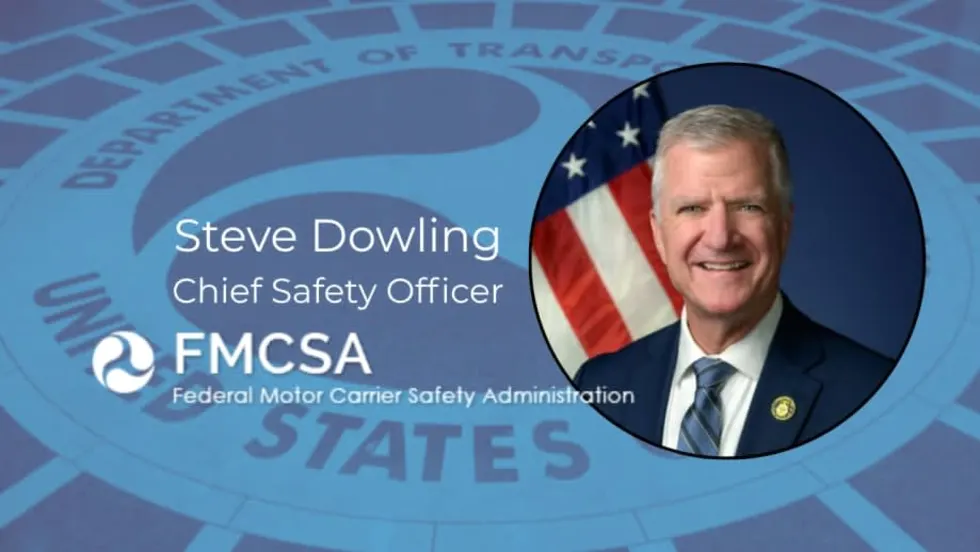
FMCSA Names New Chief Safety Officer: What School Bus Operators Should Know
Steve Dowling is set to lead the federal agency's efforts to advance commercial motor vehicle safety and reduce crashes, fatalities, and injuries on the nation's roadways.
Read More →