





The School Bus: Ensuring Student Safety, Accessibility, Community Building, and Education
Prioritizing Safety: Gaining Insights from School Transportation Officials
School Bus Fleet surveyed school transportation professionals from Colorado to New York to get a sense of what the most serious concerns are when it comes to school bus safety.
September 11, 2023
Respondents from across the United States shared their insights about safety in school transportation.
Image: Canva
2 min to read
In a recent survey by School Bus Fleet, school transportation professionals cited student behavior as the most significant factor affecting safety on the school bus and indicated that they felt great confidence in bus drivers carrying students to and from school each day.
Several respondents also called for requiring stop-arm cameras on all school buses to deter illegal passing by motorists and others urged the federal government to mandate seat belts.
Ahead of October’s National School Bus Safety Week, examine the results of this survey to gain insights into what’s happening in school transportation operations throughout the United States.
As a transportation professional, what do you consider to be the most significant safety concern related to school transportation?
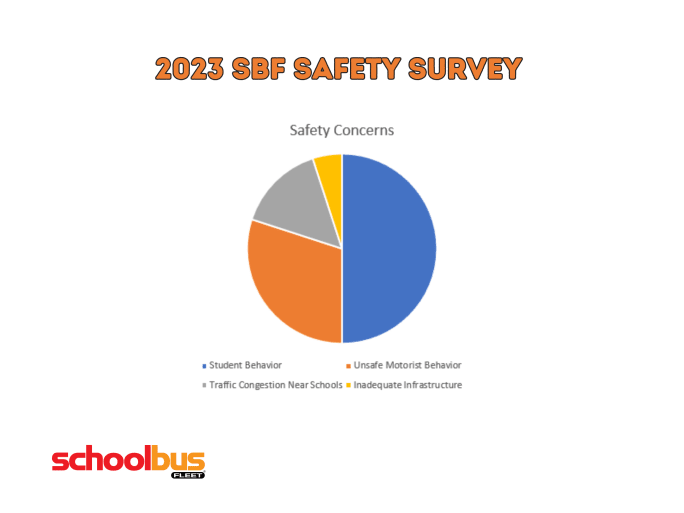
Half of our respondents ranked student behavior above other safety concerns, including illegal passing of school buses with their stop arms extended.
Image: Canva/SBF
On a scale of 1 to 5 (5 being excellent), how would you rate the overall safety of school transportation in your district/organization?
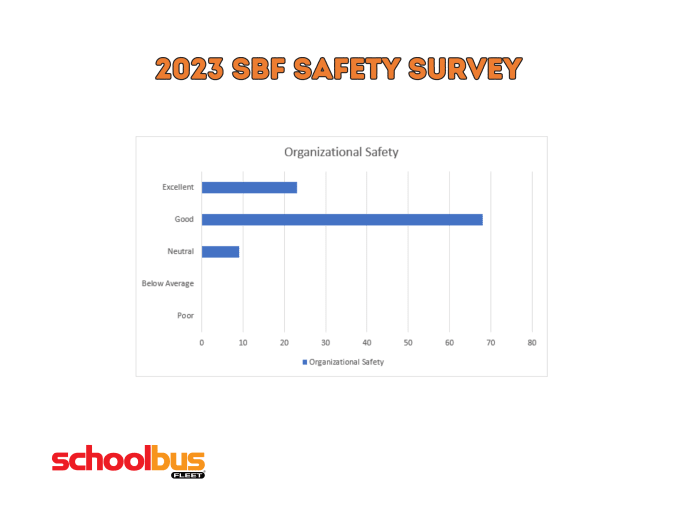
Most respondents (91%) gave their district high marks when it came to overall safety of their transportation operations.
Image: Canva/SBF
Have there been any significant incidents or accidents involving school transportation in your district/organizations in the past year?
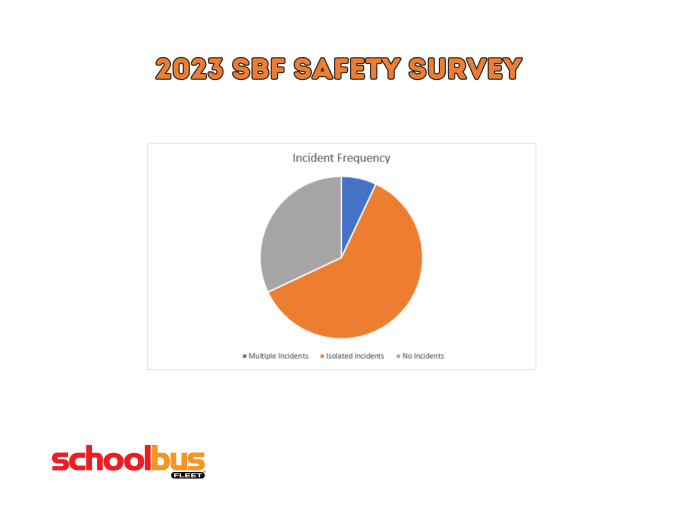
More than two-thirds of respondents (68%) indicated that their transportation operations saw at least a few isolated safety incidents during the past year.
Image: Canva/SBF
On a scale of 1 to 5 (5 being very satisfied), how satisfied are you with the communication and updates from your district/organizations regarding school transportation safety?
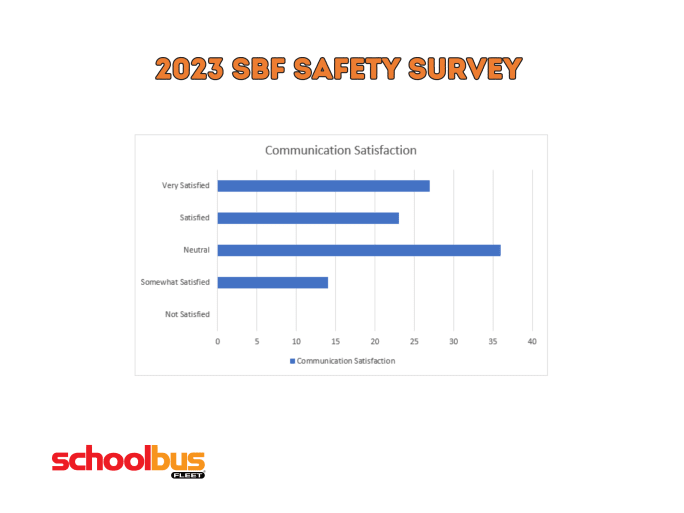
Respondents were split between high marks for communication and lower ratings, with 36% falling in the middle.
Image: Canva/SBF
How important do you believe it is for transportation professionals to collaborate with schools, parents, and local authorities to address safety concerns in school transportation?
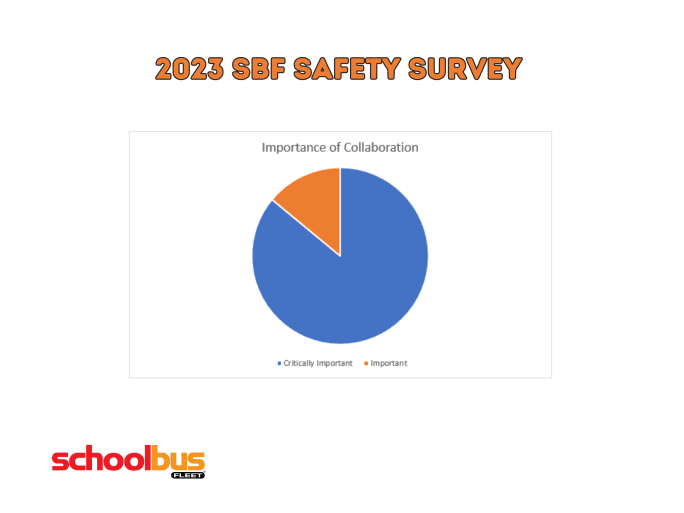
All respondents felt it was important – many critically so – to collaborate with schools, parents, and law enforcement to address safety concerns.
Image: Canva/SBF
Are there any specific areas or routes where you believe additional safety measures, such as crossing guards or traffic signals, are needed?
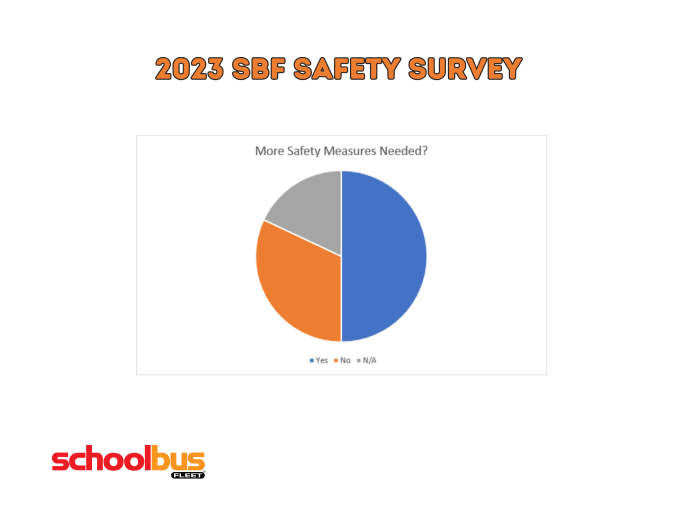
Half the respondents indicated that more safety measures could be helpful in certain areas or along specific routes.
Image: Canva/SBF
In your experience, what has been the most effective method for mitigating traffic congestion near schools during drop-off and pick-up times?
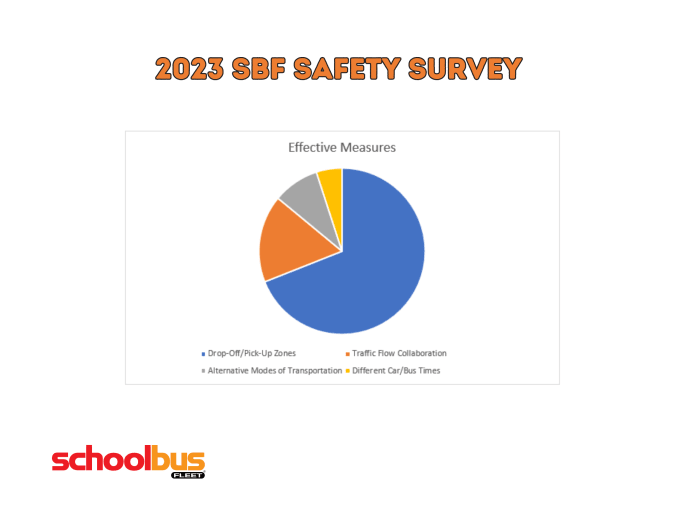
More than two-thirds of respondents (69%) indicated that setting up designated drop-off/pick-up zones is most effective at mitigating traffic congestion.
Image: Canva/SBF
On a scale of 1 to 5 (5 being very confident), how confident are you in the driving skills and behavior of school bus drivers in your district/organization?
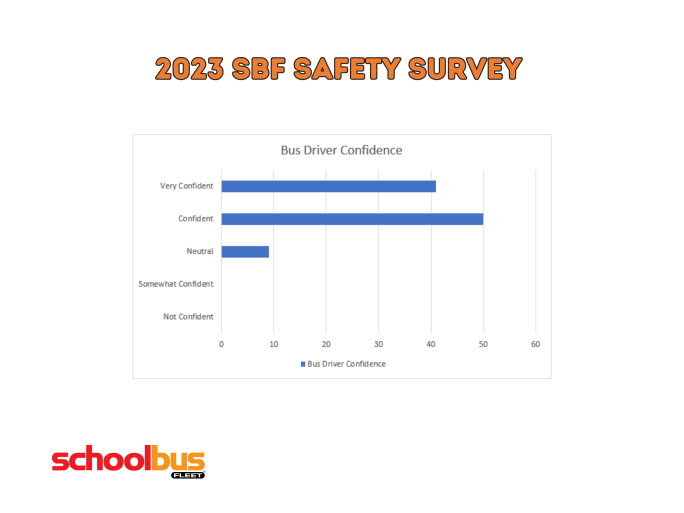
Most respondents (91%) expressed significant confidence in the skills of school bus drivers in their operations.
Image: Canva/SBF
In your opinion, what additional safety measures should be implemented on school buses?
Enhanced driver training and monitoring.
Cameras to monitor student behavior.
Improved emergency evacuation procedures.
Seat belts for all students.
Stop-arm cameras.
Respondents gave a wide variety of answers, but these were the top five suggestions.
Subscribe to Our Newsletter
More Safety
What the 2026 National School Bus Safety Month Resolution Means for Student Transportation
The bipartisan resolution highlights illegal school bus passing, student safety during loading and unloading, and the need for driver training and public education.
Read More →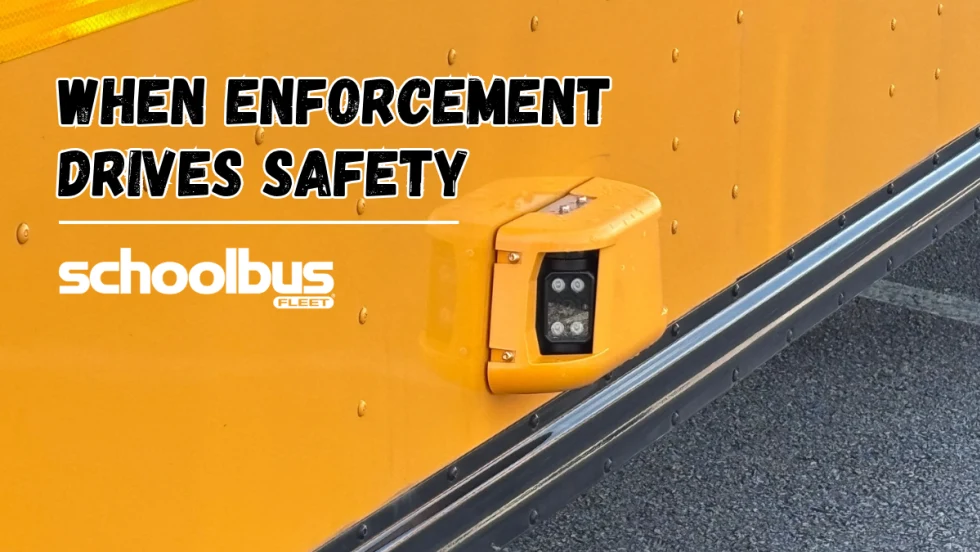
School Bus Stop-Arm Violations Decline 53% Across Verra Mobility Programs
Verra Mobility shares how school bus stop-arm cameras and school zone safety programs are changing driver behavior, reducing violations, and protecting students.
Read More →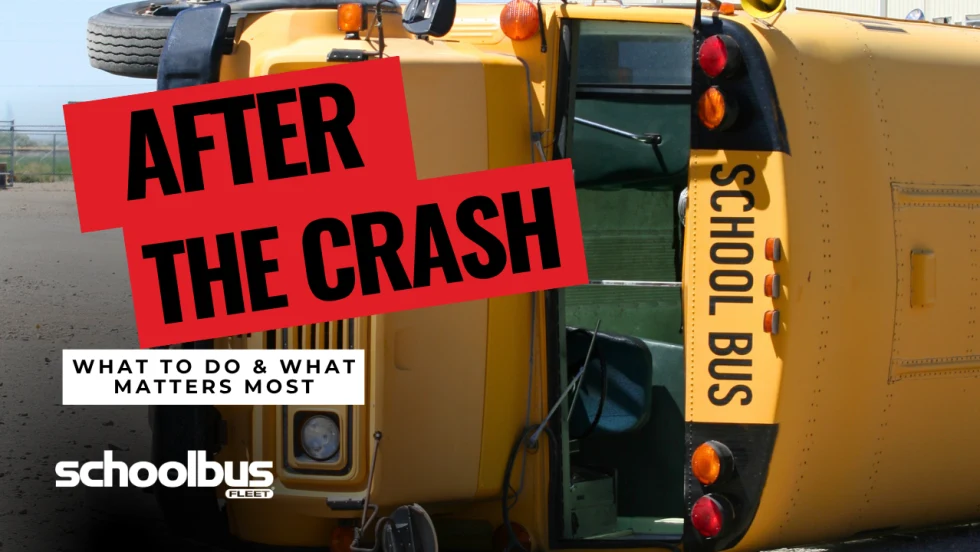
Most Bus Crashes Aren’t Your Fault. Here’s How to Prove It.
A guide for what to do in between a school bus crash and a claim: what to preserve, who to notify, and how to keep the facts available when they matter.
Read More →
National School Bus Safety Week 2026: Tips, Toolkits & Resources to Keep Students Safe
School bus safety takes more than awareness. Explore expert tips, enforcement strategies, and free resources to help protect students on every ride.
Read More →
2 Killed, Dozens Injured in Florida School Bus Crash
A multi-vehicle collision caused a Polk County school bus carrying 37 students to overturn on its way to Winter Haven High School.
Read More →
Illegal School Bus Passing Drops 24% in New York Districts
With fewer than 5% of citations involving repeat offenders, Westchester County officials said enforcement, education, and community partnerships are helping change driver behavior.
Read More →
School's Back. Here's What Happened to Traffic, Speeding & Distraction
What happens to traffic when school resumes? New data analysis examines changes in distracted driving, congestion, and speeding around schools.
Read More →
Geotab Expands Fleet Safety Tools With Video Coaching, Risk Insights
New safety and video capabilities aim to help fleet managers assess risk, support drivers, and take targeted action through video coaching, red-light violation detection, and more.
Read More →
How to Build a Better School Bus Driver Training Program
Is it time to strengthen your driver training? Here’s how to pick the right talent and improve recruitment, retention, and safety. This video is brought to you by IC Bus.
Read More →
Recent School Bus Accidents Leave 2 Dead, 2 Injured
Four school bus crashes in Florida, Illinois, and Georgia highlight risks in transportation lots, at bus stops, and during student loading and unloading.
Read More →