




NTSB Renews School Bus Seat Belt Recommendation
A fatal Tennessee school bus accident led the board to call once again for seat belts and other safety measures.

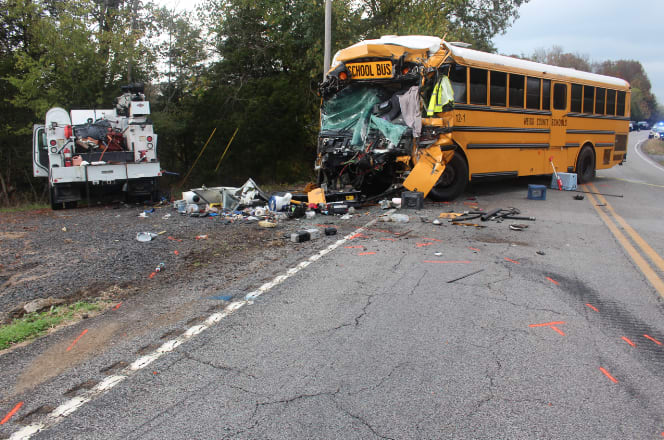
A wreck between a school bus and service utility truck in Tennessee killed the bus driver and a 7-year-old passenger. The NTSB chair warned that, despite overall school bus safety, "we've become complacent."
Photo: Tennessee Highway Patrol
The National Transportation Safety Board (NSTB) has renewed its 2018 recommendation calling for states to require passenger lap and shoulder belts on new, large school buses, as well as requiring systems that prevent lane departure on heavy vehicles, first issued in 2010 and updated in 2021.
Findings of an investigation into the 2020 crash between a school bus and a service utility truck in Decatur, Tenn., that killed two - including a 7-year-old child - led to this reiteration.
“This case is a gut-wrenching reminder that failure to act on our recommendations can lead to unimaginable — and preventable — tragedy,” said NTSB Chair Jennifer Homendy. “School buses are often praised for their safety record, but we’ve become complacent. Children’s lives are at stake. The time to act is now.”
On Oct. 27, 2020, a service utility truck was traveling on a two-lane state route when its right-side wheels departed the roadway while the truck driver was looking in his rear mirror. When the truck driver steered back onto the roadway, the truck crossed into the opposing travel lane. At the same time, a school bus was approaching in the opposing travel lane. Although the bus driver braked, she did not have time to avoid the collision. The school bus driver and a 7-year-old child died. Four other passengers sustained serious injuries and 10 sustained minor injuries.
The investigation found that several school bus passengers were not seated properly at the time of the crash, which increased their injury risk. While the school bus did not have passenger lap and shoulder belts, the NTSB found that the belts, if worn properly, would have reduced their level of injury.
Though not required, the school bus was equipped with inward- and outward-facing video cameras, whose footage gave investigators valuable insight into students’ position within the seating compartment before the crash, as well as the subsequent sequence of events.
As a result of the investigation, the NTSB is recommending the following measures to improve the safety of children traveling on school buses, all of which could have prevented or mitigated the crash:
Requiring lane departure prevention systems on new vehicles with gross weight ratings greater than 10,000 pounds. NTSB has been asking the National Highway Traffic Safety Administration to require systems that prevent lane departure since 2010.
Requiring lap and shoulder belts for all passenger seating positions in new, large school buses. One recommendation was reiterated to Tennessee and multiple states that have not yet required lap and shoulder belts in new, large school buses. A second recommendation was reiterated to the three states that require only lap belts.
Requiring all buses and trucks over 10,000 pounds gross vehicle weight rating to be equipped with onboard video event recorders and for school officials to periodically review onboard video to ensure that students engage in safe transportation behaviors on school buses. These recommendations were issued to NHTSA and to the National Association for Pupil Transportation, the National Association of State Directors of Pupil Transportation Services, and the National School Transportation Association.
More Safety

HopSkipDrive Reports Progress on Safety Advisory Council
More than a year after forming the council, independent safety experts have helped shape new rider-safety features and policy progress, with a new goal to address rider behavior.
Read More →
What the 2026 National School Bus Safety Month Resolution Means for Student Transportation
The bipartisan resolution highlights illegal school bus passing, student safety during loading and unloading, and the need for driver training and public education.
Read More →
School Bus Stop-Arm Violations Decline 53% Across Verra Mobility Programs
Verra Mobility shares how school bus stop-arm cameras and school zone safety programs are changing driver behavior, reducing violations, and protecting students.
Read More →
Most Bus Crashes Aren’t Your Fault. Here’s How to Prove It.
A guide for what to do in between a school bus crash and a claim: what to preserve, who to notify, and how to keep the facts available when they matter.
Read More →
National School Bus Safety Week 2026: Tips, Toolkits & Resources to Keep Students Safe
School bus safety takes more than awareness. Explore expert tips, enforcement strategies, and free resources to help protect students on every ride.
Read More →
2 Killed, Dozens Injured in Florida School Bus Crash
A multi-vehicle collision caused a Polk County school bus carrying 37 students to overturn on its way to Winter Haven High School.
Read More →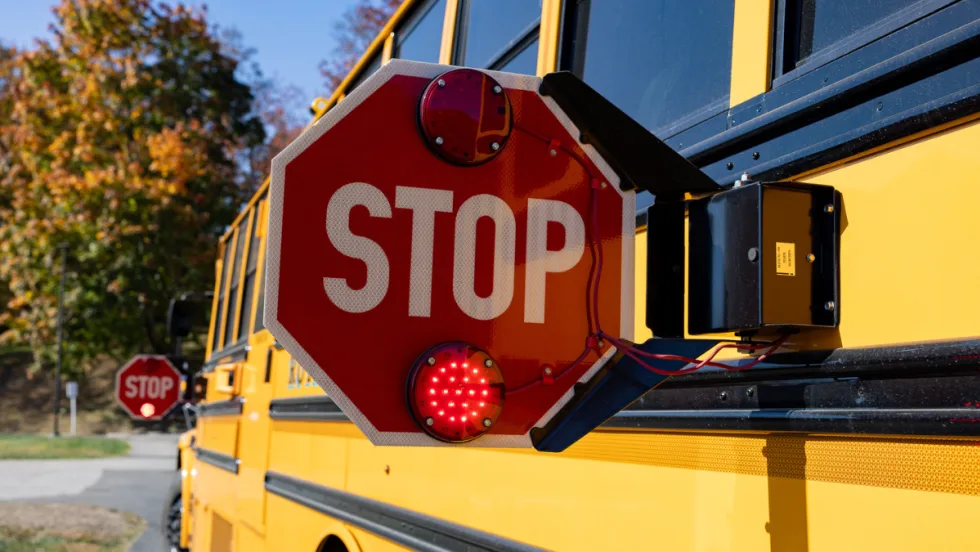
Illegal School Bus Passing Drops 24% in New York Districts
With fewer than 5% of citations involving repeat offenders, Westchester County officials said enforcement, education, and community partnerships are helping change driver behavior.
Read More →
School's Back. Here's What Happened to Traffic, Speeding & Distraction
What happens to traffic when school resumes? New data analysis examines changes in distracted driving, congestion, and speeding around schools.
Read More →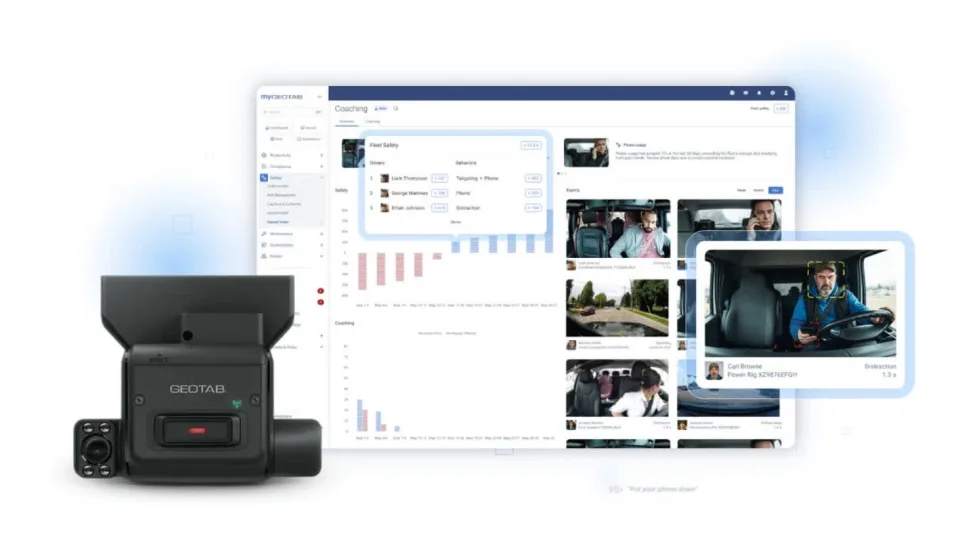
Geotab Expands Fleet Safety Tools With Video Coaching, Risk Insights
New safety and video capabilities aim to help fleet managers assess risk, support drivers, and take targeted action through video coaching, red-light violation detection, and more.
Read More →
How to Build a Better School Bus Driver Training Program
Is it time to strengthen your driver training? Here’s how to pick the right talent and improve recruitment, retention, and safety. This video is brought to you by IC Bus.
Read More →