





No Train, No Stop? FMCSA Considers Rule Change for School Buses
School Bus Manufacturers Address Tariff, EV Funding Impact
How will the changing tariffs affect school bus manufacturing and consumer prices? Will federal EV funding’s question marks lead to changed OEM production? Listen in as representatives from Blue Bird, IC Bus, and Thomas Built addressed these questions at a recent conference.
June 20, 2025
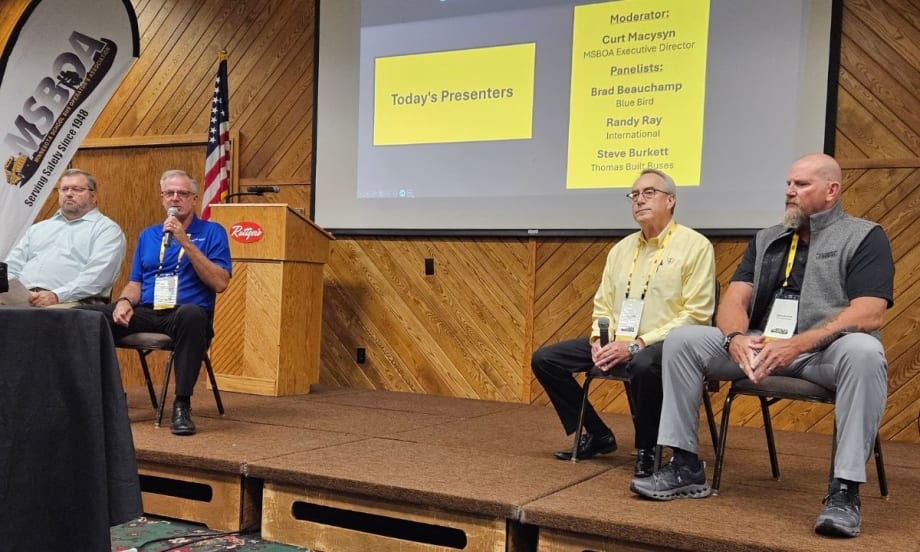
The panel at MSBOA’s summer conference was moderated by Curt Macysyn and included Brad Beachamp, Blue Bird, Steve Burkett, Thomas Built Buses, and Randy Ray, IC Bus.
Photo: Amanda Huggett
5 min to read
At this week’s Minnesota School Bus Operators Association (MSBOA) summer conference, a “State of the Industry” panel brought together representatives from three of the biggest school bus OEMs to talk about various industry topics and offer an update on their operations.
Tariffs & the School Bus
One key discussion point among the panel was talk of the new tariffs.
Brad Beachamp, EV product segment leader at Blue Bird, said when word broke about the changes, it was a struggle at first. Turning to its dealers, the company laid out what it thought the roadmap could look like.
“There was a price increase to anticipate us absorbing some of it, the dealers absorbing some of it, customers potentially absorbing some of it,” he said, noting there is much room still for adjustments.
The challenge, Beauchamp said, is when it gets down to the finite level and lies in what the individual component suppliers do. This means thousands of manufacturers all making different products in different parts of the world. (Many of the OEMs share many of the same vendors.)
Blue Bird hopes that tariffs are settled by the end of Q3 this year, which is the end of its fiscal year. Beauchamp said there will not be an extreme hike — no 50% to 75% increases — but more likely is a “modest increase” based on what we know right now.
“But one thing's for sure,” Beauchamp said, “it's money that's there has to be charged to somebody, and you've got to try to find the most fair way to do that.”
“There is no ifs ands or buts, the tariffs are real, and they are complex” Randy Ray, bus sales director at International/IC Bus added. “They're both at component levels, and they are at raw material level. We're working through them as best we can. The administration has been very open to talking to the industry, so that's the good news.”
The bad news, Ray alleges, is the politics between the countries of origin of the raw materials. “[The school bus] is truly a worldwide product,” he said. “There's a whole chart of countries, products, tariff amount, and it's levied whenever it hits the border, so we can’t pre-buy.”
IC Bus doesn’t anticipate the tariffs going away this year, but it does anticipate good news as time goes on. “Everyone has a vested interest in this not being a nightmare,” Ray said.
The complexity that Ray mentioned was further explained by Steve Burkett, regional sales manager for Thomas Built Buses. “There's multiple levels with all the components coming in,” he said. “Just going through your bill of materials, this harness has this connector, has this pin, is manufactured by this company. You have to go through all those levels and then even up to your basic steel. China's the largest manufacturer of iron ore in the world.”
For instance, something as simple as a harness could have three different tariff levels on it — taking into account the connector, wire, and plastics — and multiple countries.
Like the other OEMs, Thomas Built is hoping that by the end of this year, things will have stabilized and there will be a better understanding of the product costs.
“I got nearly 40 years in all this stuff,” Beauchamp said, closing the loop on tariff talk. “What I learned during this whole period is how much we don't make here anymore. The bus hasn't changed as much as the materials that we build the bus with. We don't make anything here anymore. If you bought a bus 40 years ago, those components were from the 50 United States. It was eye-opening to go through this exercise.”
Electrification & EV Funding Questions
The other big question mark is electric vehicle funding. EPA’s Clean School Bus Program has not yet announced the fourth and final round of grant recipients, and earlier winners reported issues in accessing their funds (the portals seem to have stabilized now). An attempt for another cycle was pursued last year, but was unsuccessful.
With a federal push backing away from EV mandates and funding, many wonder what this means for the future of greening school buses. Most say it’s more of a hiccup than anything.
Beauchamp says that Blue Bird is pivoting to its Clean Bus Solultions arm, which offers a lease model. And, the OEM has not lost one EV order yet, with the biggest backlog it’s ever had. He expects round 4 EPA funding is still coming, but will be delayed to sometime like August or September.
The other issue is that bus production may now be exceeding infrastructure capabilities. So much so that LA Unified is deploying about 200 propane-powered chargers for its EV buses.
Ray said indeed things are moving forward at IC Bus, too. It has about 80 buses in its backlog, and is just waiting on funding release to complete orders.
All on the panel believe that funding opportunities will ramp up on the state level and from some utility providers. In some cases, we’re already seeing more grant opportunities as the federal grants are in flux.
As CARB’s rules are also in question, Burkett does not believe the potential demise of the waivers will affect bus sales. “There were a few states that were really worried a year ago, like Massachusetts, New Jersey, California,” he said. “They were buying extra EVs just to get diesel tickets to be able to buy another diesel bus. So right now, this change, as far as I'm concerned, has really helped all the states across the board to keep going and buying what they want to buy, rather than being told what they have to buy.”
Ray advised MSBOA attendees to use this time of pause to get ahead of the game. Research alt-fuel options and know what type makes the most sense for your unique situation. Begin laying the groundwork for what is still coming, even if it’s in a slower timeline than we thought.
In an earlier session, John Benish Jr. of Cook-Illinois Corp had the same message as Ray. He encouraged contractors to learn as much as they can now, as he suspects all districts will start adding green components to their contracts at some point.
The point is, we all must stay flexible and focused on the long game. Now is the time for school bus fleets to plan smart, explore options, and position themselves for whatever comes next.
Subscribe to Our Newsletter
More Alternative Fuels

CALSTART and Forth Combine to Form Catalyst Mobility
The new name represents a renewed vision for the nonprofit focused on advancing clean, equitable, and affordable transportation solutions that move people and goods.
Read More →
Alt-Fuel Moves: New Buses, Charging Hubs & Real-World EV Testing
Propane and electric school bus deployments continue to grow as districts add new vehicles, expand charging infrastructure, and gather more real-world operating data.
Read More →
Fewer Electric School Bus Models Reshape the U.S. Market
WRI’s latest buyer’s guide points to a consolidating electric school bus market, but fewer options may reflect a maturing industry rather than fewer meaningful choices for school bus operators.
Read More →
The Fuel Budget You Can Actually Predict: How Propane Autogas Keeps Money in the Classroom
Learn how propane autogas helps school districts manage fuel costs with predictable pricing, lower maintenance, and reduced emissions from former transportation director Joel Stutheit.
Read More →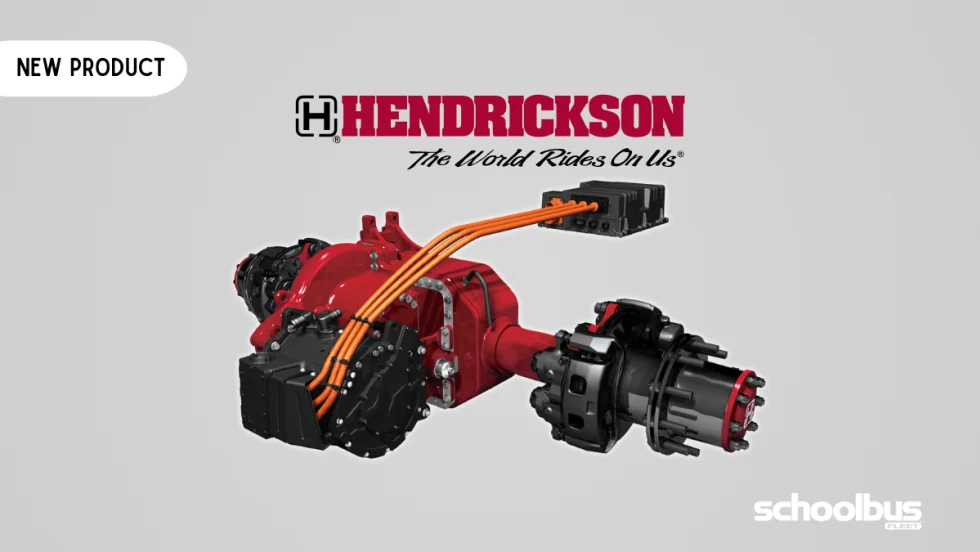
Hendrickson, Driventic Introduce New Electric Powertrain for School Buses
ELECTRAAX, the electrified, lightweight drive axle offers integrated ePowertrain efficiency and modular flexibility for Class 6–7 school bus use.
Read More →
The Mobility House Joins PowerFlex in Fleet Electrification Deal
The acquisition combines intelligent charging software, bidirectional charging expertise, and fleet electrification services to support the growing adoption of electric school buses across North America.
Read More →
Alt-Fuel Moves: Electric School Bus Investments Hit the Road
See which districts across the U.S. are putting electric school buses into service, expanding charging infrastructure, and planning the next phase of fleet electrification.
Read More →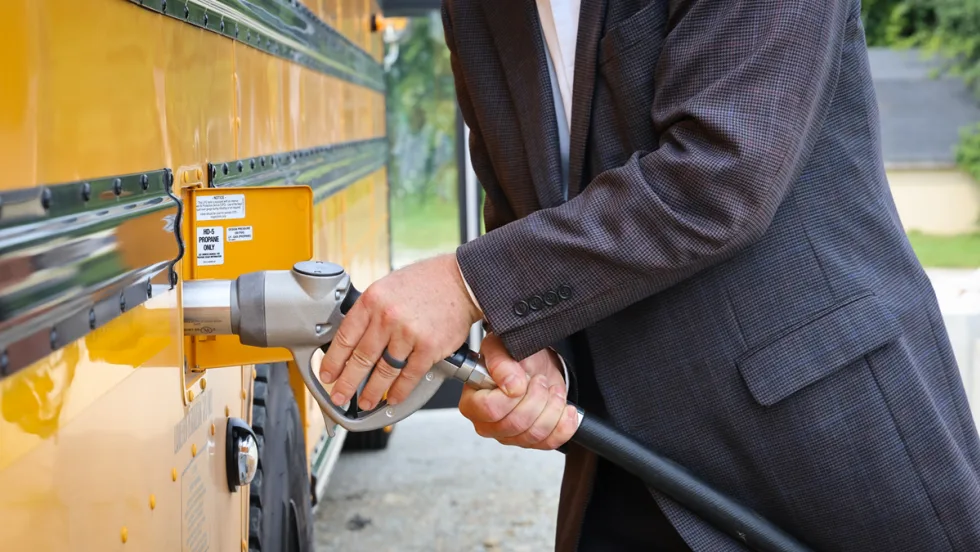
With Fuel Volatility Ahead, School Districts Turn to Propane
While diesel prices peaked above $5 this spring, districts with propane autogas-powered fleets paid under $2 per gallon, according to PERC.
Read More →
EPA Unveils Proposed Changes to 2027 Heavy-Duty Engine Rules
The federal agency has proposed changes to next year’s targets that would eliminate DEF derates, ease warranty requirements, and retain current NOx emissions standards.
Read More →
Alt-Fuel Moves: EV Charging & Infrastructure Projects Gain Momentum
The latest developments include new funding, charging infrastructure, utility investments, and fleet technologies designed to support the transition to electric school buses nationwide.
Read More →