





Similar News: NHTSA Proposes Amendments to 5-Point Restraints on School Buses Rule
No Train, No Stop? FMCSA Considers Rule Change for School Buses
The federal agency's proposed rulemaking would eliminate the requirement for school buses to come to a complete stop at railroad crossings if the warning device is not activated. The goal: to improve traffic flow and save costs. With new data released, public comment is open through April 27, 2026.
April 7, 2026
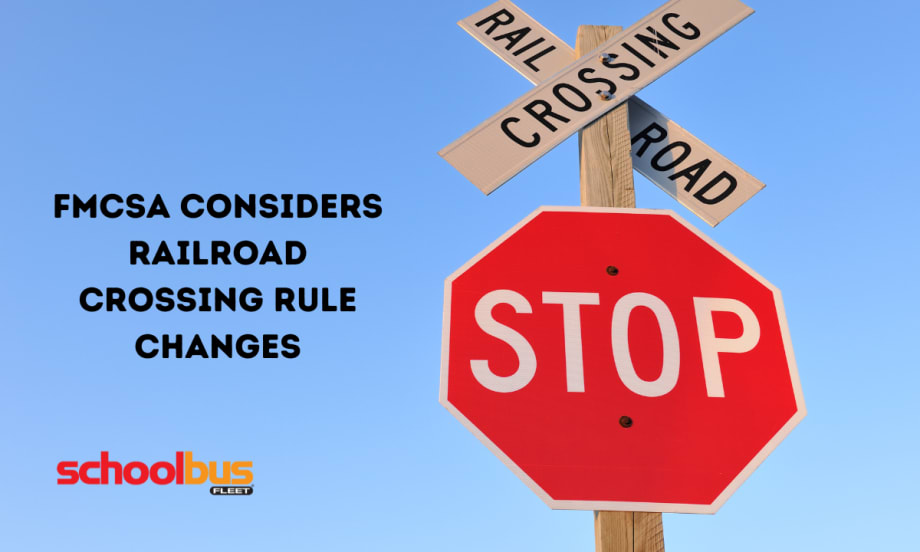
After a 2025 proposal, FMCSA has asked for new public comments on the matter after sharing statistics on vehicle-rail collisions from 2016 to 2024, fatal rear-end crashes, and annual signal failures. Comments are now due by April 27, 2026.
Photo: School Bus Fleet
2 min to read
Depending on the outcome of FMCSA's new proposed rule, it's possible that school buses may no longer need to stop at all railroad crossings.
The Federal Motor Carrier Safety Administration (FMCSA) issued a Notice of Proposed Rulemaking (NPRM) on May 30, 2025, to amend the current regulations.
Currently, drivers of commercial motor vehicles (CMVs) that transport passengers or certain hazardous materials are required to stop before crossing a railroad track, unless an exception applies, such as when the crossing is controlled by a functioning highway traffic signal displaying a green indication. The requirement took effect in 1938, and the proposal acknowledges the technological advances in active traffic control devices since.
The proposed change would add a new exception for a railroad crossing equipped with an active warning device not in an activated state (for example, automatic gates, bells, or flashing light signals that alert drivers of an approaching train). Meaning, school buses would no longer have to stop, look, and listen, and can rely on the same cues other vehicles use at railroad tracks.
The agency notes that the current stop requirement, especially on high-speed divided highways, poses a potential rear-end crash risk, as drivers of other motor vehicles are not accustomed to stopping, and the change would lead to a more predictable and continuous traffic flow. Plus, removing the mandatory stop requirement could lead to cost savings by avoiding unnecessary stops and enhancing operational efficiency.
According to the proposal, there are approximately 243,000 railroad grade crossings in the United States. Roughly 51% of public crossings (the ones that are used most often) are equipped with active warning devices, while 43% are equipped with "passive" warning signs and markings.
Share your thoughts on the matter: FMCSA took comments on docket number FMCSA– 2021–0050 through July 29, 2025.
Update as of April 7, 2026
On March 27, 2026, FMCSA released additional data on the subject and re-opened the period for public comment. According to Federal Railroad Administration data obtained by FMCSA:
- School buses were not involved in any vehicle-rail collision at any crossing type between 2016 and 2024.
- There were no rear-end fatal crashes involving school buses near active crossings with highway signals, nor at passive crossings; however, there were 10 fatal rear-end crashes (only two involving a school bus) near crossings actively controlled by crossing gates or flashing lights between 2016 and 2023.
- Across 71,249 active railroad grade crossings with multiple through trains per day, there are approximately 263 signal failures per year.
To share your opinion, reference Docket Number FMCSA-2021-0050 and write in by April 27, 2026.
Editor's Note: This post was originally published on June 11, 2025, and updated on April 7, 2026.
More Safety

How to Build a Better School Bus Driver Training Program
Is it time to strengthen your driver training? Here’s how to pick the right talent and improve recruitment, retention, and safety. This video is brought to you by IC Bus.
Read More →
Recent School Bus Accidents Leave 2 Dead, 2 Injured
Four school bus crashes in Florida, Illinois, and Georgia highlight risks in transportation lots, at bus stops, and during student loading and unloading.
Read More →
Sponsored•September 8, 2026
When Every Second Matters, Clarity Keeps Routes Moving
From routine delays to urgent incidents, strong communication practices help drivers, dispatchers, schools, and families respond with confidence.
Read More →

What Happens When a School Bus Catches Fire — and What Can Help
School bus fires are rare but can be devastating. Learn how advances in fire suppression and asset protection help fleets detect fires earlier, reduce damage, and improve safety.
Read More →
Geotab Launches Tool to Help Fleets Investigate Road Incidents
Geotab Investigations combines telematics data, video, documents, and other evidence to help fleets reconstruct incidents, resolve claims, and determine what happened.
Read More →
Texas Sixth Grader Wins 2026 National School Bus Safety Poster Contest
Sai Darshana Yekolu of Moseley Middle School in Prosper, Texas, was named the newest winner for her artwork, bringing the theme of “Safe Rides, Everyday Heroes” to life.
Read More →
Sponsored•August 27, 2026
Doing More With Less: How Transportation Directors Can Prioritize Safety Amid Budget Uncertainty
With diesel prices soaring and nearly one-third of transportation directors expecting budget cuts, maintaining student safety has never been more challenging. Download this guide to learn how leading districts are prioritizing risk, funding critical safety technology, and building stronger budget cases with data.
Read More →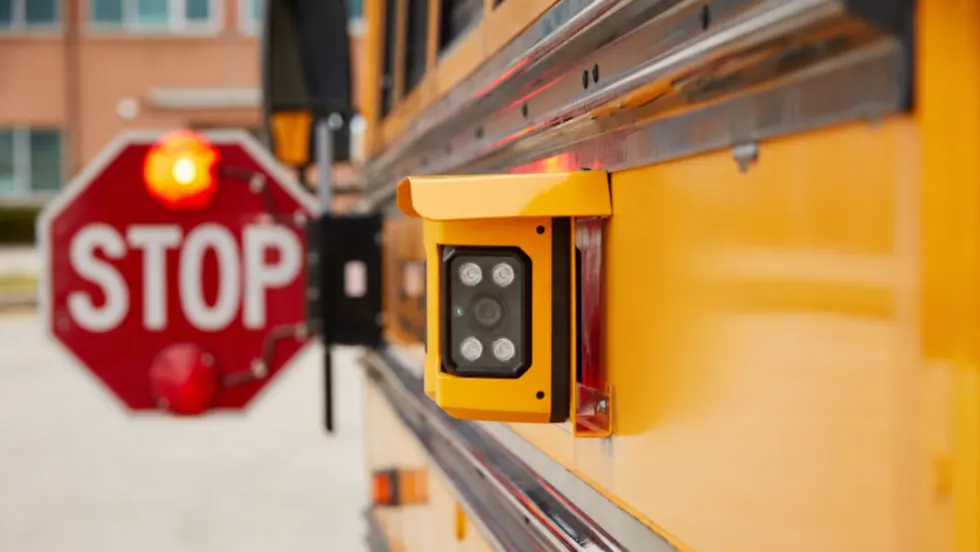
Walton County Schools Adds Gatekeeper Stop-Arm Enforcement System
The Florida district will deploy Gatekeeper’s updated Student Protector technology, which now incorporates AI to improve video evidence.
Read More →
How To Build a More Secure School Bus Yard During and After Hours
As thefts and overnight security threats continue, school transportation leaders are combining stronger operational practices with AI-enabled surveillance to better protect buses, facilities, and staff.
Read More →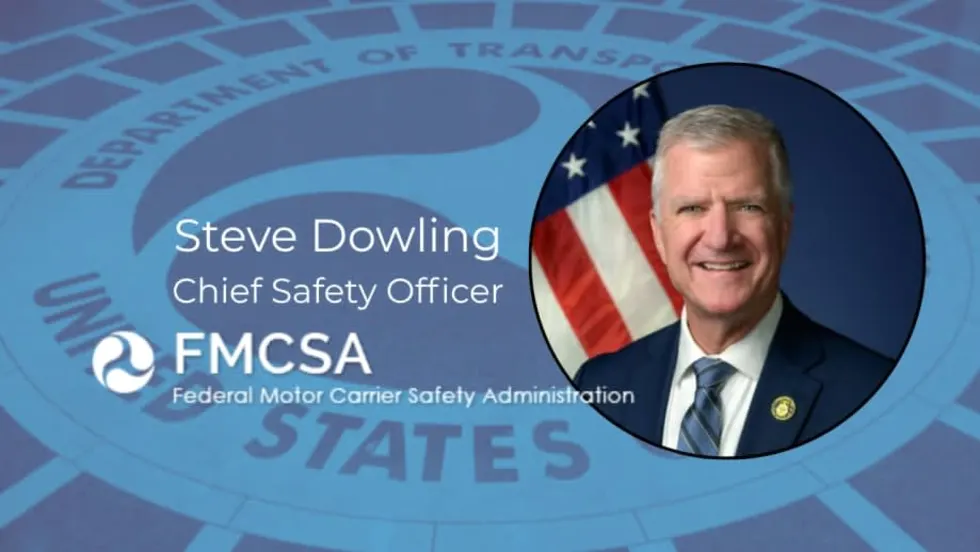
FMCSA Names New Chief Safety Officer: What School Bus Operators Should Know
Steve Dowling is set to lead the federal agency's efforts to advance commercial motor vehicle safety and reduce crashes, fatalities, and injuries on the nation's roadways.
Read More →