




Mixed Approach, New Tech Help Streamline Fuel Management
Integrated energy management aids in the transition away from fossil fuels while considering affordability of alt-fuel options and reducing dependence on any one fuel. Data tracking technology boosts efficiency and keeps costs in check.
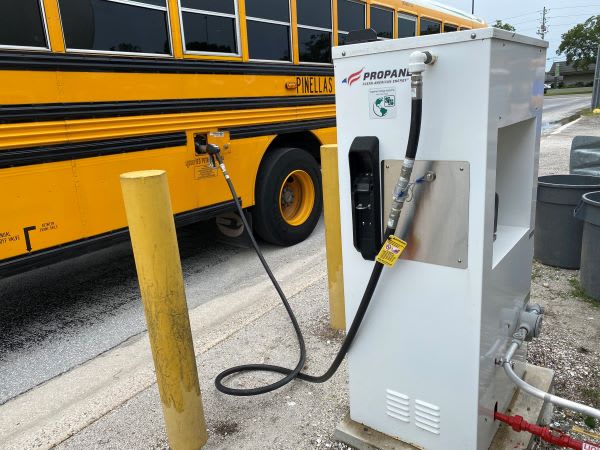
Photo courtesy Superior Energy Systems
One of the biggest advantages of school buses is the opportunity to reduce the number of vehicles on the road emitting unhealthy particles into the air. As more bus fleets look to reduce their carbon footprint, running on a single fuel source — specifically petroleum diesel — is nearly a thing of the past.
That does not mean, however, that fleet managers must look for one silver bullet replacement. This era of innovation in the fuel industry has provided the perfect opportunity to consider what I call an integrated energy management (IEM) approach — a comprehensive strategy that considers multiple fuel sources and adopts all options that best meet a fleet’s needs.
An IEM approach allows a transition away from fossil fuels while considering the market readiness and affordability of various alternatives. This helps meet both short- and long-term objectives and incorporates more types of cleaner energy sources to help achieve sustainability goals. Diversifying energy sources also reduces the risk of being dependent on any one fuel.
Here is a breakdown of some of the most discussed alternative-fuel options on the market for school bus fleets to help fleet managers determine the best mix for their operation.
Electricity
What it is: Electricity is stored in batteries that are used to power the vehicle. The batteries are typically charged by plugging into a charging station.
What’s needed: Switching to electric almost always involves buying a new vehicle. The proper charging infrastructure is also required, which is seen as a barrier to greater adoption.
Performance: Early adoption is expected in low-mileage applications where the limited range is less of a concern. Charging time and infrastructure are other considerations.
Emissions: Fully electric vehicles do not generate tailpipe emissions. However, it is important to consider the full lifecycle of an energy source: what goes into its production, delivery, and end use. Perhaps the most objective measure of that is the carbon intensity scores California assigns to fuels for its Low Carbon Fuel Standard. The standard value for electricity from the California grid used as transportation fuel is 82.9. For comparison, petroleum diesel is 100.5, and lower means cleaner.
Biodiesel
What it is: Biodiesel is made from renewable resources such as used cooking oil and waste animal fats through a chemical process called transesterification.
What’s needed: Fleets can run on biodiesel blends without making changes to vehicles or fueling infrastructure. A common blend these days is B20, which is 20% biodiesel and 80% petroleum diesel. Vehicles are also running on B100 using a simple, affordable upgrade that includes a split fuel tank for petroleum diesel in one section and biodiesel in another and a system that allows the vehicle to switch from diesel at start up to B100 once running.
Performance: Compared with ultra-low sulfur diesel, biodiesel has a higher Cetane number (a common measure of ignition quality), offering more complete combustion and more lubricity, which reduces damage to fuel pumps and injectors. Also, its cleaner burn sends less particulate matter to diesel particulate filters, minimizing the impact on those emissions control devices.
Emissions: Biodiesel is one of the cleanest fuel options, reducing lifecycle greenhouse gas (GHG) emissions by up to 86% compared with diesel. Its most recent carbon intensity score in California is 27.

Steve Klein, the senior marketing manager for the Renewable Energy Group, says that an integrated energy management approach can take into account cost-cutting and sustainability goals.
Photo courtesy Renewable Energy Group
Renewable Diesel
What it is: Renewable diesel is made from the same feedstocks as biodiesel, but the two fuels have different production processes and are distinct fuels with their own specifications. Chemically, renewable diesel is very similar to petroleum diesel. A newer trend is blending renewable diesel and biodiesel together to take advantage of the performance and emissions characteristics of each fuel and the larger supply of biodiesel.
What’s needed: Both 100% renewable diesel and renewable diesel blended with biodiesel can be used in diesel engines without any modifications.
Performance: Like biodiesel, it has higher Cetane than petroleum diesel as well as lower sulfur content and aromatics. Its Cloud Point — the temperature at which a fuel appears cloudy — is lower than biodiesel’s.
Emissions: Renewable diesel’s most recent carbon intensity score is 31.7.
Renewable Propane
What it is: Propane is a byproduct of natural gas processing and petroleum refining. In recent years, there has been a growing use of renewable propane, also known as bio-propane, which is produced from renewable raw materials like oils and fats.
What’s needed: Fleets need to either convert vehicles to run on propane or buy new vehicles. Fueling infrastructure would also likely need to be updated.
Performance: Bio-propane has a high-octane rating and cleaner combustion, which can lead to reduced oil contamination and improved engine life.
Emissions: This fuel naturally produces low GHG and nitrogen oxide (NOx) emissions. A propane low-NOx engine is 90% cleaner than EPA Standards, according to the Propane Education and Research Council.
Picking the Right Fuels
Ultimately, what is best for a fleet depends on its unique circumstances. To use a 20-bus fleet as an example, let’s say the operation can afford a combination of five electric and renewable propane buses. Rather than keep the other 15 on petroleum diesel, they use drop-in fuels like biodiesel blends. Now 100% of the fleet is running on lower-carbon fuels.
Steve Klein is the senior marketing manager for the Renewable Energy Group, a supplier of clean, renewable fuels and advanced biofuels in North America.
More Alternative Fuels

CALSTART and Forth Combine to Form Catalyst Mobility
The new name represents a renewed vision for the nonprofit focused on advancing clean, equitable, and affordable transportation solutions that move people and goods.
Read More →
Alt-Fuel Moves: New Buses, Charging Hubs & Real-World EV Testing
Propane and electric school bus deployments continue to grow as districts add new vehicles, expand charging infrastructure, and gather more real-world operating data.
Read More →
Fewer Electric School Bus Models Reshape the U.S. Market
WRI’s latest buyer’s guide points to a consolidating electric school bus market, but fewer options may reflect a maturing industry rather than fewer meaningful choices for school bus operators.
Read More →
The Fuel Budget You Can Actually Predict: How Propane Autogas Keeps Money in the Classroom
Learn how propane autogas helps school districts manage fuel costs with predictable pricing, lower maintenance, and reduced emissions from former transportation director Joel Stutheit.
Read More →
Hendrickson, Driventic Introduce New Electric Powertrain for School Buses
ELECTRAAX, the electrified, lightweight drive axle offers integrated ePowertrain efficiency and modular flexibility for Class 6–7 school bus use.
Read More →
The Mobility House Joins PowerFlex in Fleet Electrification Deal
The acquisition combines intelligent charging software, bidirectional charging expertise, and fleet electrification services to support the growing adoption of electric school buses across North America.
Read More →
Alt-Fuel Moves: Electric School Bus Investments Hit the Road
See which districts across the U.S. are putting electric school buses into service, expanding charging infrastructure, and planning the next phase of fleet electrification.
Read More →
With Fuel Volatility Ahead, School Districts Turn to Propane
While diesel prices peaked above $5 this spring, districts with propane autogas-powered fleets paid under $2 per gallon, according to PERC.
Read More →
EPA Unveils Proposed Changes to 2027 Heavy-Duty Engine Rules
The federal agency has proposed changes to next year’s targets that would eliminate DEF derates, ease warranty requirements, and retain current NOx emissions standards.
Read More →
Alt-Fuel Moves: EV Charging & Infrastructure Projects Gain Momentum
The latest developments include new funding, charging infrastructure, utility investments, and fleet technologies designed to support the transition to electric school buses nationwide.
Read More →