





Get Informed: 21 Questions About Clean School Bus Funding
5 Questions: Steve Whaley and Brad Beauchamp on Alt-Fuel Opportunities
The duo brings decades of experience to the school bus manufacturer, helping customers navigate choices between propane, electric, and diesel school buses.
January 25, 2024

Whaley lives in Greenville, S.C., while Beauchamp calls Phoenix, Ariz., his home.
Image: Blue Bird/Canva
6 min to read
School bus manufacturer Blue Bird added two alternative-fuel experts to its executive roster, with Steve Whaley joining to focus on propane while Brad Beauchamp bolsters the company’s expertise in electric school buses and charging infrastructure.
Whaley, formerly of the Propane Education and Research Council (PERC), grew up in Williamsburg, Va., and Anchorage, Alaska. He now lives in Greenville, S.C., with his wife of 40 years. They’ve got three sons.
“My wife is a passionate nutritionist and prefers organic gardening and protein, so that fits very well with what some would call my obsession with hunting deer, turkey, and wild boar,” Whaley said.
In his early career, Whaley worked on a project to help launch a propane conversion system on fleet vehicles.
“We helped convert existing gasoline-powered municipal vehicles, paratransit vans, service trucks, and commercial delivery fleets, as well as provide them with fueling infrastructure and very favorable fuel contracts,” he said. “We provided the entire turnkey package for fleets to not only significantly reduce operating costs, but lower emissions as well. Working with alternative fueling solutions continues to be extremely rewarding work for me.”
Beauchamp, who joined Blue Bird from ZEVX, was born in Highland Park, Mich. – home of the Ford Model T. He and his wife now live in Phoenix, Ariz. They’ve got a grown son and daughter. His wife works in the electric vehicle charging industry and his son is an engineer focused on electrification of commercial vehicles.
“I grew up in the automotive industry of the 1970s,” Beauchamp said. “During the ‘Oil Embargo,’ we immersed ourselves with alternative fuel solutions such as ‘Gasohol’ and ‘Propane.’”
He attended Central Michigan University, where he worked on an independent study project putting together a SuperFlow SF901 engine dynamometer.
“We also conducted many ethanol and soy diesel experiments and had crazy fun in the process,” Beauchamp said. “As the Energy Policy Act passed in the early 1990s, it was natural that it would become part of my life.”
Both Whaley and Beauchamp took time to answer five questions from School Bus Fleet about their experiences and what they bring to the table at Blue Bird Corporation.
What brought you to Blue Bird Corporation?
Whaley: My previous role with PERC involved converting a host of transportation markets to ultra-low-emission, propane-powered vehicles, including public and private transit, USPS and other parcel delivery contractors, food and beverage delivery, municipal and private utility service fleets, as well as student transportation. School bus manufacturer Blue Bird enabled me to singularly focus on my favorite area that makes the greatest positive impact to the most important segment of our society — our children.
Beauchamp: Joining iconic school bus OEM Blue Bird is a once-in-a-lifetime opportunity. It allows me to capitalize on everything I’ve learned over the past 30 years. The background picture in my LinkedIn profile shows me when I was 15 years old touring Blue Bird’s manufacturing plant in Fort Valley, Ga. My school bus affinity started in first grade when I took a Blue Bird bus to school. While it was a mix of buses in 1973, that district has been close to being exclusively Blue Bird for nearly 50 years. Now it appears I’ve come full circle. It is awesome to be part of Blue Bird’s growing alternative fuels team as the company approaches its 100th anniversary in 2027!
How does the company approach the integration of propane and electric school buses within its product lineup?
Whaley: We present both propane and electric school bus data side-by-side to our customers to show which option best meets their needs in terms of their operational duty cycle, financial criteria, and positive environmental impacts.
Beauchamp: We have the ability to continue to offer diesel-powered school buses while having ultra-low- and zero-emission vehicles in our product portfolio. Propane and electric-powered systems provide clean student transportation and complement each other. Electric can provide a zero-emission solution on the vehicle side and ultimately on the energy side as well. Through vehicle-to-grid (V2G) capabilities, electric school buses can even generate revenue streams for school bus fleet operators. Propane is a great and sustainable bridge to get us to zero-emission student transportation.
What advantages and considerations are taken into account to provide a range of clean-energy options to customers?
Whaley: First and foremost, when developing new clean energy options into our buses, safety is our most important consideration. We never compromise on providing the safest school buses in the student transportation industry. As many school district customers are demanding cleaner solutions, we believe it’s essential to provide a choice of ultra-low- and zero-emission products that will meet the varying needs of the customers we serve, including total cost of ownership (TCO), cost per mile, maintenance, infrastructure development, and environmental performance — to name a few.
What total cost of ownership considerations should customers consider between propane and electric school buses? What factors, such as initial investment, maintenance, and operational costs, contribute to the decision-making process for school districts?
Whaley: Every child deserves a safe, clean, and healthy ride to and from school every day. Student transportation leaders know how important it is to replace the oldest and most polluting buses they have in their fleets and it will take every viable clean alternative option available to accomplish this task. I believe student transportation leaders should consider their ongoing and temporary funding sources, the duty cycles of their routes, as well as the geographic and climate factors of their local operation and put the best options of alternative energy into play. I think most school districts will have a combination of energy sources in their buses to accomplish their mission. My mantra has always been that you can only be environmentally sustainable when you are financially sustainable.
Beauchamp: Propane-powered buses are readily available and very affordable. They help school districts to realize cleaner and greener transportation today. A propane school bus is slightly more expensive than a diesel bus up front, but the cost of fuel and simplicity of maintenance help to quickly recoup the investment. Electric school buses are still in the “high initial cost phase” but deliver huge operational savings on maintenance and cost per mile on the energy input side. Simply put, school districts would benefit from developing a diesel replacement strategy and if they can experience EV and supplement with propane, they will be on the path of operational efficiency and environmental sustainability.
How does Blue Bird collaborate with stakeholders to facilitate the development of necessary infrastructure, such as refueling stations for propane or charging infrastructure for electric buses?
Whaley: Blue Bird has a knowledgeable and experienced team of subject matter experts that “connect the dots” for stakeholders to not only make the capital investment into acquiring ultra-low- and zero-emission school buses, but the infrastructure expertise to provide the energy into these buses. This team knows all the best charging equipment manufacturers and propane providers who supply a combination of equipment with extremely favorable fueling contracts, and brings them to the table for school transportation leaders to understand the complete process for adopting these options into their fleets.
Beauchamp: At Blue Bird, we have been in the school bus business for nearly a century. We have a vast network of industry contacts in place and offer leading solutions for every customer. This includes a “one-stop shopping” approach for propane- and electric-powered student transportation. We are known to be “EVer EVolving.”
Subscribe to Our Newsletter
More Alternative Fuels

CALSTART and Forth Combine to Form Catalyst Mobility
The new name represents a renewed vision for the nonprofit focused on advancing clean, equitable, and affordable transportation solutions that move people and goods.
Read More →
Alt-Fuel Moves: New Buses, Charging Hubs & Real-World EV Testing
Propane and electric school bus deployments continue to grow as districts add new vehicles, expand charging infrastructure, and gather more real-world operating data.
Read More →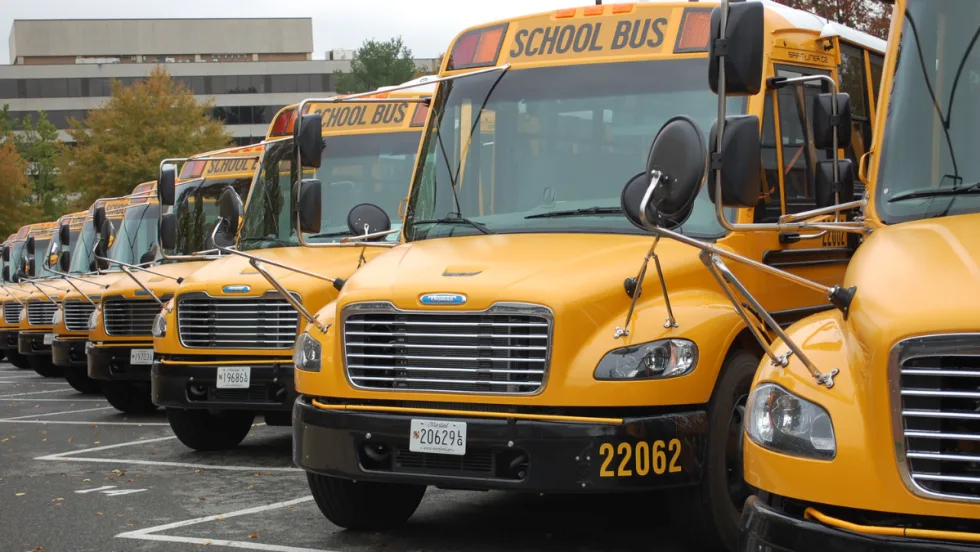
Fewer Electric School Bus Models Reshape the U.S. Market
WRI’s latest buyer’s guide points to a consolidating electric school bus market, but fewer options may reflect a maturing industry rather than fewer meaningful choices for school bus operators.
Read More →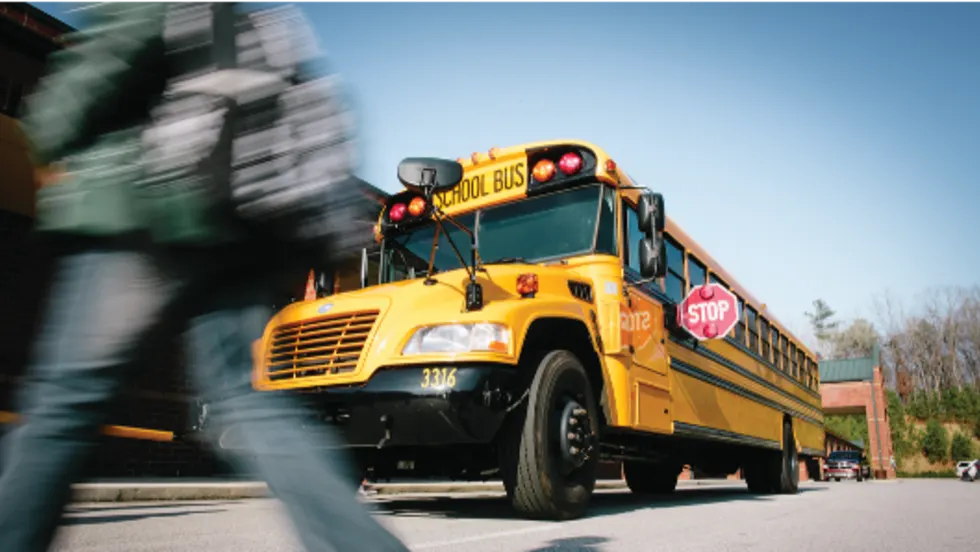
The Fuel Budget You Can Actually Predict: How Propane Autogas Keeps Money in the Classroom
Learn how propane autogas helps school districts manage fuel costs with predictable pricing, lower maintenance, and reduced emissions from former transportation director Joel Stutheit.
Read More →
Hendrickson, Driventic Introduce New Electric Powertrain for School Buses
ELECTRAAX, the electrified, lightweight drive axle offers integrated ePowertrain efficiency and modular flexibility for Class 6–7 school bus use.
Read More →
The Mobility House Joins PowerFlex in Fleet Electrification Deal
The acquisition combines intelligent charging software, bidirectional charging expertise, and fleet electrification services to support the growing adoption of electric school buses across North America.
Read More →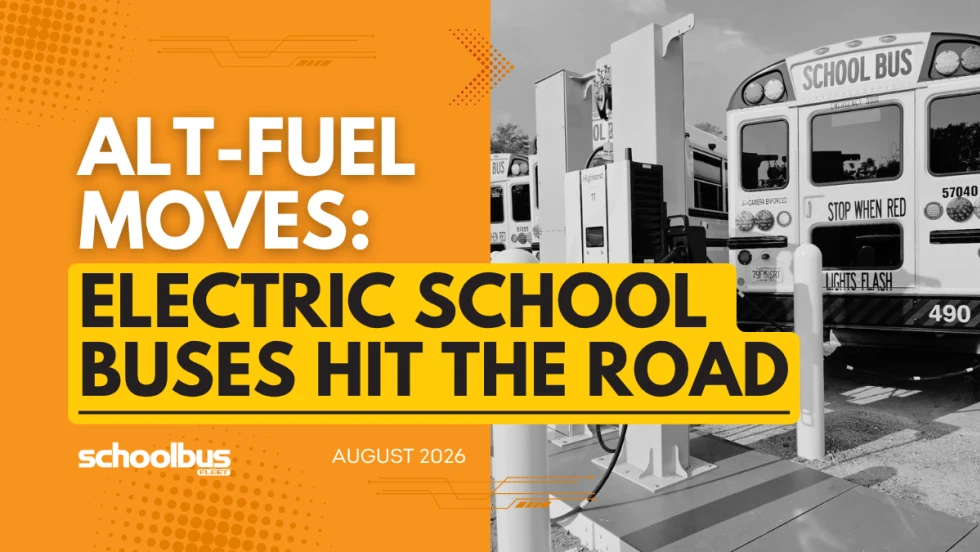
Alt-Fuel Moves: Electric School Bus Investments Hit the Road
See which districts across the U.S. are putting electric school buses into service, expanding charging infrastructure, and planning the next phase of fleet electrification.
Read More →
With Fuel Volatility Ahead, School Districts Turn to Propane
While diesel prices peaked above $5 this spring, districts with propane autogas-powered fleets paid under $2 per gallon, according to PERC.
Read More →
EPA Unveils Proposed Changes to 2027 Heavy-Duty Engine Rules
The federal agency has proposed changes to next year’s targets that would eliminate DEF derates, ease warranty requirements, and retain current NOx emissions standards.
Read More →
Alt-Fuel Moves: EV Charging & Infrastructure Projects Gain Momentum
The latest developments include new funding, charging infrastructure, utility investments, and fleet technologies designed to support the transition to electric school buses nationwide.
Read More →