




More Tips: The Back-to-School Checklist Every Director Should Complete Before the First Bell
9 Tips for a Smooth School Start
Explore tips for school bus routing, driver training, fleet maintenance, dry runs, and parent communication, for a strong start to the new school year from industry experts.
by Lynda Van Kuren
July 8, 2019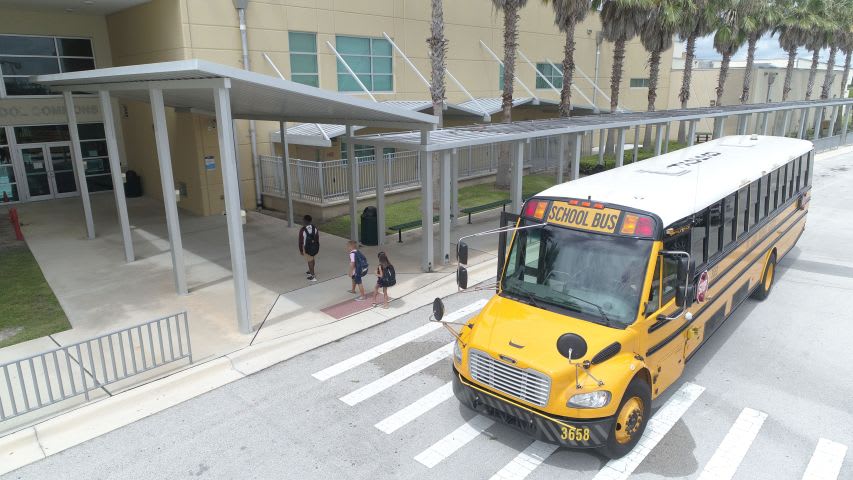
A smooth start to the school year begins long before the first bus rolls. Early attention to staffing, routing, fleet readiness, communication, and practice runs can help transportation teams catch problems before students arrive.
Credit:
St. Lucie Public Schools
9 min to read
- Reviewing the previous year’s performance is vital for identifying areas of improvement in school start preparations.
- Securing early feedback on route planning helps optimize transportation logistics for the upcoming school year.
- Addressing driver recruitment at an early stage ensures adequate staffing and mitigates potential operational challenges.
*Summarized by AI
For many districts, a new school year is about to start, and their transportation departments will be tasked with delivering lost kindergartners, confused middle schoolers, and cool high schoolers to their schools in time for first bell.
Meeting that goal is no small feat. However, with planning, practice, and technology, school transportation staff can have a great start to the new school year, and experience the satisfaction of a job well done.
“I’ve been in this business for 34 years,” says Scott Allen, regional operations manager for North America Central School Bus in Joliet, Ill. “I still get excited when I’m at a school and watch the kids get off the buses, meet their teachers, and things go right.”
With planning and preparation, your transportation staff can get high marks even during the back-to-school frenzy.
Below are some tips from school transportation operations across the U.S. to ensure your school year gets off to a great start.
1. Map the Planning Process
Although back-to-school transportation plans include a number of elements, one of the most important is a review of the previous year, according to Allen; Francine Furby, transportation director for Fairfax County (Va.) Public Schools; and Mark Lindstrom, general manager of the school transportation management company TransPar Group, who helps the Hawaii Department of Education (DOE) oversee contractors.
Next, the plan should address routing and look at changes in programming, bell schedules, student population, and roads, Furby says. Because they change frequently, staying on top of new programming and student populations in special education is particularly important, adds Don Carter, transportation director for St. Lucie Public Schools in Port St. Lucie, Fla.
The third factor to consider is driver recruitment and retention, according to Allen, who says it’s almost impossible to have a smooth start to the school year if you don’t have enough personnel.
Fourth is fleet maintenance, according to Carter. The plan should ensure the district has the buses it needs and that they’re ready to go when school starts, he says.
And last but not least is communication with staff and parents, adds Lindstrom. Communication planning should include methods to stay abreast of programming, get student changes of addresses, inform parents of bus stop information, and address problems parents experienced the previous year.
2. Conduct a Review of Last Year
When implementing his back-to-school plan, Lindstrom first looks at last year’s performance. He gets feedback from staff to learn what they struggled with and what went smoothly.
“You must understand what went right, what went wrong, and why,” Lindstrom says.
3. Make Route Planning a Team Effort
To ensure she has all the programming information she needs for routing, Furby does more than remind school district leaders to keep transportation informed. She works with the school district’s planning office, and her staff are members of its boundary and program development committees.
“Our office gives input when they’re looking at changing programs: the best location for the program, its boundaries, and feeder schools,” she says. “It’s important for us to provide input in the early planning stages.”
Furby also examines student population changes and checks out communities that are experiencing growth, have new buildings, or are undergoing road structure changes to determine bus stop locations and whether her routes meet bus capacity.
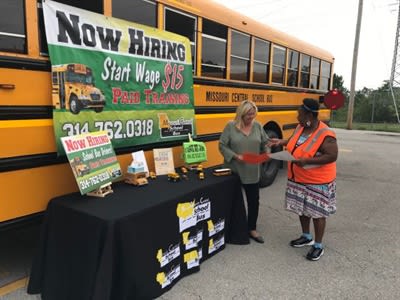
Scott Allen of North America Central School Bus says he focuses on driver recruitment as early as possible. One measure he takes is setting up a bus with a banner and a sign-up table in grocery store parking lots.
Credit:
North America Central School Bus
4. Tackle Driver Recruitment Early
Allen hits bus driver recruitment hard, and he hits it early. He attends job fairs; sets up booths in large apartment complexes; works with Goodwill Industries shops and state agencies; advertises in newspapers and on social media; posts flyers in restaurants and stores; and puts a bus with a banner, and if possible, a sign-up table, in grocery store parking lots.
Allen then holds new driver trainings throughout the summer and an in-service right before school starts. The in-service covers subjects such as student discipline and emergency evacuation, and drivers learn to handle their buses on various courses.
Carter’s entire team — drivers, aides, and mechanics — attends his before school in-service. Specialists such as attorneys and special education educators address the team, and the U.S. Department of Homeland Security presents active shooter training geared to bus drivers.
5. Get the Fleet Ready to Roll
Although safety is attended to year-round, summer is for general maintenance, Carter says. Each of his technicians is responsible for a list of buses. They ensure the technology works, upholstery is repaired, paint and body work is done, and the buses are clean.
Also, staff must check that new buses meet state requirements and are equipped with the safety features the school district uses, Allen adds.
6. Dry Runs Are Essential
Allen’s drivers conduct dry runs throughout the summer. In addition to helping them learn their routes, dry runs allow drivers to identify safety issues such as new construction, street closings, and two-way streets that have been converted to one-way streets.
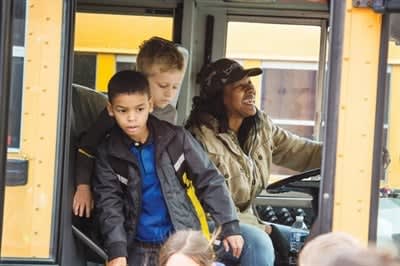
Fairfax County (Va.) Public Schools examines student population changes and communities that are experiencing growth or road structure changes to determine bus stop locations and whether routes meet bus capacity.
Credit:
Fairfax County Public Schools
“If there’s a new route or a major change to a route, we want to test [it] before we lock it down and give notice to the parents,” Allen says.
Then, Allen’s drivers, like those of Furby, Carter, and Lindstrom, drive their routes a few days before school starts at their scheduled times. This tests the system, and drivers learn traffic flows.
Lindstrom adds a twist to his dry runs: drivers take kindergartners, and sometimes elementary students, as well as their parents to school and back home.
7. Get the Word Out
Fairfax County’s Furby gives bus stop information to the schools for distribution and uses text, email, and voicemail to ensure parents know their child’s bus stop, while Carter uses personalized phone calls, open houses, and school websites. Even so, Furby and Carter get a ton of phone calls those first weeks of school, so they bring on additional staff to handle them.
“You can have a terrible start up if a message gets out there, ‘Hey, I called and called and couldn’t get an answer,’” Carter says.
8. Get More Staff Support for the First Weeks
For North America Central’s Allen, it’s “all hands on deck” for the first two weeks of school, especially for large schools or those with a lot of turnover.
“We’ll be out and about at schools to watch the loading and unloading, let drivers know we support them, and let the schools know we’re there as well,” he says. “If there’s a challenge, we’re there to help.”
Carter, too, posts staff at schools those first few days, but he also relies on GPS to alert him when problems occur.
“GPS allows my staff to have eyes in more places,” Carter says.
9. Streamline With Technology Tools
Carter finds that technology can also make the start of school easier. With the app Here Comes the Bus, parents are alerted that the bus is within a certain distance of their child’s stop.
For bus drivers, TransPar’s Lindstrom recommends tablets or mobile data terminals. They send messages, provide routing information, and include a security button for emergencies, a GPS map, and a list of students and their contacts. Carter also gives drivers mobile data terminals, and Furby equips them with a two-way radio system that lets them communicate with dispatch when there’s an emergency.
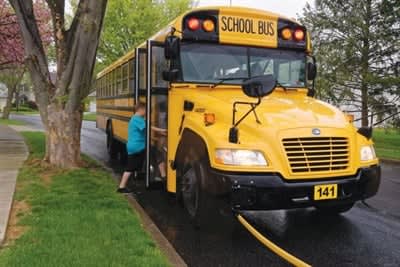
File photo: Student Transportation Inc.
More Smooth School Start Tips
Here, Gregg Voss, vice president of media relations for TSN Communications, shares top tips from three school transportation leaders for having those first few weeks of school run hassle-free.
Herbert Hill, director of transportation department, Muscogee County (Ga.) School District:
- Tip 1: Prepare your personnel. It takes about a month to train bus drivers. Don’t wait until the last minute to hire and train them. (Also, you end up losing 10% to 20% of bus drivers a year, because they find opportunities elsewhere.) We start that process nine to 12 months out. In an area like Atlanta, school districts are competitive. Drivers tend to migrate where the money is. In an isolated place like mine, we tend to grab more from the smaller surrounding counties.
- Tip 2: Focus on vehicle inspection. Starting the day after the end of the school year, my technicians prepare for the statewide inspection, making sure we have the buses ready for school. Our inspection is early July, and we start school in the first week of August.
- Tip 3: We make sure our people are properly trained and knowledgeable of our route assistance software system; we use Transfinder. We prepare the routes that are most efficient for the drivers to pick up the students. Once students are registered to a school, our routing system picks up a student. That has a 30% to 40% impact on routing.
Augie Vona, president of Total Transportation Corp. in Brooklyn, N.Y.
- Tip 1: Make sure drivers have their training up to date, and that any new training that has to be done for the year is done before the school year starts. We all know who is retiring in June, but we call every driver to make sure we know who’s coming back.
- Tip 2: Starting really happens when the old school year ends. Perform preventive maintenance on every vehicle that needs major work done. Send buses on road tests to see if a transmission is going to go.
- Tip 3: We do two dry runs, using GPS to make sure the driver did it and that they are ready for the first day. The first day is going to run late, with parents taking pictures and such. You have to make sure the new driver is fully trained, and that will take more than one dry run. If there are any problems, such as street closures, we can change that before the start of school.
Rick McBride, director of transportation, Pinellas County Schools in Largo, Fla.
- Tip 1: Make sure your routing is accurate. We use Edulog. It assigns the kids to stops and puts the routes and runs together for us. We would not be able to do it manually with the amount of students, stops, and routes in our district. We start working on it once we get the new school rollover. We get that information in March and work on it until the first part of July. We send out postcards to parents to make sure they know where their stops are.
- Tip 2: Make sure your bus fleet is inspected and they are operable and clean. It sets a good example for the students. We want to give them a good sense of order for the first day of school. The state of Florida mandates an inspection every 30 days, and we do ours every 25 days. If you have any other equipment on the bus, like GPS and cameras, make sure that they are fully functional.
- Tip 3: Communicate to the parents a good number to call for issues, concerns, and further information about their school bus stop. We have a lot of parents who call. Communicate to all your stakeholders: drivers, schools, parents, and law enforcement.
Subscribe to Our Newsletter
More Management
How to Build a Better Driver Training Program
Ready to boost up your school bus instructor training? Here’s how to pick the right talent and improve recruitment, retention, and safety.
Read More →
CALSTART and Forth Combine to Form Catalyst Mobility
The new name represents a renewed vision for the nonprofit focused on advancing clean, equitable, and affordable transportation solutions that move people and goods.
Read More →
What Makes a Great School Bus Driver Trainer?
Choosing the right school bus driver trainer takes more than experience. Learn six keys to selecting and developing trainers and evaluating program effectiveness.
Read More →


School Bus Contractors Expand Through New Deals, Acquisitions & Partnerships
STA's Canadian division acquires Ontario-based G&L Stevenson Transport while Durham School Services adds a new district contract in California, First Student adds a New Jersey contract, and Minnesota Coaches acquires Halo Transportation.
Read More →
Logan Bus Company Rolls Out AI Phone System for NYC School Bus Families
A summer pilot found that AI agents could handle most routine calls, freeing up time for customer service staff to focus on emergencies and complex family concerns.
Read More →
From Intent to Impact: What I Learned About Leadership from TAPT
A Texas transportation supervisor shares lessons on self-awareness, accountability, managing stress and building trust — and why investing in leadership development matters at every stage of your career.
Read More →
NAPT Names 2026 Award Recipients, Hall of Fame Inductee
Who earned national recognition for their work in student transportation? This year, NAPT named five recipients of its 2026 awards for service, safety, and leadership, plus its newest Hall of Famer.
Read More →
Sponsored•September 2, 2026
2026 State of Student Transportation Report
Driver shortages. Rising costs. Growing safety expectations. More data, but not enough time to act on it. The 2026 State of Student Transportation Report reveals what transportation leaders say is putting the most pressure on their operations—and where they’re investing next. See how your priorities compare.
Read More →
How to De-Escalate an Angry Person: 5 Steps for Handling Workplace Conflict
What makes emotions run high, and how should you handle an angry colleague or parent? Follow these steps for staying calm, listening, showing empathy, and resolving conflict.
Read More →
Sponsored•September 1, 2026
What Readiness Looks Like This School Year
Learn about the challenges shaping the 2026–2027 school year, from persistent driver shortages and budget pressure to technology and readiness gaps. See how school districts are responding and adapting in Zonar’s 2026 Back-to-School Readiness Report.
Read More →