




Read More: How To Prepare Electric Vehicles for Winter Months
Keeping the Engine Warm: How Winter Weather Plays with Alt-Fuels
With several variations of buses on the road now, take a look at how different fuel types handle the cold, and useful products for any school district that utilizes the yellow bus.
by Staff
December 19, 2024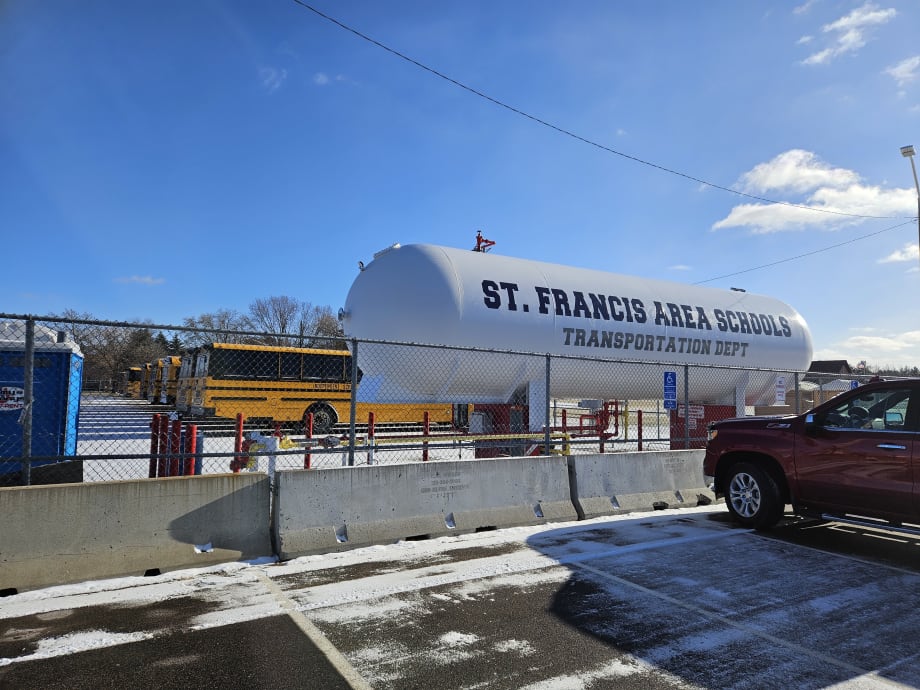
Minnesota’s St. Francis School District went all in on propane, converting their entire fleet from diesel in 2016.
Photo: Amanda Huggett
8 min to read
Winter is here for many states in the U.S., and cold weather is known to have adverse effects on motor vehicles. With that in mind, we decided to take a look at various alternative fuel buses to see how they fare in the cold, and provide some tips to keep routes operational during the winter months.
Reduced Range for Electric Buses
Battery-electric buses and vehicles are one of the most-talked about alternatives to traditional diesel and gas vehicles. While these buses can operate in extreme cold, there are some considerations that need to be made.
Districts that operate electric school buses in the cold will need to factor in the loss in charge capacity that the cold weather brings with it. While the batteries themselves can lose a percentage of their capacity, other factors include the additional power draw caused by heating the bus.
One way to maximize the charge on a bus is to precondition it before taking it out on a route. This is as simple as allowing time for the battery and cabin to warm up to optimal temperatures while the bus is still plugged into the charger.
Some districts are also opting to install a gas heater on buses to allow more of the charge to be used for driving purposes.
The availability of charging infrastructure can also become a problem on longer trips due to the shortened range during cold weather.
As the charging process causes heat, this can bring with it the risk of charging plugs becoming frozen in the socket due to condensation. This problem can be easily solved with a hair dryer.
Most electric buses are equipped with battery thermal management systems, which aid in maintaining battery temperatures at an operational level during the cold weather.
Another technology being used to extend the range of electric buses in the cold is regenerative braking. These systems allow the bus to convert kinetic energy into electricity to charge the battery any time the bus needs to break. Buses on routes with frequent stops or downhill slopes that require breaking to maintain control will see the most benefit from this technology.
Heated driver seats can be used to extend the range of an electric school bus. In situations where the bus is only carrying the driver, these seats allow for the cabin heat to be lowered or turned off while keeping the driver warm.
Storing buses indoors overnight and charging them mid-day or after they return from a route can also help keep their charge up and allow them to be operational when needed.
Despite the challenges with range and charging, electric buses do have one distinct advantage over other buses: Often the weight distribution in an electric bus is more evenly spread through the vehicle, giving the bus better traction and making it easier for drivers to control.
The even distribution, and often heavier overall weight, also help prevent fishtailing in snowy conditions.
Tok Transportation in Alaska has said that their electric Jouley performs well, even in 20-below temps.
WRI also provides more stats and tips for operating electric buses in cold weather on their website.
The further north, the colder the winters, and in states where extremely cold winters are common, districts — especially ones in rural areas — are considering other eco-friendly transportation options.
Propane and RNG Warm Up Quick
Propane is another popular alternative fuel, and can provide a number of benefits to districts in colder climates that electric buses do not.
Heating and warming up buses in cold weather is one area that propane buses excel in. On top of their range not being affected by battery usage, propane buses avoid the long warmup times that diesel buses have.
ROUSH Clean Tech did a direct comparison of the time that it took for propane and diesel buses to warm up. Over the course of an hour, they measured the temperatures of both buses, and while the propane bus only took about 30 minutes to get above freezing, the diesel bus barely broke that mark in an hour. This helps districts save on fuel as it greatly reduces the idle time of their buses.
Fueling propane buses in the winter can take longer than during the warmer months; however, once the buses are filled up, they operate similarly to diesel buses.
“The challenge that we’ve had is with the pumping of fuel in the wintertime,” said Peggy Tesdahl, transportation supervisor for the 60-bus fleet St. Francis Area Schools in Minnesota. “People were waiting up to three minutes for the pump to engage, especially if they were the first ones or if it hadn’t been used in a while. It causes frustration out there when the drivers are used to the pump coming right on and starting to fuel.”

Peggy Tesdahl says that everyone — mechanics included — love their buses, even in Minnesota winter.
Photo: Amanda Huggett
While they operate similarly to diesel buses, there are some noticeable differences. The main two would be that propane buses tend to be quieter and cleaner than diesel buses. Tesdahl said she does not miss the cloud of smoke that would accompany the afternoon pick-up line outside the school.
Another alternative that works similarly to propane is renewable natural gas (RNG). These buses have many of the same advantages as propane buses, such as lower fuel costs, better heat production than diesel, and quiet engines.
In fact, Palmer Bus Service of Minnesota piloted the first Demi-NeuFuel system by Ingevity (which uses a retrofitted RNG tank added on to a diesel bus to reduce its emissions). Jenna Fromm, CEO and co-owner, said they’ve seen about 30% reduction in diesel emissions with it. And, they love it so much that they’ve got 20 more on the way.
“We found that it's about a four-and-a-half-year investment to pay for itself,” she said. “And with diesel engines lasting a long time, it can make a lot of sense.”
There is some training needed for drivers and mechanics, but they have not seen any issues with RNG related to the cold.
The main concern with both propane and renewable natural gas are availability of fuel. Depending on location, it may be easier to acquire one over the other. In addition, the number of suppliers in an area may be limited.
Districts that utilize renewable natural gas buses won’t have to worry about the gas freezing in extreme cold, as it can remain in a gaseous state.
As with electric buses, keeping propane and renewable natural gas buses indoors can help with getting them on the road in the morning, however it is not as important due to their more-efficient heat generation. In addition, many modern buses can be equipped with engine-warming systems to help get them started when the weather reaches extreme lows.
Keeping Buses Clean and Safe
Regardless of the type of buses in your fleet, there are some products on the market that can benefit cold weather districts.
When there is snow on the ground and temperatures are below freezing, it is not uncommon for snow to get tracked into a bus, melt, and wind up freezing on the lower steps. Having heated steps on your bus, like those from Warm Welcome, can save a lot of trouble in the long run.
The heated steps are designed to make boarding and disembarking from school buses safer and prevent injury lawsuits. As a 12-volt heater, the steps can easily be integrated into any type of bus with a battery. These steps are often an option that can be selected while purchasing from the bus manufacturers.
In addition to heated steps, Warm Welcome can also directly heat more specialized equipment, specifically systems to help wheelchair users board and safely ride on a bus. Heating the ramps, lifts, and docks helps prevent them from freezing up when needed, and makes boarding the bus safer for wheelchair-bound users.
For districts that store their buses outdoors, snowfall can make getting a bus road-ready challenging. Removing all the snow from the roof of a bus can be time-consuming and require ladders or long snow scrapers.
Scraper Systems offers a simple solution known as the Fleet Plow. By suspending an adjustable brush above the buses, the Fleet Plow lets buses and other vehicles drive under it while the snow is scrapped off. An effective solution that removes some of the hassle of getting vehicles ready for the road in the winter.
Making sure buses have the right equipment in them for winter weather conditions is an important part of being ready for winter weather. If you are looking at purchasing a bus, it may be worth considering the conditions that the vehicle is likely to encounter over its lifespan.
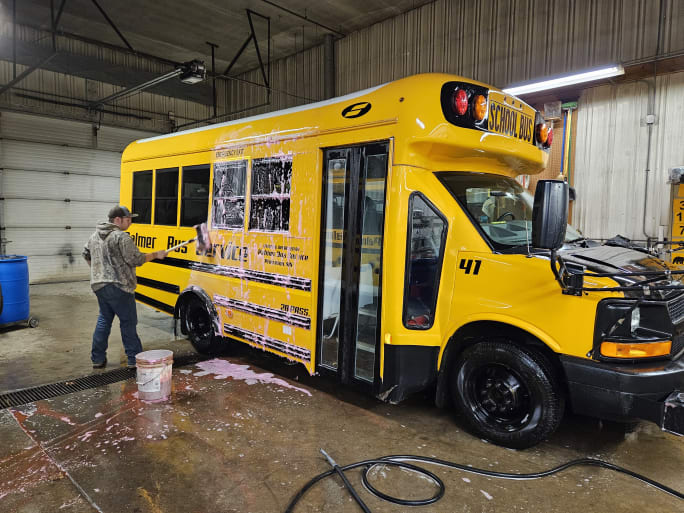
Palmer Bus Service piloted the first CNG-converted school bus at its Mankato location in Minnesota and is so happy with its performance that 20 more are on order.
Photo: Amanda Huggett
Most school buses are in operation for a decade or more, and during that time, winters can vary from mild to extreme. Any permanent fixtures in a bus that may be helpful during a cold, snowy winter should be considered during the ordering process. While it is possible to retrofit buses with new technologies, having them integrated at the factory can save headaches down the line.
“It is important to plan ahead for cold weather with permanent fixtures,” said Nathan Dyer, VP of Warm Welcome. “While we can retrofit existing buses, it does have a cost with it. And sometimes you need something for the next three months, but aren’t able to get it installed until four months later.”
Keeping up with vehicle maintenance in the winter is important. The bitter cold can have adverse effects on a number of mechanical parts, and a well-maintained bus is more likely to start up when temperatures drop.
Finally, when it comes to winter weather driving the driver can be just as important as their vehicle. Make sure that drivers have received any necessary training about operating their bus in the cold.
Drivers who understand how the bus systems work and are prepared for winter road conditions will be able to better handle any curveballs that Mother Nature decides to throw their way.
Winter can be a tricky season for schools in colder climates with a higher chance of adverse weather conditions. Keeping buses moving in the cold poses a number of challenges, but none that can’t be overcome by planning ahead and understanding how your buses handle dropping temperatures.
Subscribe to Our Newsletter
More Alternative Fuels

CALSTART and Forth Combine to Form Catalyst Mobility
The new name represents a renewed vision for the nonprofit focused on advancing clean, equitable, and affordable transportation solutions that move people and goods.
Read More →
Alt-Fuel Moves: New Buses, Charging Hubs & Real-World EV Testing
Propane and electric school bus deployments continue to grow as districts add new vehicles, expand charging infrastructure, and gather more real-world operating data.
Read More →
Fewer Electric School Bus Models Reshape the U.S. Market
WRI’s latest buyer’s guide points to a consolidating electric school bus market, but fewer options may reflect a maturing industry rather than fewer meaningful choices for school bus operators.
Read More →
The Fuel Budget You Can Actually Predict: How Propane Autogas Keeps Money in the Classroom
Learn how propane autogas helps school districts manage fuel costs with predictable pricing, lower maintenance, and reduced emissions from former transportation director Joel Stutheit.
Read More →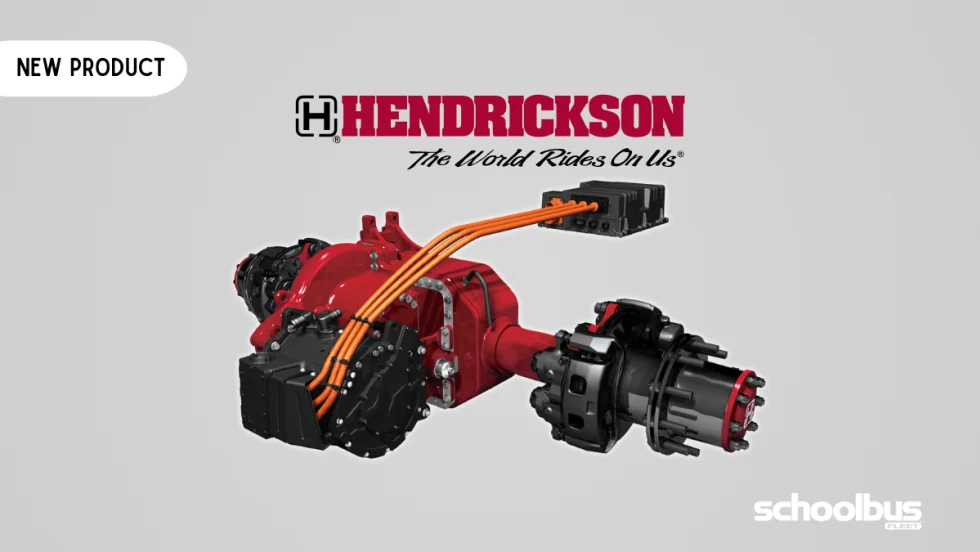
Hendrickson, Driventic Introduce New Electric Powertrain for School Buses
ELECTRAAX, the electrified, lightweight drive axle offers integrated ePowertrain efficiency and modular flexibility for Class 6–7 school bus use.
Read More →
The Mobility House Joins PowerFlex in Fleet Electrification Deal
The acquisition combines intelligent charging software, bidirectional charging expertise, and fleet electrification services to support the growing adoption of electric school buses across North America.
Read More →
Alt-Fuel Moves: Electric School Bus Investments Hit the Road
See which districts across the U.S. are putting electric school buses into service, expanding charging infrastructure, and planning the next phase of fleet electrification.
Read More →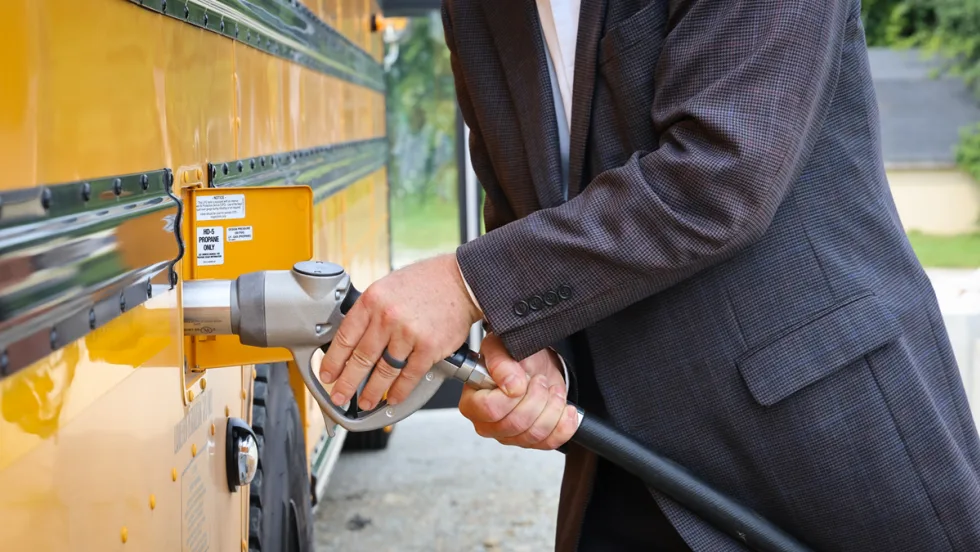
With Fuel Volatility Ahead, School Districts Turn to Propane
While diesel prices peaked above $5 this spring, districts with propane autogas-powered fleets paid under $2 per gallon, according to PERC.
Read More →
EPA Unveils Proposed Changes to 2027 Heavy-Duty Engine Rules
The federal agency has proposed changes to next year’s targets that would eliminate DEF derates, ease warranty requirements, and retain current NOx emissions standards.
Read More →
Alt-Fuel Moves: EV Charging & Infrastructure Projects Gain Momentum
The latest developments include new funding, charging infrastructure, utility investments, and fleet technologies designed to support the transition to electric school buses nationwide.
Read More →