





Don't Miss: New York Electric School Bus Mandate Blowing Fuses?
Takeaways from Lion Electric’s 2023 Fiscal Year Report
Revenue increased in Q4 2023, but the year saw some challenges for Lion, including the decision to delay LionA and LionM buses and the layoffs of 100 workers in Canada.
February 29, 2024

The fourth quarter of 2023 yielded a revenue increase of $60.4 million with the delivery of 188 vehicles by Lion Electric.
Source: Canva/Lion Electric
2 min to read
The fourth quarter of 2023 brought electric school bus manufacturer Lion Electric a substantial revenue increase of $60.4 million with the delivery of 188 vehicles. However, that growth was tempered by losses – some associated with the company’s decision to indefinitely delay production of the LionA and LionM mini-buses.
Lion Electric’s 2023 in Review
For fiscal year 2023, Lion reported a robust financial performance, marked by a revenue surge of $113.6 million compared to the previous fiscal year, reaching a total of $253.5 million. This increase was attributed to the delivery of 852 vehicles, up from the previous year. LionEnergy’s order book included 132 charging stations
The year wasn’t without its hurdles. Despite the revenue surge, Lion Electric experienced a gross loss of $5.5 million, indicating operational challenges and cost-related issues. The decision to indefinitely delay the commercial production of LionA and LionM minibuses, coupled with a write-down of inventory worth $9.8 million, suggested complexities and uncertainties in the electric vehicle market. These setbacks, alongside increased finance costs and a net loss of $103.8 million, underscored the intricacies of balancing growth with operational efficiency and financial sustainability.
In November, the same time the company announced delayed production of the LionA and LionM buses, the company laid off about 100 employees – mostly night-shift workers at the Lion facility in Saint-Jerome.
Looking Ahead to Lion’s Electric Future
Lion Electric's CEO Marc Bedard acknowledged the hurdles faced during the fiscal year. Despite these challenges, Bedard expressed optimism and outlined a strategic focus on driving growth in orders and deliveries in 2024, while emphasizing prudent cost control measures.
"2023 has been a year of significant progress, marked by record vehicle deliveries and revenue, which translated into positive adjusted gross margins, and also by several achievements, including the construction and operation of our two new factories and the start of commercial production of our Lion5 electric truck and our LionD electric school bus,” Bedard said in a news release. “However, this past year has not been without its challenges, particularly as it relates to a volatile incentive environment that slowed down the pace of orders and deliveries.”
More Alternative Fuels
Bipartisan Bill Seeks to Extend Clean School Bus Program Through 2031
The proposed legislation would renew federal support for cleaner school buses as districts navigate funding uncertainty, rising fuel and infrastructure costs, and fleet replacement needs.
Read More →
Alt-Fuel Moves: Electric Bus Rollouts, Bidirectional Charging & Propane Growth
See which fleets are adding electric and propane school buses as districts and operators invest in charging infrastructure, bidirectional technology, and alternative-fuel expansion.
Read More →
Nobody Told Diesel Prices They Were Supposed to Come Down
With diesel prices surging, school bus fleets have new reason to stress-test fuel costs, consider diversification, and calculate what each route really costs to operate.
Read More →
Why Gasoline School Buses Are Making a Comeback
Gasoline is gaining ground in full-size school buses. See how today’s options stack up against diesel on cost, maintenance, emissions, performance, and more.
Read More →
EPA Opens $180M DERA Funding Round for Diesel Upgrades
The 2026 Diesel Emissions Reduction Act program seeks applications from eligible organizations to accelerate the retirement of legacy diesel vehicles.
Read More →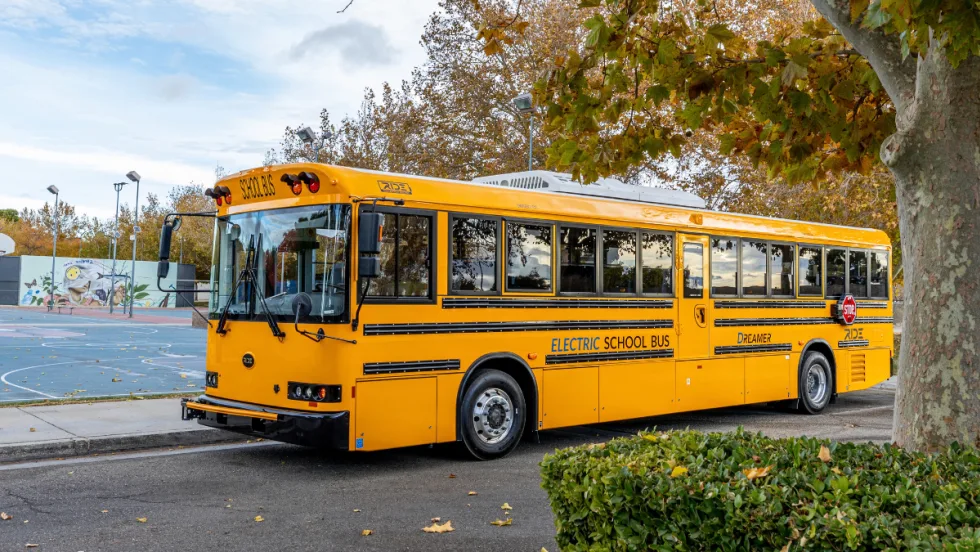
The Secret Life of an Electric School Bus Battery
Batteries change throughout years of daily routes, but degradation doesn’t necessarily mean the end. Here’s what operators should know about performance, safety, and second life.
Read More →
CALSTART and Forth Combine to Form Catalyst Mobility
The new name represents a renewed vision for the nonprofit focused on advancing clean, equitable, and affordable transportation solutions that move people and goods.
Read More →
Alt-Fuel Moves: New Buses, Charging Hubs & Real-World EV Testing
Propane and electric school bus deployments continue to grow as districts add new vehicles, expand charging infrastructure, and gather more real-world operating data.
Read More →
Fewer Electric School Bus Models Reshape the U.S. Market
WRI’s latest buyer’s guide points to a consolidating electric school bus market, but fewer options may reflect a maturing industry rather than fewer meaningful choices for school bus operators.
Read More →
The Fuel Budget You Can Actually Predict: How Propane Autogas Keeps Money in the Classroom
Learn how propane autogas helps school districts manage fuel costs with predictable pricing, lower maintenance, and reduced emissions from former transportation director Joel Stutheit.
Read More →