




New York Electric School Bus Mandate Blowing Fuses?
Empire State politicians and school district leaders are among those pushing back against the plan to phase out fossil-fuel school buses in the next decade.

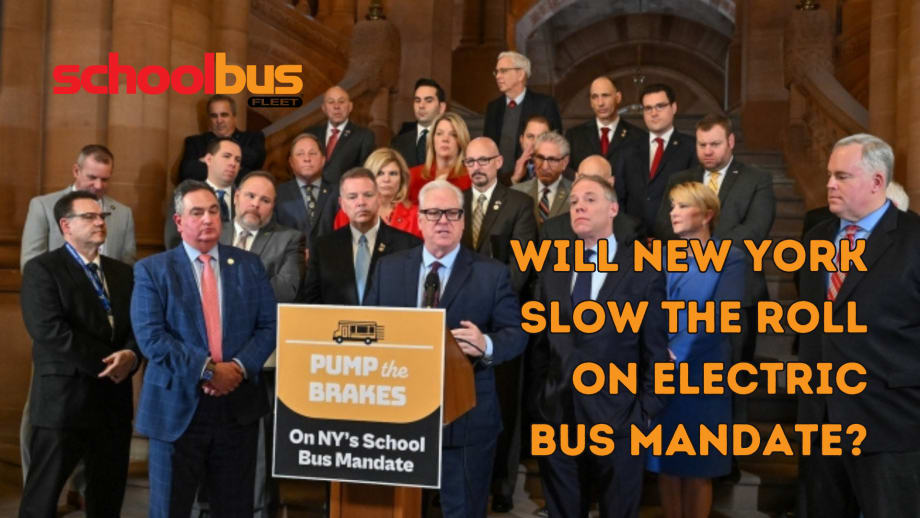
New York State Sen. Thomas O'Mara is among the opponents who want to delay the 2035 zero-emission school bus mandate.
Source: Sen. Thomas O'Mara's Office/Canva
The Empire State’s ambitious plan to shift to an all-electric school bus fleet by 2035 is colliding with what a growing number of New York politicians and school district leaders consider a simple fact: It’s just not realistic to expect districts to stop buying fossil-fuel buses and transition to zero-emission so quickly.
With that in mind, legislators have introduced bills to the state Senate and Assembly that would delay the mandate’s implementation until at least 2045.
What Are the New York Mandate Concerns?
“The current timeline raises far too many troubling questions on affordability, as well as surrounding reliability and safety for student transportation,” said State Sen. Thomas O’Mara in a news release. “We know that the existing plan comes with an enormous price tag for local schools. For already overburdened local property taxpayers, it’s emerging as yet another hard hit from yet another unfunded state mandate out of Albany. We are moving too far, too fast on this transition.”
The senator questioned the readiness and affordability of EV technology and the ability of New York’s electric grid to support the transition.
State Assemblyman Phil Palmesano agreed, saying: “School districts are facing one of the most expensive mandates they have ever faced. This state is forcing school districts to move, at breakneck speed, to implement a misguided, politically driven climate policy that the state itself has no idea if it is affordable, feasible or reliable. If we do not revise this timeline and significantly delay the implementation of the current mandate until we have more information, the benefit of experience and more efficient and less expensive technology, we are putting our schools, students and their families at serious risk and we are breaking the backs of local property taxpayers across this state at the worst possible time.”
State Sen. George Borrello warned against the financial and operational challenges of “this one-size-fits-all requirement.”
“This mandated conversion will have a price tag in the billions, with New York State taxpayers simply expected to foot the bill,” Borrello said.
Dr. Thomas J. Douglas, superintendent of Horseheads Central School District noted that education leaders across New York aren’t opposed to electric school buses, but consider the costs and the timeline to be critical concerns.
“Districts across the state need an immediate pause of this initiative because of the projected costs and timeline as well as the failure of this technology to meet the demands of school districts’ daily transportation and athletic/extracurricular needs,” Douglas said. “In Horseheads, we have more than 80 daily bus runs in both the A.M. and P.M. hours. From our initial review, a dozen of those runs simply cannot be executed with electric busing. This number increases substantially as the weather turns colder. In addition, school districts will have to construct their own power substations within transportation centers to handle the new electrical demands of EV busing.”
According to the World Resources Institute, nearly 6,000 electric school buses had been ordered, delivered, or in operation across the United States as of Sept. 1, 2023. That’s less than 1% of the entire U.S. school bus fleet, and that expansion has come largely because of the federal government’s Clean School Bus Program offered through the Environmental Protection Agency, as well as state grants and Volkswagen settlement funds.
“Today, an electric school bus powered by the typical grid electricity mix in the U.S. produces half as many greenhouse gas emissions as other fuel options – and this will only improve as the power grid decarbonizes,” the WRI stated.
Electric Vehicle Mandates Get Pushback Elsewhere
In October 2023, California Gov. Gavin Newsom signed that state’s zero-emission school bus mandate into law with a goal of 2035. In December, Canada announced its own plan to phase out sales of fossil fuel-powered cars and trucks by 2035.
Three years ago, Virginia’s General Assembly passed legislation requiring the state to follow California’s vehicle-emission standard. That means the state would be expected to comply with the 2035 mandate.
On Feb. 8, the House Labor and Commerce Subcommittee voted 3-2 to table Delegate Tony O. Wilt’s bill, which would have divorced Virginia from California’s mandate.
The U.S. House of Representatives took aim at mandates like those in New York and California with HR 1435 – the Preserving Choice in Vehicle Purchases Act - which would eliminate waivers for state standards “that directly or indirectly limit the sale or use of new motor vehicles with internal combustion engines.” The legislation passed 222-190 but has since stalled as Democrats maintain control in the Senate.
More Alternative Fuels

CALSTART and Forth Combine to Form Catalyst Mobility
The new name represents a renewed vision for the nonprofit focused on advancing clean, equitable, and affordable transportation solutions that move people and goods.
Read More →
Alt-Fuel Moves: New Buses, Charging Hubs & Real-World EV Testing
Propane and electric school bus deployments continue to grow as districts add new vehicles, expand charging infrastructure, and gather more real-world operating data.
Read More →
Fewer Electric School Bus Models Reshape the U.S. Market
WRI’s latest buyer’s guide points to a consolidating electric school bus market, but fewer options may reflect a maturing industry rather than fewer meaningful choices for school bus operators.
Read More →
The Fuel Budget You Can Actually Predict: How Propane Autogas Keeps Money in the Classroom
Learn how propane autogas helps school districts manage fuel costs with predictable pricing, lower maintenance, and reduced emissions from former transportation director Joel Stutheit.
Read More →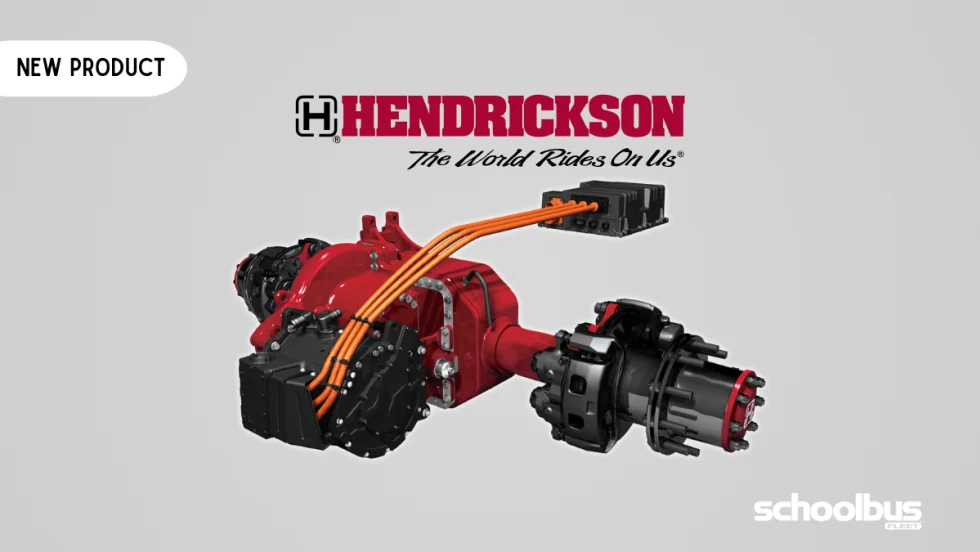
Hendrickson, Driventic Introduce New Electric Powertrain for School Buses
ELECTRAAX, the electrified, lightweight drive axle offers integrated ePowertrain efficiency and modular flexibility for Class 6–7 school bus use.
Read More →
The Mobility House Joins PowerFlex in Fleet Electrification Deal
The acquisition combines intelligent charging software, bidirectional charging expertise, and fleet electrification services to support the growing adoption of electric school buses across North America.
Read More →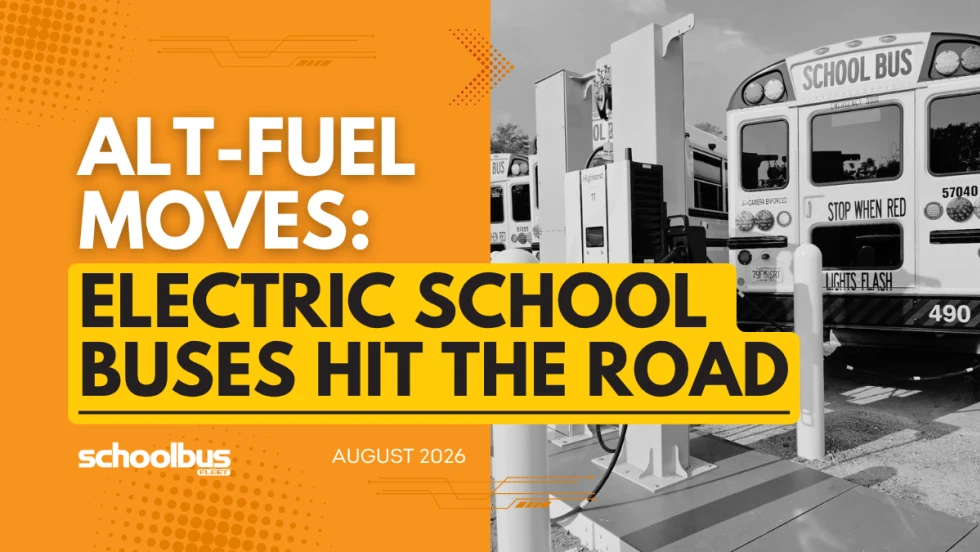
Alt-Fuel Moves: Electric School Bus Investments Hit the Road
See which districts across the U.S. are putting electric school buses into service, expanding charging infrastructure, and planning the next phase of fleet electrification.
Read More →
With Fuel Volatility Ahead, School Districts Turn to Propane
While diesel prices peaked above $5 this spring, districts with propane autogas-powered fleets paid under $2 per gallon, according to PERC.
Read More →
EPA Unveils Proposed Changes to 2027 Heavy-Duty Engine Rules
The federal agency has proposed changes to next year’s targets that would eliminate DEF derates, ease warranty requirements, and retain current NOx emissions standards.
Read More →
Alt-Fuel Moves: EV Charging & Infrastructure Projects Gain Momentum
The latest developments include new funding, charging infrastructure, utility investments, and fleet technologies designed to support the transition to electric school buses nationwide.
Read More →