





Closer Look: Southern States Among Largest Round 1 Clean School Bus Beneficiaries
First Lithium-Ion Battery Pack Produced at Lion Electric Plant
Certification of the proprietary battery pack made at the company's battery manufacturing facility in Maribel, Quebec, is expected in the first quarter of 2023.
December 22, 2022

At full scale, the Mirabel facility is expected to have an annual production capacity of 5 gigawatt hours of battery capacity.
Image: Canva/Lion Electric
2 min to read
All-electric medium and heavy-duty vehicle manufacturer Lion Electric has completed production of its first lithium-ion battery pack at the company's battery manufacturing facility in Mirabel, Quebec.
Final certification of the first battery pack is expected in the first quarter of 2023, followed by a gradual ramp-up of production. The first batteries produced in Mirabel will power the Lion5 truck and LionAmbulance, expected to reach commercial production in the first half of 2023.
"The production of our first battery pack out of our Mirabel battery facility is an important step for Lion and should, over time, bring with it a new level of optimization for product design and production efficiency," said Yannick Poulin, Lion's chief operating officer. "I am incredibly proud of our team for the continued advancement of this project, and I am very thankful to the Canadian and Quebec governments for their support in making it a reality."
Lion's new Mirabel battery manufacturing facility, once fully operational, is expected to give the company a key market advantage, with vertical integration providing more control of supply, technology advancement, and vehicle integration. Given the battery is typically the most expensive component of an electric vehicle, this new manufacturing capability should have a direct impact on Lion's development of medium- and heavy-duty electric vehicle platforms, while also offering important economic benefits.
At full scale, Lion's battery manufacturing facility is expected to have an annual production capacity of five gigawatt-hours of battery capacity. The news comes as Lion has also recently celebrated the start of production at its U.S. vehicle manufacturing facility in Joliet, Ill.
More Alternative Fuels
Bipartisan Bill Seeks to Extend Clean School Bus Program Through 2031
The proposed legislation would renew federal support for cleaner school buses as districts navigate funding uncertainty, rising fuel and infrastructure costs, and fleet replacement needs.
Read More →
Alt-Fuel Moves: Electric Bus Rollouts, Bidirectional Charging & Propane Growth
See which fleets are adding electric and propane school buses as districts and operators invest in charging infrastructure, bidirectional technology, and alternative-fuel expansion.
Read More →
Nobody Told Diesel Prices They Were Supposed to Come Down
With diesel prices surging, school bus fleets have new reason to stress-test fuel costs, consider diversification, and calculate what each route really costs to operate.
Read More →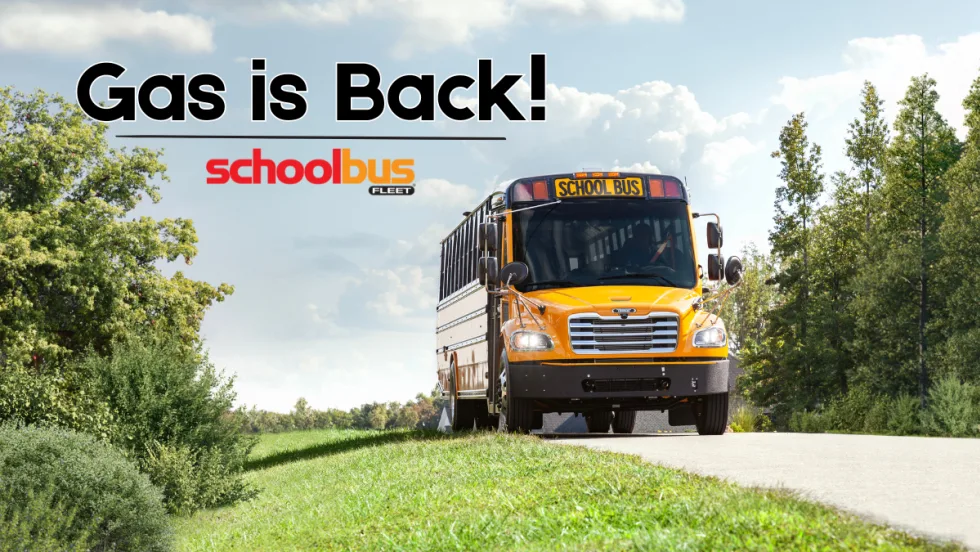
Why Gasoline School Buses Are Making a Comeback
Gasoline is gaining ground in full-size school buses. See how today’s options stack up against diesel on cost, maintenance, emissions, performance, and more.
Read More →
EPA Opens $180M DERA Funding Round for Diesel Upgrades
The 2026 Diesel Emissions Reduction Act program seeks applications from eligible organizations to accelerate the retirement of legacy diesel vehicles.
Read More →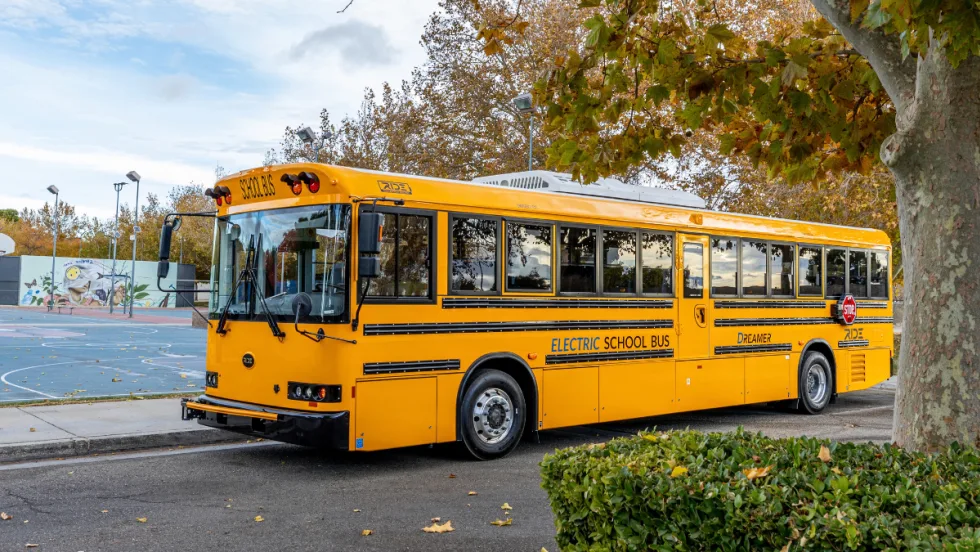
The Secret Life of an Electric School Bus Battery
Batteries change throughout years of daily routes, but degradation doesn’t necessarily mean the end. Here’s what operators should know about performance, safety, and second life.
Read More →
CALSTART and Forth Combine to Form Catalyst Mobility
The new name represents a renewed vision for the nonprofit focused on advancing clean, equitable, and affordable transportation solutions that move people and goods.
Read More →
Alt-Fuel Moves: New Buses, Charging Hubs & Real-World EV Testing
Propane and electric school bus deployments continue to grow as districts add new vehicles, expand charging infrastructure, and gather more real-world operating data.
Read More →
Fewer Electric School Bus Models Reshape the U.S. Market
WRI’s latest buyer’s guide points to a consolidating electric school bus market, but fewer options may reflect a maturing industry rather than fewer meaningful choices for school bus operators.
Read More →
The Fuel Budget You Can Actually Predict: How Propane Autogas Keeps Money in the Classroom
Learn how propane autogas helps school districts manage fuel costs with predictable pricing, lower maintenance, and reduced emissions from former transportation director Joel Stutheit.
Read More →