




California District, College Team to Train Tomorrow's Technicians
California District Expands Fleet With 10 More Electric School Buses
With the delivery of the LionC buses, Twin Rivers Unified School District has expanded the electric-powered portion of its fleet by 25%.

Nicole Schlosser・Former Executive Editor
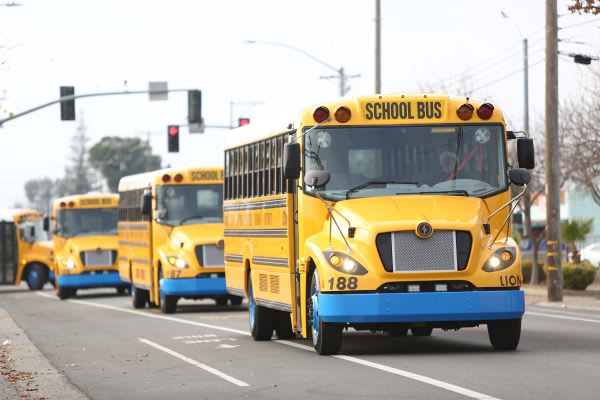
With the delivery of 10 LionC buses, Twin Rivers Unified School District in California has expanded the electric-powered portion of its fleet by 25%. Shown here are four of the district’s new electric school buses.
Photo courtesy Twin Rivers Unified School District
3 min to read
A California school district has expanded the electric-powered portion of its fleet by 25%.
The Lion Electric Co. (Lion) delivered 10 LionC school buses to the Twin Rivers Unified School District (USD) in McClellan Park, just about 15 miles northeast of Sacramento, on Wednesday.
With these new buses, the district is now operating the largest zero-emission school bus fleet in North America, with 40 electric school buses in its fleet, according to a news release from Lion.
“Twin Rivers is the recognized leader in zero-emission school buses, and the numbers speak for themselves,” said Marc Bedard, CEO and founder of Lion. “This delivery represents a deeply impressive accomplishment for the school district and zero-emission transportation as a whole and demonstrates Twin Rivers’ dedication to the health of the local community,”
Bedard added that the delivery shows that “electrification of school transportation is not coming tomorrow, it is here now, meeting and exceeding the needs of operators.”
The buses are part of California Climate Investments, a statewide initiative, according to a website on the investment program, that aims to put billions of cap-and-trade dollars to work reducing greenhouse gas emissions, strengthening the economy, and improving public health and the environment, particularly in disadvantaged communities.
The buses were funded in large part by cap-and-trade dollars, with additional funding from the Sacramento Metropolitan Air Quality Management District (AQMD), the Sacramento Municipal Utility District, and California’s Carl Moyer Memorial Air Quality Standards Attainment Program, according to Lion.
The buses each have a range of 125 miles and will eliminate, on average, 230 tons of greenhouse gas emissions per year, according to Lion. The Sacramento AQMD, California Air Resources Board, and Twin Rivers USD have collaborated on funding 63 zero-emission school buses in the region to date, with an additional 90 pending delivery in 2021. To support these buses, over $4.5 million has been funded to support the charging infrastructure.
“This is no longer a pilot demonstration,” said Alberto Ayala, Sacramento AQMD’s air pollution control officer. “With support from our partners and Twin Rivers School District’s vision, the Sacramento region can lead the way in the fight for clean air and the transition to a zero-carbon transportation future today.”
Twin Rivers USD was among the first fleets in the U.S. to put electric buses into service when it received its first buses from Lion in 2016. Lion has worked closely with the district to train staff in vehicle operation and maintenance, both onsite at its transit yard and at Lion’s nearby Sacramento Experience Center, where the vehicles are also serviced, according to Lion. The district has since incrementally added more electric buses to its fleet and was among the first school districts to receive electric buses from the California Energy Commission's first School Bus Replacement Program.
As School Bus Fleet previously reported, the district plans to eventually transition to an all-electric school bus fleet, and partnered with an electric vehicle software supplier for charging management and data collection in February.
“We started down the road of electrification four years ago, and the reception has been unanimously positive,” said Timothy Shannon, director of transportation of Twin Rivers USD. “Everyone from the drivers and maintenance staff to the community — and most importantly, students — have welcomed the possibilities of zero-emission buses and the health benefits that come with their adoption.”
More Alternative Fuels

CALSTART and Forth Combine to Form Catalyst Mobility
The new name represents a renewed vision for the nonprofit focused on advancing clean, equitable, and affordable transportation solutions that move people and goods.
Read More →
Alt-Fuel Moves: New Buses, Charging Hubs & Real-World EV Testing
Propane and electric school bus deployments continue to grow as districts add new vehicles, expand charging infrastructure, and gather more real-world operating data.
Read More →
Fewer Electric School Bus Models Reshape the U.S. Market
WRI’s latest buyer’s guide points to a consolidating electric school bus market, but fewer options may reflect a maturing industry rather than fewer meaningful choices for school bus operators.
Read More →
The Fuel Budget You Can Actually Predict: How Propane Autogas Keeps Money in the Classroom
Learn how propane autogas helps school districts manage fuel costs with predictable pricing, lower maintenance, and reduced emissions from former transportation director Joel Stutheit.
Read More →
Hendrickson, Driventic Introduce New Electric Powertrain for School Buses
ELECTRAAX, the electrified, lightweight drive axle offers integrated ePowertrain efficiency and modular flexibility for Class 6–7 school bus use.
Read More →
The Mobility House Joins PowerFlex in Fleet Electrification Deal
The acquisition combines intelligent charging software, bidirectional charging expertise, and fleet electrification services to support the growing adoption of electric school buses across North America.
Read More →
Alt-Fuel Moves: Electric School Bus Investments Hit the Road
See which districts across the U.S. are putting electric school buses into service, expanding charging infrastructure, and planning the next phase of fleet electrification.
Read More →
With Fuel Volatility Ahead, School Districts Turn to Propane
While diesel prices peaked above $5 this spring, districts with propane autogas-powered fleets paid under $2 per gallon, according to PERC.
Read More →
EPA Unveils Proposed Changes to 2027 Heavy-Duty Engine Rules
The federal agency has proposed changes to next year’s targets that would eliminate DEF derates, ease warranty requirements, and retain current NOx emissions standards.
Read More →
Alt-Fuel Moves: EV Charging & Infrastructure Projects Gain Momentum
The latest developments include new funding, charging infrastructure, utility investments, and fleet technologies designed to support the transition to electric school buses nationwide.
Read More →