




Fleet Facts About Diesel Particulate Filters
What you need to know about these emission-control devices, which are being retrofitted into thousands of school buses and will be installed in all 2007 diesel models.
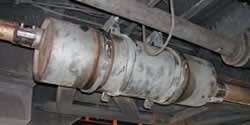
Whether you want them or not, diesel particulate filters (DPFs) will be a part of your future if you’re planning to buy school buses manufactured in 2007 and beyond. The filters will be one of the downstream components of the engine system, which will be required to meet the EPA’s 2007 standards for emissions of nitrogen oxide, hydrocarbons and particulate matter.
Some fleet managers, however, have already begun adding DPFs to their buses. Most of these fleets have received funding for the retrofits through the EPA’s Clean School Bus USA program or through the Clean Buses for Kids Program, which provided funds through an EPA enforcement action against Toyota Motor Corp.
Some of the funding can also be used to offset the cost differential of regular diesel fuel and ultra-low-sulfur diesel (ULSD). Later this year, the federally mandated phase-in of ULSD will begin nationwide.
According to the EPA, the cost of an installed DPF system, which includes the mounting brackets, filter and backpressure monitor, ranges from $6,500 to $7,500.
Ahead of the curve
Last summer, Baltimore County (Md.) Public Schools had 12 of the 850-plus buses in its fleet retrofitted with DPFs manufactured by Donaldson Co.
Fleet Manager Wayne Hopkins and Transportation Director Linda Fitchett took the initiative to apply for an EPA grant because they wanted to be proactive about reducing tailpipe emissions.
Subsequently, they received a $90,000 EPA grant for the DPFs and the related hardware. That translates into $7,500 per bus for the equipment. The district also received a $4,200 fuel subsidy to help cover the additional cost of the ULSD.
The buses were chosen for the retrofitting by data-logging their operating temperatures, says Ken Morosko, transportation maintenance supervisor. He explains that the engines need to generate enough heat to burn the soot that’s trapped by the DPF; otherwise, the filter could get clogged and create dangerous backpressure in the engine.
The buses selected for the retrofitting were manufactured by IC Corp. and have T 444 engines. The model years are 1998 (2), 1999 (3), 2001 (2), 2002 (4) and 2004 (1). “They’re all performing fine, except one,” Morosko says, adding that he believes the problem with the exception stems from a driver allowing the bus to idle too long. This can cause soot to collect in and eventually block the filter. “It was clogged enough to trigger the warning light,” he says.
The filter was removed from the bus and treated for two minutes with a device called a pulse cleaner. This device and another called a thermal regenerator are used to remove ash and unburned soot from the DPFs. Morosko says the district’s normal cleaning interval is annually or every 20,000 miles.
Morosko says the 12 buses equipped with the DPFs do not emit any black smoke, which he says is a double-edged sword. Although it’s pleasing to cut down on the cloud billowing from the back of the bus, it makes it more difficult for technicians to spot problems with injectors, o-rings and head gaskets, which, under normal circumstances, cause the bus to produce black smoke.
Clearing the air
The Huron (Mich.) School District also has concerns about air quality, especially since the bus yard backs up against the district’s kindergarten play center.
Transportation Director Joe Beaubien says he received a $250,000 EPA grant to have Donaldson DPFs installed in 27 of the fleet’s 35 buses. The retrofitting was performed in September by Michigan Bus Parts in Brownstown, Mich.
“We just thought it was a good idea,” Beaubien says, acknowledging that the proximity of the play center played a role in the decision.
[PAGEBREAK]
“So far, it’s been fantastic,” Beaubien says. The difference in the amount of smoke produced by the buses has been significant. “Now it’s like they’re not even running,” he says.
The only significant change in the transportation department’s operations is the implementation of an anti-idling policy. Beaubien says drivers are warned against idling too long because of the possible build-up of soot in the DPF.
DPF manufacturer list
The following are some of the diesel particulate filter products available:
DONALDSON CO.
The DPF Muffler removes over 85 percent of particulate matter and meets the EPA’s Voluntary Retrofit Program and the California Air Resources Board’s Risk Reduction Program. The device is available for most exhaust configurations in bus models 1994 and newer. Under normal operation, the filter requires cleaning annually or every 50,000 miles, whichever comes first. An onboard filter service (backpressure) monitor is included with each DPF. The device requires the use of ULSD. Donaldson also manufactures two cleaning systems — a pulse cleaner and a thermal regenerator. For more information, visit www.donaldson.com.
ENGELHARD CORP.
The DPX particulate filter traps particles and then uses a patented catalytic technology to continuously burn them at normal diesel operating exhaust temperatures. The filter reduces particulate matter by 90 percent, soluble organic fractions by 98 percent and carbon monoxide and hydrocarbons by up to 90 percent. It does not require low sulfur diesel fuel or additives. For more information, visit www.engelhard.com/environmental.
FLEETGUARD
The DPF uses EPA-verified Continuously Regenerating Technology (CRT) that removes up to 85 percent of particulate matter emissions. The next-generation Catalyzed Continuously Regenerating Technology (CCRT) retrofit system works for lower-temperature applications. To ensure optimum performance of the filter and engine, the DPF system monitors engine pressure and temperature. Controls in the driver’s compartment alert the driver when backpressure is high and the filter needs cleaning. The CRT and CCRT systems achieve maximum emission reduction with ULSD and are verified for use with biodiesel (up to B20 with ULSD). For more information, visit www.fleetguard.com.
INTERNATIONAL TRUCK AND ENGINE CORP.
International’s diesel particulate filters use Engelhard technology to provide a 70 to 98 percent reduction in particulate matter and visible smoke, depending on fuel quality, and a 70 to 98 percent reduction in carbon monoxide and hydrocarbons. ULSD should be used with this filter, but occasional use of higher sulfur fuel in emergency situations will not damage the system or stop the vehicle. International recommends cleaning and visual inspection at least once every 12 months or every 60,000 miles. The system includes a pressure monitor sensor that will indicate the need for cleaning. The filter is available for use on most diesel buses and medium trucks with electronic engines. For more information, visit www.greendieseltechnology.com.
JOHNSON MATTHEY
The CRT particulate filter uses a patented process to oxidize soot in the presence of NOx at a lower temperature than with oxygen. This lower temperature is compatible with typical diesel exhaust temperatures, so no supplemental heat is required. The filter reduces the emission of hydrocarbons, carbon monoxide and particulate matter by more than 90 percent. For more information, visit www.johnson-matthey.com.
SMOKE BLOTTER INC.
The Smoke Blotter system consists of a filter, housing, diverter, actuator and control module. These self-contained units effectively trap 95 to 99 percent of soot. The system can be connected to a patented “Phantom Switch.” This switch turns on the filter when the vehicle enters a predefined radius of low-frequency transponders that can be strategically placed near schools, bus stops and other places where people congregate. This prolongs the service life of the system. For more information, visit www.smokeblotter.com.
More Alternative Fuels

CALSTART and Forth Combine to Form Catalyst Mobility
The new name represents a renewed vision for the nonprofit focused on advancing clean, equitable, and affordable transportation solutions that move people and goods.
Read More →
Alt-Fuel Moves: New Buses, Charging Hubs & Real-World EV Testing
Propane and electric school bus deployments continue to grow as districts add new vehicles, expand charging infrastructure, and gather more real-world operating data.
Read More →
Fewer Electric School Bus Models Reshape the U.S. Market
WRI’s latest buyer’s guide points to a consolidating electric school bus market, but fewer options may reflect a maturing industry rather than fewer meaningful choices for school bus operators.
Read More →
The Fuel Budget You Can Actually Predict: How Propane Autogas Keeps Money in the Classroom
Learn how propane autogas helps school districts manage fuel costs with predictable pricing, lower maintenance, and reduced emissions from former transportation director Joel Stutheit.
Read More →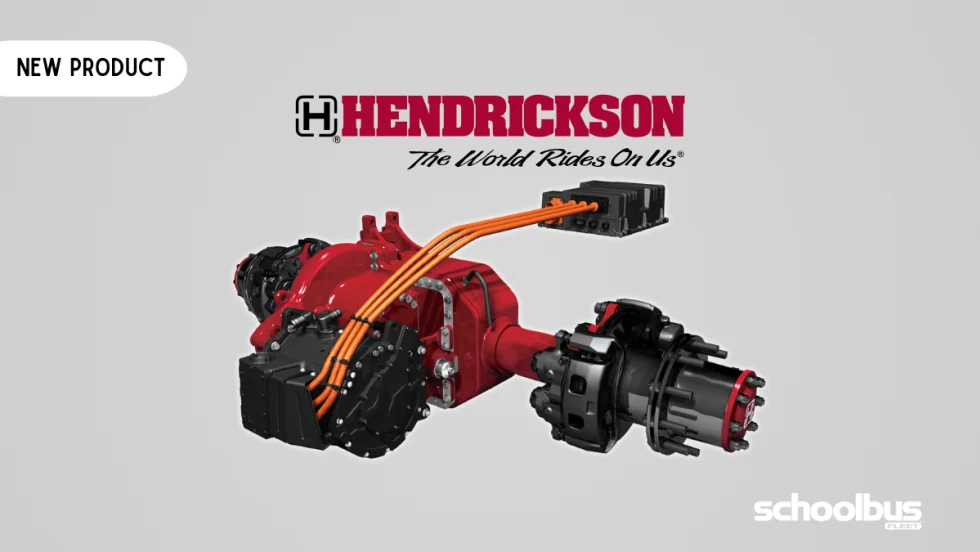
Hendrickson, Driventic Introduce New Electric Powertrain for School Buses
ELECTRAAX, the electrified, lightweight drive axle offers integrated ePowertrain efficiency and modular flexibility for Class 6–7 school bus use.
Read More →
The Mobility House Joins PowerFlex in Fleet Electrification Deal
The acquisition combines intelligent charging software, bidirectional charging expertise, and fleet electrification services to support the growing adoption of electric school buses across North America.
Read More →
Alt-Fuel Moves: Electric School Bus Investments Hit the Road
See which districts across the U.S. are putting electric school buses into service, expanding charging infrastructure, and planning the next phase of fleet electrification.
Read More →
With Fuel Volatility Ahead, School Districts Turn to Propane
While diesel prices peaked above $5 this spring, districts with propane autogas-powered fleets paid under $2 per gallon, according to PERC.
Read More →
EPA Unveils Proposed Changes to 2027 Heavy-Duty Engine Rules
The federal agency has proposed changes to next year’s targets that would eliminate DEF derates, ease warranty requirements, and retain current NOx emissions standards.
Read More →
Alt-Fuel Moves: EV Charging & Infrastructure Projects Gain Momentum
The latest developments include new funding, charging infrastructure, utility investments, and fleet technologies designed to support the transition to electric school buses nationwide.
Read More →